REVIEW · ARUSHA
The best 6-Days Kilimanjaro hiking (Machame route)whiskey route
Book on Viator →Operated by Three Peaks Tanzania Safari ltd · Bookable on Viator
Six days on Kilimanjaro is a real test. This Machame Route climb, also nicknamed the Whiskey Route, focuses on acclimatization with a guide, meals every day, and park access so you can concentrate on the climb instead of logistics.
I love how the pacing is built for altitude: trek higher, then sleep lower, with camp placements like Machame Hut at 3,000m and Shira country around 3,840m. I also like the value angle—park admissions, rescue fees, guides, and arrival/departure transfers are included, which matters a lot once you’re in Tanzania.
The main consideration is that Machame is a harder route than some alternatives, with long walking days and steep sections—so if you want easy hiking, this one won’t pretend.
In This Review
- Key highlights to know before you go
- Machame (Whiskey Route) Kilimanjaro: what makes it different
- Price and value: why $1,968 might be fair
- From Arusha to the trail: your 7:00am start matters
- Day 1: Forest floor breathing at Machame Hut (3,000m)
- Day 2: Shira Cave area (3,840m) and the crater views
- Day 3: Approaching Kibo, then Barranco Valley camp (3,950m)
- Day 4: Barranco Wall scrambling to Barafu Hut (4,600m)
- Day 5 and Day 6: summit effort build-up and the Mweka forest descent
- Guides, meals, and safety: what “included” means on Kilimanjaro
- Packing and pacing: how to avoid common self-inflicted problems
- Who should choose this 6-day Machame climb from Arusha
- Should you book this Machame (Whiskey Route) Kilimanjaro climb?
- FAQ
- Where does this Kilimanjaro climb start?
- What route is this on Kilimanjaro?
- How long is the climb?
- What time does the experience start?
- Is this a private tour?
- Are meals included?
- Are park and rescue fees included?
- Are transfers included?
- What are not included in the price?
- What happens if weather is bad?
Key highlights to know before you go
- Machame, the Whiskey Route: a demanding path that still tries to help you acclimatize by design.
- Full meals for 6 days: breakfast, lunch, and dinner are included, so you’re not rationing snacks mid-hike.
- Park and rescue fees included: you’re covered for the official costs that often get added later on other climbs.
- Private climb for your group: your guide and team work just for you, not a mixed schedule.
- Iconic altitude stops: Shira Cave area, Barranco Valley, Karanga Valley, and Barafu Hut are all in the mix.
- Guide support with safety-first attitude: one summit-focused climb story credited a guide named Justine with making the whole process feel organized and solid.
Machame (Whiskey Route) Kilimanjaro: what makes it different
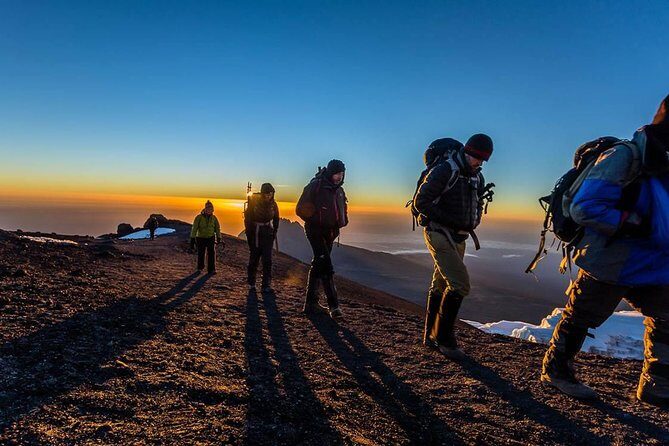
The Machame Route is known as the Whiskey Route, and the nickname isn’t just marketing fluff. This route tends to feel like a steady grind upward with a few moments where the terrain flips from scenic to workmanlike—especially once you’re in the higher moorland/desert zones.
What I like about this specific 6-day build is that it’s trying to do the altitude math for you. The overall idea is straightforward: you go up to gain experience at higher elevations, then you settle in for sleep at a practical camp altitude. That pattern can make the mountain feel more manageable, even when the walking is still hard.
And yes, it’s a more challenging route. Expect long days, and expect to feel it in your lungs and legs. If you’re the type who gets impatient with slow breathing, bring patience anyway. The mountain doesn’t care about your schedule.
You can also read our reviews of more hiking tours in Arusha
Price and value: why $1,968 might be fair
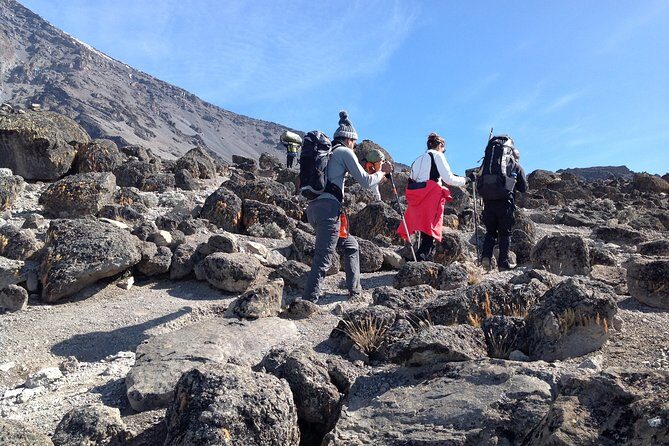
At $1,968 per person for about 6 days, the price isn’t cheap on the surface. But this climb is set up so you’re not hit with a pile of add-ons once you arrive.
Here’s what’s included that usually changes the real-world value:
- All park fees and rescue fees
- Professional mountain guides
- Arrival and departure transfers
- 2 nights of hotel accommodations
- Meals every day (breakfast 6x, lunch 6x, dinner 6x)
That combination matters. Park fees and rescue fees can be a big chunk of the total cost on Kilimanjaro climbs, and guide fees are the core expense that determines how safely (and smoothly) you move. With this package, you’re paying for the structure you need to climb rather than piecing it together.
What’s not included:
- Tips
- International flight
So, if you have a tight budget, plan your tips in advance and price out your flights separately. If you want fewer surprises and a clear, complete package, the included items are a strong point.
From Arusha to the trail: your 7:00am start matters
The climb starts at 7:00am. You’ll be picked up from your accommodation area (pickup offered), then driven toward the trailhead—about 1,800m—before you begin walking from Machame Gate.
Why that timing matters: early starts are a practical move on Kilimanjaro. You beat some daytime weather swings, you get your first “gear check” (how your body handles the first uphill steps), and you reduce the stress of arriving late to the start point. Also, you’ll likely want a calm breakfast and time to sip water before you start climbing.
You’re also using a mobile ticket, which helps keep things simple once you’re on the ground.
Day 1: Forest floor breathing at Machame Hut (3,000m)
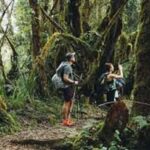
Day 1 begins with an easy-to-moderate ramp up through natural elevation forest. This is the part of the mountain that feels more alive: you pass plant life like busy lizzie flowers, begonias, and ferns. There’s real texture underfoot, and that matters because it breaks up the monotony of “just walking uphill.”
The climb takes about 5–6 hours and ends at Machame Hut (around 3,000m). Expect “warmup legs” early on, then a steady climb where your breathing starts to tell you you’re gaining altitude even if your pace feels comfortable.
One small drawback of forest starts: you can lose track of how hard you’re working because the ground looks gentle. Don’t let that fool you. By the time you reach the heather zone, you’ll feel the elevation more clearly.
Tip from how this route is described: take your time in the forest. If you walk fast early, the mountain charges you later.
Day 2: Shira Cave area (3,840m) and the crater views
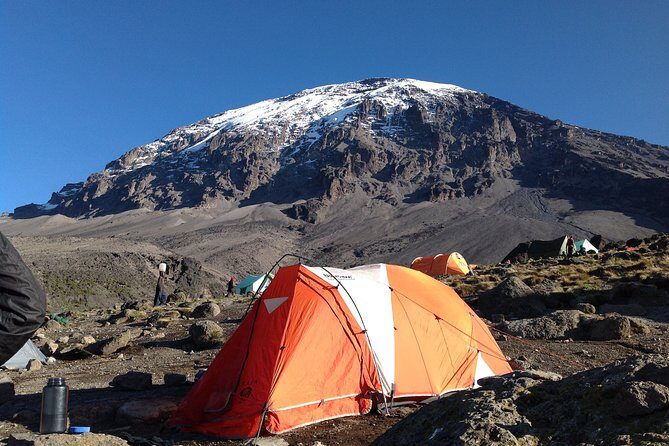
Day 2 leaves the heather zone and heads into open, high-country walking to camp by the Shira Cave at about 3,840m. This part is long—around 4–5 hours of hiking time—and it’s more exposed than Day 1.
The walk comes with two kinds of interest:
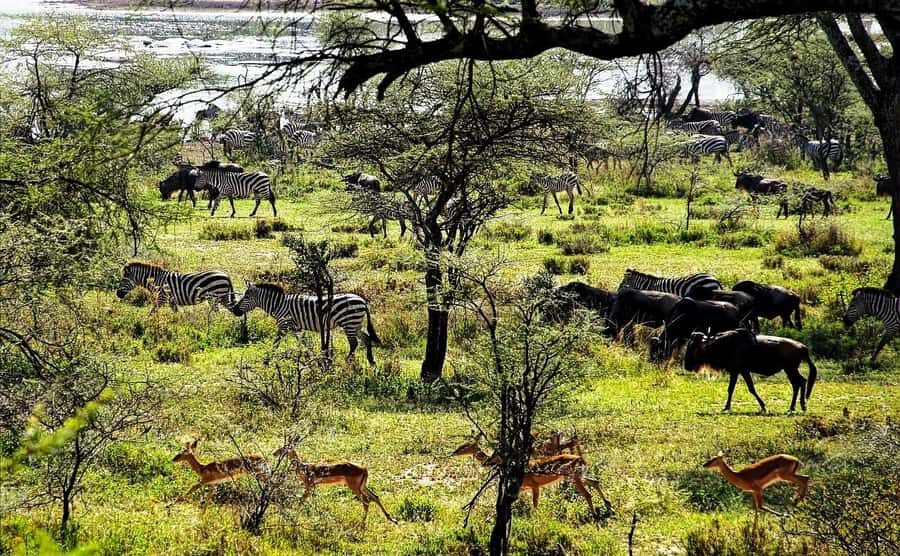
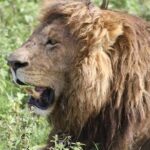
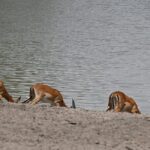
- Wildlife potential, including herds of antelope and, occasionally, a lion (so keep your head up and your safety common sense switched on).
- Earth-science scenery, since you’re moving through old volcanic terrain and the route offers chances to notice the volcanic crater features.
The Shira camp area is also known for some strong sightlines: views toward the big volcanic cone of Kibo, rock formations tied to the Shira tableland, and even Mount Meru floating on clouds when visibility lines up.
Practical note: Day 2 is a great example of the acclimatization logic. You go high (camp high), but you’re also setting your body up for later pushes where sleeping and climbing patterns matter.
Day 3: Approaching Kibo, then Barranco Valley camp (3,950m)
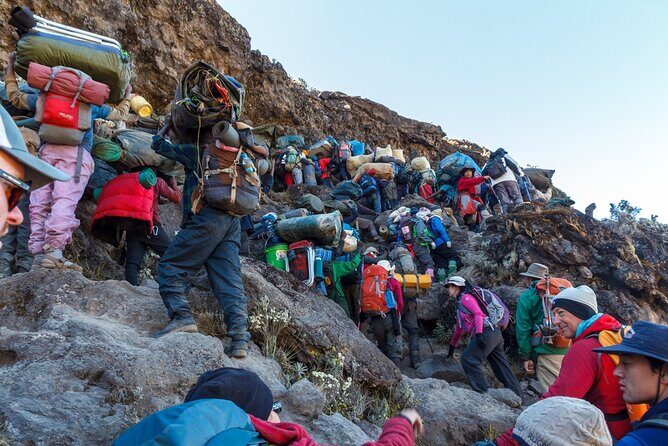
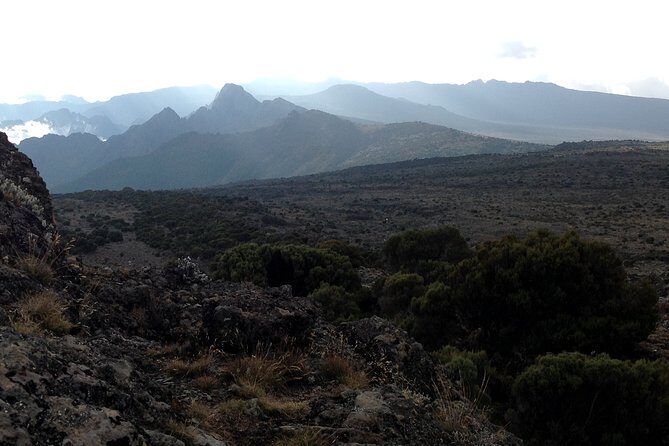
On Day 3, the route aims you toward the Kibo side. One of the standout parts is that western glaciers can be visible from the high-altitude desert feel of volcanic rocks and boulders. Even if the glaciers aren’t always view-perfect, the general impression of rugged, high, empty terrain is part of Kilimanjaro’s drama.
After that higher-zone walking, you descend into Barranco Valley for camp around 3,950m. The time listed is about 6 hours, and the ascent amount is relatively small on paper (the route notes something like 110m total ascent)—but don’t treat that as “easy.” You’re still acclimating through motion, and your body is learning how altitude feels in different phases of the day.
Why I like this day in the overall plan: it’s not only about reaching altitude. It’s about training your comfort level with changing terrain while staying respectful of oxygen levels.
If you’re prone to rushing when you feel “okay,” this is where you slow down again. Day 3 is where good pacing buys you fewer problems later.
Day 4: Barranco Wall scrambling to Barafu Hut (4,600m)
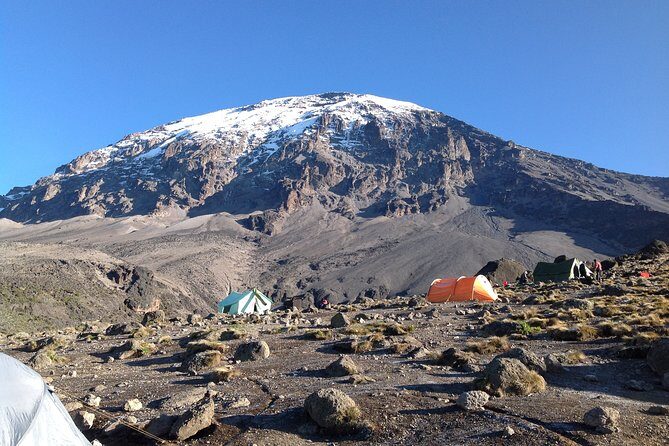
Day 4 is a big mood shift. You tackle the Barranco Wall, with sections that include simple scrambling. That means hands may help on steeper bits. It’s not technical mountaineering, but it is a real “pay attention with your footing” day.
After the wall, you descend toward Karanga Valley for lunch, then continue up to Barafu Hut at about 4,600m. The day runs around 7–8 hours of hiking with about 650m ascent.
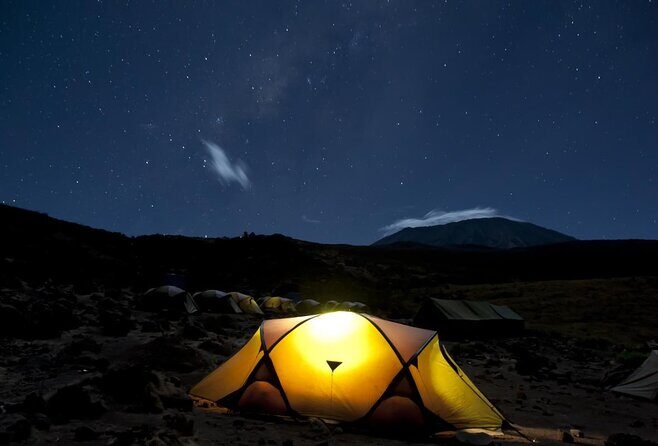
What makes this day special is the payoff at the hut: camp views toward Mawenzi Peak are described as fantastic. That’s also the moment the climb asks you to switch gears from endurance hiking to recovery. The schedule is explicit that you need to rest well because the summit hike begins early the next morning.
Possible drawback: Barafu Hut nights can feel intense because you’re higher and the air is thinner. If you don’t sleep easily at altitude, this is the day you should be mentally prepared for a restless night and a cold shift (layers matter).
Day 5 and Day 6: summit effort build-up and the Mweka forest descent
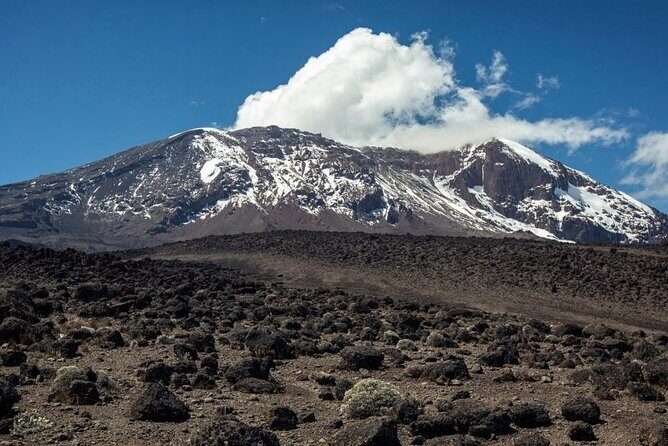
Day 5 is where the plan points toward the summit push. You’ve already reached Barafu Hut on Day 4, and the mountain is asking you to be ready for an early start. The climb is serious on this section; even with support and guides, you’ll feel the effort in every breath.
Then Day 6 starts with Mweka bivouac, followed by a 4–5 hour descent through forest to Mweka Gate. At the gate, you collect certificates and meet your vehicle, then return for the night.
This is the classic Kilimanjaro emotional swing: the hard part is behind you, but you’re still working. Forest descent can feel deceptively long on sore knees and calves. The good news is that the air is kinder down low, and the world starts to look normal again.
If you’re the type who gets anxious about the last day, plan for simple satisfaction: you’re moving downhill, but you’re still finishing the job.
Guides, meals, and safety: what “included” means on Kilimanjaro
This package includes professional mountain guides, all meals for six days, plus park and rescue fees. In practice, that translates to less decision fatigue.
You’re not trying to figure out where food comes from at 3,800m. You’re not doing the math on park costs while your brain is focused on the next step. And rescue coverage matters on a mountain where conditions can change fast.
The human side is also a big deal. One Kilimanjaro climb story credited a guide named Justine with helping make the whole experience organized to perfection. That matches what you want: steady guidance, no chaos, and a team that takes safety seriously. Another message praised the mountain crew for being kind and genuinely upbeat.
Just keep in mind: Kilimanjaro is serious business. Even when things feel smooth, you should treat every day with respect. The best climbing teams make that feel normal, not scary.
Packing and pacing: how to avoid common self-inflicted problems
The data doesn’t spell out a kit list, so I’m going to focus on the stuff you can control regardless: how you pace and how you stay comfortable.
Pace like your summit depends on it
That sounds obvious, but it’s real. On Machame, you’ll have days where you feel tempted to “make up time.” Don’t. Short, slow steps and steady breathing usually help you hold energy for later. The route’s acclimatization plan rewards consistency.
Bring layers you can adjust quickly
You’ll go from forest to high-altitude zones where temperatures can drop fast. Even with warm gear provided by the guide’s setup, you’ll want enough layers to manage cold mornings and possibly chilly nights at huts.
Hydrate early, not only when you feel thirsty
Altitude can make thirst signals less obvious. If you wait until you’re clearly dehydrated, you’ll already be behind.
Don’t overpack your day comfort
If you’re trying to carry extra weight just because it’s on your mind, you’ll pay for it on steep sections like the Barranco Wall.
If you want a simple rule: pack for function, then pace for altitude.
Who should choose this 6-day Machame climb from Arusha
This is a strong fit if you:
- Want a private climb where schedules and decisions are made for just your group.
- Prefer a route that’s built around acclimatization logic (trek higher, sleep lower).
- Are okay with a tougher route that includes steep and scrambling segments like Barranco.
It’s also reasonable for “most travelers” in the sense that the operator offers it broadly. Still, “most travelers” doesn’t mean “anyone.” Machame is challenging, so choose based on your fitness and your ability to handle long hiking days at elevation.
If you’re traveling as a couple, solo, or small group and you want a guided plan with fewer moving parts, the private format is a real advantage.
Should you book this Machame (Whiskey Route) Kilimanjaro climb?
I’d book it if your priority is a structured climb with the official costs covered, meals taken care of, and a guide crew that takes safety seriously. The inclusion of park and rescue fees, plus transfers and hotel nights, makes the total value easier to stomach.
I’d pause before booking if you know you struggle with long, steep hikes or you want a truly easy, low-stress hiking experience. Machame asks more of you. That’s also why it can feel so rewarding when everything clicks.
If you’re doing Kilimanjaro to challenge yourself, this route’s mix of forest, Shira’s volcanic drama, Barranco scrambling, and the Barafu build-up is a classic reason people return to Tanzania again and again.
FAQ
Where does this Kilimanjaro climb start?
It starts in Arusha, Tanzania, with pickup offered from your hotel area. You then drive to the Machame route near Machame Gate.
What route is this on Kilimanjaro?
It uses the Machame Route, which is also known as the Whiskey Route.
How long is the climb?
The climb is about 6 days.
What time does the experience start?
The start time is 7:00am.
Is this a private tour?
Yes. It’s a private tour/activity, and only your group participates.
Are meals included?
Yes. Breakfast, lunch, and dinner are included for all six days.
Are park and rescue fees included?
Yes. All park fees and rescue fees are included.
Are transfers included?
Yes. Arrival and departure transfers are included.
What are not included in the price?
The price does not include tips or your international flight.
What happens if weather is bad?
The experience requires good weather. If it’s canceled due to poor weather, you’ll be offered a different date or a full refund.