REVIEW · ZANZIBAR
Stone Town Historical Walking Tour
Book on Viator →Operated by Days Zanzibar Tourguides · Bookable on Viator
Stone Town hits you fast: history in your footsteps. This 2–3 hour heritage walk connects the big story of Zanzibar’s trading power with the day-to-day details you’d otherwise miss, from carved doors to calls to prayer drifting through alleys. I also like that the tour is built around clear stop-by-stop context—you know what you’re looking at and why it matters.
You’ll get a balanced mix of places: old buildings and museums on one side, and real market life on the other. The tour leans into the island’s religious harmony and cultural fusion—Islam, Christianity, and Hinduism, plus African, Arab, Persian, Indian, and European influences—without turning it into a lecture.
One consideration: a couple of major sights charge an entry fee, so plan for a separate ~$5 per person entrance cost (and any tipping you want to add). If you’re short on cash, you’ll want to know which stops you’re comfortable paying for ahead of time.
In This Review
- Key highlights you’ll actually feel
- Stone Town Heritage Walk: what you get in 2–3 hours
- Where the tour starts in Forodhani (and how to avoid timing stress)
- Stop-by-stop: Stone Town streets, carved doors, and UNESCO context
- Stop 1: Stone Town Old Town
- Stop 2: Old Fort (Ngome Kongwe)
- Old politics to real streets: Forodhani Gardens and Darajani Bazaar
- Stop 3: Forodhani Gardens and the street-food moment
- Stop 4: Darajani Bazaar
- Museums, sultans, and a global musician with Zanzibar roots
- Stop 5: People’s Palace Museum
- Stop 6: Christ Church Cathedral (the former slave market site)
- Stop 7: Freddie Mercury Museum (Zanzibar to Queen)
- Price, tickets, and budgeting without surprises
- Should you book this Stone Town Historical Walking Tour?
- FAQ
- Where does the Stone Town walking tour start and end?
- How long is the tour?
- Is pick-up included?
- Do I need to buy tickets separately?
- Is there food during the tour?
- Is this tour private?
- Do I get a mobile ticket?
- Is free cancellation available?
- How far in advance should I book?
Key highlights you’ll actually feel
- Expert guide pacing so you spend more time on what you care about, not a rigid script
- Forodhani Gardens street-food energy once the sun drops, with Kiswahili and Zanzibari favorites nearby
- Old Fort (Ngome Kongwe) tying Zanzibar’s history to Portuguese and Omani power shifts
- Markets that show everyday Zanzibar at Darajani Bazaar—spices, produce, crafts, and seafood
- Hard history stop at Christ Church Cathedral where a former slave market site is marked
Stone Town Heritage Walk: what you get in 2–3 hours
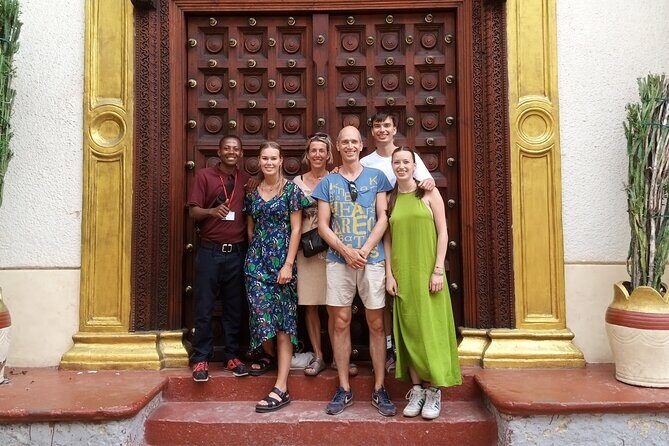
This is a smart “greatest hits with meaning” walk. Stone Town is a UNESCO World Heritage Site, but it’s also a place where people live and work, so wandering alone can turn into a lot of random turning and not enough understanding. With a guide, you get the thread that ties the doors, forts, churches, bazaars, and museums into one story.
The pace is built for short attention spans and real walking time: the tour runs about 2 to 3 hours, with quick stops that still leave room to look up, not just watch your feet. You’ll see why Stone Town is famous for its architecture and why its location made it a crossroads for decades and centuries of trade.
Value-wise, the price is reasonable for what you’re paying for: a professional guide plus the chance to cover several key sights without juggling tickets and transport across town. And since it’s private for your group, you’re not stuck waiting on other people’s photo habits.
You can also read our reviews of more walking tours in Zanzibar



Where the tour starts in Forodhani (and how to avoid timing stress)

The tour meets at Forodhani, Zanzibar, Tanzania and ends back there. That matters because Stone Town streets can be confusing, and returning to your starting point makes the whole outing feel simpler.
Pick-up is available from Stone Town hotels—you just need to request it and message in advance. If you’re staying outside Stone Town or you’re trying to squeeze in a tight itinerary on Zanzibar, this pick-up option can save you time and energy.
Also: it’s sold as a mobile ticket experience, so have your phone ready and your booking confirmation handy. If you’re the type who likes a buffer, aim to arrive a few minutes early at Forodhani so your guide can start cleanly.
Stop-by-stop: Stone Town streets, carved doors, and UNESCO context
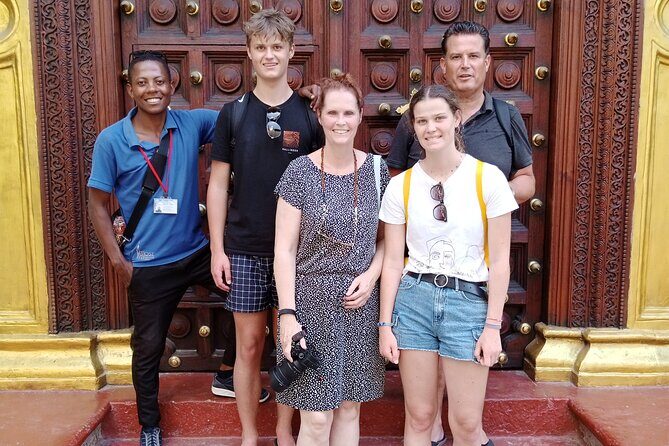
Stop 1: Stone Town Old Town
This is the foundation stop. Your guide orients you to the historical center of Zanzibar City—what it was as a trading hub and how that role shaped everything around you. Stone Town’s story includes spice and silk trade, plus connections to the slave trade routes that influenced the city for over a millennium. That long timeline is why Stone Town feels layered: you’re not just seeing old buildings; you’re seeing traces of repeated contact.
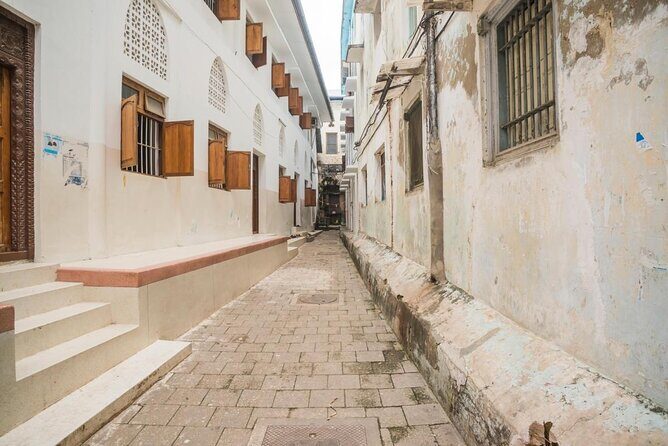
You’ll also hear why this town is one of the few ancient cities left in Africa that still feels like itself. Visually, expect old colonial buildings and intricately carved doors that reflect Zanzibari craftsmanship. The sensory side is huge too: sea smells, perfumes, and the call to prayer from minarets are part of what makes these streets come alive.
Drawback to watch for: because Stone Town is active and your senses will be switching constantly, it helps if you wear comfortable shoes and keep your expectations realistic. It’s a walking tour, not a slow museum visit.
Stop 2: Old Fort (Ngome Kongwe)
Next comes one of the most historically loaded structures in Stone Town. The Old Fort is the oldest stone building in Stone Town, dating to around 1560. Your guide connects the fort to Zanzibar’s political story—especially the period when the Yaarub expelled the Portuguese from the island after the Portuguese captured Mombasa, which is described as effectively ending Portuguese colonialism in that process.
You’ll also get a sense of the earlier Portuguese occupation and what came after, including the moment when Oman took over in 1698. Even if you’re not a history buff, this stop helps you understand why certain power centers and building styles made sense in Zanzibar at different times.
It’s scheduled for about 40 minutes, so it’s not rushed. Admission at this stop is listed as free, which is a nice plus.
You can also read our reviews of more historical tours in Zanzibar




Old politics to real streets: Forodhani Gardens and Darajani Bazaar

Stop 3: Forodhani Gardens and the street-food moment
Forodhani Gardens is where you feel the island’s rhythm after sunset. The park gets busy when tourists and locals gather at the street food market in the main square. This is the part of the tour where history doesn’t disappear—it changes forms into what people eat and how they socialize.
Expect a food lineup like grilled seafood, samoosa, cassava, and potatoes. You’ll also hear about Kiswahili and Zanzibari dishes as part of everyday culture, not just a snack stop. The scheduled time is about 30 minutes, which usually works well because you can browse and decide what to try without feeling trapped.
One practical note: the tour listing says food isn’t included. So treat this as a great chance to budget for a meal or at least a couple of bites.
Stop 4: Darajani Bazaar
Darajani Bazaar is the other side of Zanzibar life: commerce, crafts, and ingredients moving through the day. Your guide points out what’s worth noticing—fresh produce, spices, seafood, clothing, and crafts—so the market doesn’t feel like a chaotic blur.
This stop is about 18 minutes, so you won’t have time to do full shopping. But you will get enough to understand what you’re looking at, and you can interact with vendors if you want.
If you’re sensitive to noise or crowding, pace yourself here. Busy markets are part of the experience, not a detour.
Museums, sultans, and a global musician with Zanzibar roots

Stop 5: People’s Palace Museum
The People’s Palace Museum focuses on the Sultan’s residence and what it represents. You’ll learn about the royal past and cultural heritage through artifacts and exhibits. The tour also notes that interactive elements like traditional music or craft demonstrations may happen, depending on what’s available during your visit.
This is scheduled for about 18 minutes, which makes it more of a guided orientation than a deep museum session. Still, it’s valuable because it gives you a framework. After this stop, the other sights make more sense, especially when you’re thinking about who ruled, who traded, and how culture was organized.
Admission for this stop is listed as free.
Stop 6: Christ Church Cathedral (the former slave market site)
This stop turns the emotional temperature down. The guide takes you to the spot where the slave market was, and where the church stands today. It’s one of those places where you learn without needing lots of extra explanation, because the physical reminder forces the story into the foreground.
The tour schedule lists admission here as not included, and the stop is about 18 minutes. Plan for that extra entrance cost so you don’t get surprised when you reach the check point.
This is the moment where you’ll want to slow down mentally. If you prefer light, carefree sightseeing, this may not be the best match. If you want understanding—even when it’s uncomfortable—this stop is a key part of what makes the tour worth it.
Stop 7: Freddie Mercury Museum (Zanzibar to Queen)
The final stop brings Zanzibar into pop culture. The Freddie Mercury Museum covers his life and legacy, with personal items, memorabilia, and artifacts connected to his career and Zanzibari heritage. You’ll also hear how Zanzibar connects to his global path with Queen and what his impact meant for music and culture.
Like Christ Church Cathedral, admission for this stop is listed as not included. It’s scheduled for about 18 minutes, so you’ll likely come away with a clear snapshot rather than a full-scale exhibit experience.
If you’re a music fan, this is a fun way to end a heavy day without losing the Zanzibar connection.
Price, tickets, and budgeting without surprises
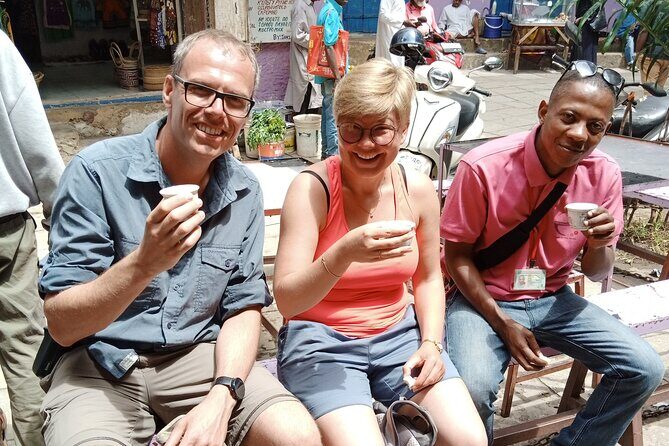
The tour costs $25 per person and runs with a professional guide. Hotel pick-up within Stone Town is included if you request it ahead of time, which improves the value a lot because you won’t need to figure out how to get everyone to Forodhani efficiently.
What’s not included is important: the listing says there’s an entrance fee of $5 USD per person. Also, food and drinks aren’t included. That matters because at Forodhani and in the bazaar area, you’ll see plenty you might want to try, but you’ll need cash or card options that match what vendors accept.
Tips are also not included. If your guide does a good job pacing you and answering questions, tipping is usually appreciated—just budget for it so it doesn’t feel like an afterthought.
One more thing: it’s booked on average 13 days in advance, so if you’re traveling around a busy holiday period, booking earlier is a safer move.
Should you book this Stone Town Historical Walking Tour?
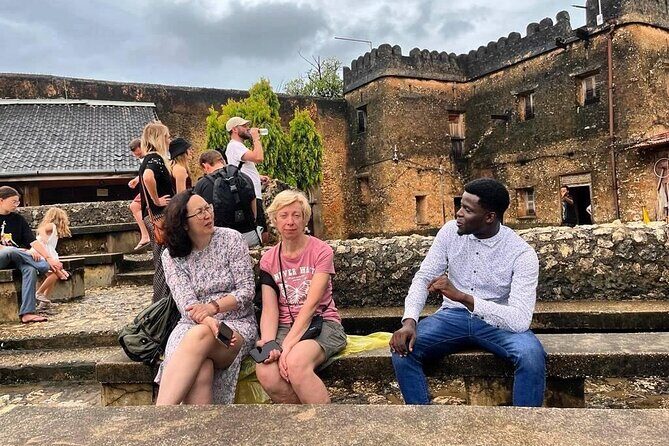
Book it if you want a guided overview that connects architecture, trade history, and everyday Zanzibar life in a few hours. This is especially good if you like structure—knowing what you’re looking at—while still getting real places like Forodhani Gardens and Darajani Bazaar.
Skip it or adjust your expectations if you only want museums or only want light sightseeing. Two stops relate directly to slavery and colonial-era history, and while the tour framework is respectful, it’s still heavy subject matter. Also, because a couple of key admissions aren’t included, make sure you’re comfortable adding the entrance fee to your budget.
If you’re short on time in Stone Town and you want a plan that feels more meaningful than aimless wandering, this walking tour is a solid choice.
FAQ

Where does the Stone Town walking tour start and end?
The tour starts at Forodhani, Zanzibar, Tanzania and ends back at the same meeting point.
How long is the tour?
It’s scheduled for about 2 to 3 hours.
Is pick-up included?
Yes, pick-up from Stone Town hotels is included, but you need to request it in advance by messaging.
Do I need to buy tickets separately?
Some admissions are free, but there is an entrance fee of $5 USD per person listed as not included. Also, admission for Christ Church Cathedral and the Freddie Mercury Museum is listed as not included.
Is there food during the tour?
Food and drink are not included. Stops include market and street-food areas, so you can buy what you want on-site.
Is this tour private?
Yes. It’s listed as private, meaning only your group participates.
Do I get a mobile ticket?
Yes. The experience provides a mobile ticket.
Is free cancellation available?
Yes, you can cancel for a full refund if you cancel at least 24 hours in advance.
How far in advance should I book?
The tour is on average booked about 13 days in advance, so booking ahead is a good idea.