REVIEW · ZANZIBAR
Zanzibar Stone Town Tour: Explore Rich History and Hidden Wonders
Book on Viator →Operated by Safe Zanzibar Tour Guide · Bookable on Viator
Stone Town has a way of sticking with you. This tour mixes street-level sights with the kind of stories that help the UNESCO site make sense fast. You get a clear plan for a short visit, with time to ask questions and see the parts of Stone Town people actually use.
I really like the local guide approach, and in one review the guide Seif stood out for clear communication before arrival and a follow-up to confirm transport. I also love how the route balances serious sites with lighter stops like Forodhani Gardens and the Freddie Mercury childhood-history stop.
One thing to think about: a couple of key attractions have admission not included (and there’s a short Tanzanite stop), so your final spend may run a bit higher than the headline price.
In This Review
- Key things to know before you go
- Why this Zanzibar Stone Town tour works in 2–3 hours
- House of Wonders: your meeting point and the start of the story
- Old Slave Market and the Anglican Cathedral: history you should treat carefully
- Ngome Kongwe (Old Fort): the oldest building, from defense to community
- Forodhani Gardens: where the waterfront changes in the evening
- Darajani Bazaar: spices, produce, and why markets are more than shopping
- House of Wonders to Freddie Mercury: music history plus a quick local pulse
- Freddie Mercury Museum stop
- Jaws Corner quick stop
- The David Livingstone preservation stop: a small moment with big context
- Tanzanite shop: a quick Tanzania-only souvenir moment
- Price and value: what you pay for, what costs extra, and what you get
- Who this tour suits best (and who might want a different plan)
- Should you book the Zanzibar Stone Town Tour?
- FAQ
- How long is the Zanzibar Stone Town tour?
- What is the meeting point for the tour?
- Where does the tour end?
- Is pickup included?
- Is the tour private?
- Do I need to buy tickets for every stop?
- Is the tour ticket mobile?
- How much does it cost?
- How early should I book?
- What is the cancellation policy?
Key things to know before you go
- Short and walkable: plan on about 2 to 3 hours on foot inside Stone Town.
- A mix of moods: memorial history, fort defenses, street food, music connections, and a local gathering corner.
- Some entries cost extra: the former slave market and the Freddie Mercury Museum aren’t included.
- Guide-led meaning, not just photos: the tour focuses on why items and places matter in daily Zanzibari life.
- Pickup only inside Stone Town: it’s convenient if you’re staying within the Stone Town area.
- Shopping is optional: there’s time for a Tanzanite shop and other shopping opportunities without it dominating the whole tour.
Why this Zanzibar Stone Town tour works in 2–3 hours
If your Zanzibar time is tight, Stone Town can feel like a lot: narrow lanes, sudden views, and too many “see this” lists. This tour is built for control. You move through a set sequence of major waypoints, and your guide connects the dots so you’re not just passing buildings—you’re learning what each place is for and why it matters.
It’s also structured in a way that helps real life. You’re not stuck staring at one museum wall for hours. Instead, you get short, purposeful stops that let you reset as you go. That rhythm is especially helpful in Stone Town, where you can feel heat and crowds shift from one corner to the next.
Because it’s private for your group, you can ask questions and shape the pace slightly. For families, groups with mixed interests, or anyone who wants to feel oriented quickly, that private format is a real quality-of-life upgrade.
You can also read our reviews of more historical tours in Zanzibar


House of Wonders: your meeting point and the start of the story
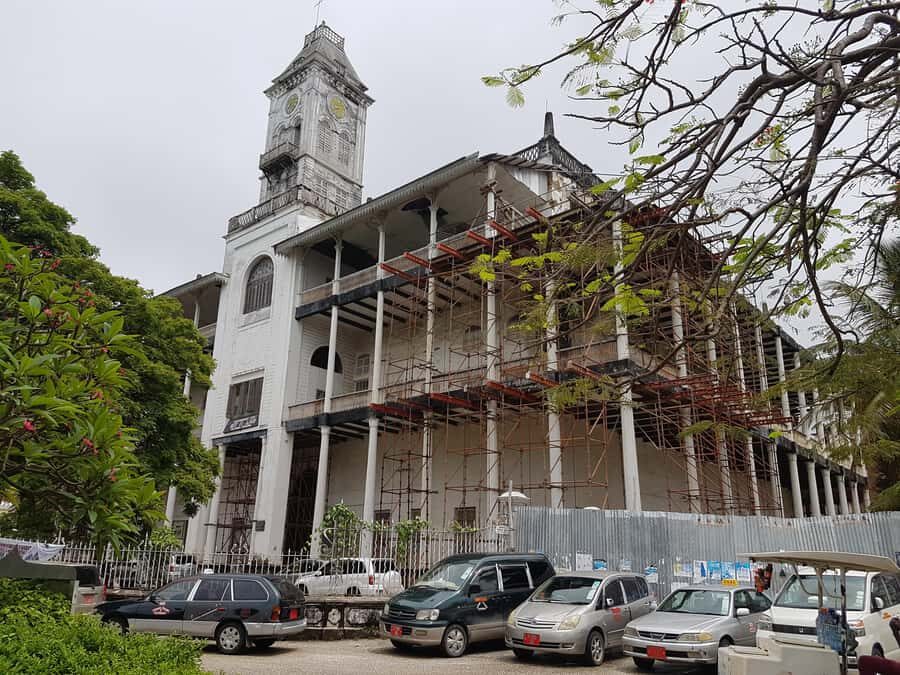
You’ll start at the House of Wonders—the biggest, most eye-catching building in Stone Town—so you’re not hunting for a random street corner at the beginning. The guide uses this stop to set context: it’s known as a former Sultan’s ceremonial palace, and today it’s used as a museum space showing Swahili and Zanzibari culture.
Even if you only spend a short stretch here, it’s a smart first move. When you understand the scale and role of one landmark building, the rest of the town feels less like a maze and more like a planned system of neighborhoods, trade, and power.
Practical note: entry here is listed as free, so you’re not adding a ticket cost before you even get going.
Old Slave Market and the Anglican Cathedral: history you should treat carefully
This is the stop that carries the most weight. You’ll visit the Former Slave Market area and hear the story of Zanzibar’s slave-trade past—painful history, but part of the island’s record. The guide focuses on what you can see on-site: a memorial and underground chambers where enslaved people were held.
It’s also a reminder that Stone Town isn’t only about architecture and romance. Some corners are meant for remembrance.
A key consideration: this stop is 40 minutes and the admission ticket is not included. That means you should expect extra cost if you want to go inside the relevant spaces. It also means you’ll want to dress and behave respectfully—this isn’t a quick photo-op stop.
Ngome Kongwe (Old Fort): the oldest building, from defense to community
Next comes Ngome Kongwe, Zanzibar’s oldest building in this area. The Old Fort gives you a different angle on Stone Town: protection against Portuguese and Omani forces. In other words, it’s architecture shaped by conflict and strategy.
What I like about this stop is that it’s not stuck in a past-only frame. The fort is described today as a cultural hub—often hosting local performances and craft market activity. Even for a short visit, that can help you picture the fort not just as a relic but as a living part of the town.
Time here is brief—about 15 minutes—but it’s listed as admission included, so you won’t have to hunt for extra tickets mid-tour.
Forodhani Gardens: where the waterfront changes in the evening
Forodhani Gardens is one of those Stone Town places where the timing matters. The plan here includes a 30-minute walk with an emphasis on the evening food scene. This is when the food market takes off, and you’ll be introduced to iconic street foods—think fresh seafood and Zanzibar pizza.
Why this stop is such good value: it’s not just “eat something.” Your guide connects what you’re tasting (or seeing) to everyday Zanzibari culture. That gives you context rather than just a snack.
This stop is marked as free admission, which is helpful if you’re trying to keep the total cost under control.
Tip for your experience: if you’re sensitive to strong smells or busy crowd flow, it helps to move with the guide and follow their pacing. Forodhani can get lively, and going with local timing is easier than trying to “pick your own moment” when you’re only in town for a short visit.






Darajani Bazaar: spices, produce, and why markets are more than shopping
After the waterfront, the tour moves you inland to Darajani Bazaar. This is a 20-minute stop where the focus is on local life: stalls selling fresh produce and spices. Your guide explains the significance of various items in Zanzibari cuisine and culture, which makes this more than a quick browse.
This is one of the stops that helps you understand Zanzibar as an island of trade. Spices aren’t just ingredients here—they’re part of identity. Seeing them in the market setting makes that relationship feel real.
Darajani Bazaar is listed with admission included, so you don’t need to budget a separate entry fee for this part of the route.
House of Wonders to Freddie Mercury: music history plus a quick local pulse
Stone Town has a surprising mix of global pop culture and local daily rhythm, and this tour touches both.
Freddie Mercury Museum stop
You’ll visit the Freddie Mercury Museum, connected to the fact that Freddie Mercury was born in Zanzibar. The guide shares stories about his early life on the island before he became a global rock icon. The time here is about 15 minutes, and admission is not included.
If you’re a fan, this is a satisfying way to add a recognizable thread to a town that can otherwise feel purely historical. If you’re not a fan, it still works as a human-story stop because it links a world-famous figure to a real place and time.
Jaws Corner quick stop
Then there’s Jaws Corner, a well-known central spot where locals gather and exchange ideas. It’s short—about 7 minutes—and admission is free.
This stop is a clever breather. After museums and markets, you get a moment to observe how people move and talk. It helps you reset your brain before the next heavier-history element.
The David Livingstone preservation stop: a small moment with big context
The tour includes a stop at the place where David Livingstone’s body was preserved before it was transported to London for burial. It’s not described as a long visit, but it’s the kind of Stone Town detail that makes the city feel linked to wider world history.
If you like the “links across time” side of travel—how one place affects another across continents—this short stop gives you that feeling without demanding extra hours.
Tanzanite shop: a quick Tanzania-only souvenir moment
At the end of the walking route, you’ll get a short visit to a Tanzanite shop. Tanzanite is listed as a mineral found only in Tanzania, and the tour presents it as a once-in-a-lifetime opportunity to hold a rare blue-purple stone.
Admission is marked free, and the time is brief—around 4 minutes. Still, shopping stops can swing your budget and attention, so it helps to go in with intent. If you want to browse or ask questions, this stop is quick enough that it won’t derail the rest of your day.
If you don’t want to buy anything, you can still use the visit to see the stone and learn what makes it special, then move on.
Price and value: what you pay for, what costs extra, and what you get
The headline price is $20.88 per person, for a tour that runs about 2 to 3 hours. That’s not a “sit on a bus” price—it covers a local professional guide and a walk designed to hit the town’s key spots efficiently.
What’s included:
- Professional local guide
- Pickup from Stonetown areas only
- Extra time
- Shopping (option )
- Mobile ticket
- A private-group setup where only your group participates
What’s not included:
- Pickup outside Stone Town
- Admission tickets not included for specific stops (notably the former slave market and the Freddie Mercury Museum)
- Any purchases you make at shops (like Tanzanite), which are naturally separate from the tour fee
Here’s how I’d think about value. You’re paying for guided meaning and time efficiency. If you land in Stone Town without context, you can waste hours wandering. This route helps you avoid that by taking you to the places with stories attached and by timing stops so you can fit them into a short afternoon.
Also, some entries are free (like Forodhani Gardens and the House of Wonders) and some are included (Old Fort and Darajani Bazaar), which helps keep the overall math closer to the base price.
Who this tour suits best (and who might want a different plan)
This is a strong match if:
- You want a first-time Stone Town orientation with real cultural context.
- Your group includes mixed interests—history, markets, street food, and a pop-culture connection to Freddie Mercury.
- You like a guide who communicates clearly. In one highlighted review, Seif was dependable and coordinated ahead of time, then checked close to the tour start to make sure transport was sorted.
You might want a different setup if:
- You’re mainly interested in long museum time or independent wandering with no structure.
- You dislike shopping stops at all. The Tanzanite shop is brief, but it is part of the route.
- You want every single entry included. Two notable places listed here have admission not included.
Should you book the Zanzibar Stone Town Tour?
I’d book it if you want a practical way to see Stone Town without getting lost in decisions. The route is paced for short attention spans and practical curiosity. You’ll get serious context at the former slave market area, learn how defenses shaped the city at the Old Fort, and then enjoy the more everyday side through markets, Forodhani food time, and local gathering at Jaws Corner.
If your main goal is to spend a full day doing fewer places at deeper length, you may prefer a longer, slower tour. But for a 2–3 hour window, this one hits the right balance of meaning and movement.
FAQ
How long is the Zanzibar Stone Town tour?
It lasts about 2 to 3 hours.
What is the meeting point for the tour?
The start point is the House of Wonders at R5QQ+JR, Sokoku St, Zanzibar, Tanzania.
Where does the tour end?
It ends back at the meeting point.
Is pickup included?
Pickup is included only from areas within Stone Town. Pickup from outside Stone Town is not included.
Is the tour private?
Yes. Only your group participates.
Do I need to buy tickets for every stop?
Not all stops require tickets. The old slave market area and the Freddie Mercury Museum have admission not included, while the Old Fort and Darajani Bazaar are listed as admission included. Forodhani Gardens, House of Wonders, Jaws Corner, and the Tanzanite shop are listed as free admission.
Is the tour ticket mobile?
Yes, it uses a mobile ticket.
How much does it cost?
The price is listed as $20.88 per person.
How early should I book?
On average, this tour is booked 8 days in advance.
What is the cancellation policy?
You can cancel for free up to 24 hours in advance for a full refund. If you cancel less than 24 hours before the start time, the amount paid is not refunded.