REVIEW · ZANZIBAR
Walking City Tour in Zanzibar Island
Book on Viator →Operated by Juma Amir Tour Guide Zanzibar · Bookable on Viator
Stone Town can feel like a puzzle. This guided walk helps you put the pieces together fast, with a private guide who maps the maze of streets into a clear route through major landmarks. I like that it pairs big-name sights like the Freddie Mercury House with place-specific details, so you understand what you’re seeing instead of just collecting photos.
Two things make this tour especially practical. You get bottled water for the walk, and the route is timed so you spend meaningful moments at each stop rather than sprinting from one photo spot to the next. One thing to keep in mind: some entrances are not included, including the Freddie Mercury Museum, so budget a little extra if you want to go inside.
The overall vibe is calm but focused. You’re given structure in an area where it’s easy to lose track, and you also get a bit of freedom to ask questions and adjust your pace with your guide—useful in Stone Town’s tight lanes.
In This Review
- Key highlights worth knowing
- Walking City Tour in Zanzibar: the 2.5-hour payoff
- Price and value: what $33 buys you (and what it doesn’t)
- Where the tour starts: Forodhani area and an easy end back
- Stop 1: Stone Town streets, UNESCO status, and the Zanzibar doors
- Stop 2: Anglican Cathedral and the old slave market area
- Stop 3: Freddie Mercury House and what to expect at the museum
- Stop 4: Darajani Bazaar—market energy with context
- Stop 5: Old Fort (Ngome Kongwe) and the builder question
- Stop 6: Tippu Tip’s House and the story behind Hemed bin Mohammed
- How the solo-friendliness shows up in real life
- Who should book this walking tour
- Tips to make your Stone Town walk easier
- Should you book it?
- FAQ
- How long is the Walking City Tour in Zanzibar Island?
- How much does it cost?
- Is the tour private?
- Where does the tour start and end?
- What is included in the price?
- Is the Freddie Mercury Museum admission included?
- Is the Old Slave Market stop included in the tour fee?
- Does the tour use a mobile ticket?
- What are the tour opening hours?
- What is the cancellation policy?
Key highlights worth knowing
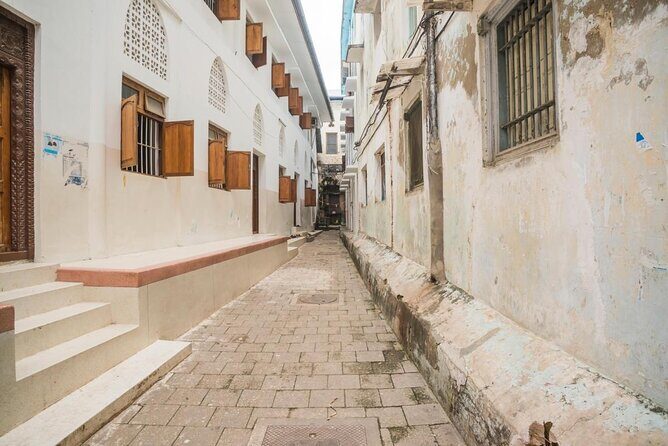
- UNESCO Stone Town, explained in plain English: limestone buildings, the mix of cultures, and what makes the area significant
- Anglican Cathedral / old slave market focus: a short stop with context and the right amount of time
- Freddie Mercury House without pressure: you can see it quickly, and the museum is optional for extra cost
- Darajani Bazaar at market pace: brief but purposeful, with background on what the bazaar is called and why it matters
- Old Fort (Ngome Kongwe): you’ll learn who built it and what the fort represents locally
- Tippu Tip’s House story: history tied to Hemed bin Mohammed and the slave trade network
Walking City Tour in Zanzibar: the 2.5-hour payoff
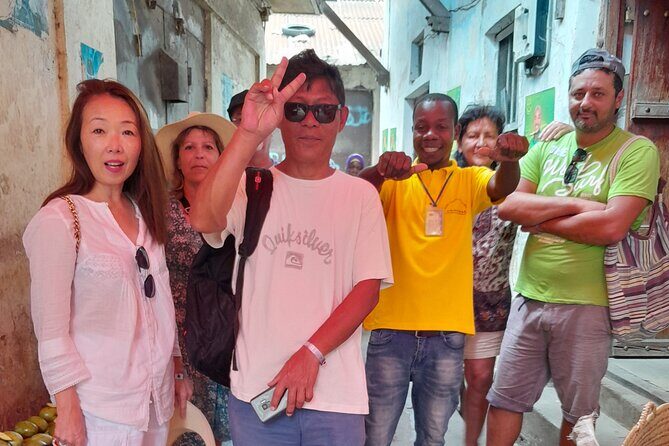
This is a 2 hours 30 minutes walking tour designed for people who want the Stone Town core without getting swallowed by side streets. You’re not just passing monuments. The guide’s job is to connect the geography—where things sit and how the lanes link up—with the human stories behind them.
Because it’s a private experience, it also works well if you’re traveling solo or you just prefer a quieter pace. You can ask questions as you go, and you can slow down for a door detail, a building facade, or a market scene when something catches your eye.
The route is paced for a half-day feel. That matters in Stone Town, where a “quick walk” can easily turn into an hour-long detour. Here, you get a planned sequence of stops that still leaves enough room to linger briefly.
You can also read our reviews of more walking tours in Zanzibar



Price and value: what $33 buys you (and what it doesn’t)

At $33 per person, you’re paying for a guided route through the places most visitors cluster around, plus key admission support. What you actually get for the money is pretty clear:
- bottled water
- a professional Zanzibar guide
- entrance fees for the old slave market area
What you don’t automatically get:
- the Freddie Mercury Museum admission (it’s not included)
- personal expenses
So the value depends on your priorities. If you’re mainly there to understand Stone Town and see the big historic sites, this price is reasonable for a guided private walk with water and at least one major paid entrance covered. If you know you want to spend time inside the Freddie Mercury Museum, treat that as an add-on cost rather than a surprise.
Also, the tour uses a mobile ticket, which is handy when your plans shift by a few hours.
Where the tour starts: Forodhani area and an easy end back
Your meeting point is listed as Cape Town Fish Market Zanzibar at The Forodhani of Zanzibar. That’s a convenient place to connect to because it’s right in the Stone Town orbit where lots of people are already hanging out.
The tour ends back at the meeting point, which is a small detail but a big relief. Stone Town doesn’t feel forgiving if you’re planning your next stop afterward. Ending where you started means you’re not stuck figuring out transport or direction while you’re tired.
Stop 1: Stone Town streets, UNESCO status, and the Zanzibar doors

The tour begins with an introduction to Stone Town itself—its street pattern, its scale, and why UNESCO put it on the World Heritage list. You’ll hear what makes it special: over 2,000 limestone buildings across about 50 hectares, shaped by generations of trade and migration.
The guide also points out how the architecture reflects mixed influences—African, Arab, Indian, Persian, and European. That matters because Stone Town can look like it has random styles thrown together. With the right framing, you start seeing the logic: different groups contributed different building habits, and the results show up in doors, balconies, and building proportions.
You’ll also get a tour-style orientation to major sights you’ll reference later. This stop includes pointers to the Anglican Cathedral, the House of Wonders, and the Freddy Mercury House area, plus the buzz around Darajani Market and the nearby Old Fort. The “free admission” note here is useful: you’re mostly walking and learning, not paying your way into a building at the start.
A practical downside? This first stop is wide-ranging, so if you’re the type who likes to go super deep into one place, you may want to lean on your guide for extra explanations during the walk rather than expecting one building to dominate.
Stop 2: Anglican Cathedral and the old slave market area

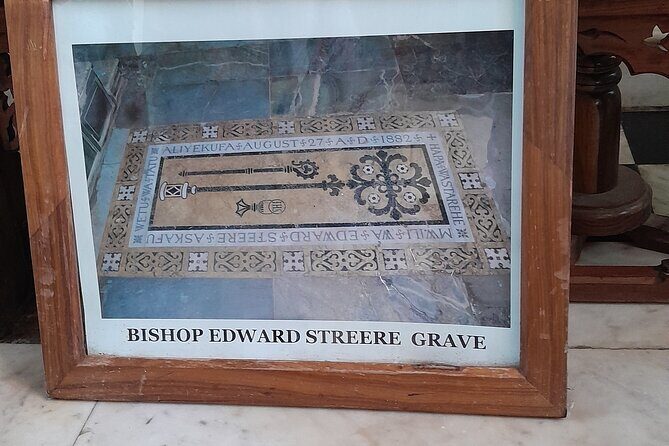
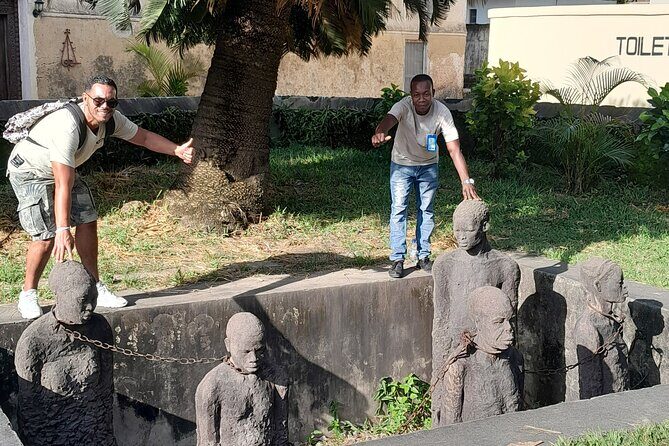
Stop 2 is centered on the Old Slave Market / Anglican Cathedral area. This is the tour’s most solemn zone, and it’s handled as a focused visit with admission included.
The value of this stop isn’t just that it’s a famous name. It’s that the guide connects the building and location to what happened there and how that history became part of Stone Town’s identity. You’ll also see how this area links to other major landmarks like the House of Wonders and the Old Fort, so it doesn’t feel like a one-off stop.
Time here is about 30 minutes, which is long enough to absorb the essentials without turning it into an all-day history class. If you prefer learning with breaks, this pacing fits.
One consideration: because the topic is heavy, it helps if you’re emotionally ready for it. If you’d rather keep the tone lighter, this tour still has market and pop-culture stops later, but the middle portion won’t be skipped.
You can also read our reviews of more city tours in Zanzibar






Stop 3: Freddie Mercury House and what to expect at the museum
Stop 3 focuses on the Freddie Mercury Museum and the related Freddie Mercury House area. The short version: you get time to understand Mercury’s family story and the influences that shaped him. You don’t just stop for a photo.
Duration is about 15 minutes, and the admission for the museum is not included. That means you’ll need to decide on the spot whether you want to spend extra money to go inside and how long you want to stay.
This is one reason I like this tour for modern travelers. It gives you the pop-culture anchor without letting it take over the entire afternoon. Stone Town is the main course; Mercury is one of the flavors.
If you’re a die-hard fan and you plan to spend serious time reading exhibits, you might find 15 minutes short. But if you want a brief, guided context and then to keep moving through Stone Town, the timing works well.
Stop 4: Darajani Bazaar—market energy with context
Stop 4 is Darajani Bazaar, timed at about 15 minutes with admission included. This isn’t a long shopping session. It’s more like a guided walk-through where you learn what the bazaar is called and why it matters in local commerce.
Why it’s worth doing with a guide: markets in Stone Town can be loud, crowded, and visually overwhelming. A guide helps you focus on the meaning behind what you’re seeing—how trade patterns, daily life, and history overlap in one place.
You also get back the bigger picture introduced earlier. When the guide has already framed the city’s cultural mix, Darajani becomes more than “where people buy things.” It turns into a living example of the city’s history in action.
If you’re hoping to buy souvenirs for hours, shorten your expectations here. This stop is about understanding and seeing, not browsing until your arm is tired.
Stop 5: Old Fort (Ngome Kongwe) and the builder question

Stop 5 is the Old Fort (Ngome Kongwe). It’s listed as 15 minutes and free admission, and the guide focuses on two practical questions: what the fort’s history is and who built it.
That’s a great way to handle a fort stop. Without guidance, forts can feel like “big rocks with views.” With a builder story and timeline context, you start seeing why the fort matters to Stone Town’s power and trade history.
A quick fort note that helps you enjoy it more: try to connect what you learn here back to earlier stops. Forts, cathedral areas, and market streets all relate to how Zanzibar’s society organized itself—who controlled what, and why certain areas gained importance.
Stop 6: Tippu Tip’s House and the story behind Hemed bin Mohammed
The final stop is Tippu Tip’s House, timed at about 15 minutes with admission included. The guide’s focus is on Tippu Tip—also known as Hemed bin Mohammed—and his involvement in the slave trade in East Africa.
This isn’t presented as distant tragedy. It’s explained as part of the slave trade network that moved people to Zanzibar Island. In a tour with multiple themes—UNESCO architecture, the slave market area, and market life—this stop adds a specific named thread to the story.
Because the stop is short, you won’t leave with every detail you’d want for a full research project. But you will leave with a clearer sense of how individual figures and broader systems connect.
How the solo-friendliness shows up in real life
One of the most useful signals in the provided feedback is how safe the experience felt for a solo female traveler. The guide named Juma Amir made a strong impression for that reason, especially on an afternoon/evening timing.
That matters because Stone Town can look charming in daylight and feel confusing at night. A guide who knows how to navigate lanes efficiently—and who can keep you oriented—turns a potentially stressful walk into a confident one.
It also helps that Juma Amir is described as flexible. So if something catches your attention early, you’re more likely to get a small adjustment rather than being forced into a rigid script.
Who should book this walking tour
This is a good match if you:
- want a private way to see Stone Town without the stress of navigation
- care about architecture and street-level context, not just landmark checkboxes
- like having time for major stops without spending a full day running around
- are a solo traveler and value a guide’s presence and local know-how
It’s also a decent fit if you’re mixing historic sites with a bit of modern pop-culture, because Mercury is included—but not at the expense of the city’s core.
Think twice if:
- you want museum-style depth at multiple venues (the Freddie Mercury Museum visit is only short, and admission is extra)
- you hate anything heavy (the Anglican Cathedral / old slave market area is central to the tour)
Tips to make your Stone Town walk easier
Here are a few practical moves that pair well with this kind of route:
- Wear shoes you trust. Stone Town streets are not designed for fancy footwear.
- Keep your phone charged. You’ll want to take quick notes as the guide connects landmarks.
- If you’re unsure about the Freddie Mercury Museum cost, decide before you reach Stop 3 so you’re not pressured in the moment.
- Bring a small bag that stays secure in busy market areas.
And one more: when the guide mentions a detail about a building or door, pause for 10 seconds. Those micro-moments are often what make the whole tour feel coherent later.
Should you book it?
I’d book this tour if you want a structured Stone Town experience that covers the big historic anchors and still leaves you feeling oriented. At $33 with bottled water and entrance support for the old slave market area, it’s a solid value for a private 2.5-hour walk. The guide presence is a big part of the payoff, and the mention of Juma Amir plus the strong safety note for a solo traveler is reassuring.
I’d skip or at least rethink if you’re chasing deep museum time. This tour gives you the essential links between sites, but it’s not built for long indoor sessions. If you’re the type who wants to read every exhibit, plan extra time separately.
If you’re visiting Stone Town and you want to come away with understanding—not just screenshots—this is a smart, efficient choice.
FAQ
How long is the Walking City Tour in Zanzibar Island?
The tour lasts about 2 hours 30 minutes.
How much does it cost?
It costs $33.00 per person.
Is the tour private?
Yes. It’s a private tour/activity, and only your group participates.
Where does the tour start and end?
It starts at Cape Town Fish Market Zanzibar, The Forodhani of Zanzibar, Zanzibar, Tanzania, and ends back at the meeting point.
What is included in the price?
The tour includes bottled water, a professional tour guide on Zanzibar, and Old Slave Market entrance fees.
Is the Freddie Mercury Museum admission included?
No. Admission is not included for the Freddie Mercury Museum.
Is the Old Slave Market stop included in the tour fee?
Yes. Old Slave Market/Anglican Cathedral entrance fees are included.
Does the tour use a mobile ticket?
Yes. It uses a mobile ticket.
What are the tour opening hours?
For the dates listed (05/22/2023 – 06/17/2026), it shows Monday through Sunday from 12:00 AM to 11:59 PM.
What is the cancellation policy?
You can cancel for free up to 24 hours in advance for a full refund. If you cancel less than 24 hours before the start time, you do not receive a refund.