REVIEW · ZANZIBAR
Stone Town Historical Walking Tour
Book on Viator →Operated by Alfa Tours & Safaris · Bookable on Viator
Stone Town makes history walkable. In about 2–3 hours, this walking tour turns Zanzibar’s old streets into a story you can actually follow, from Mj Mpongwe to the places tied to Persians, Portuguese, and the Sultanate of Oman. I like how your professional, certified guide connects the dots between famous landmarks and the darker chapters, including the East Africa slave trade.
One thing to plan for: the meeting spot area around House of Wonders can be under construction, so the Google map point may look odd at first. I’d show up a few minutes early and double-check you’re at the right exact spot on Sokoku St.
In This Review
- Key highlights at a glance
- Stone Town in 2–3 hours: a compact walk with big context
- Finding the House of Wonders meeting spot without stress
- Mj Mpongwe and the cultural mix you’ll actually understand
- Old Fort, Jaws Corner, and Forodhani Garden: photo stops with meaning
- House of Wonders and what to look for when the building isn’t perfect
- Freddie Mercury’s Zanzibar connection: more than a celebrity pit stop
- Darajani Market and the church stops: everyday life meets big influences
- Foodchain Garden and Jaws Corner: the modern rhythm of Stone Town
- Former slave market site: plan respectfully, budget the USD 5 fee
- Price and logistics: is USD 20 actually good value?
- Who this tour suits best (and who might want something else)
- Smart tips before you go
- Should you book this Stone Town Historical Walking Tour?
- FAQ
- How long is the Stone Town Historical Walking Tour?
- Where does the tour start?
- Is this tour private?
- What is included in the price?
- Are there any entrance fees?
- What happens if the weather is bad?
- Can I cancel for free?
Key highlights at a glance
- Certified guide, private pacing for your group (you won’t get mixed into a random crowd)
- A tight loop of Stone Town landmarks like Old Fort, Jaws Corner, and Forodhani Garden
- Freddie Mercury’s Zanzibar connection via his former home stop
- Market time and church visits including Anglican and Catholic churches
- Former slave market site included in the route, with an extra USD 5 entrance fee
Stone Town in 2–3 hours: a compact walk with big context
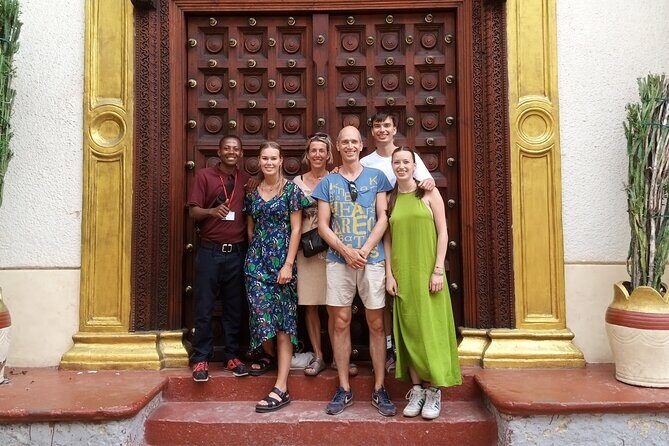
If you’re short on time in Zanzibar, this tour is built for you. You get a full sweep of the “you need to see this” Stone Town locations without feeling like you’re sprinting through them. The route is designed to move in a logical order, so the story stays coherent: how people lived here, who influenced Zanzibar, and how power and trade shaped the city.
What I like most is the balance. Yes, you’ll see headline stops like Freddie Mercury’s former home. But you’ll also get the context that makes those sights make sense in the bigger picture, including the history tied to the slave trade in East Africa and Stone Town. Your guide ties names, architecture, and street corners together so you’re not just taking photos—you’re learning how to read the city.
Is it a “slow museum day”? No. It’s a walking tour with a time box. If you want to linger for long stretches inside buildings, you might wish you had an extra hour. Still, for an introduction to Stone Town, this format is hard to beat.
You can also read our reviews of more walking tours in Zanzibar



Finding the House of Wonders meeting spot without stress

The tour starts at House of Wonders on Sokoku St (the listed map pin is R5QQ+JR). The end point is back at the same place, which is handy because you don’t have to problem-solve your way to a new pickup location.
Because the area can look like a construction zone, don’t treat the surroundings as a “this can’t be right” sign. Instead, focus on the name and street. If you arrive a touch early, you’ll have time to spot your guide and get oriented before the tour begins.
Also, plan to walk from the start point. There’s no transport included—this is a foot route—so you’ll want shoes you trust on uneven pavement and narrow lanes.
Mj Mpongwe and the cultural mix you’ll actually understand
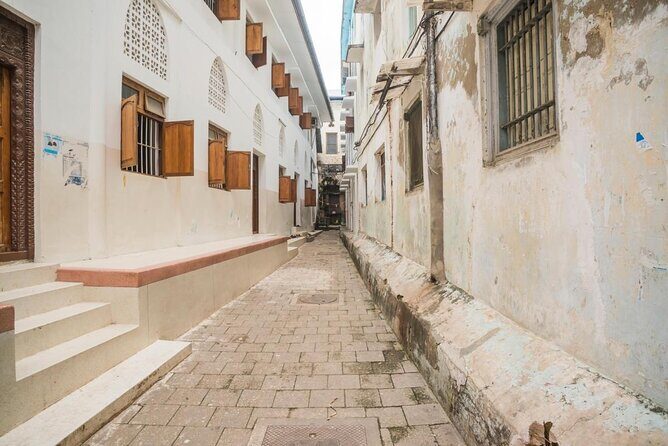
A big draw here is the way the tour explains who shaped Stone Town and how. You’ll spend time in the older parts of the city, including Mj Mpongwe, and you’ll hear stories tied to the original local people as well as influences from Persians, Portuguese, and the Sultanate of Oman.
This is where a guide makes a real difference. Stone Town can feel like it’s all carved doors, coral-stone walls, and winding alleys. A good guide shows you what to look at—subtle hints in style, the logic of the neighborhood, and why certain groups left their mark in daily life and architecture.
If you care about history but don’t want a lecture that puts you to sleep, this approach works. It’s story-led and location-led, so the information lands while you’re standing where it happened.
Old Fort, Jaws Corner, and Forodhani Garden: photo stops with meaning

This tour includes several of the most recognizable “Stone Town icons,” but it doesn’t treat them like random checkboxes.
Old Fort is one of the anchor stops. You’ll see it as part of the city’s strategic story—trade, power, and protection—rather than just as a landmark you pass by. The value here is learning why forts sit where they do and how they relate to the commercial life around them.
Jaws Corner is another place where your guide helps you connect the dots. It’s a named corner in Stone Town’s street network, and your guide uses it as a reference point for the kinds of movement and exchange that shaped the city. Even if you don’t remember every name after the tour, you’ll leave with better city navigation—and that alone is worth it.
Then there’s Forodhani Garden (often spelled Forodhani/Forodhani Garden in tour materials). Think of it as a public-facing stop that shifts from narrow-lane architecture to an area that feels more open and social. Your guide frames it as part of how Stone Town life plays out in public space.
Practical note: some of these areas are very walkable, but some streets can get crowded and tight. If you’re traveling with kids or someone who needs breaks, a private tour is helpful because your guide can slow the route down when needed.
House of Wonders and what to look for when the building isn’t perfect
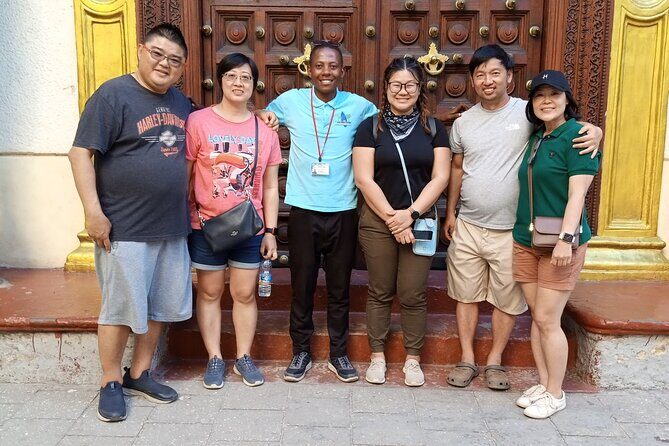
The House of Wonders is both a dramatic landmark and a bit of a reality check. It’s famous, but you should expect the site to look worn and weathered rather than brand-new.
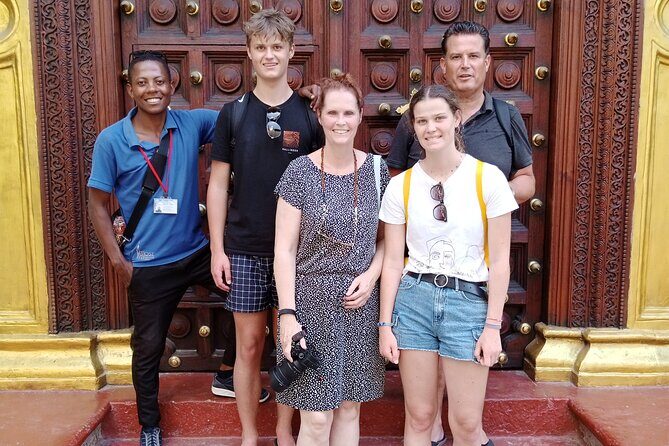
Your guide’s role is to help you see past the current condition and understand why it’s historically important. You’ll likely spend time at the start here, and the stop acts like a “chapter opener” for the rest of the route. If you’re the type who likes to understand what you’re looking at, this helps you avoid that frustrating feeling of taking photos without meaning.
Also, since the tour is a mobile-ticket format, you’ll have your proof ready on your phone. That reduces fiddly paperwork and speeds up check-in at the start.
You can also read our reviews of more historical tours in Zanzibar




Freddie Mercury’s Zanzibar connection: more than a celebrity pit stop
This is one of the most fun stops on the route, and it’s handled in a way that doesn’t feel like a gimmick.
You’ll visit the Freddie Mercury Museum area and specifically the house where Freddie Mercury lived. The tour frames it in context: Zanzibar wasn’t isolated from the wider world, and famous figures intersected with the city through real-life connections.
One useful tip: don’t rush this stop. Even in a short tour, you’ll get more out of it if you pause for a moment, look at the setting, and let your guide connect it to the surrounding Stone Town story. The guide can also help you understand how the city holds onto modern fame alongside older cultural layers.
If you’re a music fan, this is a genuine highlight. If you’re not, it’s still a clear example of how Stone Town’s streets can hold multiple time periods at once.
Darajani Market and the church stops: everyday life meets big influences
This tour includes Darajani Market and visits to both Anglican and Catholic churches. That mix is smart because it shows Stone Town as a living place, not only a heritage site.
At Darajani Market, you’re stepping into a working part of the city. It’s a strong place to learn how commerce shapes everyday movement. You may also have a chance to notice food and local goods. One of the tour’s best “small” moments is that some guides make room for simple local tastes—like fruit such as jackfruit—if your timing and preferences fit.
Then the church stops add a different layer. The presence of Anglican and Catholic churches points to the historical reach of Christian missions and European influence. Your guide uses these sites to explain how outside powers intersected with local life, without turning it into a religion lecture.
If you’re traveling with kids, these stops can break up the architecture-heavy parts nicely. In private format, your guide can keep pacing steady and stop for questions without making you feel like you’re slowing everyone down.
Foodchain Garden and Jaws Corner: the modern rhythm of Stone Town
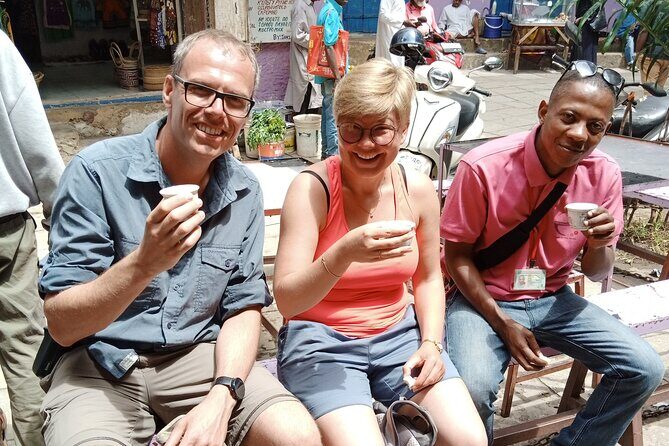
Not every stop on the tour is about old stone and old legends. Foodchain Garden is included, which gives you a brief look at present-day community life and how people gather and eat in the city.
This is useful because Stone Town isn’t frozen in time. You’ll get a sense of how the city’s current rhythm fits over the older streets. It’s also a good place to reset—sit for a minute if you need it, take photos without rushing, and get your bearings for the final stretch.
Combined with the other corners of the tour like Jaws Corner, these stops help you leave with a mental map that feels real, not just theoretical.
Former slave market site: plan respectfully, budget the USD 5 fee
This tour includes the former slave market site, and your guide explains the history of the slave trade in East Africa and Stone Town.
This is the most emotionally heavy part of the route, so I’d treat it with care. Don’t multitask. Take your cues from your guide—listen first, ask questions if you have them, and give yourself a moment before and after to regroup.
There’s one important practical detail: the entrance fee for the former slave market is USD 5 per person, and it’s not included in the tour price. That means the advertised cost is a great starting point, but your final out-of-pocket amount depends on this single fee.
On a personal level, I appreciate that guides in this program will help solve problems in real time when needed—like a solo traveler who hadn’t yet changed money for that fee. It’s a reminder that the tour isn’t only about walking. It’s also about support.
Price and logistics: is USD 20 actually good value?
At USD 20 per person, this tour is priced like an introduction, not a heavy ticketed excursion. What makes it good value is what’s included: a professional & certified tour guide and the core walking route through major Stone Town highlights.
Most stops are handled as part of the tour experience, which is why the listing notes admission is free for the tour itself. The big exception is the USD 5 entrance fee at the former slave market site. So your realistic total is usually close to USD 20 plus that one entry cost.
Another practical plus: the tour is private. For many people, a private guide is worth the money because you can ask questions and move at your pace. That matters in Stone Town, where streets are tight and attention is required to keep everyone together.
Finally, this is the kind of tour that sells out faster than you expect—this one is often booked about 13 days in advance on average. If Stone Town is on your plan, I’d lock in your date early so you can match it to your arrival day.
Who this tour suits best (and who might want something else)
This tour fits best if you want:
- A clear introduction to Stone Town in a limited time window
- A guide who can answer questions while you walk
- A mix of famous stops (Freddie Mercury) and serious context (slave trade history)
- A route that can work for families due to private-group flexibility
If you’re the type who loves spending half a day inside buildings, studying museum labels, and going at your own speed with no time pressure, you might find 2–3 hours tight. In that case, this tour is still useful—but treat it as your orientation day, then return later on your own.
Smart tips before you go
A walking tour means comfort matters. Wear shoes you don’t mind getting a bit dusty, and plan for small uphill moments and uneven paving in older streets.
Bring small cash or be ready to handle the USD 5 entrance fee at the former slave market site. If you prefer to use cards or you tend to rely on mobile payments, check what you can realistically manage before you start.
Also, if you want great photos, ask your guide for moments to pause. Private guides often have the flexibility to help you frame shots and avoid awkward crowd timing.
And if you’re the kind of person who likes shopping, you’ll probably appreciate the guidance on souvenirs. Some guides use the route to point out what’s reasonable to buy and what to skip, so you don’t feel pressured.
Should you book this Stone Town Historical Walking Tour?
Yes—if you’re visiting Stone Town for the first time and you want a guided route that covers both the “wow” stops and the heavier parts with clear explanations. The combination of private tour, a certified guide, and a focused itinerary that hits recognizable landmarks makes this a strong value for USD 20.
I’d skip this only if you have the time (and desire) to do a slower, deeper self-paced day inside museums and buildings. Otherwise, this tour is the kind of start that helps the rest of your Stone Town time click.
FAQ
How long is the Stone Town Historical Walking Tour?
It runs about 2 to 3 hours.
Where does the tour start?
The meeting point is at House of Wonders on Sokoku St, Zanzibar (listed as R5QQ+JR).
Is this tour private?
Yes. Only your group participates.
What is included in the price?
The included item is a professional and certified tour guide.
Are there any entrance fees?
Most of the tour is described as admission ticket free, but the former slave market site has an entrance fee of USD 5 per person that is not included.
What happens if the weather is bad?
The tour requires good weather. If it’s canceled due to poor weather, you’ll be offered a different date or a full refund.
Can I cancel for free?
Yes. You can cancel up to 24 hours in advance for a full refund.