REVIEW · ARUSHA
Private 6-Day Kilimanjaro Climbing via Machame route from Arusha
Book on Viator →Operated by Inno Africa safaris · Bookable on Viator
Machame is Kilimanjaro’s most scenic grind. This private 6-day climb from Arusha takes you through rainforest, moorland, and glacier views on the Machame or Whisky Route, paced to help with the hard altitude work. I like that the day-by-day rhythm keeps things manageable, and you get the focused support of a full mountain team.
I also like the practical side: private transport from Arusha, permit waiting at the park gate, and meals planned for the trek. The main drawback is real, not dramatic: summit night starts between midnight and 2 a.m., and the lower sections can be muddy and slippery.
In This Review
- Key highlights worth knowing before you go
- From Arusha Airport to Kilimanjaro Gate: where the trip really starts
- What this means for you
- Day 1: rainforest to the first big climb (1811m to 3021m)
- Practical notes
- Day 2: Shira-bound ridges, cooler air, and steady progress (3021m to 3839m)
- Why you should care about Shira day
- Day 3: Shira Plateau to Lava Tower, then down to Barranco Camp
- The hidden value here
- Day 4: Barranco Wall to Karanga Valley, then up to Barafu (South Circuit day)
- What makes this day feel different
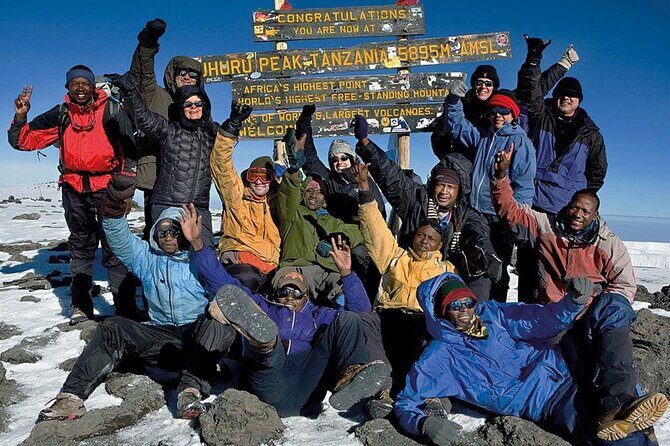
- Day 5: summit push from Barafu to Stella Point, then down (4662m to 5895m)
- How to think about summit day
- Day 6: Mweka descent, certificates, and that first real hot shower
- Price and logistics: what $160 buys you (and what to check)
- How to judge value without guessing
- Who should choose this Machame climb
- A few straight tips to help you enjoy the trek
- Should you book this 6-day Machame route with a private team?
- FAQ
- What route is included in this 6-day Kilimanjaro climb?
- Where is the meeting point and what time does the trip start?
- Is this a private tour?
- How much does the tour cost?
- What meals are included during the trek?
- Can I cancel and get a full refund?
Key highlights worth knowing before you go
- Machame Route, also called the Whisky Route: famous for varied terrain from forest to moorland.
- Acclimatization built into the plan: you’ll climb high, then drop, then climb again to adjust your body.
- Barranco Wall day: a standout stretch that turns the trek into real scrambling energy.
- Summit sunrise timing from Stella Point: a great chance to catch the light if you’re not rushing to the top.
- Gaiters and trekking poles are strongly advised for mud, wet stone, and steep descents.
From Arusha Airport to Kilimanjaro Gate: where the trip really starts
Your day begins in Arusha. The start point is Arusha Airport, with a 6:00 am meeting time, and pickup is offered. From there, you’ll drive toward Kilimanjaro National Park to begin your climb.
Once you reach the park gate, you wait for permits to be issued. This part can feel like a pause, but it’s also the first real taste of the mountain machine: you’ll see crews moving, gear being handled, and lots of planning happening around you. Then the trek starts with lower-elevation trails that can be muddy and slippery, especially through forest conditions.
You can also read our reviews of more private tours in Arusha
What this means for you
A good start matters because the route is long and your body needs to be steady from the first hours. Bring the gear that keeps your steps confident early, not just on summit day. If you’re thinking about gaiters and trekking poles, this is where they pay off.
Day 1: rainforest to the first big climb (1811m to 3021m)
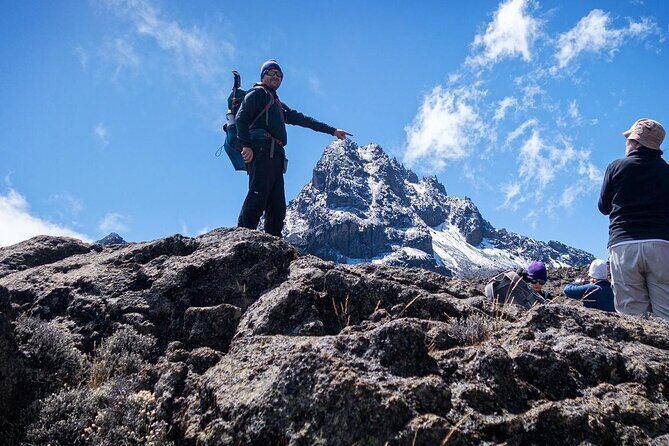
On the first day, you’re moving from about 1811m/5942 ft up to 3021m/9911 ft, with altitude gain of 1210m. Plan for around 6 hours of trekking. You start in the park with rainforest scenery and winding trails, and your guide explains local flora and fauna as you walk.
This is the day where traction becomes your friend. At these lower elevations, the trail can be wet, muddy, and slippery. Even if you feel strong, you’ll still be fighting the ground with every step.
Practical notes
- Gaiters help keep grit and water out of your boots.
- Trekking poles reduce strain on knees and help on uneven, slick sections.
Day 2: Shira-bound ridges, cooler air, and steady progress (3021m to 3839m)
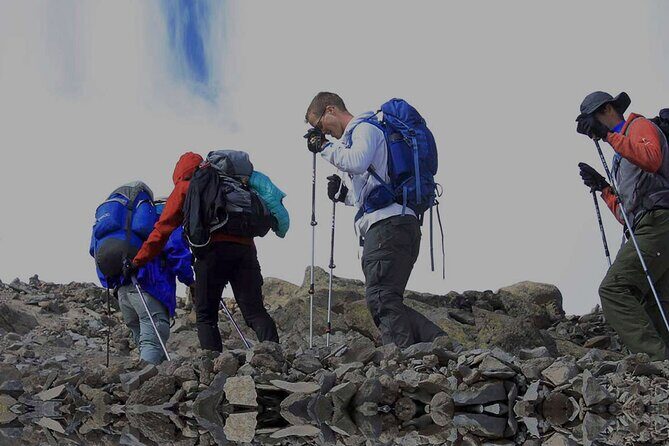
Day two takes you from roughly 3021m/9911 ft to 3839m/12,595 ft, climbing 818m over about 5 hours. You’ll leave the rainforest and move onto a route with more open climbing features.
The trail crosses a valley along a steep rocky ridge, then turns west into a river gorge before reaching the Shira campsite. Temperatures begin to drop as you gain altitude and shift away from dense forest.
A few more Arusha tours and experiences worth a look
Why you should care about Shira day
This day sets up your acclimatization approach. You’re not just racking up elevation for fun. The plan is about getting your body used to higher altitudes without jumping from low to extreme too fast.
Day 3: Shira Plateau to Lava Tower, then down to Barranco Camp
Day three is one of the most interesting “feel it working” days. You start near 3839m/12,595 ft and end around 3986m/13,077 ft, with only 147m of altitude gained. So yes, the ending elevation is close to the start.
But the action is in what happens between. From Shira Plateau, you continue along a ridge, passing a junction connected to the Kibo peak area, then you head south east toward the Lava Tower, known as the Shark’s Tooth at about 4650m/15,250 ft. After that, you reach a second junction leading toward the Arrow Glacier, then you continue and descend to overnight at Barranco Camp.
The hidden value here
Even when the day ends near the starting height, your body gets a workout at higher points. That helps your acclimatization so the later, sharper climbs feel less like a surprise.
Day 4: Barranco Wall to Karanga Valley, then up to Barafu (South Circuit day)
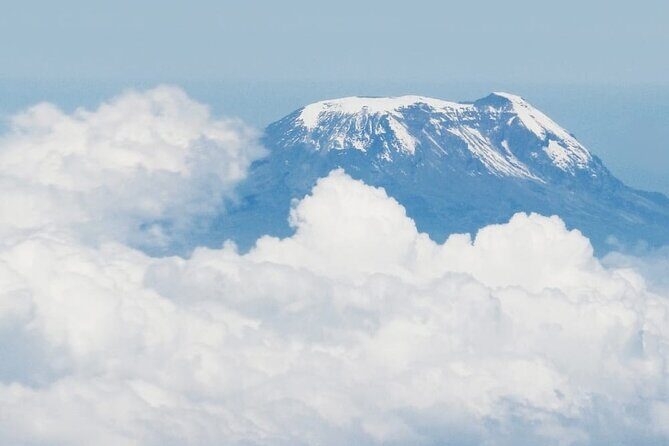
Day four starts after breakfast and pushes your altitude higher again. You climb from about 3986m/13,077 ft up to a point near 4034m/13,235 ft, then continue to around 4662m/15,295 ft. Total altitude gain is 676m, with about 8 hours on the move.
A standout moment comes with the steep ridge up to the Barranco Wall and then onward toward the Karanga Valley. You’ll reach a junction connected with the Mweka Trail, then continue up toward Barafu Camp. Once you reach Barafu, you’ve completed the South Circuit. Views of the summit come from multiple angles during this stretch.
Then comes a simple but crucial plan: early dinner and rest. You’re preparing for summit night.
What makes this day feel different
This is where the trek shifts from endurance walking into “mountain travel” mode. The Barranco Wall is described as an impressive, powerful stretch where the crew moves with agility even with the altitude in their legs.
Day 5: summit push from Barafu to Stella Point, then down (4662m to 5895m)
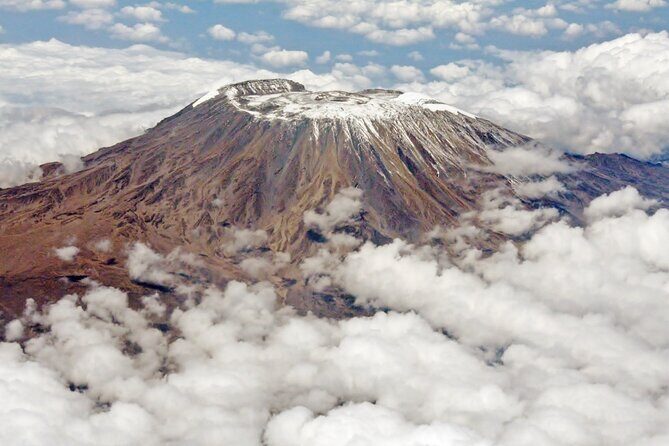
This is the big one. Day five starts with an early wake-up between midnight and 2 a.m. It’s described as the most mentally and physically challenging part of the trek.
You climb from about 4662m/15,295 ft up to 5895m/19,341 ft, gaining 1233m at that high point. After the summit sequence, you descend down to around 3106m/10,190 ft. That’s a steep drop on the numbers: 2789m of altitude lost.
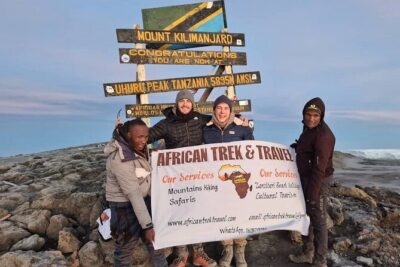
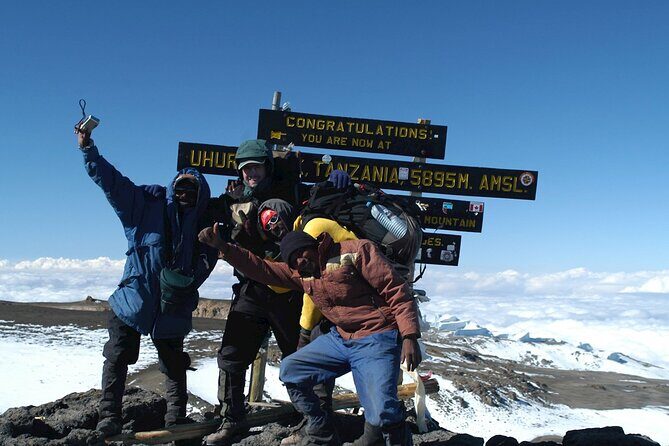
The route between the Rebmann and Ratzel glaciers is where the grind turns into a test of focus. You’ll move in a switchback motion in a northwesterly direction and ascend through heavy scree toward Stella Point on the crater rim. You’ll have a short rest there, and the reward is the sunrise. Faster hikers may see the sunrise from the summit, but Stella Point is a key moment because it’s close enough to make the timing work for more average pacing.
From there, your ascent continues toward Uhuru Peak, followed by the descent.
How to think about summit day
Try to avoid treating the day as one long climb. It’s really a sequence of smaller goals: get to the next switchback, then the next stretch of scree, then the crater rim. When you plan your mindset that way, you stop bargaining with the mountain and start cooperating with it.
Day 6: Mweka descent, certificates, and that first real hot shower
On the final day, you go from about 3106m/10,190 ft down to 1633m/5,358 ft, losing 1473m. The trek portion is shorter in “hours,” but it’s still serious on your legs.
After breakfast, there’s a heartfelt ceremony of appreciation and team bonding with your crew. Then you’ll descend to Mweka Park Gate, where you receive your summit certificates. Since the weather is drastically warmer and the terrain is wet, muddy, and steep, the same safety rules apply: gaiters and trekking poles are strongly recommended again.
From the gate, you’ll drive from Mweka village back to your hotel in Moshi. The ride is about 30 minutes, and then you get the deserved payoff: a long-awaited hot shower, dinner, and celebrations.
Price and logistics: what $160 buys you (and what to check)
The price is listed at $160.00 per person for the private 6-day Machame climb. For this kind of trek, the standout value piece is what’s included around the mountain work, not just the walking.
What’s included in this package:
- All fees and taxes
- Private transportation
- Mountain crew ration support (cook and porters)
- Pre- and post-accommodations
- Airport transfers
- Meals: dinners (4), breakfasts (4), lunches (5)
Also included:
- Pickup offered
- Mobile ticket
Not included:
- Tips
How to judge value without guessing
At this price point, I’d still ask one plain question before you go: what form do the pre- and post-accommodations take in Moshi and/or Arusha for you personally? The trek is long, and a comfortable night before summit day changes everything. If you get clear answers, the logistics here look strong.
And the human side matters too. In past Kilimanjaro experiences with this provider, the climb teams were described with specific roles like Ema as guide, Godwin as assistant guide, Peter as cook, plus porters who kept things moving smoothly. Food also came up as a highlight, which matters because you need fuel when your schedule is pushing hard.
Who should choose this Machame climb
This is a good fit if:
- You want the scenic Machame route, known for variety from forest to moorland and glacier views.
- You’re open to early starts and the mental load of summit night.
- You prefer a private experience so your pace and decisions stay in your group.
It may feel less ideal if:
- You want a slow, relaxed stroll. This plan includes big altitude changes and a very early summit push.
- You dislike wet, muddy trail conditions. Mud is part of the deal on several days.
The overall note says you should have moderate physical fitness, which sounds right for most first-time Kilimanjaro climbers going with a structured program.
A few straight tips to help you enjoy the trek
You’ll get the best experience when you show up ready to move efficiently. Based on what’s repeatedly flagged in the plan, focus on:
- Gaiters and trekking poles for slippery mud and steep descents.
- Planning your energy for the fact that summit night starts between midnight and 2 a.m.
- Expecting cold down high and warmer, wetter conditions on the descent. The trek changes zones fast.
Should you book this 6-day Machame route with a private team?
If you want Kilimanjaro with a plan that makes sense day by day, this Machame option looks like a solid choice. The itinerary supports acclimatization, the route is scenic and widely recommended, and the included logistics remove a lot of stress for you: permits, transport, meals, and crew support are built into the package.
Book it if you can handle early nights, steep and muddy trail sections, and the mental challenge of summit morning. If you’re choosing purely for comfort, you might find the climb demanding. But if you want an authentic, well-run mountain experience that ends with certificates, crew bonding, and that real hot shower moment in Moshi, this is the kind of trek that tends to stick with you.
FAQ
What route is included in this 6-day Kilimanjaro climb?
This trip climbs Kilimanjaro via the Machame route, also known as the Whisky Route.
Where is the meeting point and what time does the trip start?
The meeting point is Arusha Airport, with a start time of 6:00 am.
Is this a private tour?
Yes. It’s described as a private tour/activity, meaning only your group participates.
How much does the tour cost?
The price is $160.00 per person.
What meals are included during the trek?
Meals included are dinners (4), breakfasts (4), and lunches (5).
Can I cancel and get a full refund?
Yes, cancellations are free up to 24 hours in advance. If you cancel at least 24 hours before the experience start time, you receive a full refund; within 24 hours, the amount paid is not refunded.