REVIEW · MOSHI
Climb Kilimanjaro Machame Route 7 Days
Book on Viator →Operated by Foot On Kili Tanzania Adventures · Bookable on Viator
Midnight summit energy, planned down to the minute. This 7-day Machame trek from Moshi pairs professional guides and quality equipment with a short day just before Uhuru Peak, so you start summit night with less exhaustion. I like the safety-first framing and the fact that oxygen tank, camping equipment, and food on the mountain are included. One drawback to flag: even with a good schedule, summit night starts between midnight and 2am, and it can feel brutally cold.
I also like the practical logistics. Your company rep comes to the airport with a signboard, does a quick arrival briefing, then you ride to Moshi in an air-conditioned vehicle. You’ll also start your trek logistics from Honey Badger Lodge, and it’s run as a private group, so you’re not sharing the experience with strangers.
If you’re after real support on pacing and decision-making, you may work with guides such as Mussa and Frankie, plus a cook and porters who help keep everything running. This is a serious hike aimed at people with strong fitness, because you’ll move from rain forest days into high, icy conditions, then back down fast on summit morning.
In This Review
- Key things I’d pay attention to before you book
- Moshi Setup: Airport Pickup, Honey Badger Lodge, and Ready-to-Go Comfort
- Machame in 7 Days: Why This Schedule Is Built for Acclimatization
- Daily Walk Details: From Rain Forest Trails to Stella Point Sunrise
- Day 1: Machame Gate to Machame Camp (Rain Forest)
- Day 2: Machame Camp to Shira Camp (Moorland)
- Day 3: Shira Camp to Lava Tower and On to Barranco Camp (Semi-Desert)
- Day 4: Barranco Camp to Karanga Camp (A Short Acclimatization Day)
- Day 5: Karanga Camp to Barafu Camp (The South Circuit Views)
- Day 6: Barafu to Summit to Mweka Hut (Arctic Conditions and the Midnight Start)
- Day 7: Mweka Camp to Park Gate to Moshi (Certificates and Mud)
- Included vs Not: The Real Meaning of the $2,200 Price
- Safety, Gear, and the Oxygen Tank: What It Can and Can’t Do
- The Team Experience: Guides, Cook, Porters, and the Human Details
- Who Should Choose This Machame 7-Day Climb
- Should You Book This 7-Day Machame Climb?
- FAQ
- How long is the Machame climb?
- What is included in the $2,200 price?
- What is not included?
- Where do we meet in Moshi?
- Do you provide airport transfers?
- Is an oxygen tank provided?
- Can I cancel for a full refund?
Key things I’d pay attention to before you book
- A short, restful-feeling lead-up to summit: the schedule breaks up the Barranco-to-Barafu section into two days so summit night starts with less wear-and-tear.
- The summit push is timed for early sunrise: Stella Point is planned for a break and sunrise, weather permitting.
- Big inclusions that reduce surprise costs: camping gear, entry fees, oxygen tank, food, and transport are part of the package.
- Transport and comfort before you start climbing: airport pickup and an air-conditioned vehicle are included, plus 4×4-style park access.
- Team support is a real part of the value: guides, cooks, and porters run the day-to-day so you can focus on walking and acclimatizing.
Moshi Setup: Airport Pickup, Honey Badger Lodge, and Ready-to-Go Comfort
Most people get stressed when they land. I like that this one removes some of that. When you arrive, the company representative meets you at the airport with a signboard and stays with you through a short briefing before driving you into Moshi. That matters because Kilimanjaro trips have a rhythm: sleep, packing, hydration, and calm nerves. Losing time at the start is an avoidable tax.
In Moshi, you’ll have the trek base with two nights in a hotel in Moshi/Arusha included. You also get airport transfers, and the trip includes an air-conditioned vehicle for the moving parts between town and start points.
Your stated meeting point is Honey Badger Lodge in Moshi (M92P+CP, Kiboriloni 1258, Tanzania). It’s also described as being near public transportation, which can help if you need a simple plan for the day before the climb. And if you travel with special needs, it’s good to know service animals are allowed.
One more thing I consider a “value signal”: the operator mentions 4×4 park transport (a model safari jeep for access). You don’t want your Kilimanjaro experience starting with a sketchy ride that adds discomfort right before altitude.
A few more Moshi tours and experiences worth a look
Machame in 7 Days: Why This Schedule Is Built for Acclimatization
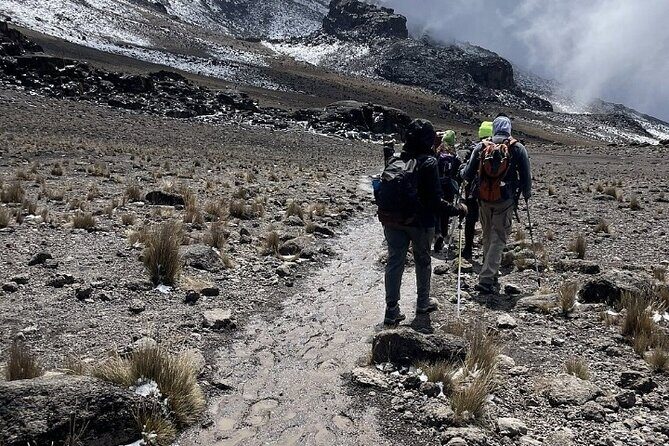
Machame is one of the classic Kilimanjaro routes, and this 7-day version is designed around a key idea: give your body enough time to adapt before summit night.
The big structure is that the route breaks the final approach days in a way that avoids stacking too much fatigue right before the summit. The plan includes a shorter day just prior to the summit attempt, so you can rest and recover. Summit day itself begins extremely early—around midnight to 2am—so arriving at that moment under-caffeinated and under-rested is the recipe for disaster. This schedule tries to prevent that.
Here’s the altitude pattern you’ll feel across the week:
- You start in the forest zone, around 5,400 ft up to 9,400 ft on day one.
- Then you climb into higher zones like moorland and semi-desert.
- You keep gaining altitude, with a crucial acclimatization-focused day where the walking is demanding, but the end-of-day altitude helps your body adapt.
- Summit day jumps from about 15,300 ft to roughly 19,345 ft (and back down to around 10,000 ft by the end of the day).
You also get a built-in “sense check” each day: some days are longer and steeper, others are shorter to reset you for the next push. That rhythm is one reason the 7-day Machame schedule is described as ideal and widely used by prominent operators.
Daily Walk Details: From Rain Forest Trails to Stella Point Sunrise
The thing about Kilimanjaro is that the mountain keeps changing moods. This week does that on purpose. Every day has its own habitat, trail texture, and challenge level. It’s not just “walk uphill”—it’s walk uphill, then change gear, then adjust again.
Below is what you can expect each day, with the specific elevations, distances, and the main things that will matter while you’re out there.
Day 1: Machame Gate to Machame Camp (Rain Forest)
You’ll start after a drive from Moshi of about 50 minutes to the park gate area. Then it’s a climb from roughly 5,400 ft to 9,400 ft over about 11 km and 5–7 hours.
This first day is through rain forest, where the lower trail can be muddy and slippery. I’d treat this as a “setup day” for your hiking mechanics:
- Use trekking poles if you’ve trained with them at all.
- Consider gaiters to keep muck and grit from turning your footwear into a swamp.
You’ll hike up a winding trail on a ridge, and the route continues until you reach Machame Camp.
What I like here: you start at a manageable pace and build confidence before the higher, rougher country.
Day 2: Machame Camp to Shira Camp (Moorland)
Day two climbs from about 9,400 ft to 12,500 ft. It’s shorter on paper—about 5 km and 4–6 hours—but it changes feel fast as you leave the rain forest glades.
You’ll walk along an ascending path, crossing a little valley, and then follow a steep rocky ridge covered with heather. The route turns west onto a river gorge area.
You’re aiming for Shira campsite for rest, dinner, and overnight.
Drawback to plan for: that “shorter distance, tougher air” combo. The pace may feel fine, but the altitude is starting to ask more of you.
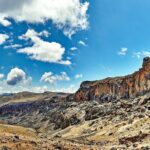
Day 3: Shira Camp to Lava Tower and On to Barranco Camp (Semi-Desert)
This is a day people remember. You’re moving from about 12,500 ft to around 13,000 ft, but you’ll cover about 10 km and hike 6–8 hours.
Starting from the Shira Plateau, you climb up toward the east, then head south-east toward the Lava Tower—described as the “Shark’s Tooth.” After that, there’s mention of the Arrow Glacier area at altitudes up to 16,000 ft, followed by a descent down to Barranco Hut around 13,000 ft.
The key point: you end at a lower elevation than the day’s high point. That’s not an accident. This day is called out as important for acclimatization—your body gets a stress test and then a chance to settle.
Day 4: Barranco Camp to Karanga Camp (A Short Acclimatization Day)
Day four is intentionally shorter: about 5 km and 4–5 hours. You go from around 13,000 ft to 13,100 ft—almost the same elevation—through an alpine desert environment.
You leave Barranco after breakfast and continue over a steep ridge, passing the Barranco Wall, then into the Karanga Valley for camp.
The advantage: it helps your body recover a bit before the higher final camp positioning. The drawback: “short” doesn’t mean easy—steep ridges can still burn your legs.
Day 5: Karanga Camp to Barafu Camp (The South Circuit Views)
Now you move from 13,100 ft to 15,300 ft over about 4 km and 4–5 hours. This day connects with the Mweka Trail junction, then climbs up to Barafu Hut.
A highlight here is the sense that you’re now committed—views open up, and you can see the two peaks of Mawenzi and Kibo from your position at Barafu.
This is also where the route is described as completing the South Circuit. You’ll camp, rest, eat dinner, and prepare for summit day.
Consideration: you’re gaining elevation quickly, but the distance is short. Expect it to feel “high and tight,” not long and steady.
Day 6: Barafu to Summit to Mweka Hut (Arctic Conditions and the Midnight Start)
This is the big one.
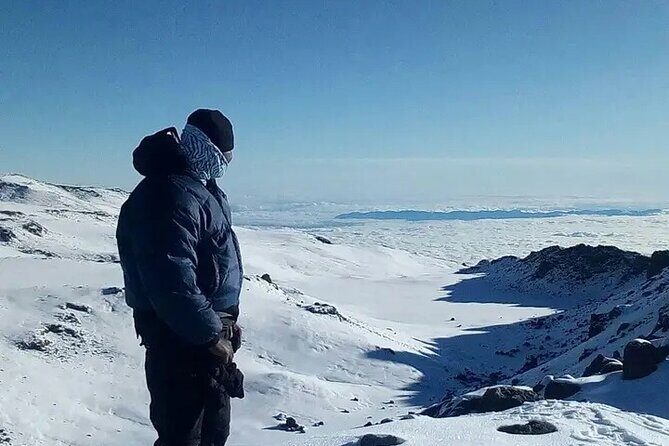
You’ll start extremely early, between midnight and 2am. The route goes through heavy scree and heads toward Stella Point on the crater rim. This is described as the most mentally and physically challenging part of the trek.
You ascend between the Rebmann and Ratzel glaciers, moving in a northwesterly direction. The summit approach includes an ascent of about 5 km, planned around 7–8 hours up, and then a much longer descent of about 12 km over 4–6 hours.
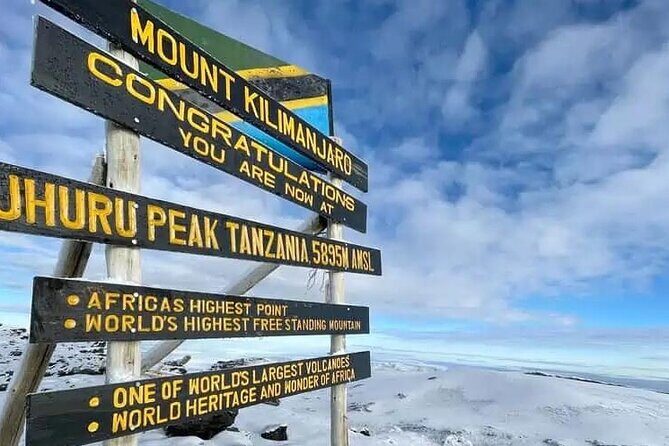
At Stella Point (18,600 ft), you stop briefly. If weather is kind, this is when you’ll see an incredible sunrise. Then it’s about a 1-hour ascent to Uhuru Peak, the highest point on Kilimanjaro and Africa.
From Uhuru Peak, you descend straight down to Mweka Hut, stopping at Barafu for lunch along the way. The plan emphasizes using gaiters and trekking poles for loose gravel on the descent.
End result: by the time you reach Mweka Camp, you’re down around 10,000 ft, but you still might be dealing with mist or rain later in the day in the upper forest area. Plan your layers accordingly.
Day 7: Mweka Camp to Park Gate to Moshi (Certificates and Mud)
Your final day is a descent from about 10,000 ft down to 5,400 ft, covering about 10 km and 3–4 hours.
You’ll continue down to the Mweka Park Gate to receive summit certificates. Then there’s another hour to Mweka Village, where a vehicle meets you to drive back to your hotel in Moshi.
Lower down, it can be wet and muddy. Again, gaiters and trekking poles can help you keep balance on uneven ground. Shorts and t-shirts are probably fine at low elevation, but keep rain gear and warmer clothing handy since weather can still flip quickly.
Included vs Not: The Real Meaning of the $2,200 Price
At $2,200 per person, this is not a “cheap and cheerful” climb. But it’s also not a bare-bones offer. The inclusion list matters because Kilimanjaro cost surprises usually come from the stuff that scales with the number of people and days: transport, park entry fees, food, gear rentals, and logistics support.
Here’s what’s included:
- Camping equipment
- Entry fees
- Salary for the team (guides, cooks, porters)
- 2 nights hotel in Moshi/Arusha
- Airport transfers
- Oxygen tank
- Food on the mountain
- Kilimanjaro team: guide, cook, porters
- Air-conditioned vehicle
And what’s not included:
- Tipping and beverages
- Visa
- Personal climbing items
- Flights
Why that makes a difference for you: when oxygen, meals, and entry fees are handled, you can budget more cleanly for visa, flights, and the personal gear you personally prefer. Since you’re also likely to be buying travel insurance and arranging flight timing, reducing “unknowns” feels like a real win.
One more value point: oxygen tank inclusion is meaningful for peace of mind. It doesn’t replace good acclimatization, but it’s part of an overall safety mindset.
Safety, Gear, and the Oxygen Tank: What It Can and Can’t Do
The tour emphasizes safety as the number one goal, and it pairs that with “quality equipment” and “professional guides.” On top of that, there’s an oxygen tank included.
Here’s how I’d think about that as an honest hiker:
- The oxygen tank is a safety tool for emergencies.
- The real prevention plan is the route design, the pacing, and your willingness to be conservative when your body says no.
This is also why the 7-day schedule’s short acclimatization day before summit matters. Summit night is where people tend to rush, because the goal feels close. A schedule that helps you start summit night with more recovery time gives you a better chance to execute smart pacing.
If you’re the type who gets stubborn when you feel pressure, you’ll want to plan a strategy before you go. Tell your guide you’ll follow pacing instructions even when you feel “fine” for a while.
The Team Experience: Guides, Cook, Porters, and the Human Details
Kilimanjaro is physically demanding. It’s also emotional. The best climbs feel organized and kind at the same time.
This operator runs with a guide plus a cook and porters, and the feedback highlights real care: professional guidance, people feeling safe, and food quality that makes those long days more bearable. Names that show up in the operator’s story include Mussa and Frankie, and that’s a good sign that the team isn’t anonymous.
For you, that means:
- Your guide can focus on pace, acclimatization, and safety decisions.
- Your cook and porters handle camp setup and daily needs so your energy stays on walking.
- You get a more predictable day-to-day rhythm, especially around the summit push and the long descent.
The operator also mentions pickup and services designed to make the start smoother. In practice, that matters because Kilimanjaro punishes disorganization—missed details can cost sleep, comfort, or morale.
Who Should Choose This Machame 7-Day Climb
This is best for you if:
- You want a structured 7-day Machame plan that’s designed for acclimatization.
- You can handle steep trekking and cold summit conditions (including possible snow).
- You prefer a guided experience where transport, meals, and entry fees are handled.
You might want to reconsider if:
- You don’t have strong fitness or stamina, since summit day includes a very early start and a long, rough ascent and descent.
- You’re strongly sensitive to cold or wet conditions, since you move through multiple climate zones and might face mist or rain near the end.
Good news: it’s run as a private tour/activity, so you and your group set the tone. And service animals are allowed.
Should You Book This 7-Day Machame Climb?
If you’re looking for a Machame climb that treats safety and acclimatization seriously—and you like the comfort of having the big logistics handled—this is a solid option to consider. The value is strongest when you add up the inclusions: entry fees, oxygen tank, camping equipment, food, airport transfers, and hotel nights.
Before you book, do two things:
- Be honest about your fitness and your willingness to follow pacing on summit night.
- Plan your budget for what’s not included: visa, flights, beverages, and tipping, plus personal climbing items.
If that sounds like you, then the Machame route in 7 days is a smart way to chase Kilimanjaro without leaving key safety pieces to chance.
FAQ
How long is the Machame climb?
This is a 7-day Kilimanjaro climb using the Machame route, moving from Moshi toward the summit area and then back down to Moshi.
What is included in the $2,200 price?
The price includes camping equipment, entry fees, salary for the team, 2 nights hotel in Moshi/Arusha, airport transfers, an oxygen tank, food on the mountain, and transport via an air-conditioned vehicle.
What is not included?
Not included are tipping and beverages, visa, personal climbing items, and flights.
Where do we meet in Moshi?
The meeting point is Honey Badger Lodge in Moshi Kilimanjaro (M92P+CP, Kiboriloni 1258, Tanzania).
Do you provide airport transfers?
Yes. Your company representative meets you at the airport with a company sign board and then you drive to your hotel in Moshi.
Is an oxygen tank provided?
Yes. An oxygen tank is included as part of the package.
Can I cancel for a full refund?
Yes. You can cancel up to 24 hours in advance for a full refund. If you cancel less than 24 hours before the experience starts, the amount paid is not refunded.