REVIEW · DAR ES SALAAM
Bagamoyo Full-Day Tour: Historic Slave Trade Route & Kaole Ruins
Book on Viator →Operated by Envoyage Tanzania · Bookable on Viator
Bagamoyo is a day trip with real weight. This full-day tour traces the coastal slave trade route and then layers in the Kaole Ruins and Holy Ghost Mission landmarks, so you see how Islam and Christianity shaped daily life in town. I love that the pace is walk-and-see, not rush-and-snap, and I also like that the route includes memorial-style stops like the Catholic Mission Museum, where the human story is handled with care. The main drawback to keep in mind is emotional content: several stops directly reference slavery and the port’s role in it, so it helps to mentally prepare.
You start early in Dar es Salaam, then spend the day moving between Fort, German-built sites, ancient trading ruins, and mission buildings tied to major figures. The result is one long, connected story on foot, with a lunch break built in and time buffer for transit between sites. I especially appreciate how the tour’s structure mixes major monuments with smaller, detail-heavy places, like the locked German-era safe and the old market area tied to export.
This is also a practical day. You get pickup by air-conditioned vehicle, bottled water, and admission where included, which matters when you’re far from Dar es Salaam and spending 8 to 10 hours outside. If you’re short on time or only want beach views, you might find the focus heavy, but if you want meaning and context, it’s a strong match.
In This Review
- Key highlights
- Why Bagamoyo’s coast is more than a beach stop
- Old Fort: Abdallah Suleiman Marhabi to German garrison and British prison
- Old Boma (1895): the German headquarters and the locked iron safe
- Kaole Ruins: two mosques, tombs, and trade-era links to China
- Holy Ghost Mission buildings: Livingstone’s night, old fathers house, and coral stone churches
- Catholic Mission Museum and Holy Grotto: what you’ll see and how to prepare
- Baobab tree, Old Market, and the old port system behind exports
- What $255 buys you: private comfort, water, lunch, and included site access
- Who should book this Bagamoyo full-day tour, and who might skip it
- Should you book this Bagamoyo tour with Envoyage Tanzania?
- FAQ
- How long is the Bagamoyo Full-Day Tour?
- What time does the tour start?
- Is pickup included?
- Is lunch included?
- Are entrance fees included?
- Is bottled water provided?
- Are alcoholic beverages included?
- Is this a private tour?
- What’s the cancellation policy?
Key highlights
- Old Fort (1860s) walk-through with layers from Arab traders to German garrison and British prison
- Old Boma (1895) admin building and that still-locked German iron safe
- Kaole Ruins with two historic mosques and the chance to see trade-era artifacts, including evidence linked to China
- Holy Ghost Mission complex including the Livingstone Tower connection and mission buildings spanning late 1800s into the early 1900s
- Catholic Mission Museum with exhibits that directly address slavery, plus religious artifacts and local artwork
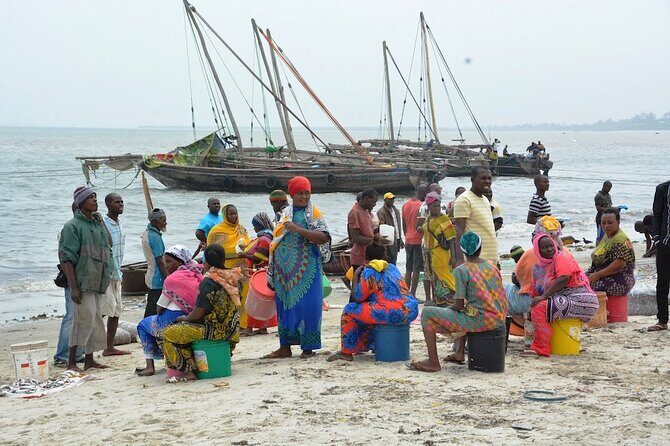
- Finish at Bagamoyo’s Old Market area and the fish market/harbor for a grounded sense of today’s port life
Why Bagamoyo’s coast is more than a beach stop
Bagamoyo sits on Tanzania’s coast, but this is not a sand-and-sun kind of day. The point of the route is the town’s role as a crossroads, where different faiths met, traded, and also suffered under exploitation tied to the export economy. You’ll walk from coastal heritage sites into ruins and mission grounds that show how communities built institutions over centuries.
What I like is that the day doesn’t treat history like a poster. You move between places with specific names and dates: a fort built in the 1860s, a German administrative building from 1895, and Kaole Ruins that trace back to an 8th-century trading settlement. The story gets more concrete as you go, because each stop explains a different layer of what this port connected.
You also get a balanced look at the religious geography. You’ll see old mosques at Kaole, then Christian mission spaces tied to Holy Ghost Fathers. That contrast is the value here: it helps you understand the town’s identity as something shaped by multiple traditions, not just one headline.
You can also read our reviews of more historical tours in Dar es Salaam
Old Fort: Abdallah Suleiman Marhabi to German garrison and British prison
Your first major stop is the Old Fort, one of Bagamoyo’s most recognizable heritage anchors. Built in the 1860s by Arab trader Abdallah Suleiman Marhabi, it later became a key node in the slave trade before shifting hands through different colonial and political eras. The fort’s timeline is part of the experience: it became a German garrison in 1896, a British prison by 1919, and after independence in 1974 it served as a police station.
This matters because you can actually feel how a physical structure can be repurposed by whoever holds power. When you walk corridors tied to trade and detention, you get a sharper understanding of how the same walls can serve very different functions over time. The tour also gives you an orientation to the fort’s significance as a symbol of change and resilience—without trying to soften the harder parts.
One practical consideration: forts tend to involve uneven footing and longer walks. Even if you move at a comfortable pace, you’ll want sturdy shoes and the ability to pause for photos and explanations. If you don’t handle emotionally heavy sites well, take breaks as needed, especially around places connected to captivity and export.
Old Boma (1895): the German headquarters and the locked iron safe
Next comes the Old Boma, built by the Germans in 1895. The building served as the administrative headquarters for German East Africa until 1919, when the British took over after Germany’s rule ended following the Versailles Treaty. After that handover, it functioned as the District Commissioner’s office until decommissioning in 1997 due to structural issues.
The highlight here isn’t only the architecture. The stop includes an old iron safe left by the Germans, and it remains locked. That locked safe is a small detail, but it changes how you read the building: it turns a former administration block into a room full of unanswered questions. You can’t see what’s inside, but you can sense the idea of records, decisions, and evidence that would have mattered to whoever was running things.
The visit is short, so it works well as a “compression stop” between larger sites. If you like history that connects policy and daily life—paperwork, administration, and enforcement—this is a smart pause.
Kaole Ruins: two mosques, tombs, and trade-era links to China
Kaole Ruins sit about 3 miles (4.8 km) east of the Indian Ocean, and they’re a different kind of heritage stop. This site was a trading town dating to the 8th century, and the name Kaole comes from the Zaramo word meaning Go and See. You’ll get the feel of an older settlement pattern: not one single building, but a whole area of religious spaces and tombs tied to regional leadership.
The most striking part is the two historic mosques. One mosque was built in the 13th century by the Sultan of Kilwa, and it’s described as possibly the oldest in Tanzania and East Africa. The second mosque dates to the 15th century and sits among about 30 tombs, including those connected to local rulers known as diwanis.
There’s also a small museum on-site where you can look at artifacts tied to ancient trade, including evidence of contact involving China. That’s a key value of Kaole: it shows the port network wasn’t only about one commodity or one empire. It was connected to wider long-distance commerce, where religion and trade shared the same geographic stage.
Practical note: Kaole is a heritage site, so you’ll want patience for walking and time for explanations. If you’re hoping for beach time, this stop will feel more like archaeology meets faith than a quick photo stop.
Holy Ghost Mission buildings: Livingstone’s night, old fathers house, and coral stone churches
After Kaole, the day shifts into mission territory: Holy Ghost Mission Bagamoyo. This complex came together through a collaboration that’s historically specific. In 1868, Father Antoine Horner of the Holy Ghost Fathers came looking to establish a mission in Bagamoyo, and land for the mission was gifted by Muslims under the leadership of Sultan Majid in 1868.
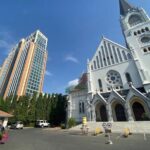
The tour then connects you to a strong timeline of Christian institutions. The first church, Holy Ghost Church, was built in 1872. Later, 1874 is tied to explorer David Livingstone, who was interred for the night at the mission, with the Livingstone Tower named in his honor.
You’ll also see the Old Fathers’ House, a three-story building completed in phases: ground floor in 1873, first floor in 1877, and second floor in 1903. A broad balcony adds to the sense that this wasn’t just a quick outpost; it was a planned residence and institution.
The New Holy Ghost Church is another highlight. It was built between 1910 and 1914 using coral stone blocks, and it’s described as larger than the original church. Seeing coral stone used in a coastal setting helps you understand how locals and institutions relied on materials that matched the environment.
A gentle heads-up: this portion of the day includes multiple stops clustered around church grounds. Wear comfortable shoes and expect to move between buildings at a moderate pace, since you’re there to learn the connections, not just to glance.
A few more Dar es Salaam tours and experiences worth a look


Catholic Mission Museum and Holy Grotto: what you’ll see and how to prepare
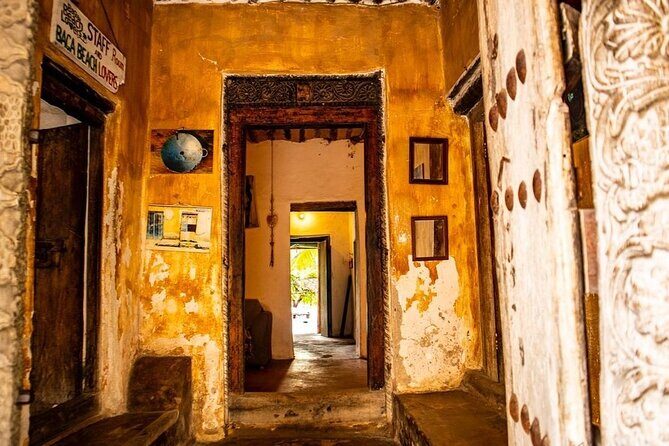
One of the most powerful stops is the Catholic Mission Museum, set in the heart of historic Bagamoyo town. It was established in 1876 as the Sisters’ House. The exhibits are described in emotional terms: images of enslaved individuals, chains and whips, and rare religious artifacts. You can also see Indian and Arab architectural pieces and local wooden artwork.
This is the kind of museum that asks you to slow down. Even if your time is limited, take the extra minute before you move on. The point is not only learning dates and names; it’s letting the museum’s objects make the human cost unavoidable. If you’re sensitive to that subject matter, plan ahead for breaks and water.
Right nearby is the Holy Grotto, built by enslaved people who were later described as emancipated slaves and who lived in the mission. Construction began in 1876, and it opened and was consecrated in 1879 by Pope Leo XIII. This site draws thousands of Catholics from around Tanzania for annual pilgrimages.
That combination—museum evidence of slavery alongside a sacred grotto built by people who were once enslaved—gives the day its strongest emotional balance. You’re not just watching history happen; you’re seeing how communities transformed trauma into faith practices and memorial spaces.
Baobab tree, Old Market, and the old port system behind exports
After the mission grounds, the route moves toward the older commercial core. You’ll stop at the Historical Baobab tree in the churchyard, with a legend attached: a French nurse named Madam Chevalier reportedly tied her donkey to the tree with an iron chain and forgot to remove it. As the tree grew over centuries, the chain was left in place, and in 2012 additional chain rings were added to preserve the story.
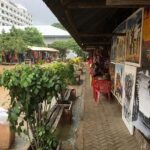
Then comes the Old Market, once used as the Bagamoyo slave market. This area is tied to how enslaved people were kept temporarily before being transported to Zanzibar. The tour includes the local story of an underground tunnel concept connecting to the beach during high tide, though the exact tunnel location is said to have never been found. Nearby, the customs house is also referenced as part of the export system, with bounty paid for every enslaved person shipped from the port.
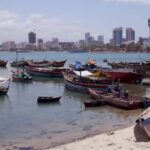
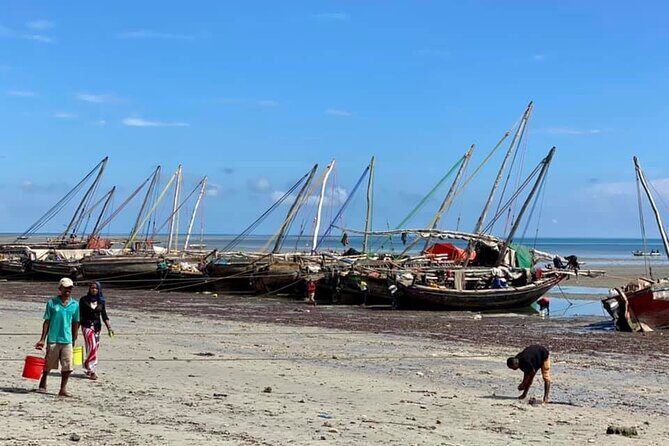
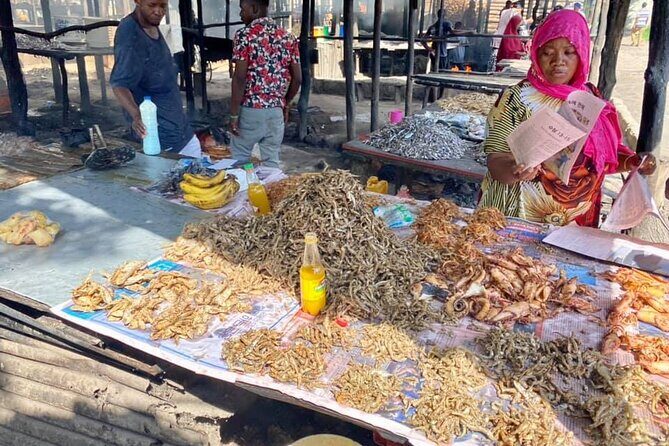
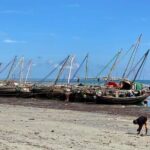
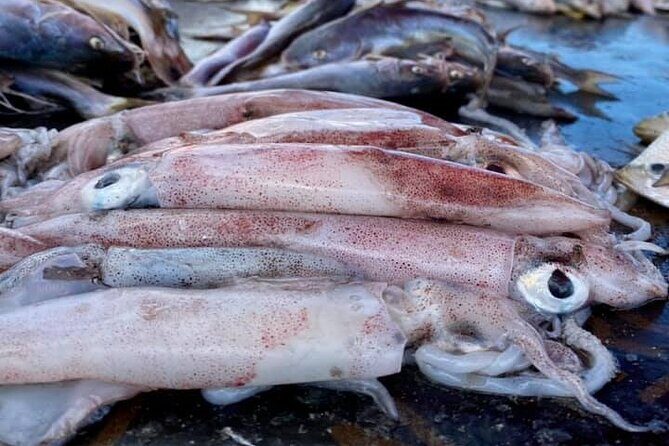
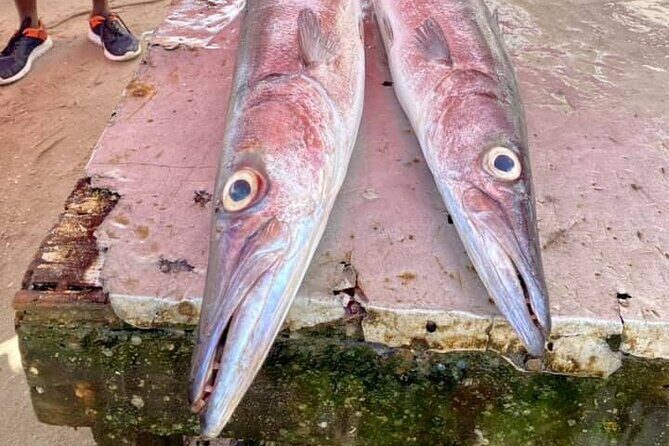
Finally, you wrap up in the area near the fish market and harbor. You’ll see Bagamoyo Fish Market where fishermen sell the day’s catch, with buyers able to purchase fish whole or in portions and even have them cleaned and prepared on site. The old auction hall has historical significance from German colonial times. The dhow harbour area is also part of the route, tied to 19th-century trading including ivory and slave trades, while today it serves fishing boats and tourist excursions with ocean views.
This ending works because it returns you to present-day rhythm. After the heavier stops, you get a sense of how Bagamoyo still moves goods through its coastline, even though the systems are different.
What $255 buys you: private comfort, water, lunch, and included site access
At $255 per person for an 8 to 10 hour day, you’re paying for time, transportation, and a guided route that strings together multiple heritage zones. For a day trip far from Dar es Salaam, that’s not just convenience—it’s the difference between a plan that actually fits and a scramble that doesn’t.
Here’s what’s explicitly included:
- Private transportation in an air-conditioned vehicle
- Pickup from Dar es Salaam with a start time of 8:30 am
- Bottled water with unlimited supply
- Lunch, with dietary restrictions taken into account
- Snacks for those who choose to partake
- Alcoholic beverages available for those age 18+ (so plan for ID if you want it)
- All fees and taxes
What’s not included:
- Breakfast and dinner
- Tips and gratuities
A good value check: the schedule includes admission where listed as included, plus several free entry stops. In practice, it means you’re not hunting down tickets on the move. I’d treat this as a “one stop logistics” day: you show up, you get guided, you eat lunch, and you go home with context.
One more practical point: it’s private for your group. That usually means you can go at a human pace and ask questions without waiting your turn.
Who should book this Bagamoyo full-day tour, and who might skip it
This tour fits best if you want your day to have meaning and you’re okay with learning about slavery, colonial rule shifts, and the port’s role in export systems. It also suits people who enjoy connections across faith and time—mosques, churches, mission buildings, and trading-era ruins in one structured day.
It may not be the right pick if you want only light sightseeing or if you get overwhelmed by emotionally difficult displays and references to chains, whips, and detention. Still, if you can handle that topic and want a guided, respectful approach, it’s a strong choice.
If you care about the quality of guiding, one highlight you’ll want to watch for is the chance to have Mr Erick as your guide. One experience praised him as smart, funny, ethical, and with excellent English—exactly the kind of guide that makes dense historical stops feel clear instead of confusing.
Should you book this Bagamoyo tour with Envoyage Tanzania?
I’d book this tour if you want a day that feels like you actually learned something, not just collected stamps. Bagamoyo is more than scenery here: the route links Old Fort, the German-era admin stop, Kaole’s mosques and tombs, and mission sites that tie together Livingstone, coral-stone church building, and the Holy Grotto. The museum stop is the emotional center, and the rest of the day supports it with context rather than distractions.
I’d think twice if you’re avoiding heavy subject matter, or if your ideal day is mostly beach time. Also, because it runs 8 to 10 hours, plan for comfort: water is covered, but you’ll still be on your feet for multiple heritage grounds.
If you’re deciding between “do a day tour” and “do nothing,” this one is built for a real understanding of Bagamoyo’s place on the coast.
FAQ
How long is the Bagamoyo Full-Day Tour?
It runs about 8 to 10 hours, with some of that time spent traveling between attractions.
What time does the tour start?
Pickup starts at 8:30 am from Dar es Salaam.
Is pickup included?
Yes. Private transportation and pickup are included.
Is lunch included?
Yes. Lunch is included, and dietary restrictions will be taken into account.
Are entrance fees included?
Admission is included for some stops, while other stops are marked as free on the route.
Is bottled water provided?
Yes. Bottled water is included with an unlimited supply.
Are alcoholic beverages included?
Alcoholic beverages are available for those age 18+ as part of the experience.
Is this a private tour?
Yes. It’s private for your group.
What’s the cancellation policy?
Free cancellation is available. You can cancel up to 24 hours in advance for a full refund.
If you want, tell me your travel dates and whether you prefer the day more history-heavy or more relaxed, and I’ll suggest how to plan your morning in Dar es Salaam so you’re fresh for the first fort walk.