REVIEW · DAR ES SALAAM
The Best/Top Rated Cultural City Tour in Dar es Salaam
Book on Viator →Operated by Duteni Tours · Bookable on Viator
Dar es Salaam clicks into focus fast. This half-day cultural route ties fossils, German-era details, and everyday market life into one practical loop, using a small group format and round-trip transfers. I love how the city feels navigable in a tight time window—especially with guides like Gideon and Mike (calm, clear, and good at steering through traffic). And I really like the way the tour mixes big “how Tanzania formed” ideas with hands-on stops like the fish market and Village Museum.
One thing to keep in mind: you’re not in control of every minute. Some stops are drive-by or can swap based on time, traffic, and weather (for example the Slipway vs. Mwenge part of the route), and Askari Monument is photo-only from the vehicle.
In This Review
- Key things that make this Dar es Salaam tour worth your time
- A half-day plan that actually helps you understand Dar es Salaam
- Price and what you really get for $90
- National Museum of Tanzania: fossils, cultures, and colonial layers (45 minutes)
- Kivukoni Fish Market: seafood, pricing, and a working-day vibe (20 minutes)
- Azania Front Lutheran Church: German mission architecture (or a drive-by) (10 minutes)
- The Askari Monument: World War I memory at a busy roundabout (photo-only)
- Slipway Shopping Centre (or Mwenge): coastal crafts and bargaining reality (30 minutes)
- Option A: Slipway Shopping Centre
- Option B: Mwenge Woodcarvers Market
- Village Museum in Mikocheni: huts, culture, and joining the dance (1 hour)
- Kariakoo market: the city’s heartbeat from the road (maybe)
- Getting around Dar with an air-conditioned vehicle (and staying comfortable)
- When this tour is the best choice for you
- Should you book this Dar es Salaam cultural tour?
- FAQ
- What is the duration of this Dar es Salaam cultural tour?
- What does the tour cost, and what’s included?
- Is pickup offered from my accommodation?
- How many people are in the group?
- Do I need to buy museum tickets?
- Is there a cancellation option and any weather considerations?
Key things that make this Dar es Salaam tour worth your time

- National Museum’s Olduvai Gorge fossils set the story straight before you hit the streets
- Kivukoni Fish Market gives you an easy-to-read slice of daily trade and seafood pricing
- German mission-era architecture at Azania Front Lutheran Church adds a surprising colonial layer
- Askari Monument photo stops connect World War I history to modern city corners
- Village Museum dance time is interactive, not just sightseeing
- Slipway and Mwenge shopping options let you buy crafts with local-artist context
A half-day plan that actually helps you understand Dar es Salaam

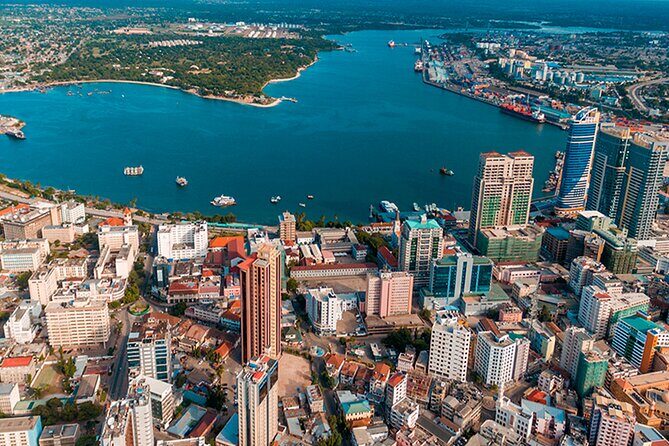
Dar es Salaam can feel huge, loud, and a bit hard to decode when you’re new. That’s why this 3 to 5 hour cultural tour works. You get a structured route, a small group, and a guide who can explain what you’re seeing without rushing you through everything. At $90 per person, the price isn’t low, but it’s also not just “gas and a driver.” You’re paying for transportation, guidance, bottled water, and included fees that would add up fast on your own.
The tour runs in either the morning or afternoon (the listed start time is 9:00 am), so you can match it to your cruise schedule or your day on the ground. And with a maximum of 50 travelers, it’s sized more like an organized excursion than a busload free-for-all. A mobile ticket and group discounts also help with logistics if you’re traveling as part of a group.
Most importantly, the guide doesn’t treat this as a checklist. The order matters: you start with context (museum), then shift to real daily life (fish market), then move into culture and memory (church, monument, village museum), and finally add shopping (coast + woodcarvers). If you’re the type who likes to “get bearings fast,” this tour gives you that in one go.
You can also read our reviews of more city tours in Dar es Salaam

Price and what you really get for $90
Let’s break down value without guesswork. You pay $90 per person, and the tour includes:
- Round-trip transfers from your accommodation (pickup offered)
- An air-conditioned vehicle
- Bottled water
- All fees and taxes
- Admission support where it applies (the National Museum ticket is included)
What’s not included is also pretty clear: lunch, snacks (though you can purchase a snack bag during the tour if you’re informed before it begins), and tips/gratuity. No breakfast or dinner either.
So if you’re counting costs, the big value isn’t just admission—it’s the time saved. Dar’s traffic and distances can turn “I’ll just go on my own” into a half-day that slips away. Here, you’re paying to keep your day intact: transport + guidance + entry fees + a route that hits multiple neighborhoods and themes.
National Museum of Tanzania: fossils, cultures, and colonial layers (45 minutes)
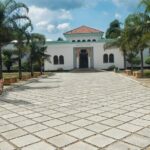
Your first real stop is the National Museum of Tanzania, and it does a smart job of setting context. You get a chance to see a copy of the famous Olduvai Gorge fossil discovery of Zinjanthropus, often called Nutcracker Man, plus other archaeology finds. That’s the kind of detail that makes later street scenes feel less random.
The museum also strings together Tanzania’s past in a way that connects to the rest of the day. You’ll learn about a mosaic of cultures, including the Shirazi civilisation of Kilwa, the Zanzibar slave trade, and the German and British colonial periods. In plain terms: when you’re later looking at German missionary architecture or thinking about Askari history, the museum gives you the background to understand what you’re seeing.
Why this stop matters for you: it prevents the tour from becoming “random photos in different places.” If you want a real mental map of Tanzania’s long story—human origins, trade routes, colonial shifts—this museum is the anchor.
What to watch for: museums take attention. If you’re tired or the heat is heavy, you may want to pace yourself and use this time to slow down before the more sensory market stops.
Kivukoni Fish Market: seafood, pricing, and a working-day vibe (20 minutes)
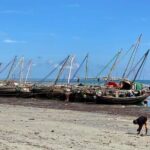
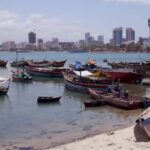
Then you jump into Kivukoni Fish Market, which is basically the city’s seafood trading engine. It’s a place where fish and seafood caught or produced in the Kivukoni area—and nearby places—move through daily. Boats and deliveries come in across the day, and buyers come in from all over.
The tour time here is short—about 20 minutes—so this isn’t a “linger and eat everything” stop. It’s more about seeing how the market works and understanding why people talk about it. It’s also famous for different types of seafood at prices that tend to be among the lowest in the city, which is useful if you’re shopping with an eye for cost.
A practical tip for you: if you’re sensitive to crowds or strong smells, keep your expectations realistic. Markets are markets. Use the quick stop to take photos, look at the variety, and ask your guide what you’re seeing. You’ll get more out of it when you have a few points explained rather than trying to read everything on your own.
Azania Front Lutheran Church: German mission architecture (or a drive-by) (10 minutes)
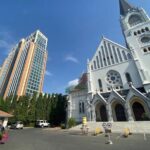
Azania Front Lutheran Church is a small stop with a big historical hook. The building was built by German missionaries at the end of the 19th century. The architecture is impressive, and it includes original German works and inscriptions.
Here’s the reality check: depending on time and traffic, you may drive past it, stop to visit, or skip it. Admission is free.
Why it’s worth including: Tanzania’s coastal history connects to different foreign influences, and this church gives you a physical clue. Even if you only catch it from the road, it’s the kind of detail that makes Dar feel layered instead of random.




The Askari Monument: World War I memory at a busy roundabout (photo-only)
Next comes the Askari Monument, located at a roundabout connecting Samora Avenue and Maktaba Street. It was built in 1927 to honor African soldiers who fought in World War I on the Allied side in Africa.
There’s also a deeper twist: a German statue used to be at the same place, and it was removed by the British when they arrived in Dar in 1916. Stopping isn’t permitted, but you’ll have time to take pictures from inside the vehicle.
For your photos: aim for a steady shot during the slow passing moment. Don’t count on a walk-up opportunity here. This is about seeing the monument in context—right where it belongs, among daily traffic.
Slipway Shopping Centre (or Mwenge): coastal crafts and bargaining reality (30 minutes)
Shopping happens in two possible ways on this tour, depending on conditions like weather and road traffic.
Option A: Slipway Shopping Centre
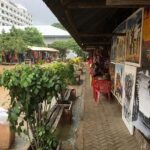
Slipway is an outdoor shopping area along the ocean coastline. You’ll get walkways and plenty of space for photos with a sea-view background. The shops tend to sell quality souvenirs like fabrics, sandals, beaded necklaces, and more. Restaurants are around too, so you’re not stuck browsing in a vacuum.
A practical note you should actually use: bargaining matters. Prices are negotiable, and you may find similar items at a different stall for about half the price. Your guide can help you set expectations so you don’t overpay just because you’re tired.
Option B: Mwenge Woodcarvers Market
If the route switches to Mwenge, you’re in a community of shops owned and run by local artists. Mwenge Woodcarvers is known for a range of items: traditional bags, jewelry, shoes, wood carvings, paintings, drums, keyrings, kitchen items, and more.
Why this craft stop is a good move for your trip: you’re not just buying stuff. You’re buying from a local creative economy, and the focus is on handmade products rather than generic tourist trinkets.
What to watch for: Mwenge can flood sometimes, which is one reason swaps happen. If it rains or roads get messy, Slipway may be the safer call (or vice versa). Either way, the tour aims to keep you moving and shopping without turning it into a long detour.
Village Museum in Mikocheni: huts, culture, and joining the dance (1 hour)
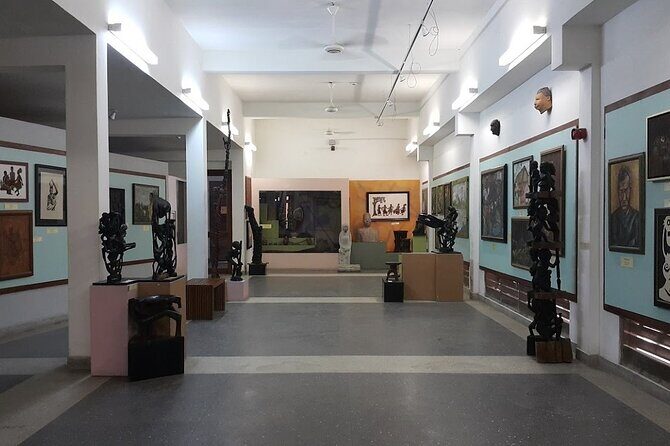
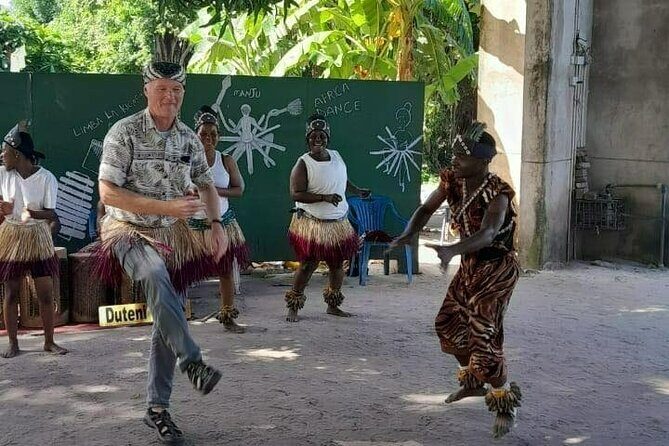
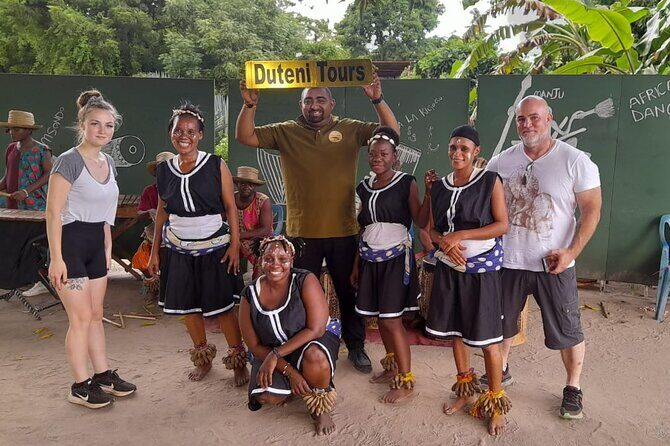
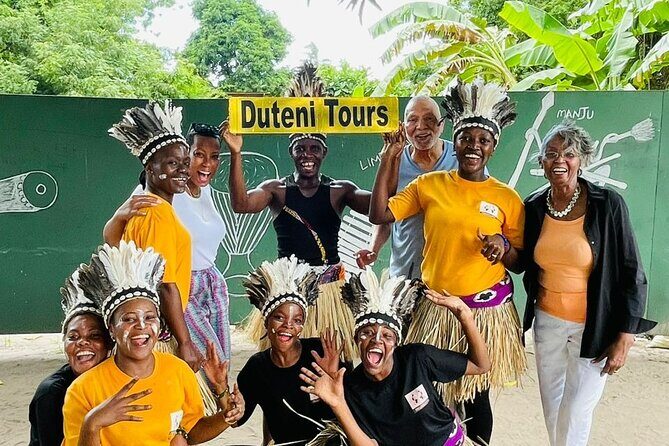
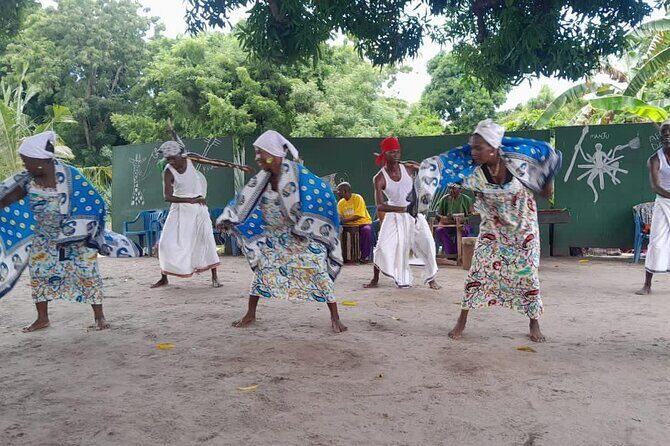
If you want a stop that feels less like shopping and more like learning, this is it. At Kijiji cha Makumbusho / Village Museum, Mikocheni, you get historical background on many Tanzanian cultures. It’s interactive, and it includes traditional huts from different tribes.
Then there’s the part you’ll remember: a traditional village dance where you’re welcome to join in and try some local dance moves. It’s not a passive “watch and clap” situation. You get pulled into the moment, and that’s where the cultural exchange feels real.
Why it works: you walk in expecting displays and end up participating. For many first-time visitors, that’s the difference between seeing culture and feeling connected to it.
Practical consideration: one hour passes quickly. Wear shoes you can dance in if you plan to join, and don’t worry if you’re not a natural dancer—this kind of setup usually works best when you treat it like a fun attempt, not an audition.
Kariakoo market: the city’s heartbeat from the road (maybe)
You may also get a stop connected to Kariakoo, a major local market area known for being the city’s heartbeat. The idea here is that you get the sights, sounds, crowds, and buildings—without walking through it. The tour notes that guests will not be permitted to walk through Kariakoo. Only drive through.
Why this still has value: it gives you exposure to a major slice of Dar’s daily economy, and your guide can explain what you’re seeing in the context of local life and market pricing.
What you should expect: since you won’t be walking through, don’t plan on deep shopping here. Think of it as a cultural orientation stop.
Getting around Dar with an air-conditioned vehicle (and staying comfortable)
Dar es Salaam traffic is part of the travel experience, so it helps when your guide keeps things calm. In the tour stories I’ve heard, guides like Gideon and Mike are praised for staying composed while driving through congestion and still keeping guests engaged with explanations.
Also, the vehicle is air-conditioned and you get bottled water, which is not a small deal in a city where the day can wear you down. You’ll also want to dress for warm weather and keep a light layer handy for the vehicle comfort vs. outside heat swing.
This tour also works well because it’s structured: stops are timed (museum 45 minutes, village museum 1 hour, market visits shorter), and you don’t end up wasting time negotiating transport between neighborhoods.
When this tour is the best choice for you
This is a good fit if:
- You want a fast understanding of Dar es Salaam—history, culture, and daily trade—in one half-day
- You prefer a small group with attention from your guide
- You’re interested in the big story (fossils, colonial-era layers) and also the local routine (fish market, crafts markets)
- You’d like a mix of learning and photos, plus a participation moment at the Village Museum dance
It’s a less ideal fit if:
- You’re hoping to spend long hours shopping or bargaining in one place
- You hate market crowds or prefer places where you can roam freely on foot
- You want a fixed itinerary where every stop is guaranteed. Some stops are drive-by or replaced depending on traffic and weather.
Should you book this Dar es Salaam cultural tour?
I think this is a strong choice for first-time visitors who want their day to feel purposeful. The combination of National Museum context, the Kivukoni Fish Market working-life snapshot, and the interactive Village Museum dance gives you variety without chaos. Add in air-conditioned transport, bottled water, and included fees, and you get a trip that’s hard to replicate cheaply or easily on your own.
If you only have a few hours in Dar and want more than a random photo walk, book it. If you’re traveling with a flexible mindset about possible swaps (Slipway vs. Mwenge) and photo-only stops (Askari), you’ll enjoy the ride much more.
FAQ
What is the duration of this Dar es Salaam cultural tour?
The tour runs about 3 to 5 hours, depending on the time of day and traffic.
What does the tour cost, and what’s included?
It costs $90.00 per person and includes bottled water, an air-conditioned vehicle, and all fees and taxes.
Is pickup offered from my accommodation?
Yes, pickup is offered, and round-trip transfers from your accommodation are included. A meeting point is also listed at Classic Mall, Mbezi Beach.
How many people are in the group?
The tour has a maximum of 50 travelers.
Do I need to buy museum tickets?
For the National Museum of Tanzania stop, an admission ticket is included. Other stops listed (like the fish market and church) are listed as free, where applicable.
Is there a cancellation option and any weather considerations?
Free cancellation is available if you cancel up to 24 hours in advance for a full refund. The tour requires good weather, and if it’s canceled due to poor weather, you’ll be offered a different date or a full refund.