REVIEW · DAR ES SALAAM
Bagamoyo Historical Tour – Everyday
Book on GetYourGuide →Operated by Dove Adventure Tanzania · Bookable on GetYourGuide
Bagamoyo hits you fast. One day here turns Dar’s coast into real stories, not just scenery. I like how this tour strings together Kaole Ruins and the port’s harder chapters, so the place makes sense in your head instead of feeling like random stops. I also appreciate the English-speaking guide approach, with time built in to connect dates, names, and why the trading world shifted.
Two highlights I really value: you get to stand amid Kaole’s ruins and its 30 tombs, including what’s described as the oldest mosque in East Africa, and you visit the Catholic Museum tied to Dr. Livingstone’s former resting place. One possible drawback: English ability can vary by guide, and if you want very polished narration, you’ll want to be ready for simple explanations.
If you’re sensitive to the subject, keep expectations steady. The tour includes reminders of the slave and ivory trade, including a prison linked to captivity, so the mood gets heavy for part of the day.
In This Review
- Key things I’d plan around
- From Dar es Salaam to Bagamoyo: The 65-kilometer “gear shift”
- Kaole Ruins: where 30 tombs explain an Arab town’s decline
- Bagamoyo’s slave-trade reminders and the meaning of Bwagamoyo
- Old Boma and German leaders’ tombs: power in stone from 1897 to WWI
- The Catholic Museum, Dr. Livingstone’s resting place, and early mission connections
- “Warm hospitality” and the beach reset after a serious day
- Price and value: what $187 buys you for an 8-hour history day
- Guide and driver quality: where it can really make or break the day
- Who should book this Bagamoyo historical tour
- Should you book? My take
- FAQ
- How long is the Bagamoyo Historical Tour – Everyday?
- Where is Bagamoyo located?
- What are the main stops on the tour?
- Does the tour include meals?
- Does the tour include pickup from my hotel?
- What’s included in the price?
- What’s not included?
- Is the tour wheelchair accessible?
- Is English always guaranteed at a high level?
- What are the booking and cancellation terms?
Key things I’d plan around
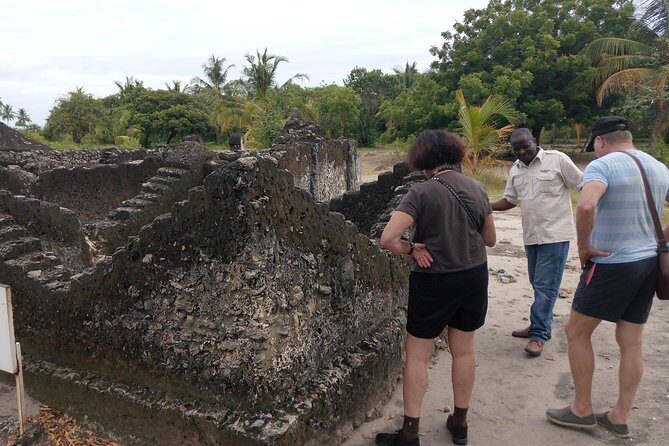
- Kaole Ruins (30 tombs + oldest mosque in East Africa): you’ll see what’s left of an Arab town shaped by centuries of trade.
- Slave-trade prison + the meaning of Bwagamoyo: you’ll hear why Bagamoyo’s name carries grief and longing.
- Old Boma’s German-era statehouse: a real colonial footprint from 1897, later taken over by the British after World War I.
- Dr. Livingstone’s connection through the Catholic Museum: Christianity meets exploration in one stop.
- A French missionary First Cross (1867): you’ll connect early mission history to the town’s wider story.
- A beach reset at the end: you’re not stuck in museums all day; you get time to cool off near the water.
From Dar es Salaam to Bagamoyo: The 65-kilometer “gear shift”
This is an 8-hour full-day tour that starts in Dar es Salaam and heads north to Bagamoyo, about 65 kilometers away. You’ll feel the change before you even reach the historical sites: leaving the big-city energy and moving toward a smaller coastal pace. For a lot of people, that drive alone is a useful warm-up, because Bagamoyo’s history is tied to what’s around it—roads, the coast, and the direction of travel toward Zanzibar.
Pickup is included, and the driver is waiting in your hotel lobby with a sign showing your name. That matters in Dar, where things can feel chaotic if you’re hunting for the right vehicle yourself. You also travel in air-conditioned transportation, plus you get water and soft drinks along the way, which helps on a day that otherwise has a lot of walking and talking.
One thing I like about this kind of day trip is the pacing: it’s not a sprint through 20 stops. You’re going to key places that each tell a different chapter—trade, decline, coercion, colonial rule, and religion—so the story grows instead of repeating itself.
You can also read our reviews of more historical tours in Dar Es Salaam
Kaole Ruins: where 30 tombs explain an Arab town’s decline
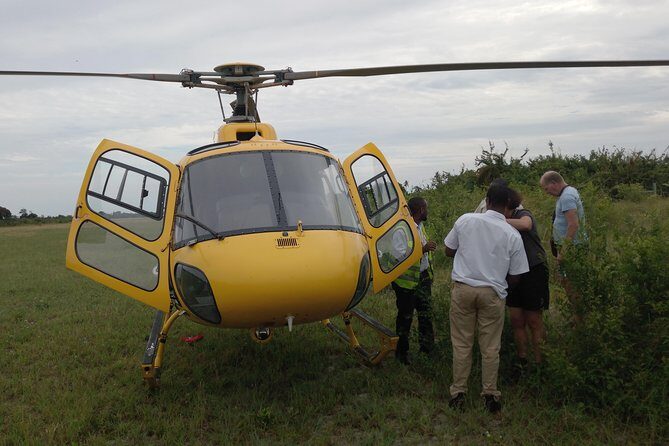
Kaole is about 5 kilometers south of Bagamoyo, and that proximity makes it easy to fit into a single-day circuit. The Kaole Ruins are described as the remains of the ancient Arab town of Kaole, and the story is clear: it fell into decline after Portuguese arrival in the 15th century.
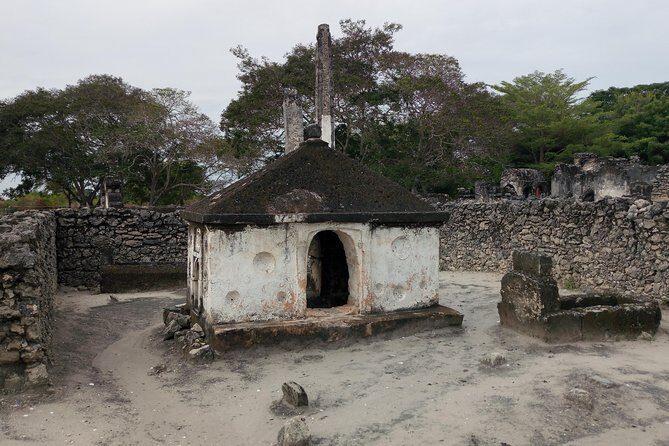
What you’re actually looking at is the physical aftermath. The ruins include around 30 tombs and the oldest mosque in East Africa (as described in the tour information). That combo is powerful for me because it’s not just architecture. Tombs tell you who was there and how people marked death in a trading society. A mosque tells you what kind of religious life shaped the town’s identity.
Why this stop is worth your attention: Bagamoyo’s importance didn’t appear out of nowhere. Kaole helps you see the earlier layer—an Arab coastal world where trade, faith, and settlement formed together. Then the Portuguese pressure and shifting routes pushed things off balance, and you can understand decline as a historical process, not as a mystery.
Practical note: ruins days reward sensible shoes. Even if the walking isn’t described in exact distances, you’ll be moving around an archaeological area where uneven ground is part of the package.
Bagamoyo’s slave-trade reminders and the meaning of Bwagamoyo
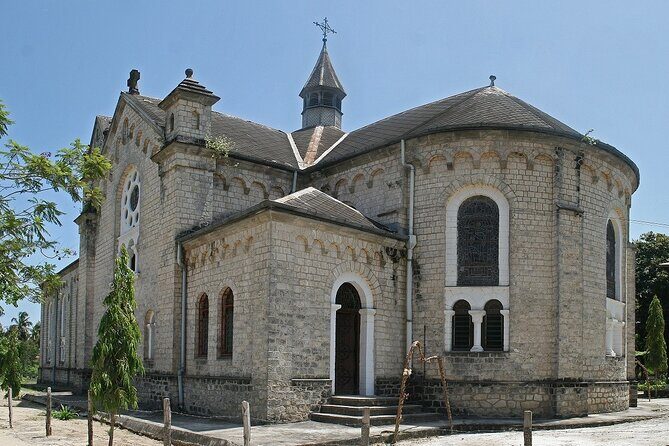
After Kaole, the tour turns to the part of Bagamoyo that many people struggle to picture: captivity and forced movement tied to the slave and ivory trade. The highlight here is visiting the prison where slaves were held captive during that trade era.
This is the emotional center of the tour. Standing where people were confined changes the way you absorb the rest of the history. It also reframes the port story: trade was not only goods and boats; it was human suffering, too. The tour’s name theme ties directly to that grief—Bwagamoyo means Here I throw down my heart, reflecting the despair of those who would never return to Africa.
I like that the tour doesn’t just mention slavery in passing. It points you to specific places in Bagamoyo’s past where the system worked. That helps you connect the town’s role as a major port with what that role cost people.
If you’re traveling with someone who gets anxious around heavy topics, it can help to agree beforehand. You’re not going to a place for casual photos only. You’re going to understand why Bagamoyo carries such a heavy name.
Old Boma and German leaders’ tombs: power in stone from 1897 to WWI
Next comes the colonial layer, and it’s not subtle. You’ll visit the Old Boma, described as a statehouse constructed by the Germans in 1897. After World War I, the British took over the building, so it holds two eras of European authority in one structure.
This stop is great for practical travel thinking: if you want to understand how European empires acted on the coast, you don’t need a textbook. You can walk around the buildings and landmarks they left behind and connect that to dates you’ve heard before. The physical place does the remembering for you.
Then you’ll walk among the tombs of German leaders who perished during the First World War. That’s another emotional stop, but in a different way than the slave-trade prison. Here, the weight is about military loss and the way empires marked their own dead.
A balanced way to approach this: notice what these sites represent, but don’t ignore that they were part of systems that affected locals and regional life. Old Boma is a history lesson about governance, conflict, and how colonial power left long shadows.
The Catholic Museum, Dr. Livingstone’s resting place, and early mission connections
If Kaole and Old Boma deal with political and economic force, the Catholic Museum shifts you toward religion and exploration. You’ll visit the Catholic Museum and the former resting place of Dr. Livingstone.
Dr. Livingstone is a name many people know, but what matters here is how the tour ties him to Bagamoyo’s spiritual and historical geography. Christianity isn’t treated as a separate storyline; it’s woven into the same coastal space where trade and travel changed hands.
After that, you’ll see the First Cross erected in 1867 by French missionaries. That gives you a timeline anchor: mid-19th century mission activity, in a coastal setting already shaped by centuries of contact.
Why I think this pairing works: it connects explorers and missionaries to the real places they visited or influenced. It’s easier to remember dates when you can place them in a town and walk between them. One stop hands you the famous name; the other gives you a concrete marker from 1867.


“Warm hospitality” and the beach reset after a serious day
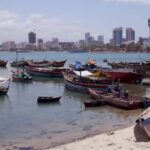
The tour ends with a change of pace: Bagamoyo’s warm hospitality and beaches. The idea is that you don’t just leave with a head full of dates and difficult scenes. You also get a chance to decompress near the water.
That matters, because history days can turn your brain into a sponge that never squeezes out. A coastal finish gives you space to breathe. You can also use the beach time to reset how you feel about everything you saw earlier—Kaole, the prison, Old Boma, the cross.
I’d treat this as your reward for staying present during the harder parts of the tour. After you’ve absorbed the darker chapters, it feels good to spend a little time where people actually come to unwind.
Price and value: what $187 buys you for an 8-hour history day
At $187 per person for an 8-hour tour, you’re paying for more than a guide. You’re paying for the whole “day machine”: air-conditioned transportation, pickup service from your hotel, water and soft drinks, and an English-speaking guide to connect the dots between sites.
The value is strongest if you don’t want to do this on your own. Bagamoyo is outside Dar by 65 kilometers, and moving between multiple historical locations is the kind of trip that becomes stressful without local help. Here, the guide reduces the mental load. You’re not working out routes while you’re also trying to understand Portuguese arrival timing, the German statehouse story, and the religious markers.
Two costs to keep in mind: meals and alcohol are not included. That’s normal for day tours, but it affects planning. If you don’t eat beforehand, you may find yourself hungry while the day is still running. I recommend you plan a simple lunch strategy outside the tour plan or eat early enough that you’re not focused on food during museum and ruins time.
Guide and driver quality: where it can really make or break the day
One of the best things about this tour is that the narration can turn sites into an actual story. In at least one account tied to this experience, Michael was praised for driving safely and keeping company on the route, and Sedic was singled out for quick, detailed narration covering port-related themes like governance and education, plus how the area works geographically.
That combination—driver confidence plus a guide who can explain clearly—makes a big difference on a day full of dates. On the other hand, there’s also a caution: English proficiency can vary. If you need highly polished English to follow complex explanations, keep your expectations flexible and consider asking your provider what the guide’s English level tends to be.
This is one reason why I like tours with built-in interpretation. Even when language isn’t perfect, a good guide still helps you understand what you’re looking at.
Who should book this Bagamoyo historical tour
This tour is a strong match if you:
- love history that feels grounded in real places, not just museum labels
- want a mix of coastal trading context and colonial-era landmarks
- are interested in Kaole’s ruins and the religious markers tied to the town’s past
- don’t mind that the day includes slavery-related reminders
It might be less ideal if you:
- want a purely relaxing beach day (this is still a full-day program)
- get overwhelmed by difficult historical topics without time to process
- need very advanced English narration to feel satisfied
If you fall somewhere in the middle, you’re probably still fine. Just plan for the emotional tone and bring patience for the fact that this is a history-focused route.
Should you book? My take
Yes, I’d book it if you want Bagamoyo to make sense. The itinerary covers the big anchors—Kaole, the prison connected to the slave and ivory trade, Old Boma, the Catholic Museum and Dr. Livingstone’s connection, and the First Cross of 1867—and it finishes with beach time so you’re not just brained-out by afternoon.
Skip or reconsider only if English narration quality is a dealbreaker for you or if you know you don’t handle slavery-related historical sites well. Otherwise, the cost feels reasonable for a guided, full-day circuit with transport, water, and interpretation built in.
FAQ
How long is the Bagamoyo Historical Tour – Everyday?
It lasts 8 hours.
Where is Bagamoyo located?
Bagamoyo is in the Pwani Region of Tanzania, about 65 kilometers north of Dar es Salaam on the coast opposite Zanzibar.
What are the main stops on the tour?
You’ll visit Kaole Ruins, the prison linked to the slave and ivory trade, the Old Boma, the Catholic Museum (including the former resting place of Dr. Livingstone), and the First Cross erected in 1867, plus time for Bagamoyo’s beaches and hospitality.
Does the tour include meals?
No. Meals are not included.
Does the tour include pickup from my hotel?
Yes. Pickup is included, and the driver will wait in your hotel lobby with a sign showing your name.
What’s included in the price?
Included are air-conditioned transportation, an English-speaking guide, water, and soft drinks.
What’s not included?
Meals and alcohol are not included.
Is the tour wheelchair accessible?
Yes, it is listed as wheelchair accessible.
Is English always guaranteed at a high level?
The tour is listed as having an English-speaking guide, but English quality can vary, so if language precision matters to you, it’s smart to set expectations accordingly.
What are the booking and cancellation terms?
You can cancel up to 24 hours in advance for a full refund. The tour also offers a reserve now & pay later option, so you can book without paying immediately.