REVIEW · ARUSHA
8 Days Lemosho Route Kilimanjaro Trekking
Book on Viator →Operated by Mafie Adventures · Bookable on Viator
Kilimanjaro feels different on the Lemosho route. This 8-day trek stitches together rainforest walking, the big views of the Shira Plateau, and then joins the southern-circuit rhythm that many people use for a summit push. I love that it starts with lower crowds compared with the more famous routes, so your early days feel more personal and quiet.
What I especially like is the variety of altitude “worlds” you pass through—rain forest, moorland, semi-desert, then alpine desert—without needing to cram everything into a single exhausting day. I also like the on-the-ground team side of this trek: Mafie Adventures runs it with a professional driver/guide, porters, and a setup that includes camping basics and meals so you’re not constantly managing logistics in the field.
One consideration: you’re still climbing to very high altitude on summit night, and the schedule includes a long day plus a cold, exposed ridge time at Barafu. If you’re not comfortable with early starts, wind, and low-water camp conditions, you’ll feel that more than you would on a milder hike.
In This Review
- Key points before you commit
- Why the Lemosho Route Feels Like a Smarter Kilimanjaro Plan
- Day 1: Arusha to Londorossi Gate and a Rainforest Start
- Day 2: Shira Ridge and Shira 1 Camp Views
- Day 3: Northern Ice Fields Area and the Lent Hills Acclimatization Option
- Day 4: Lava Tower, Arrow Glacier, and Barranco Hut for Real Acclimatization
- Day 5: Great Barranco Wall to Karanga Camp
- Day 6: Barafu Hut and the Pre-Summit Night Setup
- Day 7: Summit Push to Stella Point and Uhuru Peak, Then a Long Descent Plan
- Day 8: Mweka Descent, Celebration, and Certificate Colors
- What $2,700.52 Buys You (And What You Still Need to Plan)
- Gear, Pace, and Altitude: Practical Tips for a Safer Summit Attempt
- The Team: Where Mafie Adventures Wins Trust
- Who This Trek Suits Best
- Should You Book This 8-Day Lemosho Trek?
- FAQ
- What does the 8-day Lemosho trek include?
- Where does the trek start and end?
- What time does the trek start?
- Do you pick you up from Arusha or nearby?
- Is this a private tour?
- What route and summit goal is planned?
- What camp and altitude highlights should I be aware of?
- What happens if I reach Stella Point but not Uhuru Peak?
- Is climbing gear and a sleeping bag included?
- Are meals and tickets included?
- What is not included besides airfare?
Key points before you commit
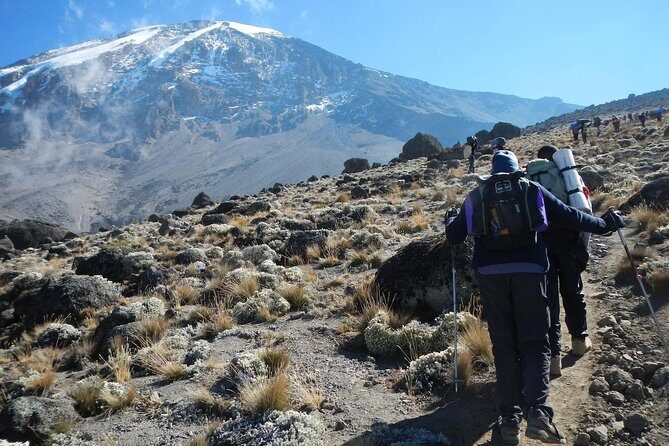
- Rainforest to Shira Plateau to the southern circuit: real variety, not just a straight line up.
- Lemosho’s early quiet factor: fewer people before the route combines later.
- Acclimatization built in: multiple “plateau” days and a moir hut plus Lent Hills option to help your body adjust.
- Critical camps and altitudes are spelled out: including Barafu (4550m) and the approach to Arrow Glacier (16,000ft).
- Summit day is the long haul: Stella Point then Uhuru Peak, followed by a big descent plan.
- Mafie Adventures communication stands out: people highlight owner Erastus and guides such as Oliver and John for responsiveness.
Why the Lemosho Route Feels Like a Smarter Kilimanjaro Plan
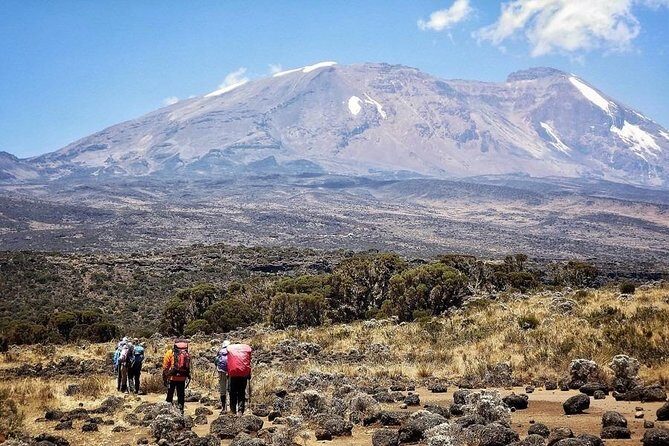
The Lemosho route is often picked for one reason: it gives you more “Kilimanjaro for the buck” in terms of scenery and pacing. The big story is that you begin through forest, climb into the Shira Plateau, then connect with the Machame-style portion so you still get the classic southern circuit viewpoints later on. That mix is why Lemosho tends to feel more varied than routes that start higher immediately.
I also like how the trek is staged for your body. You don’t just go up and hope. The itinerary keeps inserting acclimatization moments: Shira Ridge and Shira camps early on, then time near the Northern Ice Fields area, and later a camp sequence that includes Barranco Wall and a short acclimatization-style day before Barafu.
Crowd level matters on Kilimanjaro. Lemosho is described as having low crowds until it combines with Machame, meaning your first days can feel calmer. That can mean better sleep, less waiting at viewpoints, and fewer traffic-jams on narrower sections of trail. It’s not a guarantee of solitude, but it’s a genuine advantage.
You can also read our reviews of more hiking tours in Arusha
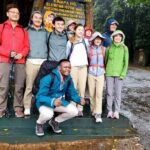
Day 1: Arusha to Londorossi Gate and a Rainforest Start
You start from Arusha with a 6:00 am launch time, then drive about two hours to Londorossi Park Gate. You’ll go from roughly 1400m in Arusha up to around 2100m at the gate, then complete entry formalities in the nearby village. After that, there’s another drive to the Lemosho trailhead.
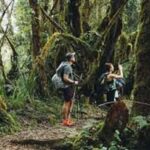
Once you start walking, Day 1 is about getting your bearings. The hike is roughly 6 km over about 3–4 hours through rainforest. Even on a “not too long” day, rainforest walking has its own rhythm: it’s cooler, shaded, and often damp, which means footing can feel slick. The trail “winds” to the first camp site, so you’re learning how your legs handle a steady climb before altitude becomes the main issue.
Why this day matters: it sets the tone. If you go into Day 1 tense and fast, you’ll pay for it later. The better approach is simple—start easy, eat lunch when offered, and keep your breathing smooth.
Day 2: Shira Ridge and Shira 1 Camp Views
Day 2 pushes you out of the forest and into moorland. The hike time is around 5.5 hours for about 8 km, and the trail rolls through tall grasses, heather, and volcanic rock with lichen.
You’ll ascend through lush rolling hills, cross several streams, and reach the Shira Ridge before dropping gently down to Shira 1 camp. The highlight is the view of Kibo from across the plateau. That moment can be motivating, especially if you’re feeling the shift from humid forest into higher, drier air.
One practical note: moorland can feel colder than you expect, even if you’re moving. Dress in layers you can manage, because you’ll go from sun to cloud to wind fast at these elevations.
Day 3: Northern Ice Fields Area and the Lent Hills Acclimatization Option
Day 3 is one of those “this is why I chose Lemosho” days. You’re walking about 15 km (roughly 5–7 hours) through moorland, aiming for a camp beneath the Northern Ice Fields.
The route is described as a gentle walk east toward Kibo’s glaciered peak across the plateau, leading you to Shira 2 camp by a stream. After that, you go toward Moir Hut, a lesser-used site near the base of the Lent Hills. This part is a strong acclimatization opportunity because there are variety-style walks on Lent Hills.
Why I like this structure: it gives you a day where the “effort level” doesn’t spike every hour. You still climb and you still get higher, but you’re not locked into nonstop steepness. If you’re serious about summit odds, that flexibility is helpful.
Day 4: Lava Tower, Arrow Glacier, and Barranco Hut for Real Acclimatization
Day 4 is longer on paper—about 7 hours and around 7 km—but the real work is altitude and exposure. You start from Moir Hut, continue east up a ridge, and pass a junction toward the peak of Kibo.
Then the route swings to the south east toward Lava Tower, known as the Shark’s Tooth. After you reach the tower area, there’s another junction that brings you up toward the Arrow Glacier at around 16,000 ft, and then you descend down to Barranco Hut at about 13,000 ft.
Even though you end the day at a similar elevation to when you started, this day is considered very important for acclimatization. It trains your system without exhausting you with a straight-up climb. Barranco Hut becomes your overnight stop, with dinner and rest so you can recover for the next day’s key obstacle.
Practical reality: higher-up, you can feel the cold quickly once the sun drops behind clouds. Start thinking about warmth before you feel desperate for it.
Day 5: Great Barranco Wall to Karanga Camp
Day 5 is a short-distance day with a name that scares people: the Great Barranco Wall. You walk about 5 km for 4–5 hours through alpine desert. There’s an early breakfast, then the wall climbs up steep terrain.
The good news in your favor: the wall is described as a Class 2 hike that many find easier than it looks from a distance. At the top, you get views of Heim Glacier and you may be above the clouds, which is a rewarding payoff for the effort.
After the wall, the trail winds up and down in the Karanga Valley, and you camp at Karanga Camp (3950m). You also get dinner and washing at the site.
I like this day because it’s a confidence-builder. It’s physical, yes, but it’s also tactical. You learn that tricky-looking terrain can be handled with slow pacing and steady foot placement.
Day 6: Barafu Hut and the Pre-Summit Night Setup
Day 6 is where the trek sharpens. You start with breakfast, then begin the ascent, intersecting with the Mweka Route, which is used for descent on the final two days.
After about an hour, you reach Barafu Hut, and the itinerary notes something practical: Barafu is the last water stop for porters because there’s no accessible water at Barafu Camp (4550m). So hydration planning isn’t optional here.
Barafu Camp sits on a rocky, exposed ridge. The word “barafu” means ice in Swahili, and the tents are exposed to wind and rocks. This is the night where you want to be fully ready before darkness, because conditions can make quick tasks harder.
You’ll have an early dinner and then rest before the summit attempt. This is also the day where your mental preparation matters as much as your physical readiness. If you go in thinking summit night is just walking uphill, you’ll be shocked by the cold and the long hours.
Day 7: Summit Push to Stella Point and Uhuru Peak, Then a Long Descent Plan
Summit night begins very early. You’ll be woken around 23:30 for tea and biscuits, then start the climb. The route heads northwest over stone scree toward the higher, harsher zone near the crater.
This part is often described as the most mentally and physically challenging section. You push for about 6 hours to Stella Point (5685m) on the crater rim. There’s a planned sunrise moment there, and it’s one of the reasons many people accept the discomfort—watching light come up high on Kilimanjaro feels unreal.
From Stella Point, you continue for about 2 hours on a snow-covered trail to Uhuru (the itinerary indicates Uhuru Peak at 5895m). After reaching the summit area, you then descend. The plan notes about 7–8 hours to get down to Mweka.
This day is not about speed. It’s about conserving energy, keeping a steady pace, and accepting that breathing may feel strange. If you’re prone to panicking when you slow down, practice telling yourself that slower is fine. The route is short on distance and long on effort.
Day 8: Mweka Descent, Celebration, and Certificate Colors
Day 8 starts with breakfast, then a celebration with dancing and singing. After that, you present tips to your guide, assistant guides, chef(s), and porters.
Then comes the payoff of returning to lower altitude: you descend for about 3 hours back to Mweka Gate, and the park requires all hikers to sign their names to receive completion certificates. Certificate color is tied to your summit progress: green for reaching Stella Point (5685m) and gold for reaching Uhuru Peak (5895m).
After the gate, you descend into the Mweka village for about 1 hour (the distance is partially listed, but the point is the final leg is straightforward). Even though your legs might be done, this is the day that feels most like closure. You’re not climbing anymore; you’re collecting your memories and letting your body unwind.
What $2,700.52 Buys You (And What You Still Need to Plan)
At $2,700.52 per person for an 8-day trek, you’re paying for more than a route on a map. This price includes camping equipment like the mess tent and mattress plus cooking equipment, plus parking fees, rescue fees, and all taxes/VAT. It also includes camping and accommodation while you’re on the mountain.
Meals are included too: 7 breakfasts, 8 lunches, and 7 dinners. Porterage is included, along with a professional driver/guide, and the itinerary lists pickup offered and a mobile ticket.
That’s the value side: you’re not funding the infrastructure that makes a Kilimanjaro trek work. Your crew provides the field logistics and food, and rescue fees are included in the package.
What’s not included is important to budget. You’ll need to arrange climbing gear (rentals available) and a sleeping bag (rental available). Bath towels and personal items are not included. Also, tips are not included, and international flights and any hotel nights before or after the trek are not covered.
The simplest way to think about it: this is priced like a full-service mountain expedition. If you plan to rent gear in-country and budget for tips, the costs feel more predictable. If you show up without a plan for cold-weather kit, you’ll feel squeezed.
Gear, Pace, and Altitude: Practical Tips for a Safer Summit Attempt
The itinerary gives several “environment tells” that can guide what you pack and how you behave:
- Barafu Camp is exposed and windy: plan for wind protection and cold tolerance. The tents are described as exposed to wind and rocks.
- Last porter water point is Barafu: don’t treat water as endless on the mountain.
- Summit starts around 23:30: you’ll need warm clothing for cold early hours, not just daytime hiking layers.
- Cold and snow are part of the plan: the trail near Uhuru is described as snow-covered.
Because the data says climbing gear and sleeping bags can be rented, you have options. I’d still suggest choosing rentals that fit well. Ill-fitting boots and sloppy layering are the kinds of problems that can ruin a trek more than elevation itself.
Pacing: your best tool is consistency. The route has days where distance looks short but elevation does the heavy work. On those days, slow steps win. Take breaks when offered, but avoid turning every pause into a long standstill where you cool down.
The Team: Where Mafie Adventures Wins Trust
This trek is run by Mafie Adventures, and the standout theme from the feedback I’ve seen is communication and a capable expedition team.
People speak positively about Erastus, the owner/organiser, for being quick to respond through WhatsApp when questions came up. On the mountain, guides like Oliver are described as friendly and central to the experience, and John is also mentioned as part of the crew.
Why this matters to you: Kilimanjaro isn’t just about walking. It’s about feeling informed when your body gets weird at altitude. Having clear guidance, a calm head in the group, and a crew that keeps the day moving is often the difference between a stressful trek and a memorable one.
Who This Trek Suits Best
This is a strong fit if you want:
- Varied scenery from rainforest to plateau to alpine desert
- A trek with built-in acclimatization structure, not just a fast climb
- A full-service expedition where camping setup and meals are handled
- A quieter start thanks to lower crowds on early Lemosho days
It may be less ideal if you dislike cold exposure and early starts. Summit night and the exposed ridge at Barafu are not mild features of the itinerary.
Should You Book This 8-Day Lemosho Trek?
I’d book it if you want the Lemosho mix: forest beginnings, big Shira Plateau views, then a well-known southern circuit progression. The included package is the practical reason—the trek supports your day-to-day needs with camping gear, meals, porterage, and even rescue fees baked in.
I’d pause and plan harder if you know you struggle with wind, cold mornings, or long summit hours. In that case, talk with the outfitter about gear rental quality and use the planning time to get your clothing and sleeping setup right.
If you match the route to your comfort level and show up ready for altitude, this 8-day Lemosho itinerary is the kind of Kilimanjaro climb that feels thoughtful—not rushed—and that’s exactly what you want when you’re heading for Uhuru Peak.
FAQ
What does the 8-day Lemosho trek include?
The package includes camping equipment (mess tent, mattress, and cooking equipment), parking fees, rescue fees, all taxes/VAT, accommodation while on the trek, a professional driver/guide, porterage, and meals (7 breakfasts, 8 lunches, and 7 dinners).
Where does the trek start and end?
It starts in Arusha, Tanzania, and ends back at the meeting point.
What time does the trek start?
The start time listed is 6:00 am.
Do you pick you up from Arusha or nearby?
Pickup is offered, and the tour notes near public transportation.
Is this a private tour?
Yes. The activity is private, meaning only your group participates.
What route and summit goal is planned?
This is the 8-day Lemosho route. The summit attempt is planned for Uhuru Peak, with Stella Point (5685m) also reached during the ascent.
What camp and altitude highlights should I be aware of?
Key stops include Barafu Camp at 4550m (with no accessible water for porters), Arrow Glacier at around 16,000ft, Barranco Hut around 13,000ft, and the summit area at Uhuru Peak (5895m).
What happens if I reach Stella Point but not Uhuru Peak?
Certificates are color-coded: green for Stella Point and gold for Uhuru Peak.
Is climbing gear and a sleeping bag included?
Climbing gear is not included, but rental is available. A sleeping bag is also not included, but rental is available.
Are meals and tickets included?
Meals are included on scheduled days. Park admission tickets are shown as free for the days listed in the trek details.
What is not included besides airfare?
Not included: international flights, accommodation before and after the trek, climbing gear rentals (you can rent), sleeping bag rentals (you can rent), bath towels, tips, personal items, and any government-imposed increases in taxes or park fees.