REVIEW · ARUSHA
5 Days Lodge Safari – Tarangire, Serengeti, Ngorongoro & Manyara
Book on Viator →Operated by Rupia Adventure · Bookable on Viator
A safari route with four parks in five days is rare. This one strings together Tarangire, Serengeti, Ngorongoro Crater, and Lake Manyara, so you get different habitats and different animal vibes without wasting days in transit.
I especially like the focus on real wildlife viewing: long drives with picnic lunches, plus time on the crater floor when animals gather around watering holes. I also like the practical lodge setup—your dome tents have mosquito nets built into the windows and doorways, and meals are handled so you don’t spend energy “figuring it out.”
One consideration: it’s a lot of driving and early starts. If you’re sensitive to long days on the road (or want private bathroom facilities), this may feel more intense than a slower safari.
In This Review
- Key things to know before you go
- A four-park hit of Northern Tanzania wildlife
- Getting picked up in Arusha and moving fast (without feeling rushed)
- Tarangire National Park: baobabs, elephants, and a river-shaped day
- Serengeti afternoon and morning drives: herds, predators, and that open-plains feeling
- Ngorongoro Crater Rim to crater floor: the “garden of animals” effect
- The Day 4 descent and climb: why the timing matters
- Lake Manyara on the final day: forest edges and luck-based lion chances
- Lodge and tent comfort: mosquito nets, foam mattresses, and shared bathrooms
- Food on safari: more than fuel between drives
- Price and value: what $2,600 gets you in the real world
- Guide quality can make or break the safari day
- Who this safari is perfect for (and who should think twice)
- Should you book the 5 Days Lodge Safari circuit?
- FAQ
- What parks are included in this 5-day safari?
- Where does the safari start?
- How long is the trip?
- What does the itinerary include each day?
- What kind of lodging do you sleep in?
- Are bathrooms available?
- How large is the group?
- Is pickup included?
- What is the cancellation policy?
- Does weather affect the trip?
Key things to know before you go
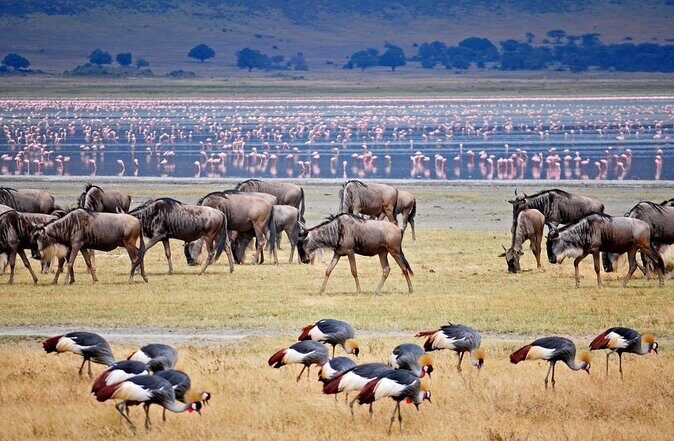
- Big-five viewing in multiple places, not just one park day
- Dome tents with built-in mosquito net protection and foam mattresses
- Picnic lunches during drives, which keeps game time from getting chopped up
- Shared public bathroom access at campsites (plan around that reality)
- Max 15 travelers, so it’s usually small-group friendly
- Weather-dependent parks, with the option of a different date or refund if conditions shut it down
A four-park hit of Northern Tanzania wildlife
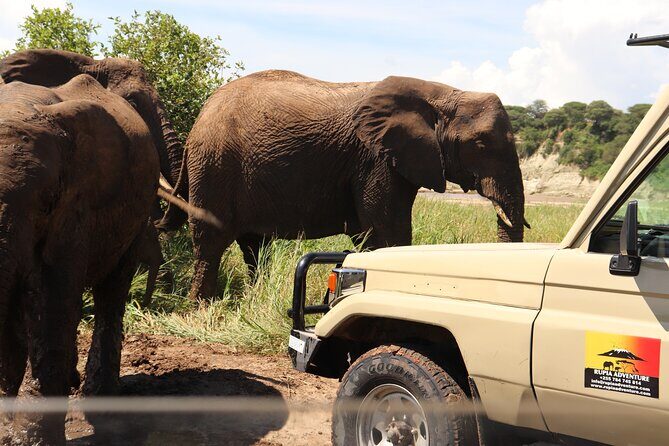
If you’re planning Northern Tanzania for the first time, you want two things: efficient routing and enough time in each place to feel the animals’ rhythm. This safari does both. You’re based out of the Arusha area, then you move through parks that each “specialize” in different kinds of sightings.
Tarangire tends to deliver elephants and baobabs. Serengeti gives you the wide-open drama of herds and predators. Ngorongoro Crater compresses wildlife into a bowl where animals show up around water. Lake Manyara adds forest edges, the chance of tree-climbing lions, and—depending on season—flamingos.
The result is that you don’t need to gamble everything on one single park day. Even when animals are quiet, the scenery and habitat shifts keep the trip from feeling repetitive.
A few more Arusha tours and experiences worth a look
Getting picked up in Arusha and moving fast (without feeling rushed)
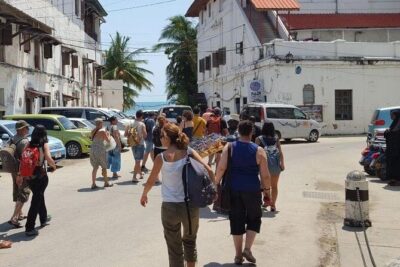
Your day starts early. Pickup is listed for 8:30 AM on Day 1 from your Arusha hotel, and the schedule keeps rolling from there. On Day 5, the final push begins at 8:00 AM.
Why that matters: in Tanzania, wildlife moves on its own timetable. Early light often brings more active animals, and midday can be hotter and less predictable. This plan respects that.
You’ll also be in a small group: the maximum is 15 travelers. In practice, small-group safaris can still vary day-to-day depending on how people book, and some past departures reported getting a quieter vehicle on certain days. So while you should expect a shared safari rhythm, you’re not stuck in a massive tour herd.
You’ll also receive a mobile ticket, and pickup is offered—those are small details that reduce stress when you’re arriving with limited time.
Tarangire National Park: baobabs, elephants, and a river-shaped day
Day 1 is built around a full day in Tarangire, starting right after pickup. You get a picnic lunch and a full day game drive, then you head to camp/lodge for dinner.
Tarangire is famous for baobab trees—huge, flat-topped giants that look like they’re holding the sky up. Animals feed beneath them, which gives you a strong sense of place. It’s not just “trees plus animals.” It’s a landscape of scale, and that helps you understand why the elephant herds feel so dominant here.
The Tarangire River is the centerpiece, and that’s the key ecological idea behind the sightings you’ll likely get:
- elephants are drawn to water and the feeding areas around it
- predators hunt where prey gathers
- the whole system tightens during dry-ish stretches
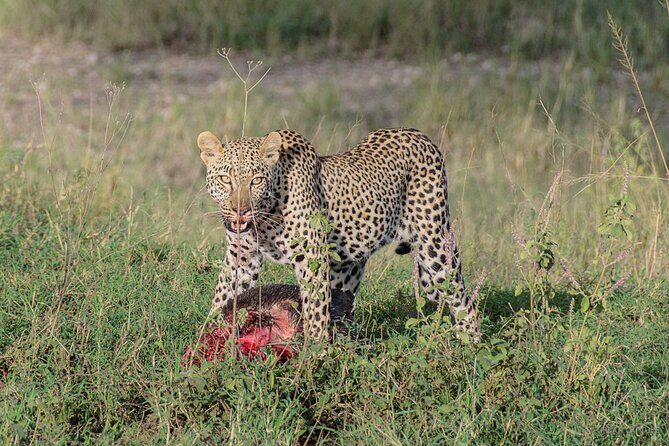
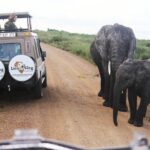
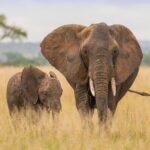
In the parks’ listed possibilities, you may spot lion, leopard, cheetah, lesser kudu, buffalo, Oryx, eland, giraffe, and zebra. Tarangire is also where the “big animal energy” often shows up fast—elephant herds can be a highlight even before you see anything else.
Practical note: bring sunscreen and water for daytime drives, but also keep something warm in the vehicle. The temperature can swing between morning and evening.
Serengeti afternoon and morning drives: herds, predators, and that open-plains feeling
You reach Serengeti on Day 2 and Day 3, with a strong mix of an afternoon drive and a morning drive. That’s not random. Afternoon light can make dust and movement pop, while mornings often bring more active feeding and predator attention.
Serengeti is described as an outstanding wildlife sanctuary, and the key reason it earns that reputation is scale. When you drive out onto the endless plains, you stop thinking in terms of “patches” and start thinking in terms of movement across the whole ecosystem.
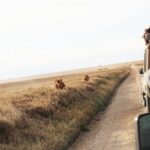
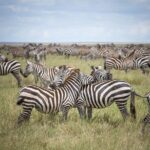
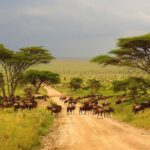
What you’re set up to look for includes the classic mix of wildebeest, zebra, gazelles, and the possibility of lions lounging in the shade. And because you’ll be on game drives that include picnic lunch time, you’re not constantly breaking the flow to search for food stops.
On Day 3, the morning drive is your best bet for seeing animals come to life. Then you depart toward Ngorongoro Crater Rim for the next phase.
My advice: be ready to stay patient. Serengeti wildlife isn’t always “rush in five minutes and done.” The upside is that when you do hit a herd or a predator moment, it feels bigger than a single sighting. It’s the vibe of an entire system.
Ngorongoro Crater Rim to crater floor: the “garden of animals” effect
Ngorongoro Crater is the big mental image stop on this itinerary. You arrive at the rim area first (Day 3) and then descend for a crater-floor drive on Day 4.
The plan calls Ngorongoro the world’s largest collapsed volcanic crater, and it’s treated like a closed bowl of wildlife. The crater floor is where things get concentrated: the listed info notes about 30,000 animals and watering holes that pull animals together.
This is where Ngorongoro differs from the open savannas. Instead of searching large spaces, you’re reading a contained environment. That changes how sightings happen. You might see animals moving between watering points more than you see long-distance chases.
On the rim day (Day 3), you’re driving with picnic lunch and setting up for the next day’s descent. Day 4 is the main event: you descend for a game drive of about 5 hours, then picnic at the Hippo Pool, and later you climb back out.
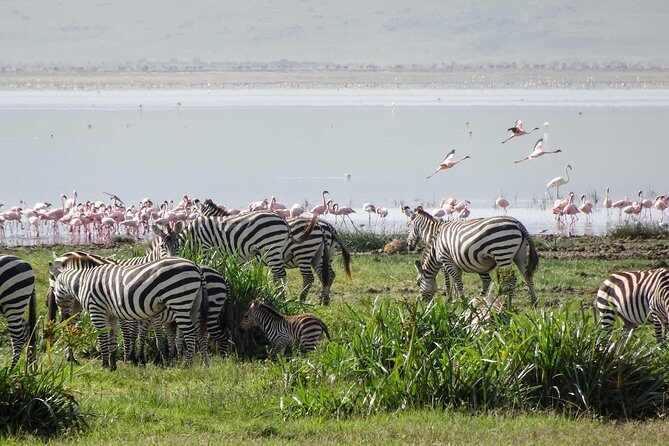
For sightings listed for the crater floor: lions, elephants, zebras, hippos, flamingos, jackals, rhino antelopes, plus many birds.
Bird time is real here. The plan lists a bunch of them, including eagle, vulture, and flamingos, and also species like sacred ibis, kori bustard, long-necked heron, and others. So if you’re the kind of person who loves wildlife details beyond mammals, Ngorongoro is worth the effort.
A few more Arusha tours and experiences worth a look

The Day 4 descent and climb: why the timing matters
The most physically demanding part of this route is also the most rewarding. You go down to the crater floor, spend a focused stretch driving, stop at Hippo Pool, then start a steep climb out.
That long crater drive plus the climb is why the itinerary makes it a full day, and why it ends with dinner waiting at your chosen accommodation in Karatu after a 2-hour drive.
Two practical points:
- Plan for steep sections. Even if you’re not walking far, you’ll feel the change in elevation and vehicle movement.
- Dress for temperature swings. One past safari note specifically called out bringing warm layers for Ngorongoro. I agree. The crater can feel colder than you expect, especially early and later in the day.
If your ideal safari day is “quiet, long viewing time with minimal physical strain,” this won’t match that. But if your ideal is “see wildlife where wildlife concentrates,” this is a strong choice.
Lake Manyara on the final day: forest edges and luck-based lion chances
Day 5 is your half-day game drive at Lake Manyara National Park, after breakfast and travel from the Karatu area. You enter the park around 9:00 AM, drive until mid-afternoon, and stop for a picnic lunch during the day.
Manyara is different from the other parks here. You start seeing acacia and mahogany trees, and that gives you a more shaded feel compared with open Serengeti.
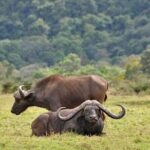
Sightings listed for this part of the safari include buffalo, giraffes, impalas, baboons, and blue monkeys. You can also watch for tree-climbing lions—and here the itinerary is honest: spotting them is luck-based.
Seasonal flamingos are another strong “maybe.” The plan notes that in the right season the shoreline can turn pink with large numbers of flamingos. So if you’re traveling in peak flamingo timing, keep your eyes on the waterline.
Why Manyara makes sense as the finale: after big drives and a crater day, a half-day gives you time to enjoy without packing in another all-day scramble. It’s a nice wrap-up that still feels like a real wildlife destination.
Lodge and tent comfort: mosquito nets, foam mattresses, and shared bathrooms
The “lodge safari” part isn’t fancy hotel style. You’re sleeping in robust dome tents with mosquito nets integrated into the windows and doorways, plus foam mattresses.
That combination matters more than it sounds. In Tanzania, your comfort isn’t just about sleep—it’s about how willing you are to wake up early the next day. Built-in netting reduces the hassle and helps you avoid the usual nighttime worry.
Bathrooms are the other reality check. The highlights mention access to shared public bathrooms and toilets while at campsites. That’s common on safari, but it’s still worth planning for:
- expect basic facilities
- treat the bathroom as “good enough,” not “spa level”
If you like clean simplicity, this setup works. If you require private, spotless en-suite comfort, you may find it frustrating.
Food on safari: more than fuel between drives
Meals are included, and the trip is positioned as having healthy, delicious food for every meal. That’s not a throwaway promise—when you’re spending long hours in a vehicle, good food is what keeps you from feeling drained before you even reach the animals.
Also, safari operations often live or die on their camp team. Multiple past accounts highlighted strong guide-and-cook teamwork. Names mentioned include David as an excellent cook and guides such as Mirage, Nora, Joseph, Emanuel, Balthazar, and others.
What I take from that as a practical traveler: you’ll likely be taken care of in the background so you can focus on the windshield, not the logistics.
Price and value: what $2,600 gets you in the real world
At $2,600 per person for about five days, this is not a budget safari. But it also isn’t pricing you for a luxury private lodge experience. It’s priced in the “serious wildlife trip” range, where costs come from park access, vehicle time, guide time, and the moving chain of camps.
Here’s the value logic as I see it:
- Four parks in five days means fewer wasted transfer days.
- Meals are included, so you’re not constantly paying for food on the road.
- Tent comfort is handled with mosquito nets and foam mattresses.
- Game drives are structured across multiple dayparts, not just one long “maybe” day.
So the question isn’t only whether $2,600 is a lot. It’s whether your priorities match what the route delivers. If your priority is big wildlife variety in one trip, this is a solid deal structure.
If your priority is comfort-first luxury and private bathrooms, you may feel the trade-offs more strongly than the average value-seeker.
Guide quality can make or break the safari day
On safari, you can’t separate animals from the human element. A great driver knows where visibility is good, where to position safely, and how to read animal behavior without spooking anything. And a strong guide can keep the day moving even when sightings are slow.
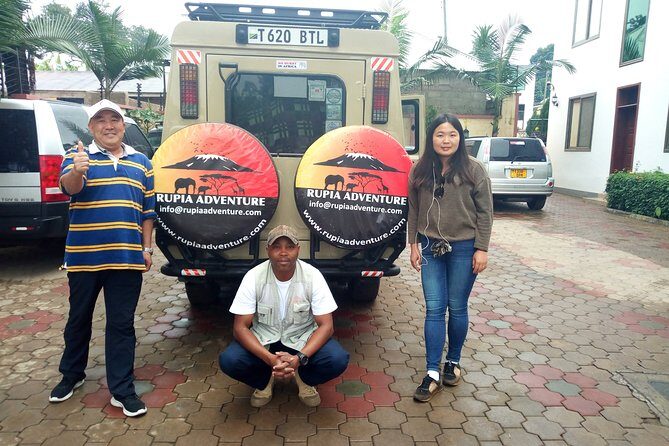
Past experiences linked to this company consistently call out guide strengths—people named Mirage, Nora, Joseph, Emanuel, and Balthazar, plus a strong camp cook named David. Some also mentioned punctual pickup and real care, and one account described schedule flexibility when dates didn’t work as planned.
My practical take: when you’re spending this much time in one vehicle with one team, personality and competence matter. With a small group cap and lots of time together, a good guide often becomes the memory you carry home.
Who this safari is perfect for (and who should think twice)
This itinerary fits best if you:
- want Tarangire + Serengeti + Ngorongoro + Manyara in one trip
- like early starts and long game drives
- are okay with shared bathrooms and tent-style camping
- enjoy seeing wildlife in different habitats, not just one park vibe
Think twice if you:
- hate long road days and steep physical schedule blocks
- need private bathrooms and hotel-level comfort
- get stressed by weather shifts, since safaris can depend on conditions
One more caution point from a negative experience: there’s at least one account stating that refund promises weren’t honored during a major disruption. I can’t generalize that to every booking. Still, if you’re booking far ahead, it’s smart to ask for clear written terms for unusual cancellations and keep your documentation organized.
Should you book the 5 Days Lodge Safari circuit?
I’d book it if you want maximum wildlife variety in a short time and you’re comfortable with a tented lodge style. The route makes sense: elephants and baobabs in Tarangire, the big-plains feel in Serengeti, crater concentration in Ngorongoro, and a calmer half-day wrap in Manyara.
I would not book it if your top priority is comfort like at home, or if you’re the type who gets miserable with shared facilities and steep elevation days.
If you’re on the fence, my best decision tip is simple: match the trip pace to your energy. If you can handle early mornings and full days of driving, you’ll likely love this circuit’s mix and the chance to see animals in very different “rooms” of the wild.
FAQ
What parks are included in this 5-day safari?
You’ll visit Tarangire National Park, Serengeti National Park, Ngorongoro Crater (at the crater rim and crater floor), and Lake Manyara National Park.
Where does the safari start?
It starts in Arusha, with pickup offered.
How long is the trip?
The duration is listed as about 5 days.
What does the itinerary include each day?
The plan is built around game drives in each park, with picnic lunches during the drives. Meals are included throughout the tour.
What kind of lodging do you sleep in?
You sleep in dome tents with mosquito nets integrated into windows and doorways, plus foam mattresses.
Are bathrooms available?
Yes. The trip highlights shared public bathrooms and toilets while at campsites.
How large is the group?
The maximum is 15 travelers.
Is pickup included?
Pickup is offered, including pickup from your hotel in Arusha on Day 1.
What is the cancellation policy?
You can cancel up to 3 days in advance for a full refund. If you cancel less than 3 days before the experience starts, the amount you paid is not refunded.
Does weather affect the trip?
Yes. The experience requires good weather, and if it’s canceled due to poor weather, you’ll be offered a different date or a full refund.