REVIEW · ARUSHA
4 Days Tanzania Safari – Tarangire, Serengeti And Ngorongoro
Book on Viator →Operated by Signature Safari · Bookable on Viator
Three parks in four days feels like speed-watching Africa. I like the way the route strings together Tarangire elephant country and Ngorongoro Crater wildlife so you get big variety without losing days to transit. I also like that hotel pickup and the daily schedule are built around maximizing real game-drive time.
The only real drawback is pace. Several days run about 10–11 hours in a vehicle, and you’ll be sleeping at safari campsites, so it’s not the kind of trip where you expect much downtime or “hotel comfort.”
In This Review
- Key things that make this 4-day Tanzania safari work
- Three parks, one tight schedule: what you’re really buying
- Day 1 in Tarangire: elephants first, then scan the treetops
- Day 2 heading to Serengeti: Rift Valley road + optional Maasai village
- Day 3 in Serengeti: northern migration focus and predator potential
- Day 4: Ngorongoro Crater descent for black rhino country
- Camping, meals, and how comfort changes your safari mood
- Guides and the human details that affect your odds
- Big Five chances: what’s realistic in a short circuit
- Price and logistics: is $890.95 good value for this route?
- Who this safari suits best (and who should skip it)
- Should you book this 4-day Tarangire–Serengeti–Ngorongoro safari?
- FAQ
- Which parks are included in this 4-day safari?
- What meals are included?
- Is hotel pickup and transport provided?
- Where do you sleep during the safari?
- How many people are in the group?
- What happens with refunds if I cancel or if weather is poor?
Key things that make this 4-day Tanzania safari work
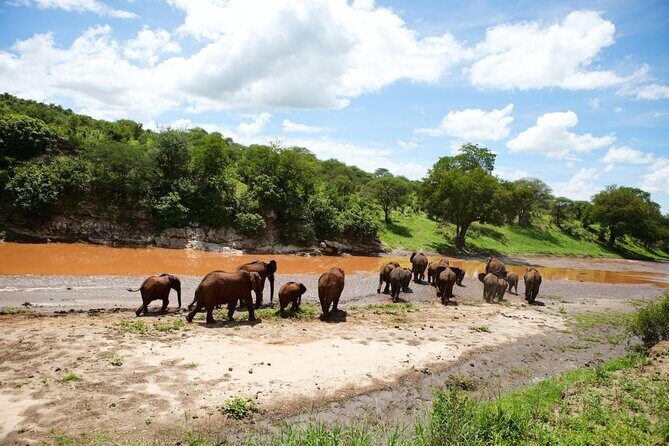
- Tarangire’s big-elephant energy with chances at herds (sometimes 10–20, sometimes up to 30)
- A Serengeti migration-focused day in the northern region for wildebeest, zebra, and more
- Ngorongoro Crater concentration: an estimated 30,000 animals plus a shot at the black rhino
- Small-group feel with a stated maximum of 2 travelers
- Meals + transport handled so you spend less time worrying and more time watching
Three parks, one tight schedule: what you’re really buying
This safari is designed for people who want the headline parks—Tarangire, Serengeti, and Ngorongoro Crater—without burning a whole week getting there. The value isn’t just that you visit three famous places. It’s the way the itinerary layers them so each day has a different wildlife style.
Tarangire often delivers “wow” moments early: elephants at close range and a chance to spot predators perched above the crowd line. Serengeti shifts the mood to wide-ranging movement, especially when you’re aiming for northern Serengeti timing tied to migration activity. Then Ngorongoro compresses everything into one crater system where animals gather around water and feed year-round—one of the reasons it’s so famous.
The trip also includes pickup and transport between parks, plus meals (three dinners and four breakfasts and lunches). That matters because in Tanzania, the safari experience starts long before you see the first animal. A smooth transfer setup lets you focus on the main event: game drives.
One more practical note: the operator is a small-group setup (up to 2 travelers). That usually means fewer “where is everyone?” moments and more flexible guiding within the limits of park rules and road conditions.
A few more Arusha tours and experiences worth a look
Day 1 in Tarangire: elephants first, then scan the treetops
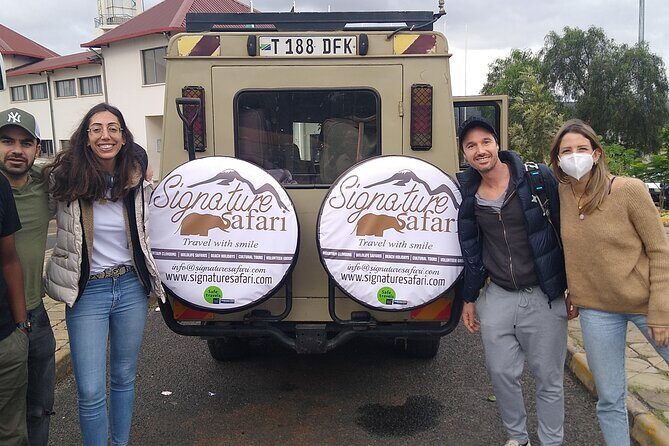
Your day starts with hotel pickup after breakfast and a straight drive into Tarangire National Park. You’ll stop for a picnic lunch and then move into a game drive mid-park, which is when Tarangire is at its best for spotting animals that stay in predictable areas.
Here’s what you’re likely to watch for in Tarangire:
- Elephants: herds of 10–20 are expected, and the trip notes that you might see groups up to 30
- The “high attention” game plan: you should also look at the top of trees because leopards can be spotted up there
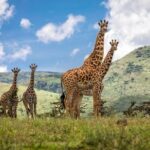
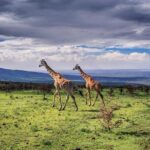
- Other likely sightings: buffalo, impala, zebra, warthog, and giraffe
What I like about this plan is the mix of “easy wins” and “real hunt.” Elephants and giraffe are often straightforward. But the leopard tip—checking treetops—pushes you to use your eyes better, not just wait for luck. That’s the difference between seeing animals and actually noticing them.
The day doesn’t end at sunset either. You’ll keep game driving until late evening, then head to Kizumba Camp for dinner and overnight. If you’re new to safari, this is a good first day because it teaches you how the viewing works—how to pause, how to scan, and how to spot behavior, not just bodies.
Day 2 heading to Serengeti: Rift Valley road + optional Maasai village
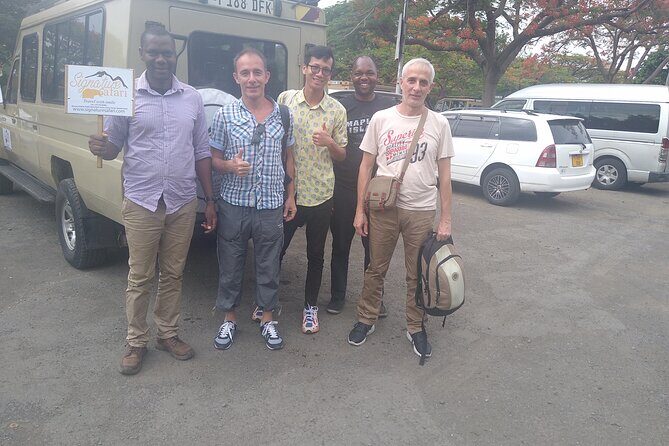
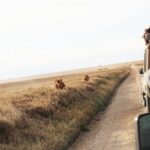
After an early breakfast, you shift gears: safari jeep boarding, camping gears organized, and then you leave camp for Serengeti via Manyara. The route is described as heading through rift valley escarpments, which is one of those visual payoffs that makes the long drive feel worth it.
The itinerary also includes an option to visit a Masai village on the way to Serengeti. That can add cultural context to the wildlife-only vibe. Just keep your expectations realistic: it’s an add-on stop, not a full-day immersion. If you’re curious about how local communities live and interact with the environment around parks, it can be a meaningful break.
You reach Serengeti by the evening and go straight into an evening game drive toward Pimbi Campsite for dinner and overnight. Evening drives can be fantastic for activity you might miss at midday, but the tradeoff is that visibility gets harder. That’s where a calm, steady guide helps you slow down and keep scanning even as light fades.
Day 3 in Serengeti: northern migration focus and predator potential
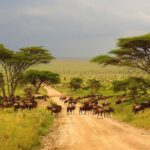
Day three starts with breakfast and another game drive in Serengeti, with a lunch box. The standout concept here is time and location: you’re aiming at northern Serengeti where the migration activity is tied to what’s happening during your travel dates.
What the plan specifically calls out you may see:
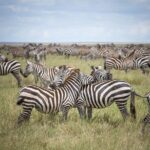
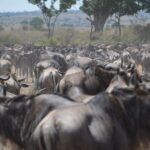
- wildebeest and zebra
- topi hartebeest, eland, and other antelope types
- hyena
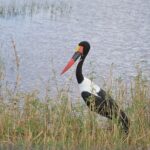
- varieties of birds singing on trees
- plus the general thrill of watching how the animals use the space across the day
Then you’ll continue game viewing until you reach the gate of Serengeti. After that, you head onward to Ngorongoro for dinner and overnight at Simba campsite.
This is a long day on paper (about 11 hours), but it has a logic: maximize your most “movement-heavy” wildlife experience in Serengeti, then reposition for the crater, where sightings can feel more concentrated. If you’re the type who gets restless in transit, this is the day to mentally prepare for a mix of driving and waiting—because waiting is often when animals decide to appear.
Day 4: Ngorongoro Crater descent for black rhino country
Ngorongoro is the reason many people book a short safari loop like this one. After breakfast, you’ll descend into the crater and spend your time on the floor with a lunch box.
The trip description gives you a powerful anchor: Ngorongoro is one of the most densely packed wildlife areas in the world, with an estimated 30,000 animals. It’s also home to Tanzania’s last remaining black rhino populations, which is highlighted as one of the big draws.
On the crater floor, you might see:
- wildebeest and zebra herds
- buffalo, eland, warthog
- hippo and giant African elephants
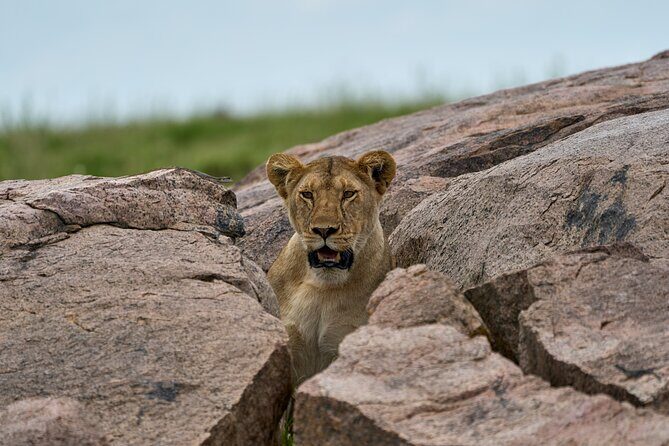
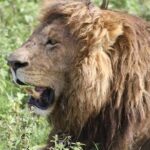
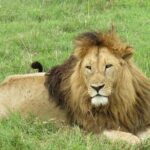
- predators: lions, hyenas, jackals, cheetahs
- and the leopard, described as ever-elusive
It’s also described as a system supported by year-round water supply and fodder. That matters because it helps explain why the crater can feel so “alive” even when other ecosystems would be more seasonal.
The viewing block is long: the plan says more than six hours of crater game drive time. Then late afternoon you drive back to Arusha, with dinner and overnight at a hotel in Arusha Town.
If you only had a single day to spend in this circuit, Ngorongoro would still be my pick. Even when animals are quiet, the density and the variety in one basin is hard to replicate elsewhere in Tanzania.
A few more Arusha tours and experiences worth a look

Camping, meals, and how comfort changes your safari mood
This isn’t a stay-in-a-luxury-resort kind of itinerary. You’ll be sleeping at Kizumba Camp, then Pimbi Campsite, then Simba campsite, before returning to a hotel in Arusha at the end.
What this changes for you:
- You’ll get the “camp safari” vibe, which many people love for the closeness to the rhythm of the bush.
- You should expect basic camp realities (early morning starts, sleeping arrangements designed for function, not plush comfort).
- The upside is that camp logistics are part of the package, so you’re not coordinating beds, meals, and transfers yourself.
Meals are included throughout in a way that supports long drive days: three dinners plus four breakfasts and lunches. That’s a big deal in national parks, because snacks bought on the fly add up fast and can also eat into game-drive time.
Guides and the human details that affect your odds
In safari, the big question is never just which parks. It’s how well you can see and understand what you’re looking at. Based on the operator’s pattern in feedback, the experience often comes down to the guide and the whole small team.
You’ll see repeated praise tied to specific team members and roles:
- Guides such as Amani and Sulley are described as strong in animal knowledge and communication, including one guide who spoke Spanish.
- Driver-guide Safiri is noted for both driving skill and animal/park facts.
- Cooks like George and Rodrigue get credit for meals that hold up well during active days.
- The company owner, Innocent, is named as someone who helps handle planning and promises around the trip.
- Drivers including Dismas and guide/driver Erick show up in feedback tied to friendliness and smooth, attentive service.
- Other mentioned safari team members include Malaki.
I take that seriously because it matches how safari goes in real life: a good team reduces stress, keeps schedules on track, and helps you notice behavior. That can make the difference between seeing an animal and understanding why it’s there.
Also, your group size is stated as a maximum of 2 travelers. That usually helps because your guide isn’t constantly splitting attention across a larger group, and the vehicle setup can stay focused on your viewing.
Big Five chances: what’s realistic in a short circuit
The tour highlights a “good chance” of seeing the Big Five. Here’s a grounded way to think about that.
You can commonly expect:
- Elephants (Tarangire is strongly elephant-forward)
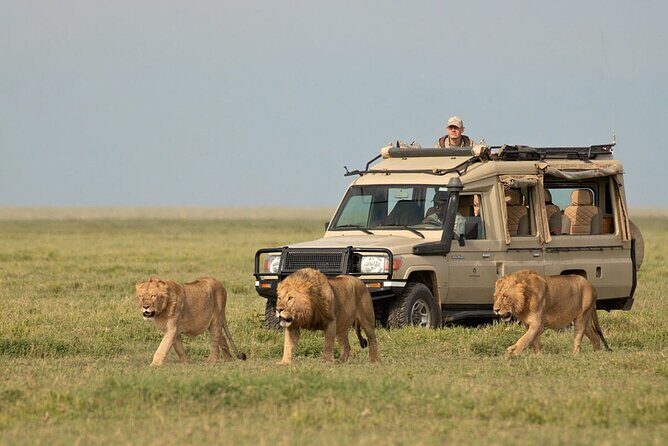
- Buffalo and lions (especially as you build into Serengeti and then crater territory)
- Leopards are possible (Tarangire treetop scanning is part of the plan; Ngorongoro mentions leopard as elusive)
- Black rhino is the specific “rare” target tied to Ngorongoro
But remember: safari isn’t a booking of guaranteed sightings. Your best strategy is to focus on the skills the itinerary nudges you toward—scanning, patience, and listening to your guide’s read on where animals tend to move in that moment.
If you’re chasing a specific species (like black rhino), this itinerary is built for that target because it ends with Ngorongoro crater time—the place where the guide can put you into the thick of it.
Price and logistics: is $890.95 good value for this route?
At $890.95 per person for a roughly 4-day safari, you’re paying for a tight loop that includes:
- hotel pickup and transport between parks
- a mix of game drives across three major destinations
- camp stays (Kizumba Camp, Pimbi Campsite, Simba campsite)
- meals included (three dinners and four breakfasts and lunches)
- admission notes show park access as free on Day 1–3 and included on Day 4 (Ngorongoro)
In simple terms, you’re not just paying for entrances. You’re paying for the logistics burden—getting you between ecosystems, keeping the schedule moving, and handling food while you’re out in the parks for long hours.
The “value” part comes from the balance:
- You get three top-tier areas without adding extra days just to reach them.
- You get the crater, which is usually the most time-intensive part of a short safari.
- You keep the group small (max 2), which can raise the quality of attention.
The main thing you’re trading is comfort and flexibility. This is a structured safari with long drive days. If you want lots of free time or minimal early starts, the price won’t feel like a deal—it will feel like you’re paying for intensity.
Who this safari suits best (and who should skip it)
This 4-day safari is a strong fit if:
- you’re on a limited time Tanzania trip and want Tarangire + Serengeti + Ngorongoro in one go
- you like action-packed days with game drives as the main event
- you’re comfortable with camp-based lodging and a lot of time on safari vehicles
- you want a smaller group experience (max 2)
It may not be your best match if you:
- need a very relaxed pace with frequent downtime
- expect hotel-level comfort throughout (you only get hotel overnight in Arusha at the end)
- get very tired by long days (10–11 hours happens more than once)
Should you book this 4-day Tarangire–Serengeti–Ngorongoro safari?
I’d book this if your priority is maximum wildlife variety in a short window, and you’re excited by the idea of ending in Ngorongoro crater for the densest chance at black rhino territory and predator-heavy viewing.
I’d think twice if you want a slower trip with lots of room to breathe, or if camping-style nights would feel like a strain.
One more reason I like it: the combination of elephants in Tarangire, migration focus in northern Serengeti, and crater concentration on Day 4 is a smart “three-hit” safari plan. If those are the experiences you came for, this itinerary makes efficient use of your days.
FAQ
Which parks are included in this 4-day safari?
The safari covers Tarangire National Park, Serengeti National Park, and Ngorongoro Crater. It runs out of Arusha and includes game drives in each area.
What meals are included?
The tour includes three dinners and four breakfasts and lunches across the four days.
Is hotel pickup and transport provided?
Yes. The experience includes pickup from your hotel in Arusha and transport between parks during the safari.
Where do you sleep during the safari?
You sleep at Kizumba Camp after Day 1, then Pimbi Campsite after Day 2, then Simba campsite after Day 3. On Day 4, you return to Arusha for dinner and overnight at a hotel in Arusha Town.
How many people are in the group?
The tour has a maximum of 2 travelers, so it’s a small-group setup.
What happens with refunds if I cancel or if weather is poor?
You can cancel up to 3 days in advance for a full refund; if you cancel within 3 days, the paid amount is not refunded. The experience also requires good weather—if it’s canceled due to poor weather, you’ll be offered a different date or a full refund.