REVIEW · ARUSHA
4 Days scenic Tarangire, Ngorongoro, Serengeti Group Safari
Book on Viator →Operated by Aquiline safaris and adventures · Bookable on Viator
Elephants and a crater in four days. This is a tight, scenic Tanzania loop built around Tarangire sightings, a dramatic Ngorongoro Crater descent, and long Serengeti game drives where you’re in the middle of migration country. You also add Lake Manyara into the mix for classic birdlife and that famous flamingo drama.
What I like most is how the days are structured for real wildlife time. You start early on the Serengeti days (game drives around 6:30 am), and you’re not stuck on a schedule that ignores sightings. The second big win is the human side: guides like William and Mike have a reputation for knowing where animals hang out, and the meals get treated like part of the trip, not an afterthought.
One consideration: you’ll be up early and you may be sleeping in camping accommodation on night one. If you’re the type who expects a slow, cushy day with no early starts, this itinerary will feel busy.
In This Review
- Key Things to Know Before You Go
- The 4-Park Circuit That Makes Sense for First-Timers
- Day 1 in Tarangire: Elephant Country and a Picnic Lunch Plan
- Ngorongoro Crater: The 2,000-Foot Drop That Changes Everything
- Serengeti Days 3 and 4: Morning Game Drives and Migration Season Math
- Lake Manyara and the Flamingo Angle: Not Just a Pass-Through
- Food, Water, and Real Comfort: What’s Included vs What You’ll Still Handle
- Price and Logistics: Is $1,000 Good Value for This Mix?
- Who This Safari Suits Best (and Who Might Want Another Plan)
- Should You Book This 4 Days Scenic Safari?
- FAQ
- What parks are included in this 4-day safari?
- How does the Ngorongoro Crater day work?
- What time do the Serengeti game drives start?
- Are meals included?
- Is bottled water provided?
- Is this safari private?
- Do I get pickup in Arusha?
- Do I need to budget for tips?
- How does cancellation work?
Key Things to Know Before You Go
- Private transportation all the way, so you’re not sharing a van with strangers
- Ngorongoro descent of about 2,000 feet for a half-day crater tour
- Early Serengeti drives around 6:30 am when animals tend to be active
- Seasonal migration odds with stated numbers of zebras and wildebeest in the grasslands
- Food and water included, with picnic lunches during game drives
- Lake Manyara + flamingos added for a different kind of safari scenery
The 4-Park Circuit That Makes Sense for First-Timers
This safari is built for people who want Tanzania’s biggest hits without stacking too many nights. You’re based around Arusha, then you move through Tarangire, Lake Manyara, the Ngorongoro Crater, and finally the Serengeti. That order matters because it lets you shift from river and elephant country to a crater ecosystem, then into open savannah.
The value here is in how the route mixes different habitats. Tarangire is elephant-heavy, Ngorongoro is all about the crater bowl with big concentrations of animals, and the Serengeti is where you go for wide-open roaming and migration season. Lake Manyara is a nice contrast day, especially if flamingos and waterbird scenes are on your wish list.
A few more Arusha tours and experiences worth a look



Day 1 in Tarangire: Elephant Country and a Picnic Lunch Plan

Day one is a drive from Arusha to Tarangire National Park, which is Tanzania’s third-largest park and known for unusually large elephant populations. You’ll do a game drive with a picnic lunch, so you can stay out in the park during the time animals are most likely to show.
Tarangire tends to feel hands-on: you’re looking for movement in the dry-season light, then suddenly there’s a herd working the edges or feeding in the open. Even if you’re not doing a checklist safari, elephants can reset the whole trip vibe. They’re big, present, and often surprisingly close—your guide’s ability to read tracks and behavior makes a difference.
Night one is in camping accommodation. That doesn’t mean the whole trip is rough, but it does mean you’re swapping luxury for atmosphere. If you want a classic safari feel, this is part of the charm. If you hate camping-style basics, plan for that now.
Ngorongoro Crater: The 2,000-Foot Drop That Changes Everything
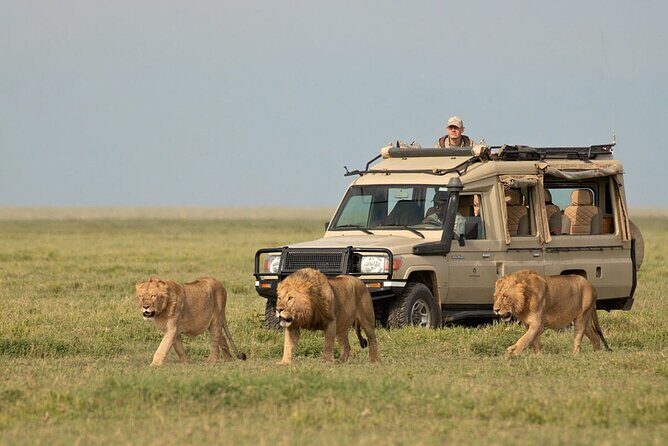
If Tarangire is about elephants and wide park drives, Ngorongoro is the change of pace you remember. Day two starts with early breakfast, then you head for a crater tour where you descend about 2,000 feet over roughly 600 meters to the crater floor.
That vertical element matters. The crater is a closed ecosystem, so once you’re down there, the wildlife viewing gets more concentrated and the scenery feels enclosed compared to open savannah parks. You’ll be on a half-day crater tour, which is a smart way to balance time inside with time on the road.
What to watch for on the crater floor is animal density and behavior. Even if you’re not guaranteed any single species, the crater tends to deliver frequent sightings because animals are drawn to the limited resources below. The experience is also mentally satisfying: you go from rim views to walking through the ecosystem the animals actually live in.
Serengeti Days 3 and 4: Morning Game Drives and Migration Season Math
Days three and four are the core Serengeti block. You’ll eat early breakfast, then head out on game drives starting around 6:30 am for about 6 to 7 hours each day. That timing is practical: mornings in the Serengeti are when you often get strong sightings before the heat pushes animals to shade and slower movement.
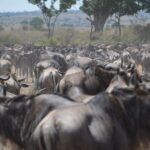
The itinerary is clearly built around migration season, with stated numbers that are worth repeating because they give you a sense of scale. The grasslands can host around 250,000 zebras, about 1.5 million wildebeest, and roughly 500,000 antelope during peak periods. When the herds are active, you’re not watching one animal here and there—you’re watching patterns.
On the Serengeti, you should also expect variety beyond migration herds. The plan mentions animals like impala, buffalo, crocodile, and hippo. Those species can mean that the park doesn’t feel one-note: you might see river and water-edge activity on one day and more open grazing on another.
A small practical note: 6 to 7 hours in a game drive is long. Bring what you need to stay comfortable—sun protection and patience matter. But the payoff is that you’re not skimming one quick loop and leaving. You’re there long enough to let the wildlife show itself.
Lake Manyara and the Flamingo Angle: Not Just a Pass-Through
The overall safari plan includes Lake Manyara National Park, even though the day-by-day outline spotlights Tarangire and the crater first. This matters because Lake Manyara adds a different kind of safari day: water, birds, and scenery that doesn’t feel like the Serengeti.
The tour description specifically mentions thousands of flamingos, which is the kind of wildlife detail that can turn a good safari into a memorable one. Flamingo scenes are also a reminder that Tanzania isn’t only about big cats and herds. It’s about ecosystems—sometimes the stars are birds standing in shallow water, not only the mammals in grasslands.
If birds and waterlife are your priority, you’ll enjoy the added variety here. If you’re purely chasing mammals, you can still make the day work—just treat it as a breather between the crater intensity and the Serengeti mornings.
A few more Arusha tours and experiences worth a look




Food, Water, and Real Comfort: What’s Included vs What You’ll Still Handle
You get bottled water, lunch, and all fees and taxes included. Picnic lunches are part of the rhythm: day one includes a picnic lunch, and day two includes picnic lunch boxes. That reduces decision fatigue on the road—you’re not hunting for food stops while you’re trying to keep your eyes on the landscape and animals.
The reviews also point to strong staff support and food quality, and that lines up with why safari logistics feel smoother when meals and timing are handled for you. You also have private transportation, so you’re not negotiating seat-shares or mixed group stops.
What you should plan personally is simple: tips and comfort items. Tips aren’t included, and camping night means you may want to think ahead about what you’ll need to feel settled. Also, you’ll be outdoors a lot, so keep your sun and rain strategy ready.
Price and Logistics: Is $1,000 Good Value for This Mix?
At $1,000 per person for about 4 days, this safari sits in the range where details really matter. The good sign is that the price includes private transportation, lunch, bottled water, and all fees and taxes. That means you’re not later hit with surprise park or vehicle costs that inflate the real total.
The other value lever is pacing. You’re not just driving past parks; you’re doing game drives and a crater descent. Ngorongoro alone is a major time investment because you’re going down into the crater floor for a half-day tour, so your money is buying experience time, not only transit.
The main trade-off is that it’s a fast, packed itinerary: four days covering multiple parks means you’re likely spending a lot of your day in transit and on game drives. For many people that’s the whole point, but it’s not a slow-travel option. If you want lots of free time, this may feel tight.
Who This Safari Suits Best (and Who Might Want Another Plan)
This tour fits best if you want a classic Tanzania highlight route with big wildlife time and minimal hassle. You also get the benefit of private transportation and only your group participating, which can make the vibe feel more personal.
It’s a solid choice if you enjoy structured days. Early starts, picnic lunches, and long drives can sound intense, but they’re built for the reality of wildlife viewing—animals often reward the morning and the time you’re willing to stay out.
You might reconsider if camping-style accommodations won’t work for you, or if early mornings will ruin your trip mood. Also, if your travel style is heavy on relaxation and light on schedule, the “3 parks + crater + Serengeti” pace may feel like you’re constantly in motion.
For everyone else, this is the kind of safari where you can walk away feeling like you actually saw Tanzania’s ecosystems, not just the parking-lot version.
Should You Book This 4 Days Scenic Safari?
If your goal is a well-packed Tanzania route with real time in the parks, I’d say yes. This itinerary gives you elephant-focused Tarangire, the unmistakable Ngorongoro crater descent, and long Serengeti mornings aligned with migration season. You also get Lake Manyara in the plan, which is a nice way to balance mammals with birdlife and flamingo scenes.
Book it if you’re excited by early mornings and you’re okay with camping-style comfort on night one. If you’re chasing a slow pace, luxury lodging, and a flexible day with minimal road time, you’ll probably want to look for a longer itinerary with fewer park changes.
FAQ
What parks are included in this 4-day safari?
The tour route includes Lake Manyara National Park, Tarangire National Park, the Ngorongoro Crater, and Serengeti National Park.
How does the Ngorongoro Crater day work?
On day two, you’ll have early breakfast, then descend about 2,000 feet over approximately 600 meters to the crater floor for a half-day crater tour.
What time do the Serengeti game drives start?
Days three and four include early mornings with game drives that start at about 6:30 am and last around 6 to 7 hours.
Are meals included?
Yes. Lunch is included, and the itinerary includes picnic lunches during the safari days.
Is bottled water provided?
Yes. Bottled water is included.
Is this safari private?
Yes. It’s listed as a private tour/activity, meaning only your group participates.
Do I get pickup in Arusha?
Pickup is offered, and the tour starts from Arusha.
Do I need to budget for tips?
Tips are not included.
How does cancellation work?
Free cancellation is allowed up to 24 hours in advance for a full refund, and if the experience is canceled due to poor weather, you’ll be offered a different date or a full refund.