REVIEW · ARUSHA
4 Days Safari to Tarangire, Serengeti and Ngorongoro
Book on Viator →Operated by Serengeti Wildlife Safaris · Bookable on Viator
Four days, three big parks, no fluff. This safari route works for you if you want the headline Tanzanian wildlife with a tight schedule, and it still gives you serious time in Serengeti and a proper Ngorongoro crater experience.
I especially like two things: the sunrise game drive approach in Serengeti (early enough to catch animals more active), and the way the tour layers parks with totally different vibes—Lake Manyara’s lake-edge action, then Serengeti’s endless plains, then Ngorongoro’s dramatic “on-the-floor” wildlife.
The trade-off is real: you only spend one night in Serengeti, so the park can feel fast. Also, lodging is not guaranteed to feel luxurious; one recent traveler flagged tent-style accommodations as basic and recommended packing a sleeping bag just in case.
In This Review
- Key highlights worth the early start
- Why this 4-day safari hits the big parks without wasting time
- Arusha pickup, drive time, and what “early” really means
- Day 1: Lake Manyara National Park along the Rift Valley—trees, monkeys, and hippos
- Day 2: Serengeti National Park—endless plains and Great Migration scale
- Day 3: Serengeti sunrise, then the Ngorongoro crater—black rhino included in the plan
- Day 4: Ngorongoro morning wildlife, Hippo Lake picnic, then back to Arusha
- Price and logistics: is $1,450 good value for four days?
- Guides make the trip: John, Manfred, and Augustin
- Lodging reality check: tent stays can be the weak link
- Who should book this safari—and who might want a longer trip
- Should you book this 4-day Arusha safari circuit?
- FAQ
- What parks are visited on this 4-day safari?
- How early is the safari start time?
- Is hotel pickup included?
- What meals are included?
- What isn’t included in the tour price?
- Is this tour okay for most travelers?
Key highlights worth the early start
- Early morning drives for better sightings and that famous Serengeti sunrise timing
- Lake Manyara’s lake-edge wildlife with hippos nearby and big trees hosting primates
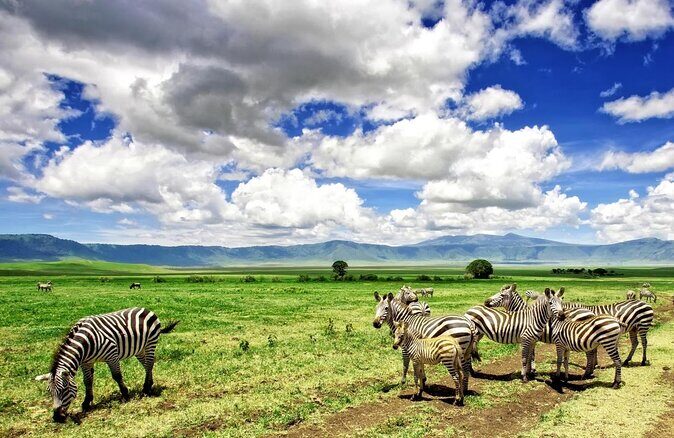
- Serengeti’s Great Migration numbers (millions of wildebeest and huge zebra herds)
- Ngorongoro crater scale: 102 sq miles with ~2,000 ft walls that funnel wildlife activity
- Black rhino on the radar inside the crater’s protected ecosystem
- What’s included: park fees, a professional guide, unlimited drinking water, and all key meals
Why this 4-day safari hits the big parks without wasting time
This is a “greatest hits” safari, built for people with limited vacation days. If you’ve dreamed about Serengeti, Ngorongoro, and the Rift Valley parks, this format gets you there fast—and it avoids the common problem where a short trip turns into mostly driving and checking in.
The value is how the days stack: you start with Lake Manyara for scenery and wildlife variety, then you get Serengeti’s scale, and finally you drop into Ngorongoro for crater-floor game drives. It’s a smart way to experience how different these ecosystems feel, even when you can’t stay long.
A few more Arusha tours and experiences worth a look
Arusha pickup, drive time, and what “early” really means
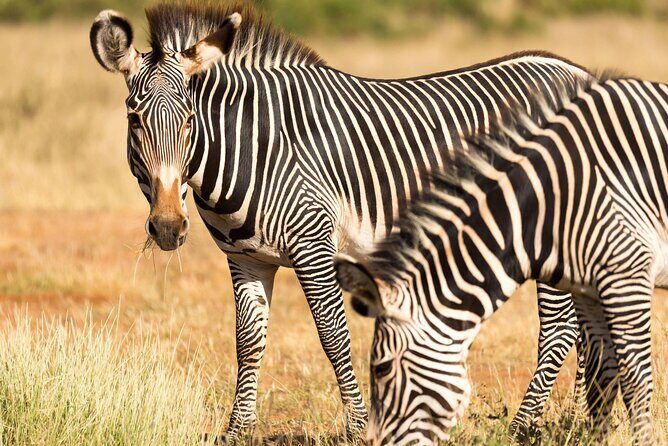
The tour is based in Arusha, and you should expect a very early morning start. The meeting time is listed as 7:00 am, and the Day 1 pickup is listed from your hotel at 8:00 am—so you’ll want to plan your morning around an on-time departure rather than a relaxed coffee.
Because this is a road safari, the travel days are part of the experience. You’ll cross the Rift Valley and spend a lot of time in the vehicle looking for animals and photographing big horizons. Also note: the activity has a maximum of 100 travelers, which keeps things from feeling chaotic, even though safaris can still feel like a group game because everyone is watching the same wildlife hotspot at the same time.
Pickup is included, but there’s a detail that matters for budgeting: extra charges apply if pickup is outside 30 km (listed as $50). If you’re staying farther out, confirm the exact pickup distance before you go.
Day 1: Lake Manyara National Park along the Rift Valley—trees, monkeys, and hippos
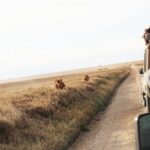
Lake Manyara is smaller than some other parks, but it hits hard visually. You’re picked up and start a full day of game driving, with the route crossing the Great Rift Valley before you even get fully into the park feel.
What you’re looking for here is classic Lake Manyara variety:
- Lush acacia forest and big trees like giant figs and mahogany
- Baboons and blue monkeys (great for quick sightings and photo moments)
- Larger mammals like giraffes, elephants, impalas, and buffaloes
- Hippos living around the lake
The payoff for you is that Lake Manyara gives you more than one “kind” of wildlife day. It can be monkeys in the trees, then elephants in a clearing, then hippos near the water—all in the same general game-drive rhythm. Even if you think you’re only there for the Big Names, you’ll often be surprised by how much the park feels alive and close to the action.
Practical tip: you’ll be spending long hours on the road, so dress for sun and sudden cool breezes. With wildlife, the best photos often come when you’re ready fast, not when you’re settled in for a long wait.
Day 2: Serengeti National Park—endless plains and Great Migration scale
Serengeti is the reason many people plan Tanzania in the first place, and this day aims to give you that first wow: open plains that seem to stretch forever.
The numbers matter because they explain the feeling:
- Serengeti is huge—about 6,900 sq miles (18,000 sq km)
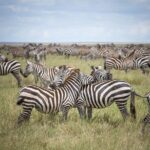
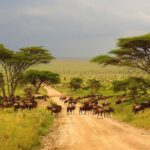
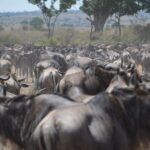
- It’s home to the Great Migration, including roughly two million wildebeest, plus hundreds of thousands of zebras and other antelope
You’re not just seeing animals; you’re seeing how Serengeti works—how herds move across massive space and how predators and prey share the same stage. That “endless plains” effect can mess with your sense of distance—in a fun way—because the horizon stays busy with movement.
This is also a day where the vehicle ride isn’t a punishment. The long driving is part of the safari, since spotting depends on being in the right place at the right time. If you’re camera-first, the strategy is to keep your attention up and your eyes scanning continuously, because action can show up quickly in the grass.
Day 3: Serengeti sunrise, then the Ngorongoro crater—black rhino included in the plan
Day 3 is the day that shifts from “big plains” to “concentrated drama.” It starts with an early wake-up call for an early morning game drive in Serengeti, timed for when animals are more active and when sunrise can look unreal.
After that morning drive, you return for brunch—then you head to Ngorongoro, often called the 8th Wonder of the Natural World. And this park isn’t subtle. The crater spans about 102 sq miles, with walls roughly 2,000 ft high. That kind of bowl shape changes everything: animals often feel more “present” because they’re within a bounded system.
Inside the crater, the tour description focuses on a whole ecosystem packed into one protected space:
- It’s described like a natural Noah’s Ark, with many species you’d expect across East Africa
- There’s a river, swamps, and a soda lake
- The rare prize is the possibility of seeing the black rhino, listed as one of the few places on the continent where it can be witnessed
What this means for you on the ground is that Ngorongoro tends to feel high-density. Even if you don’t see every headline species, you’re still likely to see plenty of life because so much is concentrated in the crater environment.
A few more Arusha tours and experiences worth a look


Day 4: Ngorongoro morning wildlife, Hippo Lake picnic, then back to Arusha
Your final day starts very early, with a descent into the crater floor for a wildlife morning. If Day 3 felt like the transition into Ngorongoro, Day 4 is the payoff: more time on the crater floor where sightings are often strongest.
After the morning game drive, you get a picnic lunch near Hippo Lake. That location is named for a reason—hippos are central here—so it’s one of those moments where you can eat and also keep spotting wildlife without leaving the crater rhythm entirely.
Then there’s time for a short additional drive before ascending and exiting Ngorongoro Conservation Area. You’re expected back in Arusha at around 5 pm, but the schedule notes flexibility depending on flights or other situations.
Price and logistics: is $1,450 good value for four days?
At $1,450 per person, this tour isn’t cheap, but it can make sense if you compare it to what you’d pay for park access plus guides plus a multi-park route in one package.
Here’s what your price covers:
- Park fees
- Professional guide
- Unlimited drinking water
- Meals: breakfast (4), lunch (4), and dinner (3)
The practical win is that you’re not constantly paying small add-ons during the trip. In safari-country, park fees and guiding are major cost drivers, so bundling them is usually where package value shows up.
What’s not included (so you can budget cleanly):
- Visa
- International flights
- Tips
- Any extra pickup if you need pickup beyond 30 km (listed as $50)
One more cost reality: with only four days, your time is the real currency. This itinerary spends most of your time in parks instead of in downtime. That’s why it works for short trips, and why it can feel rushed for people who want long Serengeti days.
Guides make the trip: John, Manfred, and Augustin
This is the kind of safari where the guide can change how the day feels. The better guides don’t just know names of animals; they help you spot faster and understand what you’re seeing.
In the feedback you provided, multiple guide names show up clearly:
- John, described as the CEO who communicated smoothly and stayed responsive to questions
- Manfred, praised for leadership and an expert grasp of wildlife during the adventure
- Augustin, described as a veteran who advised guests to get the camera ready before you can spot anything—a small tip that actually changes your odds of good photos
That “camera ready” detail is a great mindset for you too. On safari, your best sightings often arrive in a heartbeat. If your brain is already scanning and your camera is set, you catch more.
Lodging reality check: tent stays can be the weak link
One of the few caution notes in the feedback is about accommodation comfort. A traveler wrote that the overall safari was great, but the accommodations were basic—described as tent-style, and they suggested bringing your own sleeping bag. They also noted that the first day’s tent stay felt nicer because it was at a resort called Jungle Pearl.
On the other hand, another traveler mentioned that their lodging for the honeymoon-style booking felt perfect (without giving extra details).
So here’s how I’d advise you to think about it: with a short, multi-park itinerary, some lodges may prioritize location over luxury. Before you pack, ask your operator what sleeping arrangement you’ll have (tent vs. room), what bedding is provided, and whether warm layers are needed for night temperatures.
Who should book this safari—and who might want a longer trip
This tour is ideal if:
- You have only four days but you want Serengeti and Ngorongoro on the same trip
- You’re okay with early starts and long driving days
- You want a strong introduction to multiple ecosystems, not a slow, deep stay in one park
You might want something longer or different if:
- You care more about relaxing lodge time than early drives
- You’re sensitive to simple accommodations and don’t want to deal with tent-style stays
- You want a full Serengeti experience spread across multiple nights (because this plan gives Serengeti only one night)
Should you book this 4-day Arusha safari circuit?
Yes, I think you should book it if your goal is practical: see the big icons of northern Tanzania in a tight window, with real game-drive time and early morning strategy.
Before you commit, do two things:
- Confirm what Day 1 park you’ll get if your package is flexible between Lake Manyara and Tarangire—your summary notes either option, but this schedule you shared lists Manyara.
- Ask about lodging specifics for the tent or room setup, and consider packing a sleeping bag if you tend to get cold at night.
If you do those checks, this is a strong value way to hit Serengeti and Ngorongoro without turning your whole vacation into a transfer marathon.
FAQ
What parks are visited on this 4-day safari?
You’ll visit Lake Manyara National Park, Serengeti National Park, and the Ngorongoro Conservation Area. The tour description also mentions Tarangire as an option in some versions, so confirm which park is included for your exact departure.
How early is the safari start time?
The meeting time is listed as 7:00 am. The Day 1 pickup from your hotel is listed at 8:00 am.
Is hotel pickup included?
Yes, pickup is offered. If pickup is outside 30 km, there is an extra $50 charge.
What meals are included?
The tour includes 4 breakfasts, 4 lunches, and 3 dinners, plus unlimited drinking water.
What isn’t included in the tour price?
Visa, international flights, and tips are not included.
Is this tour okay for most travelers?
The information says most travelers can participate. The activity maximum size is listed as 100 travelers.