REVIEW · ARUSHA
8 Days Mountain Kilimanjaro Lemosho Route
Book on Viator →Operated by African polecat safaris · Bookable on Viator
Kilimanjaro starts with rainforest shade. On the 8 Days Mountain Kilimanjaro Lemosho Route, I like how the trip is built for acclimatization (not just pushing upward), and I also appreciate the KPAP membership that supports ethical porter pay and treatment. One thing to keep in mind: the summit push happens around midnight and can be brutally cold and windy at altitude, even when you do everything right.
What makes the Lemosho route especially interesting is the variety. You go from thick rainforest to tall-grass savannah, then to moorland and alpine desert, and finally down through rain forest after reaching Uhuru Peak. Many guests specifically mention the leadership and teamwork of the chief head guide John Danford and the broader crew as a big reason they made it to the top.
In This Review
- Key Reasons This Lemosho Trek Gets Such Strong Love
- Day 1 to Mti Mkubwa: Your Kilimanjaro Begins with Rainforest and Wildlife
- What to watch for on Day 1
- Shira Ridge to Shira Plateau: The Day You Start Seeing Kibo
- Why this plateau day is a big deal
- Lava Tower to Barranco: Volcanic Formations and the Senecio Forest
- Barranco Camp is more than a stop
- Great Barranco Wall to Karanga: A Shorter Day with a Steep Reward
- Why this day helps your summit chances
- Barafu Hut and the Southern Circuit: Views Before the Toughest Night
- Midnight to Uhuru Peak: The Summit Day and Stella Point Sunrise
- Mweka Gate to Moshi: The Descent, Certificates, and Mud Reality
- Price and What You Get for $2,840 Per Person
- Who feels this price most strongly
- Guides, Crew, and KPAP Porter Ethics You Can Actually Notice
- Real talk about expectations
- Who Should Choose the 8-Day Lemosho Route (and Who Should Rethink It)
- Should You Book This Lemosho Climb with African Polecat Safaris?
- FAQ
- How long is the Kilimanjaro Lemosho route in this package?
- What time does the tour start?
- Where does the experience start and end?
- What’s included in the price?
- What’s not included?
- Is this tour private?
- Do you get ethical porter support on this trip?
- Who leads the hike?
- Is free cancellation available?
Key Reasons This Lemosho Trek Gets Such Strong Love
- Ethical porter support via KPAP (a real practical difference, not a marketing line)
- Clean water plus all meals and key camping gear so you travel lighter
- A route with gradual acclimatization moments, including a gentler Shira Plateau day
- Big visual payoffs: Kibo sightings and summit sunrise near Stella Point
- Camp-to-camp flexibility, since the guides work with your pace and interests on this route
Day 1 to Mti Mkubwa: Your Kilimanjaro Begins with Rainforest and Wildlife
You start with pickup from your accommodation right after breakfast, then you drive toward the park and the Lemosho area. Along the way, there’s time to stop before you enter fully—there’s an option to grab lunch in a nearby local village and pick up last-minute supplies. Starting at 8:00 am helps you get going early, which matters when the first day is about settling in and hiking steadily.
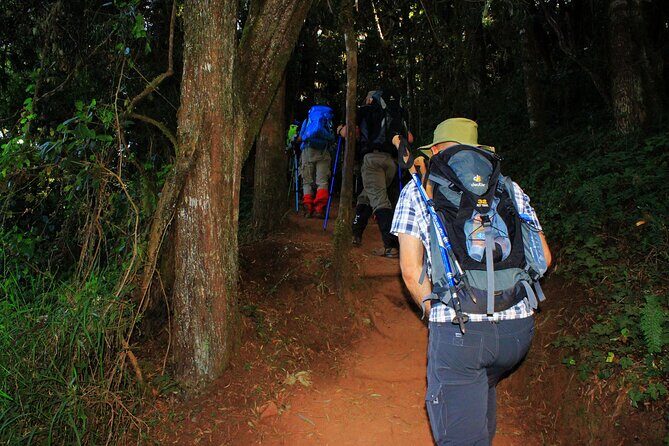
Your first real climb is the hike from the gate area into thick rainforest to Mti Mkubwa (Big Tree) Camp. The day is usually around 3 to 4 hours, and it’s timed so you can walk without feeling like you’re already racing the mountain. I like this approach because you’re not just buying a ticket to altitude—you’re easing into it.
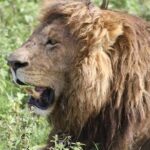
And yes, it’s not just trees and mud. During that initial trek you may spot wildlife like Colobus monkeys. Even if you don’t catch a monkey, the rainforest soundscape can be a welcome change from the high-altitude seriousness that comes later.
You can also read our reviews of more tours and experiences in Arusha.
What to watch for on Day 1
Rainforest days can be wet and slippery. Bring footwear that can handle mud, and be ready for cool damp air even when Tanzania is warm at lower elevations. If you go in expecting a dry, easy stroll, you’ll be disappointed. If you go in expecting a real hike that happens to be scenic, you’ll feel better.
Shira Ridge to Shira Plateau: The Day You Start Seeing Kibo
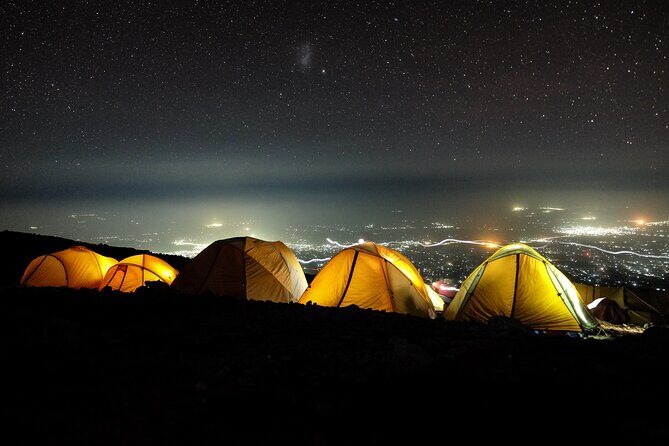
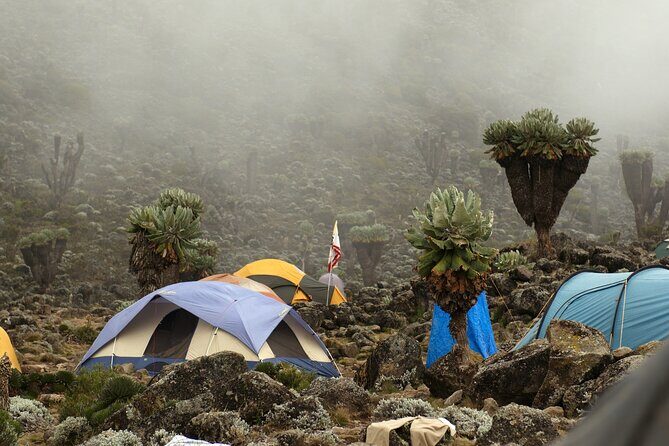
Day 2 takes you from rainforest into savannah and higher terrain. You gain elevation from about 9,498 ft to 11,500 ft over roughly 8 km (5 miles), with around 5 to 6 hours of hiking. The trail shifts into tall grasses, heather, and volcanic rock with lichen. This is where the mountain starts changing its personality.
You reach Shira Ridge, then drop gently down to Shira 1 Camp. One of the practical thrills here is your first meaningful view of Kibo across the plateau. That early glimpse is motivational because it gives you something to aim at besides numbers on a briefing sheet.
Day 3 then becomes the long acclimatization day on the Shira Plateau. You move through moorland meadows for much of the day, usually 5 to 7 hours over about 11 km (7 miles), climbing from 11,500 ft to 13,800 ft. This is the kind of day that helps your body catch up to the altitude while your mind gets used to the rhythm of hiking slow.
A neat detail: you divert to Moir Hut, a less-used site near the base of the Lent Hills. The route descriptions emphasize multiple walk options here, which is valuable because it lets your guide tailor the day to how you’re doing, not just the calendar.
Why this plateau day is a big deal
You’re not just walking to move camps. You’re training your body to tolerate altitude by alternating gentle movement with time at high elevation. Many climbers discover their real climbing pace here: not fast, but steady. If you rush on Day 3, it can come back to haunt you later.
Lava Tower to Barranco: Volcanic Formations and the Senecio Forest
Day 4 is where the route gets visually dramatic. You start from Moir Hut, climb toward Lava Tower (about a 300 ft volcanic rock formation), then descend to Barranco Camp. Total time is about 3 to 4 hours for the first segment plus a shorter descent hike, making the day roughly 6 hours overall.
Elevation goes from around 13,800 ft to 15,190 ft, then drops down to about 13,044 ft at Barranco. Even though the day ends near where it started, the time spent higher is part of what makes it good for acclimatization. That’s a subtle but important difference between a “bigger climb” and a “smart altitude day.”
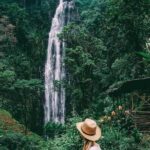
Descending toward Barranco also passes through Senecio Forest. It’s an unusual, almost otherworldly vegetation zone, and it helps break up the mental monotony that can happen when you’re just grinding upward.
Barranco Camp is more than a stop
Barranco is often where climbers start feeling like they’re in the real mountaineering story, not just a walking tour. You’ll arrive with legs that feel it, but the terrain starts looking more alpine. That shift is part of why Lemosho feels special.
Great Barranco Wall to Karanga: A Shorter Day with a Steep Reward
Day 5 is listed as a shorter acclimatization day, which I like because it keeps the schedule from turning into nonstop punishment. You go from Barranco Camp to Karanga Camp. The trek time is about 2 to 3 hours over roughly 5 km (3 miles).
The key feature is the Great Barranco Wall. You descend into a ravine, then climb a steep but non-technical cliff face—nearly 900 ft of gain. After reaching the top, you cross hills and valleys before you descend sharply into Karanga Valley, then make the final climb to Karanga Camp.
This is a great day for learning a very important Kilimanjaro skill: keep moving, don’t sprint. The wall might feel intimidating, but a steady pace and short breaks can turn it from panic into progress.
Why this day helps your summit chances
You’re not gaining altitude all day. You’re working hard on a short segment, then lowering and regaining in a controlled way. That “push then recover” rhythm tends to be easier on the body than a long grind.
Barafu Hut and the Southern Circuit: Views Before the Toughest Night
Day 6 brings you to Barafu Camp/Barafu Hut, the staging point for the summit bid. Elevation rises from about 13,106 ft to 15,331 ft, with a trek time around 1 to 2 hours over about 4 km (2 miles).
You climb through rocky terrain up toward Barafu, and this is described as completing the Southern Circuit. The real benefit here is timing: your summit day is coming fast, so the day is shorter to keep you functional.
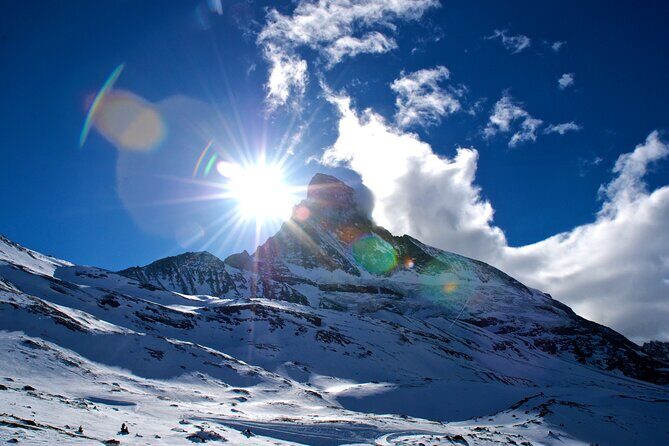
From Barafu, you get views of Mawenzi and Kibo from your camp position. I’d treat these views like part of your training: notice how your breathing feels at rest, watch your legs, and take in the moment because the next night is where the mountain tests you.
You also get rest and an early dinner to prepare. That meal timing matters. If you feel rushed or ignore hydration, the summit push feels worse than it should.
Midnight to Uhuru Peak: The Summit Day and Stella Point Sunrise
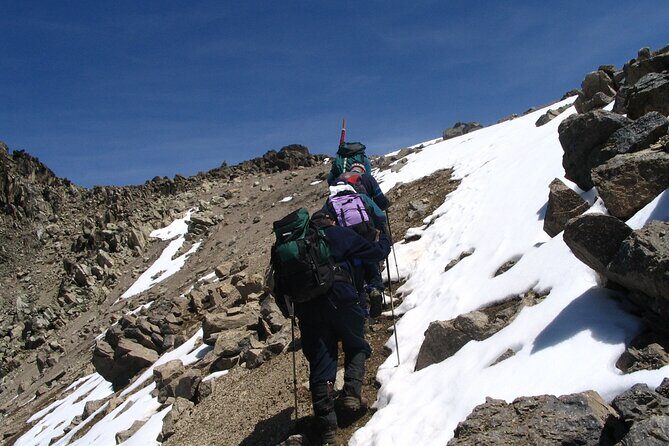
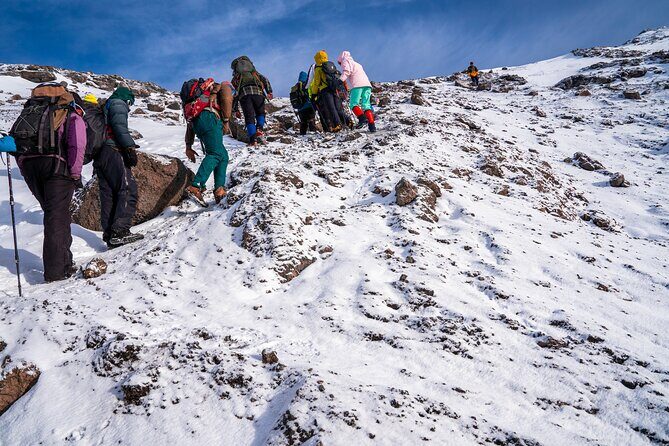
Day 7 is the famous one. You start the push to the summit very early, around midnight, from Barafu Camp toward Uhuru Peak at 19,341 ft. The walking time is usually 6 to 8 hours on the ascent, and the environment shifts into what’s described as arctic habitat. In plain terms: cold wind is common at this altitude and time of day.
You ascend in darkness for several hours, with frequent short breaks. This is mentally hard because you can’t see the top, and physically hard because your body is already working against altitude before daylight arrives. But you do get a payoff close to Stella Point (about 18,900 ft).
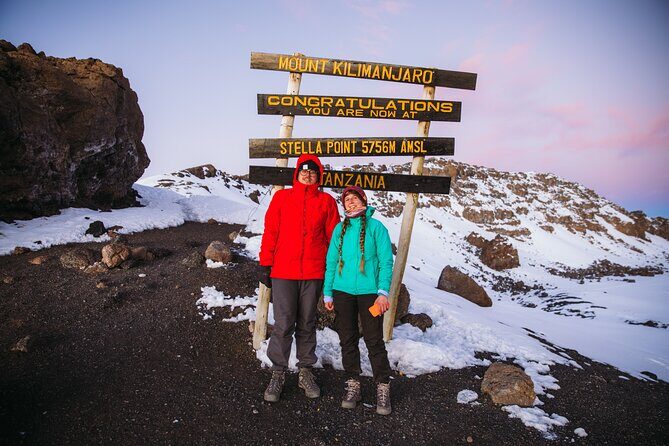
Near Stella Point, the route description highlights a magnificent sunrise coming over Mawenzi. I like that detail because it gives you a specific milestone to focus on. It’s not just the idea of sunrise. It’s a moment you can picture, which helps keep you calm when the climb feels endless.
After reaching Uhuru Peak, you descend to Mweka Camp. This is about 12 km (7 miles) and can take 4 to 6 hours, dropping from around 19,341 ft to 10,065 ft through rain forest habitat. This part can feel long, but it’s also relief: you’re lowering elevation fast, and your body starts to reward you for getting it through the hardest hours.
Mweka Gate to Moshi: The Descent, Certificates, and Mud Reality
Your final day (Day 8) focuses on descent. You go from Mweka Camp to Mweka Gate, dropping from around 10,065 ft to 5,380 ft over about 10 km (6 miles) in 2 to 3 hours. Then you continue about an extra hour to Mweka Village, where you’re met by vehicle transport back toward your hotel area in Moshi.
A key ritual happens at the gate: you collect summit certificates. It’s simple, but it lands. You earned it, and it’s a clean way to close the loop on the climb.
Lower elevations can be wet and muddy, according to the route description. This is one of the few times you should actually be happy about having decent footwear. Good traction matters when you’re tired and the ground turns slick.
Price and What You Get for $2,840 Per Person
At $2,840 per person for the 8-day Lemosho climb, you’re paying for more than a guided walk. The package includes all fees and taxes, clean water, camping gear, a sleeping bag, and meals: 7 breakfasts, 7 lunches, and 7 dinners.
That inclusion list is a major part of the value. Many climbing costs sneak in through rentals, park admissions, or basic logistics. Here, the essentials are covered, which makes it easier to budget for things you actually control, like tips and travel documents.
What’s not included is also clear: tips, travel insurance, visas, and flights. If you’re comparing prices with other operators, check those four items carefully. A lower headline price can turn into a similar total once you add the missing basics.
Who feels this price most strongly
If you already have trekking poles, boots, and a sleeping system, you might feel like you’re paying for convenience. If you don’t, you’ll appreciate how much is handled for you. Either way, the real question is whether you want a smooth, guided, camp-based experience where you can focus on acclimatization and hiking instead of logistics.
Guides, Crew, and KPAP Porter Ethics You Can Actually Notice
A big theme from guest experiences is the mountain guidance and crew support. Many reviews highlight John Danford as the chief head guide, credited with helping groups make it to the top through pace, instructions, and teamwork. Some also mention strong support from other guides like Chris, reinforcing the idea that you’re not solo out there.
The standout ethical detail is that the operator has paid membership with KPAP (Kili Porter Assistance Program). Practically, that matters because it’s tied to how porters are treated and paid, not just how your team takes care of you at camp.
You may also notice more than one guest mentioning how impressed they were with the crew and the setup, including tents. I’d take that as a sign that day-to-day camp function is part of the experience, not an afterthought.
Real talk about expectations
Even with a strong team, Kilimanjaro can still beat you. Altitude illness risk is real on summit night. The best guides don’t promise easy outcomes; they help you move smart, rest when it counts, and handle the mountain safely.
Who Should Choose the 8-Day Lemosho Route (and Who Should Rethink It)
This route is listed for people with moderate physical fitness. That’s useful, but “moderate” doesn’t mean easy. You’ll hike multiple days, spend hours at altitude, and do a midnight summit push. If you have experience with long uphill days and you can handle cold conditions, you’ll feel more prepared.
You’ll also want to be the kind of person who can follow guidance without getting stubborn. The Lemosho route’s structure uses acclimatization-focused days, but you still have to listen to your body and your guide.
This is also a private tour/activity, meaning it’s only your group. That can be a plus if you want a quieter experience and more direct pacing attention. If you’re traveling with friends, you may also enjoy how the group energy can carry you through the harder hours.
Should You Book This Lemosho Climb with African Polecat Safaris?
If your goal is a classic Kilimanjaro route with strong pacing support, included meals and gear, and an operator that backs porter ethics through KPAP, this trip is worth your serious attention.
I’d book if:
- You want the Lemosho-to-Shira experience with a real acclimatization rhythm.
- You prefer not to manage camping gear and basic logistics yourself.
- You care about porter treatment and fair pay.
I’d think twice if:
- You hate very early wakeups and cold nights, because the summit push starts around midnight.
- You’re not ready for muddy descent conditions at lower elevations.
- You rely on the package to cover everything; it doesn’t include tips, insurance, visas, or flights.
FAQ
How long is the Kilimanjaro Lemosho route in this package?
The trek runs for 8 days (approx.), following the Lemosho route from the gate area through to Mweka Gate and back toward Moshi.
What time does the tour start?
The start time is 8:00 am.
Where does the experience start and end?
You’re picked up from your accommodation right after breakfast and driven toward Lemosho Gate for the start. After the descent, a vehicle meets you at Mweka Village and drives you back to your hotel in Moshi.
What’s included in the price?
Included are all fees and taxes, clean water, camping gear, a sleeping bag, plus 7 breakfasts, 7 lunches, and 7 dinners.
What’s not included?
Not included are tips, travel insurance, visas, and flights.
Is this tour private?
Yes. It’s listed as a private tour/activity, so only your group participates.
Do you get ethical porter support on this trip?
The operator notes paid membership with KPAP (Kili Porter Assistance Program), which focuses on ethical porter treatment and fair payment.
Who leads the hike?
Guides are part of the crew, and guest feedback specifically mentions John Danford as chief head guide. Some reviews also mention other guides such as Chris.
Is free cancellation available?
Yes. You can cancel up to 24 hours in advance of the experience start time for a full refund. If you cancel within 24 hours, the amount paid is not refunded.