REVIEW · ARUSHA
Embark on a 5-day camping safari adventure.
Book on Viator →Operated by The East African Safari and Touring Company · Bookable on Viator
There’s something about camping near real wildlife. This 5-day safari route links Tarangire, the Serengeti, and the Ngorongoro ecosystem with game drives, picnic lunches, and tented nights that keep the costs sensible for a Northern Tanzania hit.
Two things I really like: first, the pricing is more straightforward than many safaris because park and conservation fees are included, plus bottled water and a private driver/guide. Second, the plan moves fast enough to feel like a proper adventure, but not so frantic that you miss the point of each place.
One thing to consider: this is a camping safari with early departures (including a morning crater descent), so it rewards solid sleep habits and a willingness to be comfortable in a more basic setting than a lodge.
In This Review
- Key highlights you’ll actually care about
- Tarangire National Park and Migombani: your first real safari day
- Serengeti in two days: from Seronera to the heart of the plains
- Ngorongoro Highlands and Simba campsite: the change in altitude and mood
- Ngorongoro crater day: why early mornings are worth it
- Camping safari comfort: tents, meals, and what to pack
- Price and value: what $1,250 buys you (and why it can feel fair)
- Guides and the personal touch: what you can hope for
- Who should book this 5-day camping safari?
- Should you book this tour from Arusha?
- FAQ
- FAQ
- What parks does this 5-day safari cover?
- Where does the tour start and end?
- How many people are in the group?
- What’s included in the price?
- Is vegetarian food available?
- Are tips and personal expenses included?
- Can I cancel for a full refund?
Key highlights you’ll actually care about
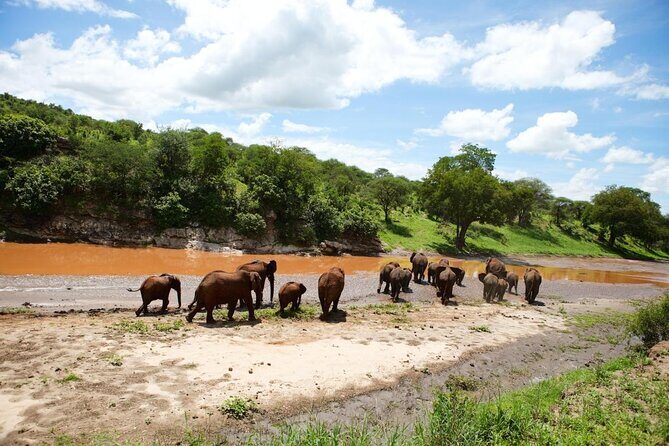
- Private tour, max 6 travelers: easier communication and more flexible timing for game drives.
- All the big parks in 5 days: Tarangire, Serengeti (two full days), and Ngorongoro.
- Tented accommodation with bed linen: camping feel without needing to bring bedding.
- Meals are mostly covered: 4 breakfasts, 5 lunches, and 4 dinners, so you’re not chasing food every day.
- Infinity-pool views at Migombani: a rare bonus for a camping itinerary.
- Game viewing built around timing: long drives and early starts where wildlife activity usually pays off.
Tarangire National Park and Migombani: your first real safari day
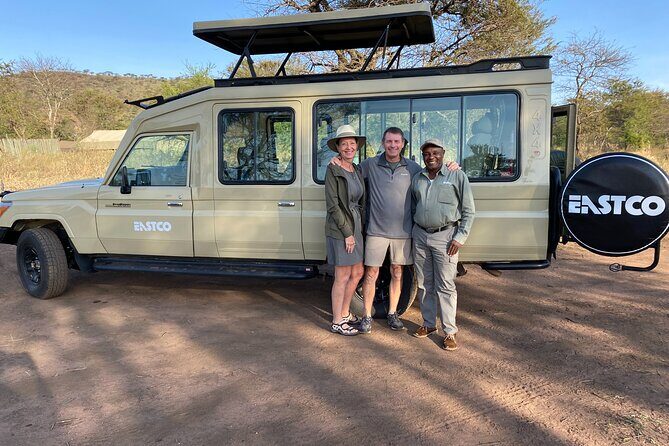
Your day starts with an 8:00 am departure from AIM Mall in Arusha. From there, you drive to Tarangire National Park, where the rest of the day is built around game viewing with a picnic lunch. Tarangire is a great first stop because it sets expectations fast: you’re in the right rhythm for spotting animals while you’re still fresh.
In the late day, you head to Migombani Campsite for dinner and overnight. The standout detail here is the infinity pool with views toward Lake Manyara, so you’re not stuck with a plain campsite after a long day in the bush. It’s one of those small moments that turns a “we camp tonight” trip into something you remember.
What to watch for: Tarangire days can be scenic in the literal sense—wide-open areas with animals moving at different distances—so your guide’s ability to position the vehicle matters. Also, since you’re packing a full safari day into roughly 8 hours of activity time, expect a schedule that starts early and keeps going.
A few more Arusha tours and experiences worth a look
Serengeti in two days: from Seronera to the heart of the plains
After breakfast, you move into the Serengeti National Park with a picnic lunch. The day ends with dinner and overnight at a campsite in the Seronera Valley. That matters because the Serengeti isn’t one uniform scene—it’s multiple habitats—and being based in the Seronera area makes it easier to get out and explore without losing half the day on transfers.
Day 2 is a full game-viewing day. You’re out with picnic lunch again, with the plan described as covering different sections of the park—from the famed southern plains east of Seronera, to rolling hills in the less-visited Lobo area, to wooded riverine valleys farther out around Kirawira and Grumeti. In plain terms: you’re not just doing drive-by sightseeing. You’re getting chances to see how wildlife patterns shift as habitat changes.
Why I think two full days is a smart choice here: in one day, you can get lucky or unlucky. Two days gives you a second attempt. It also gives your eyes a chance to learn what to look for—tracks, animal movement on the edges, and when predators become active.
For planning, keep in mind the Serengeti ecosystem is strongly tied to wildebeest migration each year. The migration timing changes what you see, but even outside peak movement, the Serengeti can deliver big wildlife drama because the ecosystem is so large (about 35,000 square kilometers across the broader system).
Ngorongoro Highlands and Simba campsite: the change in altitude and mood
On Day 4, you leave the Serengeti early with picnic lunch, driving toward the Ngorongoro Highlands and your campsite at Simba Campsite on the rim. Dinner and overnight follow there. The rim-to-crater setup is important for your expectations: this isn’t just another park drive. You’re heading toward a viewpoint system where the next morning’s descent becomes the centerpiece.
The conservation context is part of why Ngorongoro feels different. The area is the Ngorongoro Conservation Area (about 8,300 square kilometers) that surrounds the crater and the highlands. Historically, the crater was tied to the Serengeti, but in 1956 it became a conservation area after pressure and lobbying connected to the Masai community and land changes during the national park era.
What you’ll feel as you travel: the landscape becomes more dramatic as you approach the rim. Even if you don’t have elevation numbers in your head, your body knows you’re getting different views. From a safari perspective, Ngorongoro is known for concentrating wildlife because the crater functions like a natural bowl—so your guide’s timing on the rim can make a difference.
Ngorongoro crater day: why early mornings are worth it
Your Day 5 starts with an early descent into the crater walls for a full day of game viewing. Picnic lunch is included again, and after lunch you drive back toward Arusha, arriving mid to late afternoon.
This is the day people plan around, and the reason is simple: the crater’s wildlife tends to be very accessible compared with many open ecosystems. The crater is about 210 square kilometers, and the variety of habitats inside it supports a steady flow of animals. The hype about Ngorongoro—its consistency and the famous concentration—gets credit because you can often see more in fewer moves.
A practical way to enjoy the crater day: don’t only chase the obvious. Your guide will likely position the vehicle for sightings, but it’s also worth scanning for slower action at the edges of the action: herbivores moving between grazing pockets, and predators waiting for an easy moment.
Also, remember the schedule is a long one: the day is about 6 hours of activity time in the crater circuit, then you still have the drive back. Bring layers if you run cold early in the morning, then be ready for warmer sun later.
Camping safari comfort: tents, meals, and what to pack
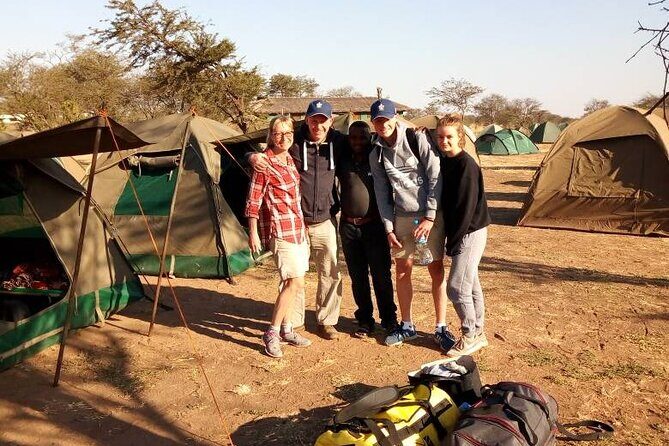
This trip is camping, but it’s not “rough it” chaos. You’ll have tented accommodation with all bed linen provided, which removes one of the biggest annoyances of camping travel. You’ll also get bottled water and a private driver/guide for the time on the road.
Food coverage is another value point. You’re provided 4 breakfasts, 5 lunches, and 4 dinners. That means you can focus on safari instead of food logistics. It also helps if you’re prone to getting hangry after long drives, which is a real issue out here.
Vegetarian options are available if you ask when booking. If you have dietary requirements, tell the operator ahead of time so meals match your needs. For anything beyond vegetarian—like allergies—you’ll want to confirm directly during booking, since the details of camp cooking aren’t listed here.
What to bring (based on the way the days are structured): a light daypack, comfortable closed-toe shoes for campsite areas, sun protection, and a warm layer for early starts. You’ll also appreciate quick-dry clothing because you’ll be out for long game-viewing stretches.
One more comfort note: camping nights can be peaceful or not, depending on conditions and animal activity outside the camp area. Bed linen is included, but you should still think in terms of “sleep like you’re camping,” not “sleep like you’re at a hotel.”
A few more Arusha tours and experiences worth a look

Price and value: what $1,250 buys you (and why it can feel fair)
At $1,250 per person, you’re paying for transport between major parks, private guiding, and the camping system that keeps you closer to the action than lodge-only budgets. The big value angle is that all taxes, park and conservation fees, and handling charges are included. You’re also covered for most meals (breakfasts, lunches, dinners), plus tent lodging.
Where costs can still creep up: tips, personal items, and snacks are not included, and there may be government-imposed increases in taxes or park fees. So budget a little breathing room, especially for snacks and drinks you want beyond what’s provided.
Group size also affects perceived value. With a maximum of 6 travelers and a private tour for just your group, you get the advantage of a dedicated vehicle and guide rhythm rather than sharing time with lots of different schedules.
In short: if you want a Northern Tanzania safari without paying lodge prices for every night, this style of itinerary often makes sense. If you need full lodge comfort every step, you may find camping limits your comfort.
Guides and the personal touch: what you can hope for
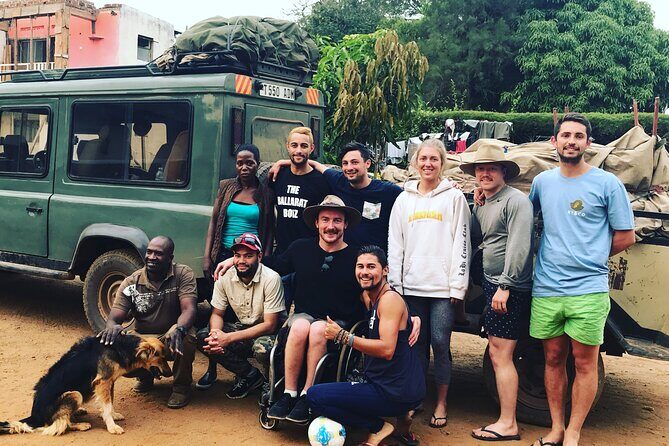
This is a private tour with a driver/guide, and the operator can use a multi-lingual guide. The company’s communication style in past planning also suggests they take the guide experience seriously.
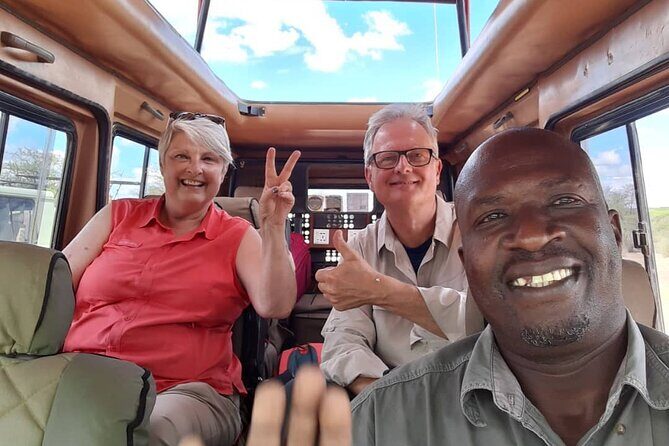
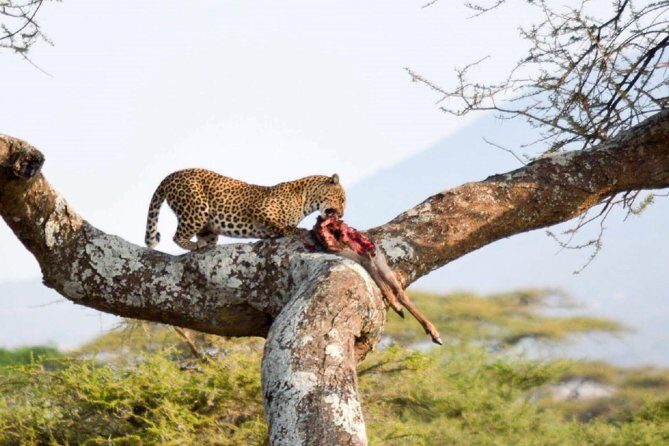
From their own internal shout-outs, guides like Bernard and Emmanuel have been highlighted for their driving and spotting ability, with specific praise for animal-focused skills (including cat-related sightings in at least one noted experience). Another name that pops up is Wilson as a guide connected to an Eastco safari experience.
Your guide experience will shape your day. A good guide does two things: positions you for sightings, and keeps the long hours tolerable with clear talk and smart timing.
Who should book this 5-day camping safari?
Book it if you want:
- A classic Northern Tanzania circuit without stretching into a longer 7–10 day trip.
- Plenty of time in the Serengeti (two full days is a big deal).
- Camping that includes tent bedding and most meals, not a do-it-yourself situation.
- A small-group setup (max 6) where you can actually hear and communicate easily.
Consider a different style if you:
- Want hotel-level comfort every night.
- Don’t like early mornings or long drive days.
- Need extremely specific dietary setups beyond what you can confirm during booking.
Should you book this tour from Arusha?
I’d book it if your dream is big parks plus real safari time, and you’re comfortable with camping trade-offs. The included fees and most meals remove a lot of the hidden “nickel-and-dime” feeling, which makes the $1,250 price feel more like a package than a guess.
The main decision comes down to comfort expectations. If you’re fine sleeping in tents with bed linen and you’re excited about early starts for crater wildlife, this is a strong Northern Tanzania route. If you want a slower pace and more refined lodging, you might feel the itinerary is busy.
If you do book, pack smart for mornings and sun, and tell them about dietary needs right away so nothing turns into a last-minute scramble.
FAQ
FAQ
What parks does this 5-day safari cover?
You’ll visit Tarangire National Park, spend time in the Serengeti National Park over two days, and then go to the Ngorongoro Conservation Area, including a crater day.
Where does the tour start and end?
It starts at AIM Mall, Mbauda, Arusha (TZ, Arusha 3424, Tanzania) at 8:00 am and ends back at the same meeting point.
How many people are in the group?
This is a private tour with a maximum of 6 travelers.
What’s included in the price?
The package includes taxes, park and conservation fees, handling charges, a private driver/guide, bottled water, tented accommodation with bed linen, and meals: 4 breakfasts, 5 lunches, and 4 dinners.
Is vegetarian food available?
Yes. A vegetarian option is available. You should advise the operator of dietary requirements at the time of booking.
Are tips and personal expenses included?
No. Tips, personal items, and snacks are not included.
Can I cancel for a full refund?
Yes. You can cancel up to 24 hours in advance for a full refund. If you cancel less than 24 hours before the start time, the amount paid is not refunded.