REVIEW · ZANZIBAR
Zanzibar: Stone Town 3-Hour Walking Tour
Book on GetYourGuide →Operated by Babu Tours & Safaris · Bookable on GetYourGuide
Stone Town can feel like you’re wandering through time, and this 3-hour walking tour is one of the easiest ways to get your bearings fast. I love the balance of big, dramatic landmarks (like the Old Fort/Arab Fort and Sultan Palace area) with street-level stops that help you understand daily life in Zanzibar. You also get time at the fruits and spice market and curio lanes, so the tour isn’t just photos and plaques.
One thing to plan around: this is a walking tour with narrow lanes and historic sites, and the experience is marked not suitable for people with mobility impairments, even though wheelchair access is listed.
In This Review
- Key highlights to watch for
- Stone Town in 3 hours: what this walk is really for
- Pickup, clothing, and the small rules that matter
- Stop-by-stop walkthrough: what you’ll see and why it matters
- Old Fort, also called Arab Fort, plus early Stone Town clues
- Sultan Palace entrance: where the official story lives
- Forodhani Gardens and the Darajani fruits and spice market
- Zanzibar ferry terminal: the modern “arrival” viewpoint
- Freddie Mercury house stop: pop culture with a Stone Town twist
- Curio shops and bazaar lanes: the best place to slow down
- Jaws Corner coffee shop stop: a break that still fits the story
- Anglican cathedral, also called the former slave market
- What your guide adds (and why guide quality shows up fast)
- Price and value: is $27 for 3 hours a fair deal?
- Who this tour fits best
- Should you book this Stone Town walking tour?
- FAQ
- FAQ
- What is the duration of the Zanzibar Stone Town walking tour?
- How much does the tour cost?
- Is hotel pickup and drop-off included?
- What time does the pickup happen if I’m staying in Stone Town?
- What languages are the live guides available in?
- What should I bring, and what isn’t allowed?
Key highlights to watch for

- Arab Fort route plus House of Wonders stops that set the political and trade story early
- Forodhani Gardens and the Darajani fruits and spice market for smells, colors, and real local hustle
- Old slave market area at the Anglican cathedral, including the context of East African slave trade routes
- Freddie Mercury and Jaws Corner-style pop culture stops to see how Stone Town modern life overlaps the past
- Plenty of guided “in-between” time to wander narrow streets near the curio shops
Stone Town in 3 hours: what this walk is really for
A lot of Stone Town tours try to cover everything, and you end up speed-walking from one viewpoint to another. This one is shorter and more focused, and that matters. In three hours, you can actually learn the layout—where the maze-like streets lead, what’s worth lingering over, and how the old trading world connects to what you see today.
At the start, you’ll meet your guide and get a short briefing before heading out. The pace is built for walking, with moments to pause near the big stops and time to drift through the curio lanes. If your goal is to leave Stone Town with a mental map and a sense of why each place exists, this format works.
You’ll also get a clear advantage from a guide who can explain the story as you go, instead of listing facts at a single museum desk. And if you’ve got the kind of curiosity that makes you ask why a street name exists or how Swahili formed, this tour is designed for that.
You can also read our reviews of more walking tours in Zanzibar



Pickup, clothing, and the small rules that matter
This tour runs at a set time. If you’re staying in Stone Town, pickup is at 9:00 AM from your hotel lobby. The tour includes hotel pickup and drop-off, which removes one of the biggest hassles in Stone Town—figuring out meeting points in a neighborhood that’s basically built for feet, not traffic.
A few “know before you go” items can make the difference between a smooth morning and constant stopping:
- You need clothing that’s at least below the knees.
- Bring sunscreen. Sun can hit hard in open areas around the waterfront and markets.
- Wear comfortable shoes. This is true walking, not just a gentle stroll.
- You can’t bring luggage or large bags.
You also need to be respectful with photos: you may not take someone’s picture without permission. In markets and curio shops, that rule keeps things polite and helps you avoid awkward moments with vendors.
One more thing: the tour is listed as wheelchair accessible, but it’s also marked not suitable for people with mobility impairments. In practice, that usually means the tour can be accessible in theory, but real-world navigation (narrow streets, steps, and historic site entry) can be difficult. If you need a chair, confirm what “accessible” means for the exact day and stops before you book.
Stop-by-stop walkthrough: what you’ll see and why it matters
Old Fort, also called Arab Fort, plus early Stone Town clues
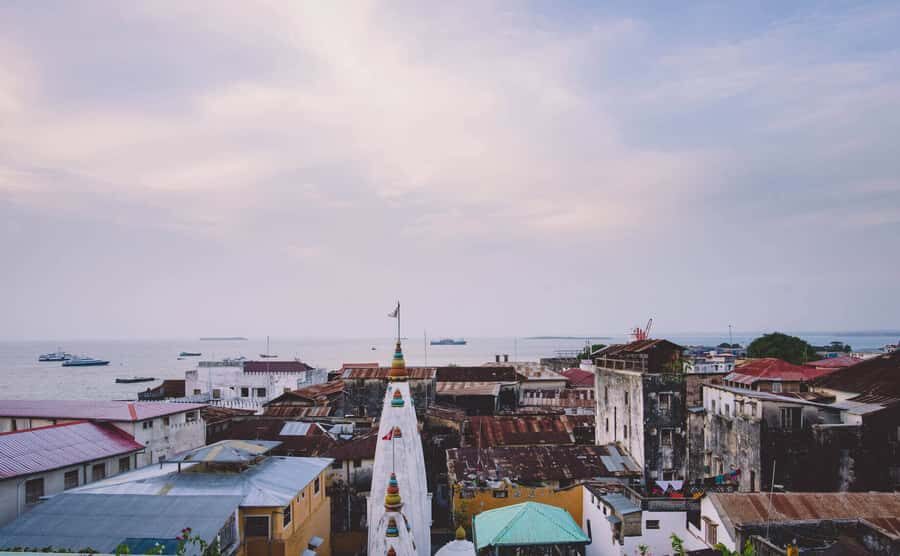
You start with the old fort, also known as the Arab Fort. This is a strong opener because forts explain power. You’re not just looking at walls—you’re hearing how Zanzibar’s coastal position made it a strategic stop in regional trade.
Your guide should also point you toward the House of Wonders area early on. That pairing is useful: the fort helps you understand control and defense, while the House of Wonders anchors the idea of ambition, architecture, and status in Stone Town’s history.
A practical tip: arrive ready to look upward and around. Fort viewpoints and surrounding corridors can be tight, so if you’re hoping for calm photos, plan to pause at the less crowded edges.
Sultan Palace entrance: where the official story lives
The tour includes the entrance fee to Sultan Palace. Even if you think you’re not a palace person, the value here is context. Palace spaces tend to show you how authority looked when Zanzibar was shaped by ruling power and long-distance trade.
Because this is a short tour, you won’t spend all day inside. Instead, you’ll get the key takeaways and then move on while the story is still fresh. That’s the strength of a 3-hour format: it keeps the momentum and helps you connect the next stop to what you just learned.
A few more Zanzibar tours and experiences worth a look




Forodhani Gardens and the Darajani fruits and spice market
Next comes one of the most enjoyable parts: Forodhani Gardens and the Darajani (darajani) fruits and spice market—often where the senses take over. Zanzibar is famous for cloves and spices, but a market is where you see the everyday side: packages, bundles, vendor routines, and the quick bargaining rhythm.
Your guide also connects this market to the bigger theme in the tour: Swahili origins. You’ll likely hear about how trade routes and mixed communities helped shape language and culture along the coast. That part matters because it turns the market from scenery into a living result of history.
There’s also a practical upside: markets are where you can ask questions that don’t fit museum labels. What’s used for cooking? What’s common locally? How do people shop? With the time you get, you can usually make the stop functional rather than just passing through.
Zanzibar ferry terminal: the modern “arrival” viewpoint
Then you move toward the Zanzibar ferry terminal area. It’s not just a transit zone—it’s a reminder that Stone Town is still connected to the water routes that shaped it long ago.
This stop helps you connect movement to meaning. You’ll notice how quickly the city shifts between old stone lanes and active waterfront activity. If you’re the type who likes to understand why places are placed where they are, this “in-between” stop gives you that logic.
Freddie Mercury house stop: pop culture with a Stone Town twist
You’ll also visit the Freddie Mercury house. This stop is short, but it works as a bridge: it shows how a global figure fits into local streets and daily life rather than living in a separate tourist bubble.
If you know Mercury only through music, you’ll probably appreciate the chance to see how that fame becomes part of Stone Town’s modern identity. If you’re not interested in the celebrity angle, treat it as a marker for how Stone Town continues attracting attention from around the world.
Curio shops and bazaar lanes: the best place to slow down
After the waterfront and landmarks, you’ll get time for leisure exploration among narrow streets next to the curio shops. This is where you can look closely without feeling rushed. You can browse crafts, ask about items, and get a sense of how sellers describe their products.
This is also where guides earn their keep. A strong guide can point out what to pay attention to, how bargaining works without making it aggressive, and which lanes are better for browsing than for quick photos.
If you’ve got a gift list, this is your window to shop without feeling like you missed the best part of the tour.
One useful real-world note from language and experience: some guides spend a little too long in a single shopping stop, and that can feel less balanced if you’re expecting equal attention on the history and public sites. I’d treat your shopping time as flexible—if you want fair browsing, keep your focus on exploring rather than committing to any one stall.
Jaws Corner coffee shop stop: a break that still fits the story
You’ll also stop at Jaws Corner coffee shop. In a short tour, this kind of stop is useful for two reasons: it gives your legs a reset and it helps you see how Stone Town’s present-day café culture sits right next to its older trade routes.
You might not have time for a full sit-down meal, but the stop can still help you decompress. If you’re sensitive to heat or walking fatigue, treat this as your cue to hydrate and slow down for a minute.
Anglican cathedral, also called the former slave market
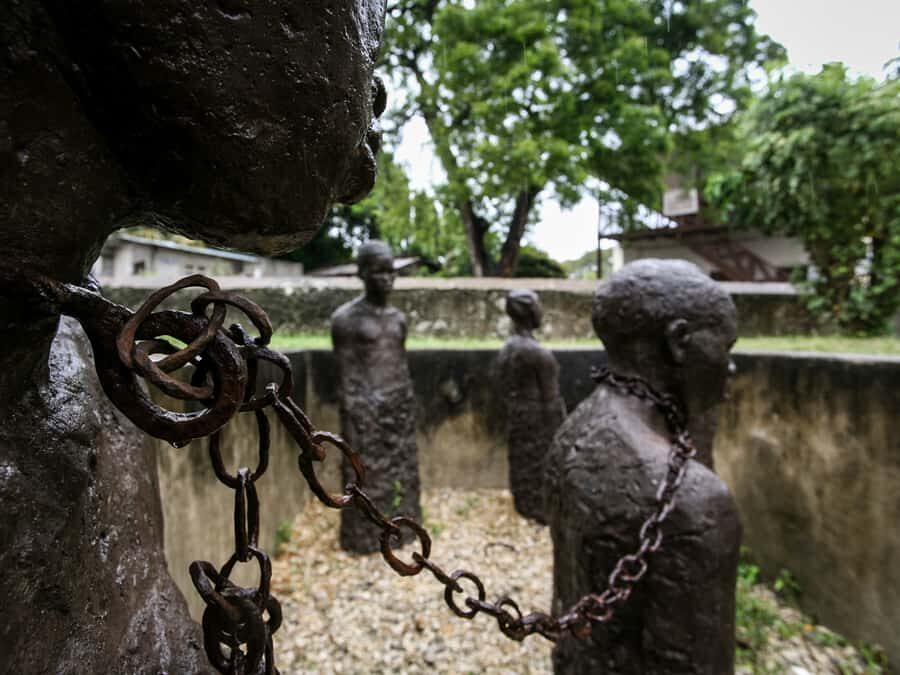
The tour includes the Anglican cathedral, also referred to as the former slave market. This is one of the tour’s most serious moments.
Stone Town’s story includes the East African slave trade. This site is described as a hub used for centuries where people were hunted and abducted from regions such as Malawi, Congo, Zambia, and other parts of East Africa. A good guide will handle this with care and clarity, linking the location to the history rather than turning it into a quick stop.
This is where the tour stops being only about sightseeing and becomes about understanding. If you visit with an open mind, you’ll see how a city can carry layers of trauma while still hosting everyday life around it.
If you want to be prepared: keep your phone and camera ready, but ready in a respectful way. Read the signs, listen closely, and don’t rush yourself through the emotional parts of the route.
What your guide adds (and why guide quality shows up fast)
This tour runs with a live guide in Spanish, French, German, Italian, or Russian. That language support matters because Stone Town details are hard to catch if you’re only half understanding what you’re hearing.
In practice, guide style shows up immediately. Some guides are excellent at linking sites together so your brain can form a coherent story—others can get stuck in one shopping moment. I’ve seen examples of guides like Amari delivering strong context for why Stone Town deserves a real guide, and guides like Mohamed using anecdotes to make the maze of streets feel less random.
What I’d aim for: when your guide talks, watch how they pace. If they keep moving but still explain why each stop matters, you get the best value from the three hours. If you feel the tour leans heavily into one retail stop, it’s worth gently redirecting your attention to the public sites during the time you have.
Price and value: is $27 for 3 hours a fair deal?
At $27 per person for 3 hours, the pricing can make sense when you compare what’s included. You’re getting hotel pickup and drop-off, a guide, guide fee to the markets, and the entrance fee to Sultan Palace, plus government taxes.
So the real question isn’t only the dollar amount—it’s what you’d otherwise pay if you tried to do it on your own:
- Entry fees and guided explanations often cost more when booked separately.
- Stone Town is easy to get turned around in, which quietly raises the cost of your time.
- Having a guide can also reduce the number of “dead-end” moments where you walked somewhere and didn’t know what you were looking at.
If you’re traveling solo or as a couple and you want a high signal-to-time ratio, this price is a reasonable way to learn the city’s core points without spending the whole day.
Who this tour fits best
This is a good match if you:
- Want a fast orientation to Stone Town.
- Like walking tours with landmark stops and markets.
- Enjoy learning how Swahili culture and trade connect to what you see in public spaces.
- Are comfortable with curio shopping lanes and want guided time there.
It’s less ideal if you:
- Need step-free access or have limited mobility (the tour is marked not suitable for people with mobility impairments).
- Want long, slow museum time (this is built for movement and key stops, not lingering all day).
Also, if you’re traveling with a lot of luggage, plan to leave it behind—no large bags means you should travel light for the walk.
Should you book this Stone Town walking tour?
If your goal is to get a working understanding of Stone Town in half a day, I think you should book this. The big reason: the route mixes major landmarks, the Darajani spice and fruit market area, and the former slave market at the Anglican cathedral into a single flow you can actually remember later. You’ll come away with a map in your head, plus a sense of what to revisit on your own.
I’d say yes especially if you like guided explanation and want time to wander curio streets without feeling lost. And if you care about Swahili origins and the market-to-history connection, the itinerary is built for that.
If you’re very sensitive to emotional history, go in ready to slow down at the cathedral site rather than rushing. If accessibility is your concern, confirm the exact route and site entry in advance because historic Stone Town can be unforgiving.
FAQ
FAQ
What is the duration of the Zanzibar Stone Town walking tour?
The tour lasts 3 hours.
How much does the tour cost?
The price is $27 per person.
Is hotel pickup and drop-off included?
Yes. Hotel pickup and drop-off are included.
What time does the pickup happen if I’m staying in Stone Town?
If you’re staying in Stone Town, pickup from your hotel lobby is at 9:00 AM.
What languages are the live guides available in?
The live tour guide is available in Spanish, French, German, Italian, and Russian.
What should I bring, and what isn’t allowed?
Bring sunscreen and wear comfortable shoes. Luggage or large bags are not allowed. Also, make sure your clothing is at least below the knees, and you can’t take someone’s picture without their permission.