REVIEW · ZANZIBAR
3-Hour Private Stone Town Walking Tour
Book on Viator →Operated by Art & Cultural Tours Zanzibar · Bookable on Viator
Stone Town is best understood on foot. This 3-hour private walk threads major sights with real street life, all wrapped in the Arab, Indian, and British architectural mix that defines Zanzibar. I especially like how the route connects Stone Town’s architecture to daily culture, not just postcards.
My other favorite part is the practical pacing: you get a tight hit of landmarks, markets, and one famous pop-culture detour without feeling lost. One thing to consider: this is a walking tour through narrow streets and sea-front areas, so heat and stone steps can slow you down if you are not used to moving at street level.
In This Review
- Key highlights to know before you go
- Stone Town on Foot: the 3-hour private plan
- Meeting at Old Fort on Mizingani Road
- Old Fort: the oldest stone anchor on the seafront
- Forodhani Gardens: sea-front dinner energy after sunset
- Old Customs House: 18th-century power on a carved door
- UNESCO Stone Town streets: narrow lanes, carved doors, and Jaws Corner
- Darajani Bazaar: the spice market for real daily supplies
- Old Slave Market and Anglican Cathedral: heavy history, clear wayfinding
- Freddie Mercury Museum: Zanzibar roots in the center of town
- What the private guide really changes (and why people love it)
- Price and value: $35 for a full “layers” route
- Practical tips for a smooth Stone Town walk
- Who should book this tour, and who might skip it
- Should you book this 3-hour private Stone Town walking tour?
- FAQ
- How long is the 3-hour private Stone Town walking tour?
- What is the price per person?
- Is this a private tour or a group tour?
- Where do you meet for the tour?
- Where does the tour end?
- Do I need to buy admission tickets for the listed stops?
- Does the tour use a mobile ticket?
- Can I bring a service animal?
- Is confirmation provided after booking?
- What is the cancellation policy?
Key highlights to know before you go
- Old Fort meeting point: Start where the seafront story is oldest, with strong sightlines toward nearby landmarks
- Forodhani Gardens food time: After sunset, the sea-walk crowds turn into a popular Swahili-style dinner scene
- Old Customs House details: Look closely at the 18th-century carved door motifs and the Sultan-era significance
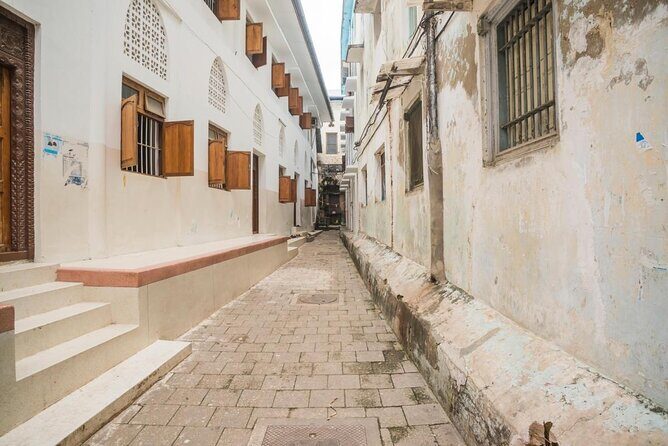
- UNESCO Stone Town lanes: Narrow streets, Zanzibar carved doors, and specific local religious architecture get pulled into the walk
- Darajani Bazaar seafood and spice market: Fresh fruits, fish, and spices make this one of the most tangible stops
- Freddie Mercury Museum focus: A compact, on-foot way to connect Zanzibar roots to global music history
Stone Town on Foot: the 3-hour private plan

This is a private walking tour in Stone Town, Zanzibar, priced at $35 per person for about 3 hours. It is designed for people who want orientation fast: where to look, what to notice, and how the town’s layers fit together. You will move on foot between major sites and local stops that feel like the town’s everyday rhythm, not museum-only geography.
Because it is private, the pace can match your comfort level. If you want more time to linger at a door pattern or ask one extra question about architecture, you can usually steer the walk that way. Also, you are not sharing the streets with a big crowd from the tour itself; it is just your group.
You can also read our reviews of more walking tours in Zanzibar



Meeting at Old Fort on Mizingani Road
You start at Old Fort, on Mizingani Road, right by the seafront. This matters because Stone Town can feel like a maze if you arrive cold. Starting at a landmark helps you orient instantly: you understand direction, you see where the sea-side landmarks line up, and the rest of the walk starts to make sense.
The tour ends back at the meeting point. That simple loop is useful when you want to keep plans flexible afterward, whether that means browsing on your own or grabbing dinner near the seafront.
Old Fort: the oldest stone anchor on the seafront
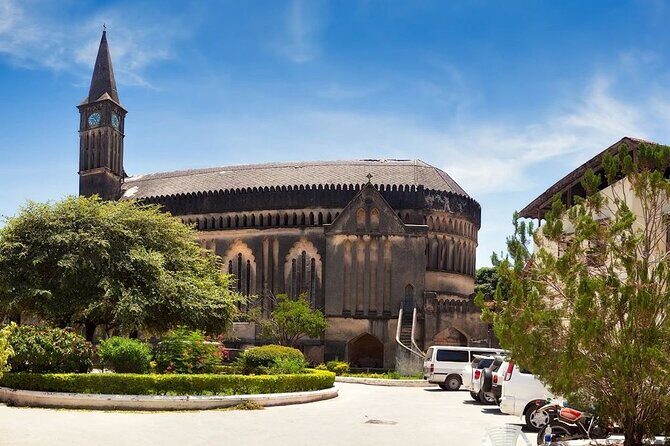
Old Fort is also known by names like the Arab Fort. It is described as the oldest building in Stone Town, and that age gives it extra weight at the beginning of your walk. You get a sense of how long this place has been tied to maritime life and power.
The location also sets up the next stops. Old Fort sits adjacent to the House of Wonders (the former palace of the Sultan) and it faces toward Forodhani Gardens. That means your early photos are not random. They are part of a layout the town still revolves around.
One practical consideration: this is a seafront area, so you might get sun exposure before you settle into the shade of the street lanes. If you burn easily, plan for hats and water and keep an eye on your energy early.
Forodhani Gardens: sea-front dinner energy after sunset
Forodhani Gardens is a smaller part of historical Stone Town, but it is a big mood. It sits along the main sea walk, in front of the famous buildings nearby, so it acts like a bridge between architecture and street life.
The standout moment here is timing. After sunset, the area becomes a popular food street market where locals and visitors gather for dinner. The tour route is designed so you do not just see the gardens. You see what the gardens are for: nighttime food, people-watching, and Swahili and Zanzibari cousin dishes.
What to expect at this kind of food street setup is spelled out clearly: grilled seafood, samosas, cassava sweet potatoes, and a Zanzibar mix called urojo. And yes, you will likely smell spices and smoke before you even decide what to try. If you are picky, come hungry but pace yourself, because one strong snack stop can turn into a full dinner if you are not careful.
Old Customs House: 18th-century power on a carved door
Old Customs House was built in the 18th century, and it carries a political detail that makes the stop more than a pretty facade. It is tied to Sultan-era history, including the fact that the grandson of Sultan Said was proclaimed Sultan there in 1896.
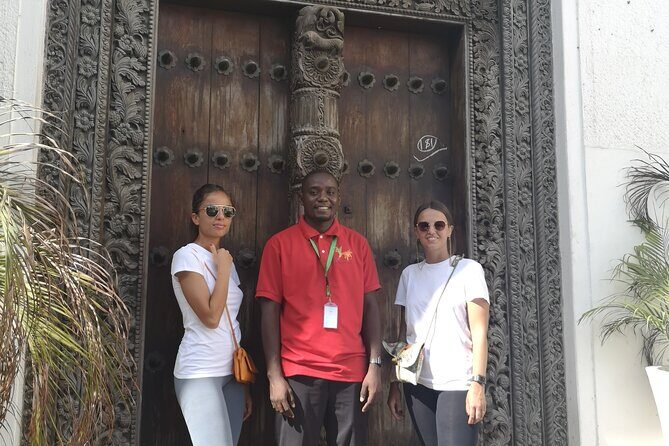
The most memorable thing here is visual. The door is beautifully carved with motifs like fish, lotus, and an anchor. Those symbols fit the setting. They point back to sea trade and cultural meaning, and they give you a clear example of how local craftsmanship appears in everyday architecture.
If you like slow looking, this is one of the stops where time stretches. If you tend to rush, you might miss the small details that make the door special, so set yourself a quick goal: take one minute just to scan the carvings before moving on.
You can also read our reviews of more private tours in Zanzibar





UNESCO Stone Town streets: narrow lanes, carved doors, and Jaws Corner

Stone Town is a UNESCO World Heritage Site, designated in 2000. The reason is simple and visible on your route: the architecture, mostly dating back to the 19th century, reflects multiple influences tied to Swahili culture, including Arab, Persian, Indian, and European elements.
This stop is where the tour shifts from landmark photos to what you actually experience walking. Expect narrow streets, turns that surprise you, and doorways that look like they belong in a museum but are attached to everyday buildings. The walk specifically calls out places like Ismail Khoja Jamat Khana and Zanzibar carved doors.
You will also hear about the city center area known as Jow’s Corner. That matters because Stone Town can feel like a collection of separate sites unless someone connects them. When someone points out key corners and what to look for on each block, the whole town starts reading like a single story.
Here is the tradeoff: this part is the most “walking-heavy” visually. If you are short on patience for street-level details, you may feel like you are constantly stopping. If you enjoy architecture and street texture, this is where the tour really pays off.
Darajani Bazaar: the spice market for real daily supplies
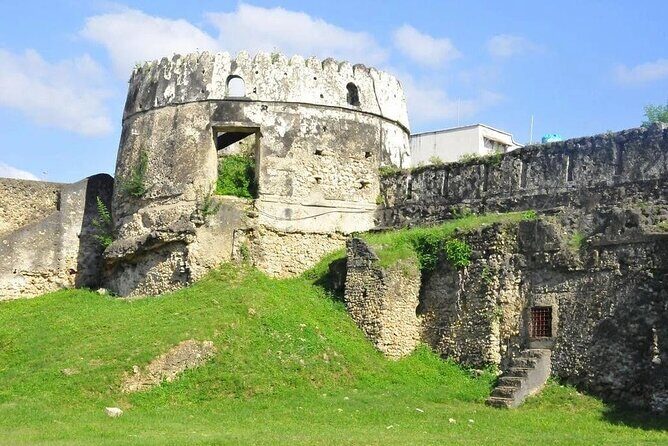
Darajani Bazaar is often called the Spice Market or by similar names, including Darajani Market or local market. The tour highlights it as one of the places where you see fresh goods up close.
This is not a souvenir stop pretending to be local. It is described as a market where you can see fresh fruits, fish, and spices. Those categories tell you what the market actually is: an everyday supply chain for food and cooking, not just a performance for tourists.
If you plan to snack while you walk, this is the type of stop that helps you choose. But remember, markets move fast and stalls can be crowded. Keep your phone secure, watch your footing, and use the guide’s lead if you are navigating toward the most interesting lanes.
Old Slave Market and Anglican Cathedral: heavy history, clear wayfinding
This stop is emotionally heavy by nature, and the tour frames why the site matters. For centuries, Zanzibar was central to political and economic power in East Africa, and it was also a key location tied to the slave trade. Captured people from the mainland were brought to Zanzibar in chains to be sold in the city slave market.
The tour also provides the turning point: the market was closed on the orders of the Sultan in 1873, and Zanzibar’s role was important to abolition movements not only in Africa but worldwide. That historical context is crucial here because if you only look at the location without the story, you miss what the place represents.
There is also a nearby Anglican Cathedral connection in the stop description, which helps explain why the area includes more than one type of landmark. When you look at sites like this, you want the guide to point out what is visible now and what the history means for how you should interpret it.
If you want to keep your day balanced, pace this stop. It is one of the stops where you might need a minute after to reset mentally before moving on to something lighter like Freddie Mercury.
Freddie Mercury Museum: Zanzibar roots in the center of town
Freddie Mercury’s story shows up right in the middle of Stone Town. The museum is described as located in the heart of Stone Town, and it connects back to a Zanzibar birthplace: Farroukh Bulsara (Freddie Mercury), born in Zanzibar and later moving to England around 1963.
What the museum focuses on is not just fame. It covers his roots, including the Zoroastrian religion connection, along with childhood and upbringing in Zanzibar. The tour notes his schooling route as well, including schooling in Panchangani, India before his extraordinary journey to becoming one of the greatest stars of all time.
This stop is great for a mixed group, because it gives a familiar story inside an unfamiliar setting. If you have music fans in your group, it also becomes a break from constant architecture reading. And if you think you know everything about Freddie Mercury, the Zanzibar angle often changes the story you thought you knew.
One thing to keep in mind: museums can vary in how much time you want to spend inside. Since the tour’s overall duration is about 3 hours, you may not have unlimited time here unless the pace allows it.
What the private guide really changes (and why people love it)
The biggest reason this kind of walking tour works is not the route. It is the person steering it. The feedback around guides from Art & Cultural Tours Zanzibar is strong and consistent: clear English, professional handling of the walk, and real city pride.
Names that come up include Ahmad and Hassan, and the praise centers on how they present history and point out architectural features tied to different influences. In a place like Stone Town, that is the difference between seeing doors and understanding why doors look the way they do.
You also get flexibility. The walk can be tailored to your needs and interests, including adjusting requested stops. That is a real value when you are traveling with different priorities, like architecture lovers plus someone who wants the Freddie Mercury connection without losing the markets and historic lanes.
Price and value: $35 for a full “layers” route
$35 per person for a 3-hour private walking tour is reasonable in Stone Town, especially because the stops listed are marked as free admission for the attractions visited. You are paying for guidance, interpretation, and a well-timed order that keeps you from wasting hours figuring things out alone.
You also get multiple categories in one outing:
- landmark history tied to the seafront
- street life through a nighttime food market area
- 18th-century architecture detail via Old Customs House
- UNESCO-level context through Stone Town lanes
- markets for fresh spices, fish, and fruit
- a difficult but important slave trade site
- a pop-culture stop that connects Zanzibar to the world
That mix is the value. Many tours pick one lane: either history-only or food-only. This route stitches the town together so you walk away with both what happened and what it feels like.
Practical tips for a smooth Stone Town walk
Because this is a walking tour through narrow streets and sea-front areas, wear shoes you can trust. Stone can be uneven, and the narrow lanes can slow you down, especially if you stop often for photos and details.
Bring water. Even if the tour lasts only about 3 hours, Stone Town’s sun and humidity can add up. For Forodhani Gardens after sunset, consider that you might be standing and walking longer than expected around food stalls, so go easy on your pace.
If you want to shop or snack, plan your budget separately. The tour description focuses on seeing and context at the markets and gardens, while food is part of the scene. You may want to try grilled seafood or samosas, but treat it as a personal choice rather than a fixed included meal.
Who should book this tour, and who might skip it
This is a great fit if you:
- want orientation in Stone Town without spending the day mapping routes yourself
- like architecture and door details tied to different cultural influences
- want a mix of markets, historic sites, and at least one modern story stop
You might skip or swap for a different format if:
- you dislike walking in narrow lanes and crowded market zones
- heavy topics like the slave trade history would disrupt your day too much
- you want a lot of museum time, since the tour is designed to cover multiple stops within a short window
Should you book this 3-hour private Stone Town walking tour?
Yes, if your goal is to understand Stone Town quickly and walk out with a clearer picture of how Arabic, Indian, Persian, and European influences shaped the town’s architecture and daily life. The route is tight, the stops are meaningful, and the guide quality is a major part of the experience, with names like Ahmad and Hassan often highlighted for professionalism and clear explanation.
If you already know Stone Town deeply and want a slower, deeper museum-heavy day, you may prefer a longer self-guided plan. But for most visitors, this private 3-hour format hits the sweet spot between big landmarks and real street texture.
FAQ
How long is the 3-hour private Stone Town walking tour?
The duration is about 3 hours.
What is the price per person?
The price is $35.00 per person.
Is this a private tour or a group tour?
It is a private tour/activity, meaning only your group participates.
Where do you meet for the tour?
The meeting point is Old Fort, Mizingani Rd, Zanzibar, Tanzania.
Where does the tour end?
The tour ends back at the meeting point.
Do I need to buy admission tickets for the listed stops?
The stops are marked with admission ticket free in the tour details.
Does the tour use a mobile ticket?
Yes, it includes a mobile ticket.
Can I bring a service animal?
Service animals are allowed.
Is confirmation provided after booking?
Confirmation will be received at the time of booking.
What is the cancellation policy?
You can cancel for a full refund if you cancel up to 24 hours in advance. If you cancel less than 24 hours before the experience starts, the amount paid is not refunded.