REVIEW · MOSHI
Serengeti Wildebeest Migration.
Book on Viator →Operated by Bujo Tours · Bookable on Viator
Timing matters on a migration safari. This Serengeti wildebeest migration itinerary is built around the months when herds are most likely to hit the Mara River, with side trips to Tarangire and the Ngorongoro crater for big wildlife variety. You also start with an early, efficient drive out of Moshi or Arusha so your first day already feels like safari time.
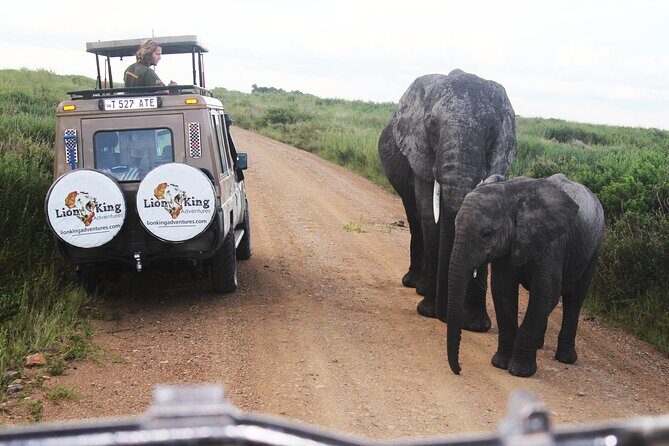
I love the way this route mixes classic parks with the migration focus. Tarangire brings in elephant family sightings and giant baobabs, while the central and northern Serengeti sections are aimed at lion-and-leopard areas plus the herds’ movement. I also like the private-ride feel: a 4×4 with a pop-up roof, fridge, and portable charging stations, plus mineral water on all days.
One thing to consider is that migration is never a guaranteed show. Weather, river conditions, and herd timing drive what you see, and the program can feel a little rushed when the schedule moves you between regions, especially near the Serengeti–Ngorongoro switch.
In This Review
- Key highlights to expect on this Serengeti migration safari
- Serengeti migration safari from Moshi: getting started the right way
- Tarangire game drive: elephants, family behavior, and those baobabs
- Serengeti Seronera and the kopjes: lions and leopards on a classic route
- Heading toward Kogatende: the northern Serengeti terrain shift and Mara River timing
- Mara River crossing day: why mid-June to September is the sweet spot
- Central Serengeti return: lions in Seronera and the dry-season water advantage
- Serengeti to Ngorongoro crater rim: switching from plains to a geological powerhouse
- Early crater-floor time at 6:30AM: black rhino, hippos, and the biggest herd drama
- Price and value: what you pay for at $4,185 per person
- Timing tips that actually affect what you see
- Who this Serengeti wildebeest migration tour suits best
- Should you book this Serengeti migration safari with Bujo Tours?
- FAQ
- What time does the safari start?
- Where is pickup offered?
- Which parks are included in this safari?
- When is the best time for wildebeest river crossings on this route?
- What’s included in the price?
- Can I cancel for free?
Key highlights to expect on this Serengeti migration safari

- Mara River crossing chances depend on season, with dramatic timing described for mid-June to September in this region
- Tarangire elephants and baobabs start your trip with strong scenery and wildlife early
- Serengeti Seronera kopjes and lions give you top predator odds even when migration isn’t right at your doorstep
- Northern Serengeti shifts terrain toward a hilly, broken landscape as you head to areas near Kogatende and the Mara River
- Ngorongoro early descent at 6:30AM sets you up for a full crater-floor game drive and the hippo pool lunch stop
- Guide support matters: Bujo Tours’ guide Fredy is specifically praised for making the trip feel stress-free
Serengeti migration safari from Moshi: getting started the right way

This safari starts the day with purpose. At 8:00am, you’re picked up from your hotel in Moshi or Arusha, then driven roughly 150 km toward Tarangire National Park. The drive is about three hours, which matters because you lose less daylight to transit and more time is available for wildlife.
On your first real safari morning, you’re not jumping straight into endless plains. Tarangire has a different look and feel: the park’s nine vegetation zones create variety, and that change in terrain makes animals easier to spot. You’ll notice the giant baobab trees early, and they’re not just scenery. They give you scale cues—giraffes can look surprisingly small beside them.
What I like here is that Day 1 is structured for pacing. There’s a game drive through late afternoon, plus a picnic lunch stop, then dinner back at your camp or lodge. That dinner-and-sleep rhythm is smart before the longer Serengeti days.
Possible drawback: you’ll still have a full day of driving and guiding right out of the gate. If you’re the type who likes slow mornings, plan to be mentally ready for an early start on day one.
You can also read our reviews of more tours and experiences in Moshi.

Tarangire game drive: elephants, family behavior, and those baobabs
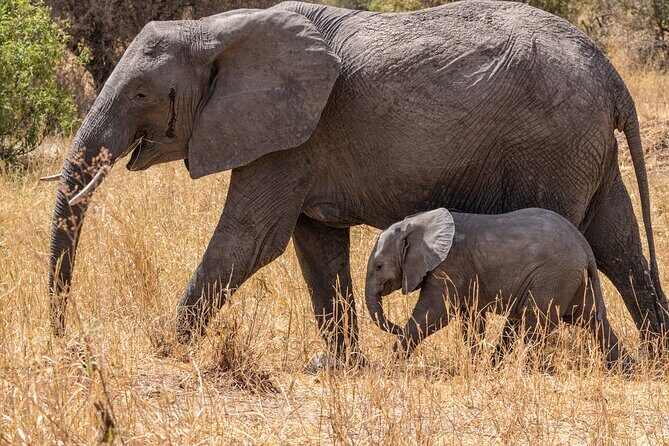
Tarangire National Park is famous for one reason you’ll feel in your bones once you’re there: elephants. The plan specifically calls out the highest concentration of elephants, and that’s a real advantage on Day 1 because elephants are often predictable in where they feed and how families move.
The itinerary also points to interaction between elephant families. Even without a guarantee of a close encounter, the odds are strong that you’ll spend time watching the social side of elephant life—calves, groups splitting and reuniting, and the quiet power of mature bulls moving through the landscape.
And then there’s the visual payoff. Those baobabs make your photos work, even when the animals are far. If you like wildlife photography, this is the day to get your camera habits sorted, since you’ll be told to keep it ready and you’ll need it for fast-changing moments.
What to watch for: try not to rush your stops. Elephant behavior is often slower than big-cat action, so patience gets rewarded.
Serengeti Seronera and the kopjes: lions and leopards on a classic route

Day 2 shifts you into Serengeti National Park, and the focus becomes “top predator country.” After breakfast, you head into the park and start working in the most celebrated wildlife areas.
The itinerary highlights the Seronera area as one of the richest wildlife habitats. That’s a big deal because predators follow water and prey. Seronera includes the Seronera River, and the plan notes that the water source attracts wildlife from across the park. More wildlife usually means more predator opportunities.
Two Serengeti details are built into your route description:
- Lions and lion prides in this region
- The kopjes, massive granite boulders that shelter and break up the open plains
Those kopjes aren’t just a scenic background. For predators, rocky outcrops can mean shaded resting spots, better ambush angles, and places to haul prey. If you’re hoping for steady viewing rather than just chasing movement, this part of the itinerary tends to deliver.
Possible drawback: Day 2 has several hours of drive time. If you prefer a lighter schedule, you might find yourself wanting more time to just sit and watch. The upside is that the route is designed to keep you in strong lion and leopard territory.
Heading toward Kogatende: the northern Serengeti terrain shift and Mara River timing

Day 3 is where the safari starts to feel more like a chase—still organized, but with more variation. You go from the central area toward the northern Serengeti, specifically mentioning an enroute drive toward the Kogatende region.
The itinerary calls out a terrain change: from the usual flat grassland to a more hilly and broken landscape. That matters because it changes animal movement patterns and how you see wildlife. In open plains, animals can feel tiny dots on the horizon. In broken terrain, animals can appear suddenly near ridgelines or around boulders.
This is also a day with resident game options. The plan lists zebras, topi, gazelle, buffalo, and the presence of leopards and lions in the north. So even if the migration itself isn’t right in front of you, you still have plenty to look for.
Then there’s the key timing piece: depending on arrival timing, you may spend a few hours by the Mara River. That’s important because river-edge viewing is what turns migration from a concept into a real event.
What to manage: if you’re traveling for crossings specifically, keep your expectations flexible. A few hours near the river can be incredible, or it can be a quiet setup for the next day’s crossing-focused viewing.
Mara River crossing day: why mid-June to September is the sweet spot

Day 4 is the migration centerpiece. The plan specifically says that in the months between mid-June to September, migration can be found in this region, and that this Mara River stretch is where you get the most dramatic river crossing chances.
The description is vivid: the river can be fierce, deep, and rain-fed, taking an enormous toll on the migrating wildebeest. The itinerary also points you toward what you might actually see: surging animals through torrential water, some drowning, and crocodiles waiting nearby.
If you’ve dreamed of migration for years, this is the day you’re planning around.
A practical note: the itinerary suggests that you might be able to witness the natural wonder if it’s your lucky day. That wording matters because you’re dealing with a living system. Herd size, river depth, and timing are all out of anyone’s control.
Possible drawback: this kind of crossing viewing often means long hours and an emotional intensity you can’t “turn off.” If you’re sensitive to harsh wildlife realities, this day may feel heavy even when it’s amazing.
Central Serengeti return: lions in Seronera and the dry-season water advantage
After the crossing day, you shift again. Day 5 heads south toward the central Serengeti, returning toward the Seronera terrain.
The route description matters because it signals variety: you drive through hill country, the Lobo area, woodlands, and then back into Seronera terrain. That kind of in-between habitat change can pay off with sightings because animals use different spaces as the day progresses.
Once in Seronera, the itinerary emphasizes the same big benefit: predators love the water pull of the Seronera River. It also repeats a key idea about lion prides that thrive here and the survival interactions you might observe.
This is also where the program leans on a viewing strategy common to the dry season: in areas with more permanent water, you can get better odds of animals gathering and staying. The itinerary notes dry season benefits when describing other full-day drive time in Serengeti.
What I’d do if I were you: keep an eye out for predators even if the migration doesn’t pop into view. The itinerary is built to make sure you’re not waiting on one specific moment only.
Serengeti to Ngorongoro crater rim: switching from plains to a geological powerhouse
Day 6 is your move into the Ngorongoro Conservation Area. You start at 9:00am and the plan includes a short game drive in Serengeti after breakfast, then a half-day game drive with picnic lunch before heading toward the crater rim.
The drive to the crater rim is about 75 km, taking around 2.5 hours, with mild game action enroute. This matters because it breaks up the “roads only” time with at least a chance for sightings while you transition regions.
Then you hit the crater rim. The itinerary describes the crater as Africa’s impressive geological attraction and a wilderness mecca, and gives you key scale numbers: the crater is a world’s largest inactive, intact volcanic caldera with roughly a 260 square kilometer floor and over 2,000 feet of depth.
Even if you’re not a geology nerd, that size helps explain why wildlife concentrates. A crater floor acts like a natural habitat bowl: food, water, and shelter pull in animals.
Possible drawback: this is another schedule day. If you tend to get travel-fatigue, you’ll want to manage your energy so you can handle an early next morning.
Early crater-floor time at 6:30AM: black rhino, hippos, and the biggest herd drama
Day 7 is built around one thing: the early start. You’re told to descend at around 6:30am, which is a strong strategy. Early light often helps your viewing, and wildlife is usually more active earlier in the day.
The crater floor game drive is described as lasting about five hours. That’s a solid block, not a rushed glance. And the animal list is specific, which is helpful when you’re planning your expectations:
- African elephant
- Buffalo
- Black rhino
- Hippos
- Hyenas
- Cheetahs
- Lions
One detail that really stands out: lunch is at the beautiful hippo pool. That’s the kind of timing that makes the day feel like more than just driving. The itinerary sets up a straightforward flow—game drive, picnic lunch at hippo pool, then a steep ascend to exit.
What to know: you’re going from rim to floor and back up. That’s not just scenic. It can affect how your legs feel. Pack your “comfortable stamina” attitude and don’t expect a relaxed hike day.
Price and value: what you pay for at $4,185 per person
At $4,185.00 per person, this is not a budget safari. You’re paying for several things that add up fast in Tanzania:
- Private transport with a dedicated 4×4 and pop-up roof design
- Park time across Tarangire, Serengeti, and Ngorongoro
- A migration-focused schedule aimed at river crossing windows
- Guided days plus a structured meal plan
- Safety backup: AMREF Flying Doctors insurance for emergency evacuations
- Practical perks: mineral water on all days and portable charging stations
Also, it’s listed as a private tour/activity, so you’re not sharing the game-viewing experience with a random crowd. That often makes it easier for your guide to position the vehicle based on sightings and for you to settle into a routine without constant interruptions.
What’s not included also matters for value math:
- Flights (international)
- Alcohol and soft drinks
- Tips for your safari guide
- Personal expenses in nature, travel insurance, and visa fees
- Visa fees are listed as $100 for American and $50 for non-American
So if you’re comparing prices, ask yourself what your alternative includes. If your cheaper option uses shared transport, shortens game-drive time, or skips the migration-targeted river-day approach, the total experience can feel less satisfying even if the sticker price looks lower.
Timing tips that actually affect what you see
Two timing windows are explicitly described for migration viewing:
- July and August: herds migrate from the Serengeti toward the Masai Mara ecosystem in Kenya
- September and October: crossings can happen as the migration moves the other way
The itinerary also calls out that July marks the start of the Masai Mara River crossing period and notes mating season in the Serengeti, with faster movement driven by water and greener grass.
Here’s the practical takeaway: if you’re going specifically for crossings, pick your month based on the schedule window that matches the river crossings you want. Then manage expectations. Even in the right month, you’re dealing with living timing.
Also note the daily start times: 8:00am at the beginning days, 9:00am before Ngorongoro, and that crucial 6:30am crater descent. If you hate early starts, you’ll feel it most on the last day.
Who this Serengeti wildebeest migration tour suits best
This tour fits best if you want a classic Tanzania circuit with a migration heartbeat.
It’s a good match for:
- Couples or small groups who want private safari logistics
- Wildlife-first travelers who want both predators and migration potential
- People who want the structure of Serengeti plus the crater finish at Ngorongoro
It may feel less ideal for:
- Travelers who dislike long drives and changing regions daily
- Anyone who needs a guaranteed river crossing outcome (nobody can promise that)
One more human detail from real-world experience: the guide Fredy is mentioned as someone who made the trip stress-free and handled details from start to finish. That matters because migration safaris live and die by day-of decisions, not just a printed schedule.
Should you book this Serengeti migration safari with Bujo Tours?
If your dream includes Serengeti migration plus a serious Ngorongoro finale, this itinerary makes sense. You’re not only chasing wildebeest—you’re also getting Tarangire elephants and predator-heavy Serengeti regions, with a crater day that checks a lot of boxes in one morning.
Before you book, do two sanity checks:
- Confirm whether your trip dates align with your river-crossing window (July/August for one direction, September/October for the other) and what the itinerary lists for your specific day set.
- Double-check the lodge or camp level you’re paying for, since one real-world account mentions budget camping and the overall package can come in different accommodation styles.
If you want a structured, private safari that takes migration seriously and still delivers other wildlife magic, Bujo Tours’ Serengeti and Ngorongoro program is worth strong consideration.
FAQ
What time does the safari start?
The meeting/start time is 8:00am for the pickup and first travel day.
Where is pickup offered?
Pickup is offered from hotels in Moshi or Arusha.
Which parks are included in this safari?
The itinerary includes Tarangire National Park, Serengeti National Park, and Ngorongoro Conservation Area with a crater-floor game drive.
When is the best time for wildebeest river crossings on this route?
The information provided points to July and August for crossing chances as herds move toward the Masai Mara, and September and October as the migration moves in the other direction. It also notes dramatic crossing chances in the region from mid-June to September.
What’s included in the price?
Included items are the mentioned activities, Flying Doctors insurance (AMREF) for emergency evacuations, mineral water on all days, a private 4×4 jeep with refrigerator, portable charging stations, and pop-up roof, and meals (breakfast, lunch, dinner as listed).
Can I cancel for free?
Yes. The policy says you can cancel for a full refund if you cancel up to 24 hours in advance of the experience start time.