REVIEW · ARUSHA
Private 8 day Northern Circuit Kilimanjaro Climb
Book on Viator →Operated by Duma Explorer · Bookable on Viator
The Northern Circuit makes Kilimanjaro feel like the whole story. This private 8-day climb circles the mountain on the less-traveled route, starting in the west and wrapping around to the north before you ascend via Marangu on the east. I especially like the full-mountain views you get as you loop around the slopes, and I also love the extra acclimatization time this longer schedule gives you before the final push.
One thing to think about: this route asks for real altitude discipline. You can get headache and other mild symptoms, and there’s a long, tough summit night that starts around 11pm to midnight, so if you’re not already fit, you’ll feel it.
In This Review
- Key highlights I think you’ll care about
- Why the Northern Circuit Loop makes sense (and isn’t just marketing)
- Price and value: what your $2,999 is paying for
- Getting started at Londorossi Gate: the day you set the tone
- Day 1: Mti Mkubwa Camp and the calm start
- Day 2: from forest to heather and a first Kibo glimpse at Shira One (3504m)
- Day 3: boulders, petrified lava, Moir Hut (4161m) and a planned acclimatization climb
- Day 4: “peace and solitude,” altitude up to 4402m, then down to Second Pofu (4033m)
- Day 5: 6.8 km of up-and-down over the northern slopes, with Mawenzi growing
- Day 6: the big lift to School Hut (4717m) and the midnight wake-up
- Day 7: Hans Meyer Cave, Gillman’s Point, and Uhuru Peak (5895m)
- Day 8: finish at Mweka Gate (1633m) and roll back to Arusha
- What the camp setup and meal rhythm really means for you
- Guides, porters, and the team feel (names you’ll see again and again)
- Who this Northern Circuit climb is best for
- Should you book this tour?
- FAQ
- FAQ
- How long is the Kilimanjaro climb on this Northern Circuit route?
- Where does the trek start?
- Is pickup offered?
- Is this a private tour?
- What time does the day start?
- Are meals included?
- What is the summit route and highest point?
- When do you start the summit assault?
- What’s the cancellation rule?
Key highlights I think you’ll care about
- Quiet hiking on a less-traveled line that still delivers big scenery and changing zones
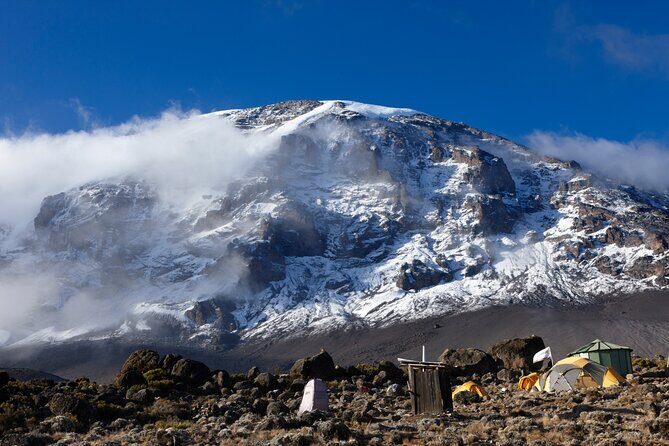
- A loop that shows the entire mountain rather than one side of Kibo and that’s it
- Split training for altitude: a walk that builds up, plus a planned acclimatization climb near 4300m
- A summit push built around your timing: you’ll reach Uhuru Peak (5895m) and then your guide sets how long you stay based on conditions
- Comfort-focused camp routine: tents already set up on arrival, with snacks and meals handled by the team
Why the Northern Circuit Loop makes sense (and isn’t just marketing)
Most Kilimanjaro routes shove you into a shorter timeline. The Northern Circuit does something smarter: it loops. You start at the west side (via the Lemosho starting point area), then travel around the northern slopes and up toward Kibo in a way that keeps your “what am I climbing?” view in motion. The payoff is that you don’t spend the whole trek looking at the same face of the mountain.
From a practical angle, that loop structure also helps you manage altitude. You’re not just “hoping” your body adjusts. You’re giving it several days of steady walking, sleeping at camps on the way up, and then getting a longer summit timeline than many faster itineraries. The plan is built for acclimatization, and that matters because altitude doesn’t care how motivated you feel.
I also like that this route crosses and overlaps with other classic lines on the map. You’ll connect with terrain associated with Lemosho, Rongai, Marangu, and Mweka as you move through the loop. In plain terms: you get variety without changing providers mid-trip.
You can also read our reviews of more private tours in Arusha

Price and value: what your $2,999 is paying for
At $2,999 per person, you’re paying for a private, structured, multi-day mountain operation—transport, national park access logistics, trained guiding, and a full camp system. This isn’t “book a bed and good luck.” Your schedule includes 7 breakfasts, 8 lunches, and 7 dinners, plus the routine of tents being set up before you settle in.
Two value details stand out:
- The itinerary is designed around time at altitude, not just distance. That longer 8-day pacing is usually where the money goes in a successful mountain climb.
- It’s private. Your group is the only group participating, which usually means you can keep a consistent rhythm with your guide and staff rather than merging with a bigger crowd.
If you like having pickup offered and a mobile ticket approach, you’ll appreciate the lower-friction start to the trip.
Getting started at Londorossi Gate: the day you set the tone
Your adventure begins with a drive from Arusha into Kilimanjaro National Park and onward to Londorossi Gate. You handle registration formalities there, then it’s a further 12 km by vehicle to the route start point. Travel time can run 45 minutes to 1 hour 30, depending on road conditions.
This “vehicle leg” matters more than it sounds. It keeps day one from being a chaotic mix of driving and rushing uphill. Once you start hiking, you’re not thrown into instant suffering. From the Lemosho starting point (about 2389m) to Big Tree Camp (2785m), you cover around 5 km and gain just under 400 m.
You end at Mti Mkubwa Camp, and that first-night camp setup is part of why this trek feels organized. You arrive to find your tent already erected, plus a snack waiting—small comfort on a big trip.
Day 1: Mti Mkubwa Camp and the calm start
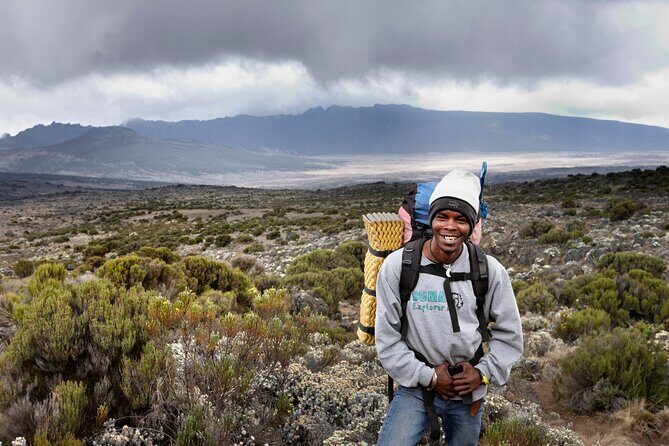
Day one is about pristine forest walking and staying in “feel-good effort.” You’re moving from lower conditions into the mountain atmosphere, but the climb is short enough that you can focus on pacing. If you take one lesson from this first day, make it this: go slow enough that you can keep breathing steady.
Day 2: from forest to heather and a first Kibo glimpse at Shira One (3504m)
Day two is the most varied start of the trek. You continue through forest, then the trail lifts you out of the trees into the heather and moorland zone. This shift is more than scenery. It changes how you walk—wind can feel different, and you’ll often notice the air getting sharper.
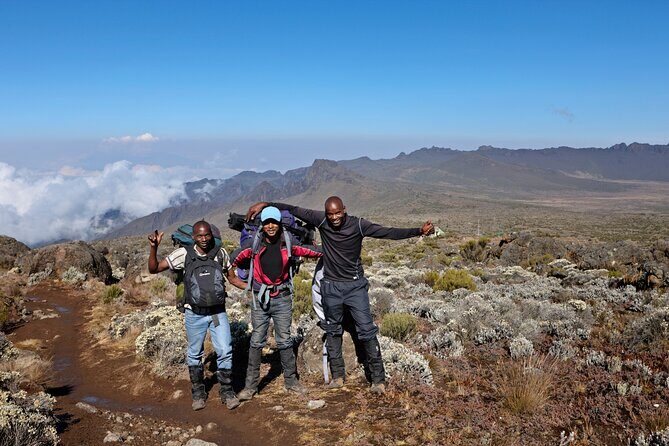
As you climb, you’ll round the northern slopes of the Shira Ridge, including a look at Kili’s little-known third summit. Then you pause because you can see the “final destination” in the distance: Kibo, snow-covered in clear conditions.
You end at Shira One Campsite (3504m), on the western edge of the Shira Plateau. This is one of those camp locations where you’ll see the mountain layout opening up around you.
A note worth taking seriously: mild headache can be normal as altitude catches up. If that happens, the right response is to keep your effort calm and keep drinking. The route is built for you to do that.
Day 3: boulders, petrified lava, Moir Hut (4161m) and a planned acclimatization climb
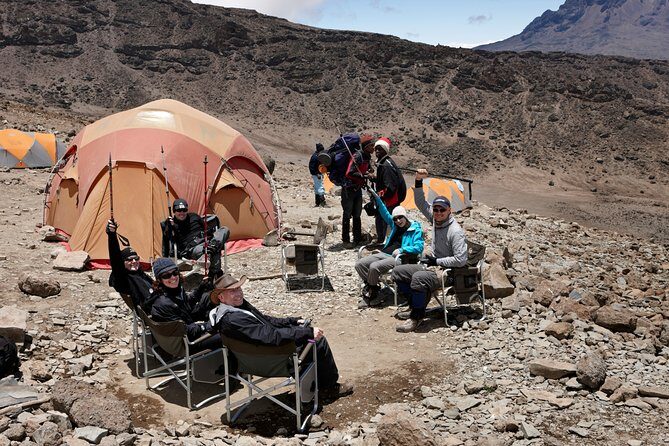
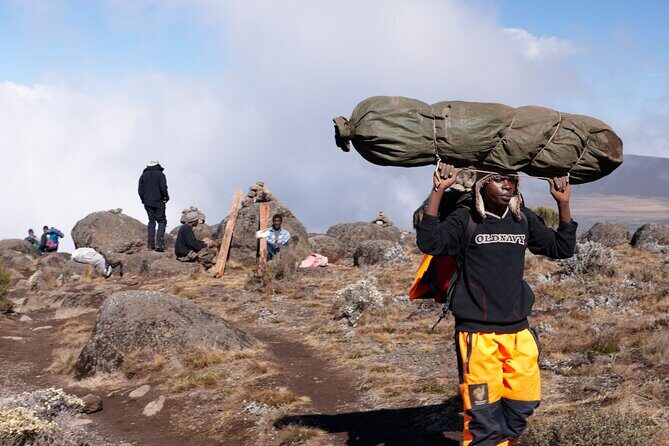
Day three connects important trail features and altitude strategy. You leave camp and, in under an hour, reach Simba Camp and a junction with a 4WD emergency track that runs from Shira 2 down the mountain. You then take about 135 minutes along a path through boulders, around or over petrified lava flows, and across grassy sections.
You also pass an impressive cave before reaching Moir Huts (4161m). The day’s basic stats are a helpful guide for what to expect: roughly 9.7 km with about 657 m of total ascent.
Then comes a smart twist for acclimatization: a sunset climb to about 4300m on the ridgeline. You do an excursion of roughly 1.9 km with a gain around 139 m. It’s not meant to exhaust you. It’s meant to help your body adjust.
Day 4: “peace and solitude,” altitude up to 4402m, then down to Second Pofu (4033m)
Day four is described as quiet and solitary, and that fits the Northern Circuit identity. You push to about 4402m before dropping to Second Pofu Camp (4033m).
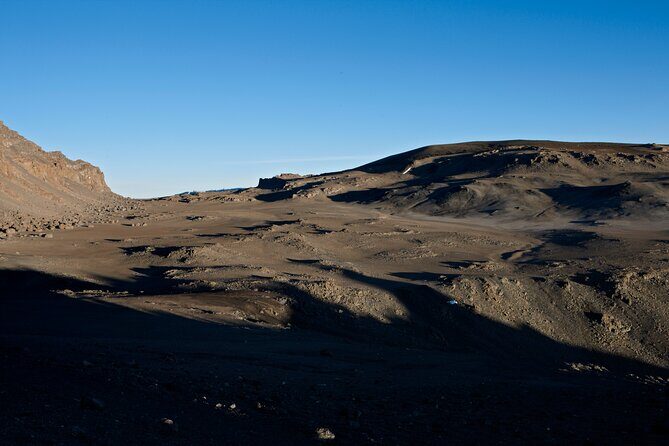
The start includes what can feel like the steepest effort of the day: a relentless slog up barren slope to exactly 4300m. After that you move around Kibo’s northern face, dropping into valleys and then climbing back out. It’s up-down travel, and even if the air is thinner, you’re still working your legs.
After about three hours, you arrive at the first of the Pofu Camps and continue to camp for the night. Expect a steady “work” day rather than an easy stroll.
If you feel altitude symptoms here, take it as a signal—not a crisis. Go pole pole (slowly), drink consistently, and keep your energy for what comes next.
Day 5: 6.8 km of up-and-down over the northern slopes, with Mawenzi growing
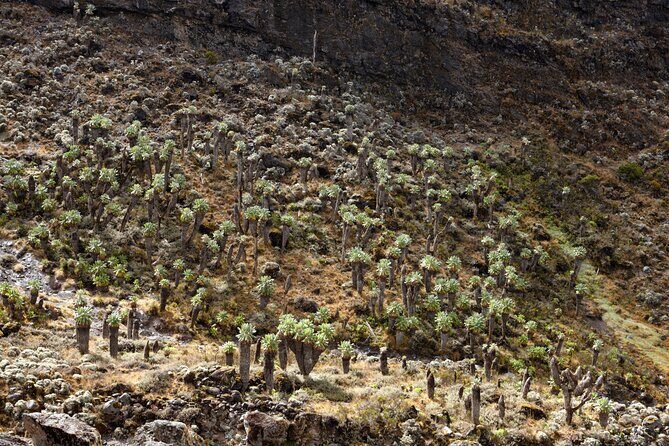
Day five keeps your rhythm with a shorter stage: about 6.8 km. It’s still on the northern slopes and still involves ascending and descending. The gradients aren’t as dramatic as day four, but you can still feel pretty puffed out because altitude adds friction to everything.
This is also a scenery day. You’ll see Kibo to your right as you move, and Mawenzi gradually gets more present ahead of you. One detail that makes the trek feel cinematic: you won’t see the famous saddle yet until the next stage.
You finish at Third Cave Campsite.
Day 6: the big lift to School Hut (4717m) and the midnight wake-up
Day six is a turning point because you go higher, faster, and then the summit plan locks in.
After a gentle traverse along the eastern slopes, you climb from Third Caves Campsite (3936m) up to School Hut (4717m). It’s a relatively short distance—about 4.9 km—but it comes with 781 m of gain. This is one of those “short but serious” days. You’ll want to arrive early to mid-afternoon as the plan indicates.
Once you reach camp, you should aim to sleep quickly. You’ll be woken around 11pm to midnight to begin the summit assault. That’s not optional. And meals are handled by the staff during the night, which helps when you can’t imagine doing anything besides moving your body and staying warm.
If you don’t feel like eating, that can happen. Still, you’ll be encouraged to try—because you need energy for the ascent.
Day 7: Hans Meyer Cave, Gillman’s Point, and Uhuru Peak (5895m)
This is the climb’s most intense window. Around midnight you depart School Hut and start working your way to the summit.
Your route goes via:
- Hans Meyer Cave (5259m)
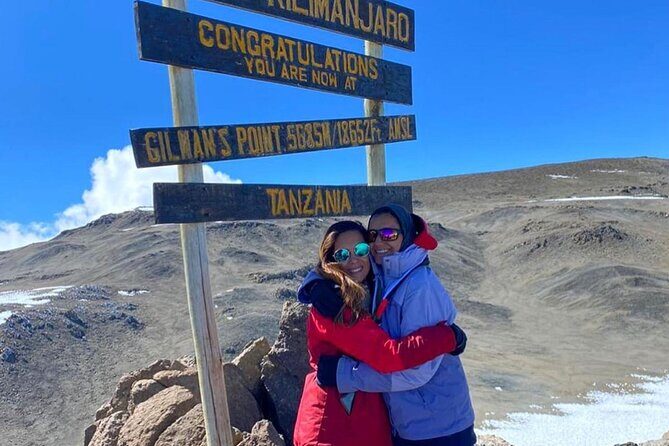
- Gillman’s Point (5719m)
- Uhuru Peak (5895m)
On the summit, your guide will manage your time based on your condition, timing, and weather. That’s a practical approach. Altitude isn’t a video game, and “stay until the last second” can backfire.
After your summit rest, you descend about 4.86 km back to Barafu Camp. It’s slower than you’d like, but it’s also easier than climbing. Then you take breakfast and relax for about an hour before continuing descent roughly 6.6 km further down the mountain.
You also might collect a different summit-area milestone depending on how you’re doing. The route mentions reaching Gilman’s Point (5,756m)—and you receive a certificate for reaching that point. The point isn’t just bragging rights. It’s also a marker that you matched the plan to your body on a demanding day.
Day 8: finish at Mweka Gate (1633m) and roll back to Arusha
Day eight is the end-of-trek relief: after breakfast, you hike from camp to Mweka Gate (1633m). Those who reached the summit (or Gilman’s Point) collect certificates there.
A car waits for the drive back to your hotel in Arusha. The itinerary even points to the comfort you’ll likely crave: warm showers and cold beers.
Then you finish with the last stretch via the Mweka Trail and complete gate procedures. For many people, the emotional high of Kilimanjaro doesn’t fully hit until you realize you’re actually done hiking.
What the camp setup and meal rhythm really means for you
A big part of what makes these long treks work is how your days end. Here, your pattern is consistent: tents are already erected when you arrive at camp, and you get snack support after the day’s walk.
Your meals are also built into the schedule:
- Breakfast happens seven times
- Lunch is listed eight times
- Dinner is listed seven times
That rhythm matters because it prevents the “we’ll eat when we find something” chaos that can drain morale at altitude. And it helps you keep a steady routine even when you’re tired.
On the summit night, staff wake you for meals too. That’s one less mental load at the time when your brain is focused on warmth and movement.
Guides, porters, and the team feel (names you’ll see again and again)
One of the best themes that comes up with this provider is the team behind the climb. Reviews for Duma Explorer often highlight specific guides and porters, including names like Colman, Emanuel, Imran, and Humphrey, plus porters such as Dickson and Mariam.
Even if your exact crew differs by date, the takeaway is consistent: you’re not just buying a route. You’re getting people who understand how to pace the mountain day-by-day, manage altitude stress, and keep camps running smoothly.
On a long trek, safety isn’t only about emergencies. It’s also about tone. A good guide helps you keep going calmly, especially when your body gives mixed signals.
Who this Northern Circuit climb is best for
This trek fits you best if:
- You have strong physical fitness and the willingness to handle steep and up-down walking at altitude
- You want the whole mountain experience, not just a one-sided view
- You prefer quieter hiking days and a more controlled pace
- You’re okay with a summit push starting around midnight
If you’re the type who gets anxious when plans get intense, you may still be fine—just make sure you’re emotionally ready for the long midnight climb and the long day 7.
Should you book this tour?
I’d book it if your priority is a route that gives you time to acclimatize and keeps you oriented with changing mountain views all the way around. The 8-day pacing, the plan for an acclimatization climb near 4300m, and the structured camp routine are all signals that this is built for the mountain, not just for checking a box.
I’d pause if you’re uncertain about your altitude tolerance. This is a route with real highs, including a summit day to 5895m, and mild altitude symptoms can happen to anyone. But if you’re fit, plan to go pole pole, and trust the guide’s timing, this climb is a strong match.
FAQ
FAQ
How long is the Kilimanjaro climb on this Northern Circuit route?
It runs for about 8 days, from the start trek days through reaching Mweka Gate and returning to Arusha.
Where does the trek start?
You drive from Arusha to Kilimanjaro National Park and register at Londorossi Gate, then continue by vehicle to the route start point.
Is pickup offered?
Yes, pickup is offered as part of the experience.
Is this a private tour?
Yes. It’s listed as private, so only your group participates.
What time does the day start?
The start time is 9:00 am.
Are meals included?
Yes. The package includes breakfast (7), lunch (8), and dinner (7).
What is the summit route and highest point?
The summit day ascent includes Hans Meyer Cave and Gillman’s Point, and you reach Uhuru Peak at 5,895 meters.
When do you start the summit assault?
You’re woken around 11pm to midnight on the night before Uhuru Peak so you can begin the assault.
What’s the cancellation rule?
Free cancellation is available up to 24 hours before the experience’s start time for a full refund.