REVIEW · MOSHI
Mt. Kilimanjaro Climb – 8 Day Lemosho Route
Book on Viator →Operated by Roam Wild Adventure · Bookable on Viator
You’ll feel Kilimanjaro’s magic without the crowds. This 8-day Lemosho route is built for slower acclimatization, with extra time on the Shira Plateau and a high (around 95%) summit success rate goal. I like that it also stays scenic from the western slope, with big views toward Mt. Meru and Moshi along the way.
Two things I really appreciate: the plan gives you time to adjust (that climb high, sleep low rhythm), and it keeps the trek moving through varied habitats instead of repeating the same scenery all week. One drawback to plan for: this is still a full-on altitude trek, so a strong fitness base matters, and you’ll need to bring key personal gear like a sleeping bag.
In This Review
- Key Highlights (What Makes This Lemosho 8-Day Climb Special)
- Lemosho Route Value: Quiet Scenery and a Summit Plan That’s More Forgiving
- From Moshi to Londorossi Gate: Day 1 Forest Walking and Blue Monkey Energy
- Shira Days 2–3: Big Plateau Views and the Acclimatization Sweet Spot
- Lava Tower and Senecio Forest: Day 4’s High-Altitude Lesson Without the Chaos
- Great Barranco Wall and Karanga Valley: The Trek’s Tightest Challenge
- Barafu Hut and Summit Night Prep: Day 6 Sets You Up for Stella Point
- Uhuru Peak Morning and the Descent Plan That Matters More Than You Think
- What’s Included (and What You Must Bring) for a Smoother Kilimanjaro Week
- Price, Group Size, and the Roam Wild Adventure Crew Setup
- Who Should Book the 8-Day Lemosho Climb (and Who Should Rethink It)
- Final Verdict: Should You Book This 8-Day Lemosho Route?
- FAQ
- How long is the Mt. Kilimanjaro climb on the Lemosho route?
- What time does the trek start each day?
- Does the tour include airport pickup and drop-off?
- Is hotel lodging included before and after the climb?
- What meals are included?
- What camping and comfort items are provided?
- What gear is not included that I should plan to bring?
- What is not included in the price?
- What is the group size limit?
- Is there free cancellation?
Key Highlights (What Makes This Lemosho 8-Day Climb Special)
- Lemosho’s pacing: extra acclimatization days help your body adjust before the summit push
- Less crowd pressure: it’s one of the least crowded Kilimanjaro routes, with room to enjoy the mountain
- Wildlife in the forest start: the first day’s drive-and-forest section includes a chance to spot blue monkeys
- Landmark highlights: Lava Tower, Senecio Forest, Barranco Wall, Stella Point, and Uhuru Peak
- Small group size: maximum 12 travelers keeps the experience controlled and personal
- Big support team model: certified guides plus porters, cooks, and a support structure designed for comfort and safety
Lemosho Route Value: Quiet Scenery and a Summit Plan That’s More Forgiving
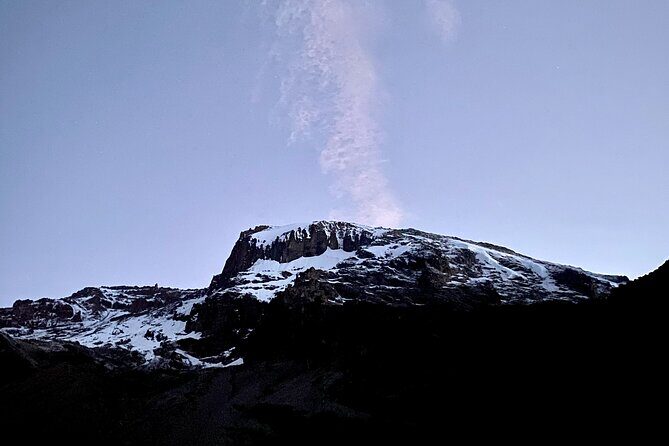
Lemosho is one of the best-known ways to climb Kilimanjaro because it gives you time. The route is long enough to build acclimatization gradually, and the schedule is designed around the idea that your odds improve when your body has time to adapt. That means fewer panic climbs, more steady hiking, and more chances to enjoy what you’re passing.
You also get a week of changing terrain. You start in forest, move into savannah and moorland, then work through volcanic scenery and high-altitude zones. That variety isn’t just pretty. It keeps the walk interesting and helps you stay mentally engaged during the longer days.
For many people, the “value” isn’t just the price tag. It’s that your money covers the stuff that actually affects your comfort and safety—certified guides, a support team, tents and mats, and meals—so you’re not piecing together key logistics last minute.
You can also read our reviews of more tours and experiences in Moshi.
From Moshi to Londorossi Gate: Day 1 Forest Walking and Blue Monkey Energy
Your trip starts in Moshi with transport to Londorossi Gate, about a four-hour drive. You’ll handle entry formalities, then continue to the Lemosho trailhead and begin hiking through undisturbed forest. This first day is about easing into the routine: walking, taking in the air and sounds, and learning how your body feels at this altitude.
Forest on Kilimanjaro can feel like a different world compared to the summit region. Expect a cooler, shaded start and the kind of dense natural quiet that makes you slow down without trying. You’ll also have a chance to spot blue monkeys swinging through the trees—one of those small moments that makes day one memorable.
One practical note: even on day one, you’re on a multi-day trek schedule. Don’t treat this day like a casual stroll. The best approach is steady effort, simple pacing, and early awareness that your breathing will gradually change as you go higher.
Shira Days 2–3: Big Plateau Views and the Acclimatization Sweet Spot
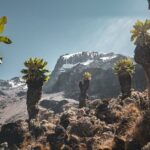
Day 2 moves you out of rainforest and into savannah with tall grasses, heather, and volcanic rock draped with lichen beards. You ascend toward Shira Ridge, then descend gently to Shira 1 Camp. The first glimpse of Kibo from across the plateau is the kind of visual that sticks with you—like the mountain is officially on the calendar now.
Day 3 is where Lemosho really shows its value. You spend the day exploring the Shira Plateau with a gentle eastward walk over moorland meadows toward Shira 2 Camp. Then you divert off the main route toward Moir Hut, near the base of the Lent Hills. This kind of extra walking option is practical acclimatization: you get movement and gradual altitude exposure without feeling like every step is a race.
If you’re worried about altitude, Shira is one of the better places to feel hopeful. A slower rhythm here reduces the odds of getting behind the acclimatization curve later. And because the terrain is varied (meadows, plateau edges, volcanic textures), you stay mentally fresh even when the hike feels steady rather than dramatic.
Lava Tower and Senecio Forest: Day 4’s High-Altitude Lesson Without the Chaos
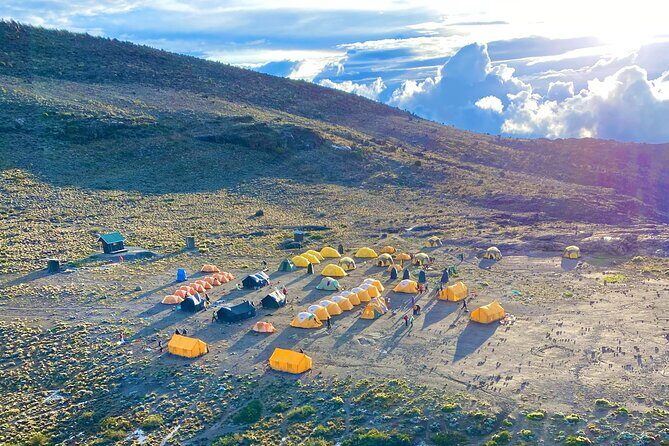
On Day 4, you climb up a ridge and head southeast toward Lava Tower, a roughly 300-foot volcanic rock formation. Then the day turns into a descent toward Barranco Camp through Senecio Forest, reaching about 13,000 feet.
This is one of the sneaky-smart parts of the schedule. Even though you start and end the day around similar elevation, you spend time higher than your camp point. That’s valuable for acclimatization because it gives your body altitude exposure without forcing you into a full recovery-stress cycle at the same height.
The tradeoff is simple: forest descents can feel slower and wetter underfoot, and your legs get different work than flat trails. Pack your attention for your footing, take your time, and you’ll turn this day into a confident bridge toward the classic Kilimanjaro scenery ahead.
Great Barranco Wall and Karanga Valley: The Trek’s Tightest Challenge
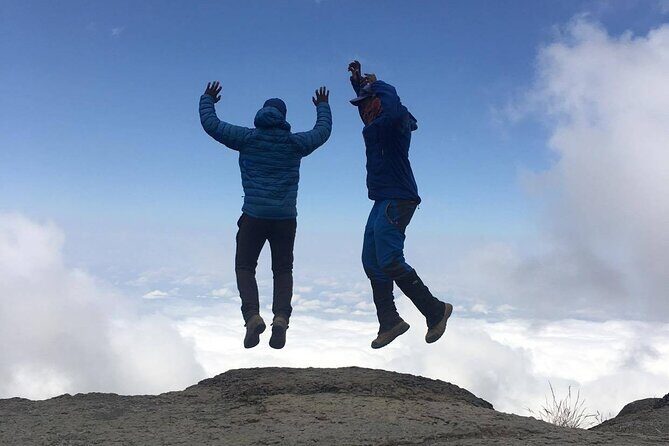
Day 5 delivers the most iconic Kilimanjaro obstacle on this route: the Great Barranco Wall, also called the Kissing Wall. You descend into a ravine base, then climb the steep cliff portion—nearly 900 feet—and it’s described as about 3 feet wide at the narrow section. The good news is it’s non-technical, meaning you’re not doing rock climbing. The hard news is the angle is steep, and your legs have to work.
You’ll cross to the top, and the route then moves through hills and valleys before descending sharply into Karanga Valley. From there, you climb again to Karanga Camp. This day is shorter than some others, which helps you conserve energy for higher altitude work the next day.
If you want one piece of real-world advice: mentally rehearse that steep, narrow-feeling moment before it arrives. Once you’re on it, the trick is calm breathing and small, consistent steps. The wall looks intimidating from a distance, but once you’re there, the job is simple: move forward. (Also, it’s a great photo moment right after you pass the tricky bit.)
Barafu Hut and Summit Night Prep: Day 6 Sets You Up for Stella Point
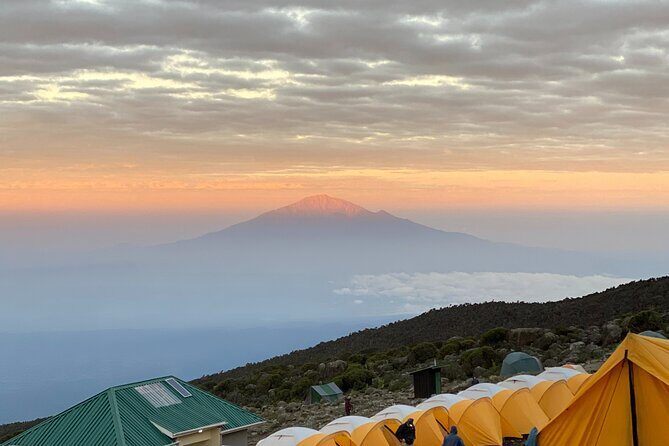
Day 6 starts by leaving Karanga and connecting toward the Mweka Trail. You climb rocky sections up to Barafu Hut, and this is where you’ve completed the southern circuit—meaning you’re now getting those big views of Kibo and the summit approach from multiple angles. The perspective shift is real here: the mountain feels closer and more direct.
You camp at Barafu, rest, and enjoy an early dinner designed to fuel the summit push. The layout of the day makes a quiet kind of sense. If you’re going to be climbing in cold, low-light conditions for hours, you want your body ready and your mind not scrambling.
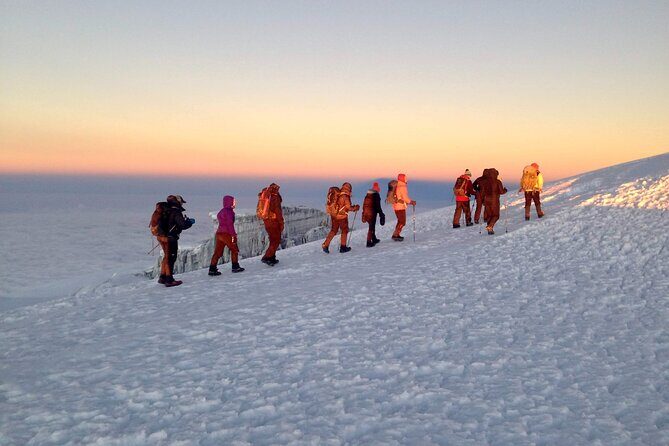
Day 7 is the midnight summit push. You ascend in darkness for several hours with frequent but short breaks. Around Stella Point (about 18,900 feet), you’re rewarded with the summit sunrise coming over Mawenzi Peak—one of those “you don’t have words for this yet” moments.
This is not just physical work. It’s mental pacing. Your job is to keep effort controlled in the cold, slow the panic if it shows up, and let the guides’ rhythm guide you. The mountain does not care if you feel strong at the start. It cares how steady you are at the end.
Uhuru Peak Morning and the Descent Plan That Matters More Than You Think
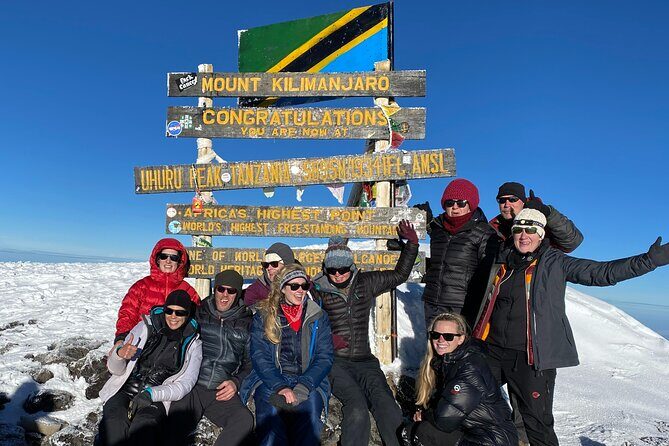
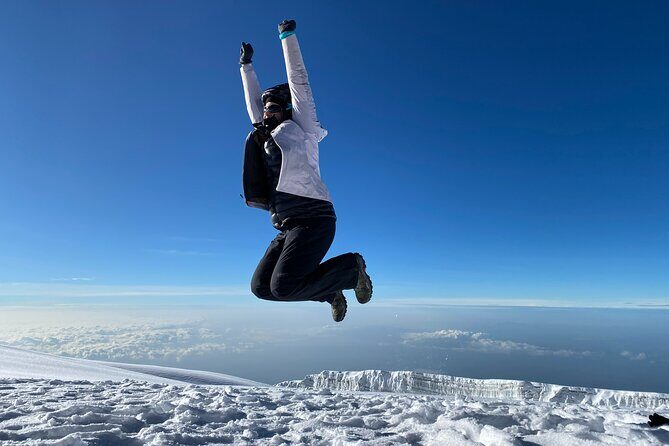
After the sunrise around Stella Point, you continue to Uhuru Peak, the highest point on Kilimanjaro and Africa. This is the big checkbox on the map, and it deserves your attention. You can take a moment for photos from the Rooftop of Africa and soak it in before you turn back to the work of coming down.
Then you start the descent. The route continues downhill toward the end-of-trek area, and the plan matters because altitude fatigue hits hard on the way down. I always tell friends: your legs feel weird, and your body wants to rush. Don’t. Descent is where people slip when they start moving too fast.
By Day 8, you continue descending to Mweka Gate, where your driver meets you and transports you back to Moshi. Expect lower elevations to be wet and muddy—so fresh footing and a careful pace are the last, underrated skills of the whole climb.
What’s Included (and What You Must Bring) for a Smoother Kilimanjaro Week
This climb includes a lot of the operational stuff that can otherwise turn into surprise spending or stress. You’ll have airport pickup and drop-off, plus hotel lodging the night before and the night after the climb. On a trek, those two nights off-trail really matter for recovery.
You also get a support team with certified guides and porters, and you’re not left carrying every detail alone. Meals are included: breakfast (6), lunch (6), and dinner (6). The food isn’t just calories. It’s timing and consistency—especially during summit-night prep.
Gear is partially covered. You’ll have 3-person mountaineering tents, a sleeping mat, and a private toilet tent. What’s not included is just as important: you must bring a sleeping bag and your personal gear, and you may need rental gear depending on what you already own. Drinks and snacks are not included, and tips for the support team are not included either—so budget those thoughtfully.
Also, the route caps at 12 travelers. That’s a good sign for easier movement, fewer bottlenecks, and better guide-to-group attention during the tricky parts.
Price, Group Size, and the Roam Wild Adventure Crew Setup
At $3,099 per person, this is a serious trek price. The question is whether it covers the things that cost money and affect outcomes. Here, a big chunk of the price goes toward guides, entry fees and taxes, lodging, tents, mats, meals, and a full support operation.
In feedback shared about Roam Wild Adventure, the guide team names Ezekiel and Michael come up often, and people highlight how professional pacing and small safety decisions can make a difference on summit night. A key practical detail: one described setup for a smaller group included a lead guide, assistant guides, a chef, a waiter, and a large porter team. That kind of staffing usually means meals stay on schedule and camps run smoother, which is exactly what you want when your energy is limited.
There’s also an operational comfort angle. A private toilet tent is not glamorous, but when you’re tired and the weather changes, these small conveniences help you keep moving with less stress.
Who Should Book the 8-Day Lemosho Climb (and Who Should Rethink It)
This trek suits you best if you’re aiming for the classic Kilimanjaro summit experience with a plan that favors acclimatization. The route’s extra time on the plateau and the structured climb schedule are a good match if you want a realistic shot at Uhuru without treating it like a sprint.
It’s also a good fit if you like variety: forest to savannah, moorland meadows to volcanic features, then the dramatic Barranco Wall and high-altitude sunrise. If you want one kind of scenery only, you might feel like you’re changing habitats constantly. But if you like watching the mountain evolve under your feet, you’ll enjoy the whole arc.
The main caution: you must have strong physical fitness. Even with a solid acclimatization plan, summit night is demanding. If you struggle with sustained uphill effort, breathing at altitude, or cold-weather endurance, you should take that seriously and possibly talk to a qualified trekking doctor or coach before committing.
Final Verdict: Should You Book This 8-Day Lemosho Route?
I’d recommend booking this 8-day Lemosho plan if your top goals are (1) a well-paced climb with time to acclimatize and (2) a high chance of summiting with a less crowded feel. The included guides, meals, tents, mat, airport transfers, and pre/post hotel nights all reduce the messy logistics that can ruin the experience for the wrong reasons.
I would not rush to book if you’re missing the basics: you don’t have a sleeping bag, you don’t have the fitness base for steep days, or you hate cold, darkness, and slow summit pacing. If you’re prepared for that reality, this route is one of the most satisfying ways to reach the Rooftop of Africa.
FAQ
How long is the Mt. Kilimanjaro climb on the Lemosho route?
It’s an 8-day trek, starting from Moshi and following the Lemosho route through multiple camps before reaching Uhuru Peak.
What time does the trek start each day?
The start time is listed as 9:00 am.
Does the tour include airport pickup and drop-off?
Yes. Airport pick-up and drop-off are included.
Is hotel lodging included before and after the climb?
Yes. Hotel lodging is included the night before the climb and the night after the climb.
What meals are included?
The trek includes breakfast (6), lunch (6), and dinner (6).
What camping and comfort items are provided?
Included items are 3-person mountaineering tents, sleeping mats, and a private toilet tent.
What gear is not included that I should plan to bring?
You should bring a sleeping bag and other personal gear. Sleeping bags and other personal gear are not included, and rental gear is also not included.
What is not included in the price?
Not included are airfare to and from Tanzania, personal travel insurance, visa, tips for the support team, lunch and dinner at the hotel, and drinks and snacks.
What is the group size limit?
The maximum group size is 12 travelers.
Is there free cancellation?
Yes. You can cancel up to 24 hours in advance for a full refund.