REVIEW · MOSHI
Kilimanjaro Climb – 8 Days Lemosho Route
Book on Viator →Operated by Incredible Africa Adventures · Bookable on Viator
A mountain like Kilimanjaro has a way of changing you.
This 8-day Lemosho Route from Moshi is a quieter, remote way up, and its extra time helps your body adjust before the high-altitude push. I also like how the trip moves through multiple zones, from rain forest to moorland, then semi-desert and alpine terrain, ending with glaciers near the summit area. One consideration: this isn’t a quick hike. You’ll be doing long days, and the day-7 summit effort is serious even if you’re in good shape.
What really makes this plan feel workable is the careful rhythm. You start with gradual altitude gains, then you get a classic Lemosho style of hiking that includes meeting the Machame route around Lava Tower, dropping into the Barranco Valley, and working up the Great Barranco Wall. The downside is that the route’s beauty and remoteness also mean you need to take the program’s pace seriously, especially on summit day and the big descent that follows.
Before you ever step onto the trail, the team handles the big “first-day chaos” items: you’re transported between Kilimanjaro Airport and your Moshi hotel, and once you arrive, your head guide does a briefing plus a gear check. You can also arrange for equipment hire if you need it. You still need personal items and you’ll likely plan for guide/porter tips, but the core mountain setup is taken care of.
In This Review
- Key things that stand out on this 8-day Lemosho climb
- Why the Lemosho Route feels different for your Kilimanjaro plan
- Day-by-day: how each camp shapes the climb
- Day 1: Moshi to Londorossi Gate, then MtI Mkubwa Camp (rain forest)
- Day 2: Mti Mkubwa Camp to Shira I Camp (moorland)
- Day 3: Shira I Camp to Shira Hut (moorland)
- Day 4: Shira Hut to Lava Tower to Barranco Camp (semi-desert)
- Day 5: Barranco Camp to Karanga Camp (alpine desert)
- Day 6: Karanga Camp to Barafu Camp (alpine desert)
- Day 7: Barafu Camp to summit, then the big descent (glaciers)
- Day 8: Mweka Camp to Mweka Gate and Moshi (rain forest)
- Summit-day reality check near the Southern Ice field
- Crew support, meals, and gear: what you truly get for your $2,900
- Value in the details: why private feels different on Kilimanjaro
- Who this 8-day Lemosho climb suits best
- Should you book this 8-day Lemosho Kilimanjaro climb?
- FAQ
- How long is the Kilimanjaro climb on the Lemosho route?
- Where does the route start and where does it end?
- What meals and water are included during the climb?
- What’s included in the price?
- What’s not included?
- Is cancellation possible if weather turns?
Key things that stand out on this 8-day Lemosho climb
- A longer climb profile for acclimatization with multiple nights before the summit attempt
- Massive scenery variety from rainforest to moorland to semi-desert to glaciers
- Route design that matches the altitude challenge including time at Shira and a Lava Tower meeting point
- Crew support built into the whole experience with professional guides, cook, and porters
- Practical pre- and post-climb care including airport transfers and a briefing/gear check
Why the Lemosho Route feels different for your Kilimanjaro plan
Lemosho is one of those routes that feels made for people who want a bit more breathing room. With 8 days on the mountain, you get more time across changing altitude zones than shorter itineraries. That extra time matters because Kilimanjaro isn’t just about willpower. It’s about how your body handles the rise in altitude, day after day, while you still keep moving steadily.
One thing I’d pick out immediately is the way the route threads through distinct ecological areas. Your first day is in the rainforest zone (and it’s not a token “walk through trees” moment). You start at Londorossi Gate and trek for about 3 hours over roughly 7 km, with an altitude gain around 360 m, which is a gentle start to get your bearings.
From there you transition into moorland on day two and three. Day two takes 6–7 hours over about 10 km with a gain of 755 m, and day three is shorter at 3–4 hours (about 8 km, 305 m gain). That pattern can help you feel like the climb is building instead of jumping.
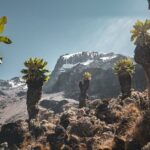
Then comes the classic Lemosho shift into the dryer, harsher zones. Around day four you move toward Lava Tower and Barranco Camp, and the route continues through semi-desert and alpine desert terrain. You’re not just climbing; you’re walking through a sequence of worlds that make each day feel like a chapter.
You can also read our reviews of more tours and experiences in Moshi.
Day-by-day: how each camp shapes the climb
Here’s what the 8 days look like on the ground, and what each segment is doing for you.
Day 1: Moshi to Londorossi Gate, then MtI Mkubwa Camp (rain forest)
You’ll begin in Moshi and head to Londorossi Gate, then hike into the forest toward Mti Mkubwa Camp. Expect around 3 hours of trekking, about 7 km, and roughly 360 m of altitude gain.
Rainforest hiking has its own pace: it can feel slower because conditions are often humid and footing can be slick. But starting in this zone is useful because it helps you get warm, settle into rhythm, and avoid the shock of going straight into big altitude.
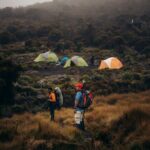
Practical detail: you’re also using this day to get organized with your gear and team structure. Your head guide does a gear check and briefing before the climb kicks into full gear, so you start the trekking day knowing what’s where and what to expect.
Day 2: Mti Mkubwa Camp to Shira I Camp (moorland)
Day two is longer and more altitude-forward. You trek about 6–7 hours across roughly 10 km, gaining about 755 m to Shira I Camp.
This is where many people start to feel the altitude as a presence instead of an idea. Moorland tends to be windier and cooler than the forest, so layering matters. Even if you’re not thinking about it as “strategy,” this day functions like a foundation day: you’re moving up, but you’re still far from summit pressure.
Day 3: Shira I Camp to Shira Hut (moorland)
Day three keeps the climb moving but doesn’t hit you with a huge distance. You hike about 3–4 hours, 8 km, gaining around 305 m, landing at Shira Hut.
For acclimatization, this kind of shorter day can be a gift. It gives you time to adjust to altitude without exhausting yourself into poor decision-making. It also sets up the transition toward the Lava Tower area, where you’ll later meet up with the Machame route.
Day 4: Shira Hut to Lava Tower to Barranco Camp (semi-desert)
This is one of the more interesting days because it’s both a connector and a shift. You trek 6–7 hours over about 10 km, with only around 50 m of altitude gain, ending at Barranco Camp in semi-desert.
That small altitude gain doesn’t mean an easy walk. It usually means you’re spending more time traversing terrain, and your body still gets hit by the thinner air. Lava Tower is also a key landmark, and this is the day where the Lemosho route meets the Machame route around that area. From there, the plan becomes classic: hike down into the Barranco Valley, then work your way through the next day’s standout climbs.
A practical way to think about day four: you’re prepping for the Barranco style of hiking. It’s not just about going higher; it’s about managing effort when the trail is steeper or more exposed.
Day 5: Barranco Camp to Karanga Camp (alpine desert)
Day five is shorter: about 3–4 hours, roughly 6 km, with about 140 m of altitude gain to Karanga Camp in alpine desert.
This kind of day often feels like it gives you a chance to reset. If you’re feeling tired, you still have a real hiking day, but the time on your feet isn’t as punishing as earlier segments. Alpine desert terrain can feel stark and exposed, and you’ll want to keep your hydration and pacing consistent because the environment can trick you into underestimating how much energy you’re burning.
Day 6: Karanga Camp to Barafu Camp (alpine desert)
Day six is short in distance but not in meaning. You hike about 2–4 hours for around 4 km, gaining about 600 m to Barafu Camp.
This is the “summit setup” day. The distance is small, but you’re climbing into the zone where the air gets noticeably thin. Even if you don’t feel your “summit legs” yet, this is where you start treating each step like part of a system: don’t race, don’t waste effort, and keep your attention on steady breathing.
Day 7: Barafu Camp to summit, then the big descent (glaciers)
Day seven is the day you trained for, and it’s the day that demands focus. Trekking time is roughly 6–8 hours for about 7 km, with an altitude gain around 1296 m from Barafu Camp to the summit area near the glaciers.
And then there’s the descent, which is its own half-day challenge. Expect 6–8 hours trekking, about 12 km, with an altitude loss around 2896 m.
That’s why acclimatization days matter. A summit attempt isn’t only about reaching the top. It’s about how you cope after reaching it, when legs are tired and your body is already running at altitude limits. You’ll want to keep the descent pace controlled rather than heroic, because downhills are where people can get sloppy.
Day 8: Mweka Camp to Mweka Gate and Moshi (rain forest)
After the summit and descent, day eight is long but meaningful. You trek 4–5 hours, about 10 km, with an altitude loss around 1360 m, finishing at Mweka Gate and then returning to Moshi through rainforest.
Rainforest on day eight can feel like a reward. Your body still may feel wrecked, but the lower altitude often makes breathing easier. This day is about safely finishing the trek and transitioning back into normal life.
Summit-day reality check near the Southern Ice field
One of the most useful bits in this itinerary is what happens after the Barranco transition. You eventually traverse underneath Kilimanjaro’s Southern Ice field. That’s not just a dramatic line on a map. It signals you’re entering the higher, more exposed environment where the mountain feels close and the conditions can turn fast.
Also, note the route’s structure: day four is long but with minimal gain, day five is shorter, day six jumps in gain with short distance, and day seven hits the summit with a large gain and a huge loss. You can see the logic: the itinerary gradually places you closer to summit conditions and then gives you the summit push when your body has had multiple chances to adjust.
For you, the takeaway is simple: treat the early days as “part of summit day,” not just warm-up hiking. If you rush day two or day three, you’re more likely to feel the cost later. The route’s pacing is designed to give you the best opportunity, so it’s worth matching that plan with your effort level.
Crew support, meals, and gear: what you truly get for your $2,900
At $2,900 per person, you’re paying for a full mountain operation, not just a guide with a GPS. Based on what’s included, you’re getting transport, mountain logistics, and a full team.
Here’s what’s included:
- Transport from and to Kilimanjaro Airport to your accommodation in Moshi
- Park entry fees and camping fees
- Accommodation equipment while on the mountain
- Professional mountain guides, cook, and porters
- 3 meals daily and water while on the mountain
- Emergency first-aid kit with facilities to support safety
- Fair treatment of the whole crew
This matters because Kilimanjaro is resource-heavy. If meals and camp setup are handled, you spend less mental energy on survival logistics and more on pacing and recovery.
What’s not included is also important:
- Meals at your hotel in Moshi
- Travel insurance
- Personal items and tips for guides, porters, and cook
The food and water inclusion is a big practical advantage. When you’re at altitude, being able to focus on eating and drinking instead of hunting for supplies can help you maintain consistency. Consistency is what you’re really buying when you choose a structured operator.
Mobile ticket and pickup offered are small details, but they point to day-to-day smoothness. And after you finish and arrive at Kilimanjaro International Airport, you’ll be met and transferred for an overnight stay at your hotel. That’s a thoughtful cushion for the final transition, because you’re not immediately expected to turn around and travel without rest.
Value in the details: why private feels different on Kilimanjaro
This is listed as a private tour/activity, and only your group participates. On a mountain like this, group size affects everything: pace decisions, how much space you have for rest stops, and how smoothly the team can manage your rhythm.
You’ll also see how the route is designed to manage movement. Days four through six include both terrain changes and altitude management. Having your own group means the guides and porters can apply the plan to your pace and situation without constant cross-group adjustments.
I also like that the operator includes a gear check and can arrange equipment hire if you need it. That reduces the chance you show up missing something essential and spend the first day scrambling. You still handle personal items, but the core setup is supported.
Who this 8-day Lemosho climb suits best
This experience is aimed at people with at least moderate physical fitness. The itinerary includes multiple days with 6–7 hours of trekking, plus the summit day and the long descent.
You should strongly consider this trip if:
- You want a route with extra time for acclimatization
- You like the idea of moving through varied ecological zones rather than one repeated trail type
- You want a structured mountain support system, including meals, porters, and camping setup
- You prefer a private group rather than a mixed crowd
This may not be your best fit if you’re looking for a short, low-commitment hike. Even the shortest days still sit in a demanding altitude environment. Day seven also comes with a long descent, so you need to be prepared for the reality that “success” includes getting down well.
Should you book this 8-day Lemosho Kilimanjaro climb?
If you’re dreaming about Kilimanjaro and you want a plan that takes acclimatization seriously, I think this 8-day Lemosho option is a strong match. The itinerary’s length, the staged altitude gains, and the classic Barranco-to-summit progression give you a route that feels built for the climb challenge rather than a race against the clock.
The best reason to book is the mix of support + structure: professional guides, cook, and porters; 3 meals daily and water on the mountain; camping and park fees included; plus an emergency first-aid kit with facilities. For your budget, that’s the kind of packaging that helps remove avoidable stress.
My main caution is to respect the difficulty. Summit day is long, the descent is longer in terms of how your body handles gravity, and the climb is remote enough that the plan’s pacing is non-negotiable. If you match the effort level to the itinerary and you show up with moderate fitness, you’ll give yourself the best shot at a memorable summit day and a confident finish.
FAQ
How long is the Kilimanjaro climb on the Lemosho route?
The trek runs for about 8 days. You’ll camp on the mountain on multiple nights, finish at Mweka Gate, and return to Moshi.
Where does the route start and where does it end?
The climb starts at Londorossi Gate and the summit attempt is followed by a descent that ends at Mweka Gate, with transport back to Moshi.
What meals and water are included during the climb?
You get 3 meals daily and water while on the mountain. Meals at your hotel in Moshi are not included.
What’s included in the price?
Included are transport from and to Kilimanjaro Airport to your Moshi accommodation, park and camping fees, accommodation equipment on the mountain, professional guides plus cook and porters, mountain meals and water, and an emergency first-aid kit.
What’s not included?
Not included are hotel meals, travel insurance, and personal items and tips for guides, porters, and cook.
Is cancellation possible if weather turns?
Yes. The experience requires good weather, and if it’s canceled due to poor weather, you’ll be offered a different date or a full refund.