REVIEW · ARUSHA
Private 4 Days Wildlife Safari at Tanzania
Book on Viator →Operated by Martial Adventure Safaris · Bookable on Viator
Wildlife time moves fast in Tanzania. What makes this 4-day safari appealing is the tight three-park loop—Lake Manyara, Serengeti, and the Ngorongoro Crater—done in a way that keeps your days packed with game drives instead of long idle hours. I also like that it’s a private tour, so your schedule can match your group, and the experience leans hard on your guide Benny (spelled Ben in one listing) for smarter spotting and better photo moments.
You’ll sleep in public campsites on this budget-style trip, which keeps costs down and gives you that grounded safari feel. The trade-off is comfort: expect basic camping conditions, plus early starts for the best game-drive timing. If you’re the kind of traveler who wants five-star lodging and slow mornings, this may feel a bit too rugged.
In This Review
- Key Things That Make This Safari Worth It
- How the Northern Circuit Fits 4 Days (Without Feeling Crushed)
- Day 1: Lake Manyara Game Drive, Dinner, and Public Campsite Night
- Day 2: Serengeti Arrives Through a Ngorongoro Stop on the Way
- Day 3: Early Serengeti Drive, Brunch, Then Rim-of-the-Crater Camping
- Day 4: The Ngorongoro Crater Morning Game Drive, Then Back to Arusha
- Benny, the Guide Factor, and Why It Changes Everything
- Price and Value: What You Get for $1,600 Per Person
- Camping-Style Reality Check (And How to Make It Work)
- Practical Tips for the Best Game Drive Experience
- Who This Private Safari Is Best For
- Should You Book This 4-Day Private Tanzania Wildlife Safari?
- FAQ
- How long is the Tanzania wildlife safari?
- Where does the safari start and end?
- Which parks are visited on this 4-day safari?
- Is this tour private?
- What is included in the price?
- Are flights, visa fees, and travel insurance included?
- What time does the safari start each day?
- Is it available all year?
- Can I cancel for a full refund?
Key Things That Make This Safari Worth It

- Private, game-drive focused schedule: You’re not sharing your drives with strangers, which helps the pace and photo stops.
- Benny’s spotting and timing: One of the strongest repeat themes is that his guidance turns sightings into keep-forever memories.
- Lake Manyara’s special stage: This park is known for dramatic Rift Valley positioning and the famous tree-climbing lions.
- Serengeti coverage in limited time: You get both afternoon time and an early drive, which helps you catch different animal rhythms.
- Ngorongoro Crater density: Sleeping near the Rim sets you up for a smooth morning crater drive.
- Meals + bottled water included: Breakfast, lunch, dinner, and water remove a lot of day-to-day guessing.
How the Northern Circuit Fits 4 Days (Without Feeling Crushed)
This safari is built around three northern Tanzanian stops, all with different personalities. Lake Manyara gives you a dramatic setting tied to the Great Rift Valley’s western escarpment, plus that shallow but huge soda lake. Then Serengeti takes over as the big-wilderness draw, described as 14,500 square kilometers of game-rich territory where each day can feel like a different kind of search.
The timing matters. You start with Lake Manyara, move into Serengeti with a drive that keeps you going, then sleep close enough to Ngorongoro Crater to make the next morning’s crater game drive feel efficient. By the final day, you’re back in Arusha rather than dragging the trip into an extra night.
This is also offered as a private activity with daily departures across the year, so you’re not forced into a single travel window to make the route work.
You can also read our reviews of more private tours in Arusha
Day 1: Lake Manyara Game Drive, Dinner, and Public Campsite Night

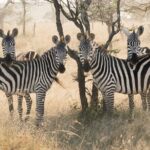
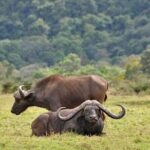
Your day begins with a drive from Arusha into Lake Manyara National Park for a game drive. Lake Manyara is one of those parks where the setting helps you understand what you’re seeing. The park includes a shallow but huge soda lake, positioned at the foot of the Great Rift Valley’s western escarpment. That combination tends to concentrate activity, so you’re not just scanning—sometimes you feel like the animals are coming into your line of sight.
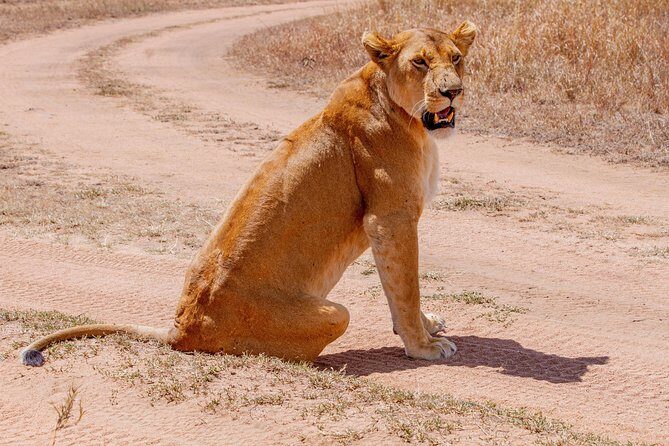
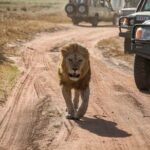
What I like about starting here is that you get an immediate sense of the safari rhythm before you move on to the heavier-hitter parks. You also get a specific hook to watch for: Lake Manyara is famous for tree-climbing lions. Even if you don’t see them right away, knowing that’s part of the park’s identity changes how you watch—paying attention to trees, slopes, and movement patterns instead of just open plain scanning.
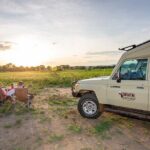
After the game drive, you drive out of the park to one of the public campsite areas for dinner and overnight. This is the first point where you’ll want to mentally prep for “camping safari” rather than hotel safari. It’s budget-friendly and straightforward, but the experience is still about being outdoors and living the routine rather than polishing comfort.
Practical tip: since you’re doing a drive day right out of Arusha, keep your daypack light. You’ll want essentials easy to reach during stops and during the game drive.
Day 2: Serengeti Arrives Through a Ngorongoro Stop on the Way
Day two is about moving toward Serengeti while keeping game-drive time working for you. You drive via Ngorongoro on the route with the aim of reaching Serengeti in the afternoon. That means you don’t lose the entire day to transit. You may catch a game drive while traveling through the Ngorongoro area, then you continue with additional game drive time in Serengeti once you’re there.
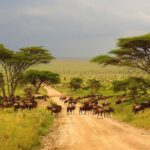
Serengeti is where the “classic Africa safari” feeling comes from, and this tour emphasizes it as the heart of wildlife. It’s described as a massive wilderness of 14,500 square kilometers, so even when you’re staying only a couple of days, the scale is the point. You’re not looking at a small reserve. You’re driving through a wide, game-rich system.
One of the smarter parts of a schedule like this is that you don’t only do “one time window” in Serengeti. Afternoon tends to have a different feel than morning—different light, different movement patterns, and often a different mix of behaviors. Your day-two timing helps you avoid the all-or-nothing problem.
You finish with dinner and overnight in central Serengeti at a public campsite. Central Serengeti is a good fit for keeping your early start on schedule tomorrow. It also means you wake up already in the zone instead of repeating long repositioning drives at dawn.
If you’re the kind of traveler who likes photos, day two is when your best instincts will matter most: be ready to react fast when Benny spots something. The pace is part of the thrill.
Day 3: Early Serengeti Drive, Brunch, Then Rim-of-the-Crater Camping
This day is built around the most productive time of day for wildlife viewing: early morning. You start with a game drive in Serengeti, then drive back to camp for brunch. That combination—early wildlife time followed by food and recovery—keeps you from running on empty.
Brunch matters more than it sounds. On multi-day safaris, the morning drive can be long and mentally intense. Getting back to a planned meal means you can reset instead of trying to find food later, and it gives you a calmer transition into the next leg of the trip.
After brunch, you drive to Ngorongoro Simba public campsite on the Rim of the Crater for the night. This is a big deal for how smooth your final day feels. Staying on the Rim means you’re set up for an early start into the crater rather than spending the morning in transit.
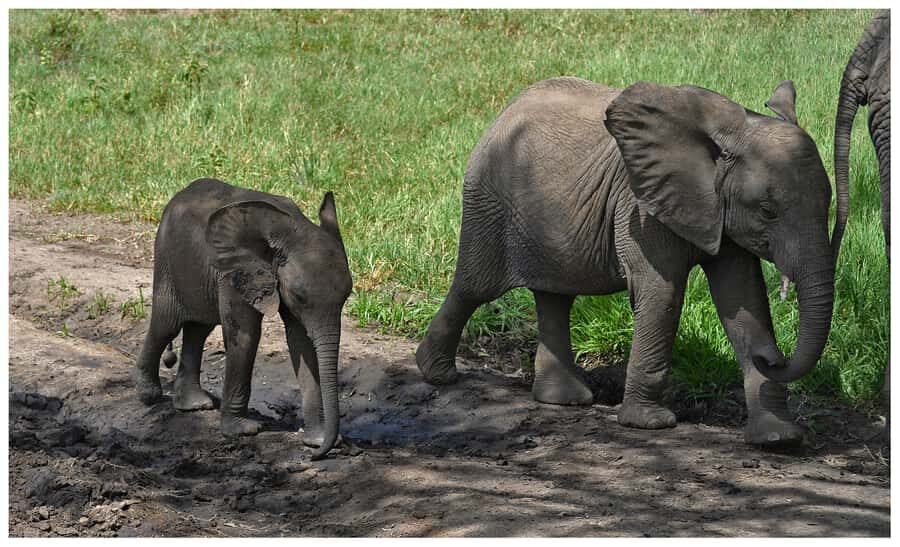
Ngorongoro Crater is described as having one of the highest concentrations of game in Africa, and that matters because it shifts your viewing style. When animals are densely present, you’re not just chasing sightings—you’re watching interactions. It can turn a drive into a series of small scenes: animals moving through predictable routes, predator-prey dynamics, and group behavior you might miss when densities are lower.
That Rim camping night also adds a psychological boost. You go to sleep knowing tomorrow’s drive is the “big container” moment: the self-contained world with unbelievable concentrations of animals, as the tour description frames it.
Day 4: The Ngorongoro Crater Morning Game Drive, Then Back to Arusha
Your final morning starts with an early breakfast, then you drive into the Ngorongoro Crater for the game drive. This is the centerpiece experience on the route, and it’s scheduled while your energy is highest and your timing is most favorable.
Because the crater is described as one of the highest concentration wildlife areas, you can expect the drive to feel efficient. When animals are plentiful, your effort isn’t wasted on long stretches of empty viewing. The crater’s “self-contained world” quality also tends to make animals feel more present in your view, even if you still have to practice patience.
After the crater game drive, you drive back to Arusha. The fact that the itinerary loops you back to Arusha at the end is practical. It means you can plan your onward travel without building in extra buffer days for getting out of the northern circuit.
A few more Arusha tours and experiences worth a look
Benny, the Guide Factor, and Why It Changes Everything
If there’s one repeatedly praised ingredient here, it’s the guide experience—especially Benny. In the feedback you can see how his role goes beyond “showing up with a vehicle.” People highlight his game drives as delivering excellent photo ops, and they also mention his insights and knowledge.
That makes sense. On safari, the difference between a good day and a great day is often attention: where to look, when to stop, how to read signs, and how to anticipate what might be coming next. A strong guide helps you:
- spend your time where animals are likely to be moving,
- understand what you’re seeing instead of just identifying shapes,
- and capture photos without scrambling at the last second.
For your own expectations, I’d frame it this way: the vehicle and parks give you the opportunity, but the guide helps you cash in on it. If you’re doing this as a photography trip, the Benny factor is a key reason the reviews stand out.
Price and Value: What You Get for $1,600 Per Person
At $1,600 per person for roughly four days, this isn’t a budget safari in the “nothing included” sense. The value comes from what’s already packaged.
Included items:
- breakfast, lunch, and dinner
- bottled water
- private transportation
- all fees and taxes
Not included:
- flights
- visa fees
- travel insurance
- personal spending (souvenirs)
- optional activities
So the key value question for you is how much you’d otherwise pay to arrange private park transfers, entry fees, and daily meals. By bundling those together, you get fewer moving parts during the trip. That matters on safari because the days run on tight timing. Fewer logistics headaches means you can focus on game drives, photography, and sleeping.
Where you should stay realistic is that the lodging style is budget camping on public campsites. That keeps the price lower than a lodge-based version, but it’s also why comfort is not the main selling point.
If you want a safari that’s organized, private, and built around real park time with meals included, the price-to-structure ratio feels reasonable. If you want high-end comfort, you’ll likely end up paying extra elsewhere.
Camping-Style Reality Check (And How to Make It Work)
This safari uses public campsite options. That’s a common way to keep the experience accessible, and it also creates a more “inside the routine” feeling. You’re out there, you’re moving by daylight, and your evenings are simpler.
The downside is the comfort range. You should plan for basic camping conditions rather than hotel expectations. Also, because you’re doing early drives (at least one morning clearly starts early in the schedule), you’ll want to treat sleep as a priority. Bring earplugs if you’re sensitive to night noise, and be ready for mornings that come quickly.
This is also where moderate physical fitness comes in. The tour notes a moderate fitness level requirement. You don’t need to be a marathon runner, but you should expect walking around campsites, climbing in and out of vehicles, and dealing with long driving days.
The best approach is to pack smart and keep routines simple: warm layers, a dependable day-to-day water plan, and a good attitude about outdoor basics.
Practical Tips for the Best Game Drive Experience
Even without extra frills, the safari experience can feel magical. Here are the practical things that will help you get the most from it:
- Bring layers. Game drives are long, and conditions can change during the day.
- Use a small camera setup mindset. You’ll be moving often, and quick stops can happen.
- Plan for mornings. Early drives mean you’ll want your essentials ready at breakfast time.
- Keep your daypack organized. You’ll likely be pulling things out frequently: water, lens cloth, sun protection, and whatever you need to stay comfortable.
- Treat Benny’s spotting style as the plan. If he stops, don’t debate it—those stops are often why you get the shot.
Also, this tour includes bottled water, which helps. Still, you should handle personal hydration thoughtfully so you don’t end up rationing later in the day.
Who This Private Safari Is Best For
This tour fits best if you:
- want a private safari instead of a shared-group scramble,
- like structure but still want the outdoors and the camping feel,
- care about seeing multiple parks in a short window,
- and value guide-led spotting for both wildlife and photography.
It’s also a solid option for family groups or mixed ages, as long as everyone can handle early mornings and moderate physical activity. The reviews you’re given emphasize that the organization felt perfect for different travelers, including people traveling with kids and relatives.
Should You Book This 4-Day Private Tanzania Wildlife Safari?
I’d book it if you want a focused northern circuit with private transport, included meals, and a guide experience built around game-drive quality—especially if photography is part of your goal. The combination of Lake Manyara (including the tree-climbing lion reputation), Serengeti’s scale, and a crater morning at Ngorongoro is a strong use of four days.
I’d hesitate if you’re expecting luxury lodging or lots of downtime. Camping nights at public campsites mean you’re trading comfort for access and value. Also, early starts are part of the deal, not an optional extra.
If that sounds like your style, this is the kind of safari that can genuinely feel like multiple chapters of wildlife Africa, all tied together neatly from Arusha.
FAQ
How long is the Tanzania wildlife safari?
It runs for 4 days (approx.).
Where does the safari start and end?
It starts in Arusha and ends back in Arusha.
Which parks are visited on this 4-day safari?
Lake Manyara National Park, Serengeti National Park, and Ngorongoro Crater.
Is this tour private?
Yes. It’s a private tour/activity, and only your group will participate.
What is included in the price?
Breakfast, lunch, dinner, bottled water, private transportation, and all fees and taxes are included.
Are flights, visa fees, and travel insurance included?
No. Flights, visa fees, and travel insurance are not included.
What time does the safari start each day?
Daily departures are listed with opening hours from 8:00 AM to 8:30 AM (local time).
Is it available all year?
Yes, it can be done all year long with daily departures.
Can I cancel for a full refund?
Free cancellation is available. You can cancel up to 24 hours in advance for a full refund, based on the experience’s local time.