REVIEW · ARUSHA
From Arusha: 7 Days Classic Safari Central Northern Circuit
Book on Viator →Operated by Beach & Safari · Bookable on Viator
Seven days of wildlife, starting right in Arusha. This Central Northern Circuit mixes Arusha National Park birding, Lake Manyara’s oddball sights, Tarangire elephant sightings, and a shot at Ngorongoro Crater’s famous Big Five.
I like the way the route keeps you moving through different ecosystems fast. You get alkaline-lake bird life in one park, open-country animal viewing in another, and crater drama at the end, all with the same core team driving and guiding you.
One consideration: your price covers a lot, but you still need to budget for the Tourism Development Levy and village tax at check-in, plus drinks and tips.
In This Review
- Key highlights to expect on this Central Northern Circuit
- Entering Arusha With an 8:00 Start and Park-Ready Pace
- Arusha National Park: Colobus Monkeys and Birding at Mount Meru’s Feet
- Lake Manyara’s Rest Day: Choose Slow or Go Active in Mto Wa Mbu
- Lake Manyara National Park: Flamingoes, Baboon Roadsides, and Tree-Climbing Lions
- Tarangire National Park: Elephant Country With Easier Sightlines
- The 150 Corners Road to Karatu: Moving With Views, Then Choosing Your Own Afternoon
- Ngorongoro Crater: Big Five Odds Inside a Volcanic Caldera
- Price and logistics: What You Are Really Paying For
- Driver-guide quality: Why Allen, Jeff, Gaza, and DJ Kalid get named
- Lodges near the parks: Comfort that supports long driving days
- Who should book this 7-day circuit
- Should you book this Central Northern Circuit safari from Arusha?
- FAQ
- FAQ
- What time does the safari start each day?
- Where does the safari start?
- Which national parks are included?
- Are park fees included in the price?
- Are meals included?
- Do I pay any taxes or fees at check-in?
- Is transportation included?
- Is this a private tour?
- What is the physical fitness level needed?
- Is free cancellation available?
Key highlights to expect on this Central Northern Circuit
- Private-group feel with pickup from Arusha so you are not guessing logistics each morning
- Arusha National Park for birding plus black-and-white colobus monkeys near Mount Meru
- Lake Manyara’s small-area variety with thousands of flamingoes and tree-climbing lions
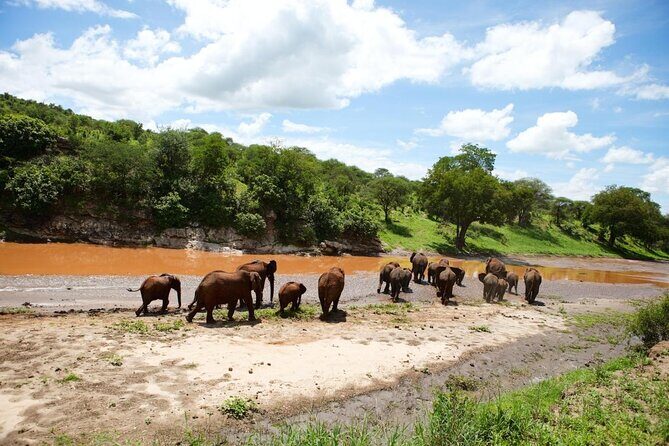
- Tarangire’s elephant concentration in open terrain that often makes sightings easier
- Ngorongoro Crater game drive in a massive volcanic caldera with strong Big Five odds
- Full-board meals built in (breakfast, lunch, dinner) for simpler day-to-day budgeting
Entering Arusha With an 8:00 Start and Park-Ready Pace
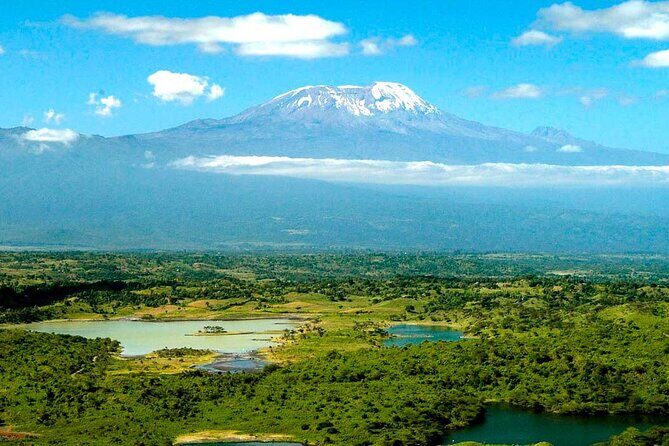
Your day begins at 8:00 am with pickup from your Arusha-area stay or the airport. From there, the trip goes straight into the national-park rhythm: you drive, you scan, and then you do a proper game drive rather than just a quick stop.
This matters more than it sounds. On safari, time is wildlife. When your schedule is built around game drives and included park fees, you spend your energy on seeing animals instead of negotiating tickets and timing.
Also, you are not stuck managing meals. The itinerary uses a full-board plan with breakfast, lunch, and dinner across your time on the circuit, so you can keep a steady routine even when mornings start early.
A few more Arusha tours and experiences worth a look
Arusha National Park: Colobus Monkeys and Birding at Mount Meru’s Feet
Arusha National Park is smaller than the big names, but it has a special job: it kicks off your safari with variety in a compact space. It sits at the foot of Mount Meru, and the mix includes mountain zones, rain-forest patches, and lakes.
The star for many people is the black-and-white colobus monkey. You are not just hoping for a blurry silhouette. This is one of those parks where the colobus is described as often visible, moving between trees with long arms and that striking two-tone fur pattern.
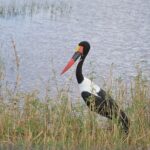
Then there is the birding angle. Arusha is a highlight for bird watchers, with tropical species you may not see elsewhere. If you like spotting hornbills and studying behavior (not just chasing big mammals), this is a smart first day.
The practical side: the game drive is listed as about 6 hours. That is long enough to find your rhythm, but it is still a manageable intro before the longer, more intense days later.
Lake Manyara’s Rest Day: Choose Slow or Go Active in Mto Wa Mbu
Day 2 is intentionally lighter: a relaxing window around the Manyara region. You can lounge by a pool with a cocktail, visit a spa, or choose an add-on excursion from a wider list of activities.
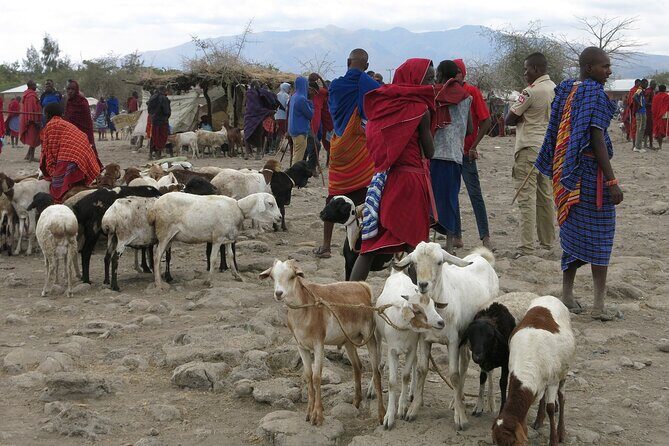
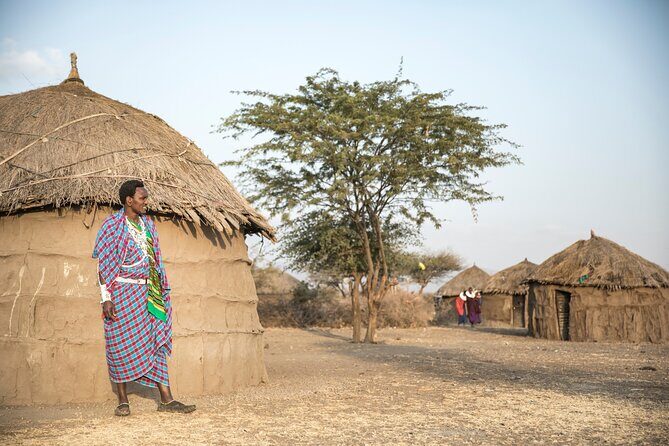
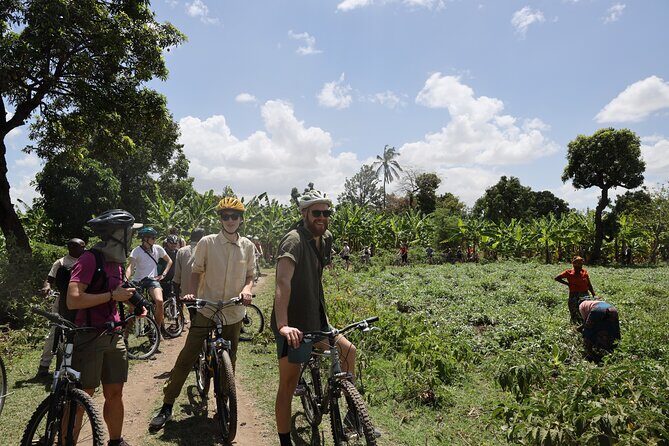
You can also get into local culture in a few ways that are specifically mentioned. A traditional Maasai boma is an option. There are active choices like a mountain bike tour through farms and village life near Mto Wa Mbu. There is also time-friendly shopping and food-culture style visiting, including the Maasai market.
And if you want something low-key but fun, there are tuktuk-style options around Mto Wa Mbu. This kind of day breaks up the constant driving and gives your brain time to absorb the safari parts you have already seen.
The only caution is mindset. If you are the type who wants every day packed with wildlife, a rest day can feel like a pause. If you enjoy pace control, it is a good reset that helps the rest of the week feel less rushed.
Lake Manyara National Park: Flamingoes, Baboon Roadsides, and Tree-Climbing Lions
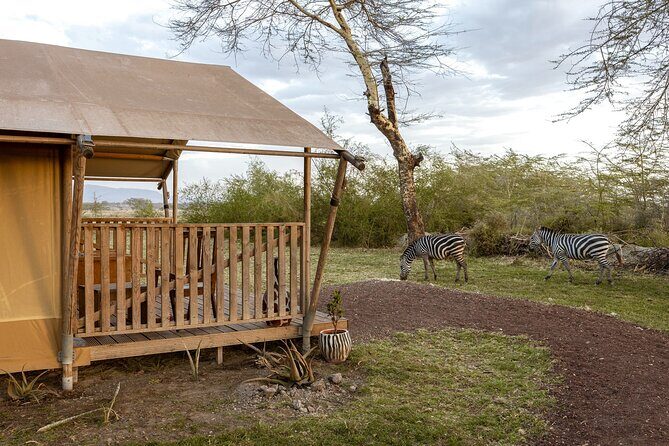
Day 3 is a full game drive at Lake Manyara National Park, and the park earns its reputation for stacking a lot into a relatively small area. The lake’s alkaline soda helps create strong conditions for birds, and more than 400 species have been identified.
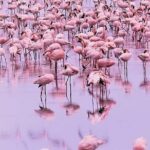
The headline sight is the flamingoes. The description points to thousands of strolling flamingoes, which is exactly the kind of moment that changes how you remember a park. It is not only about the animals you grew up expecting; it is also about seeing animals acting out their daily routines in the habitat they belong to.
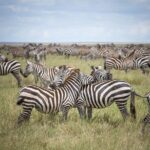
Then you get the other side of the park: a groundwater forest zone near the road where baboon troops can appear on the roadside and in trees. After that, the grassy banks bring grazing animals into view, including wildebeest, giraffe, zebra, and buffalo.
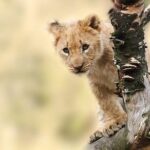
And yes, there are tree-climbing lions. If you are picturing a classic plains lion scene, this is different. You may have the chance to spot lions living in trees where the environment supports it.
The drive time is listed at about 6 hours. That is a sweet spot: long enough for wildlife to show up, but not so long that everyone gets gridlocked by fatigue.
Tarangire National Park: Elephant Country With Easier Sightlines
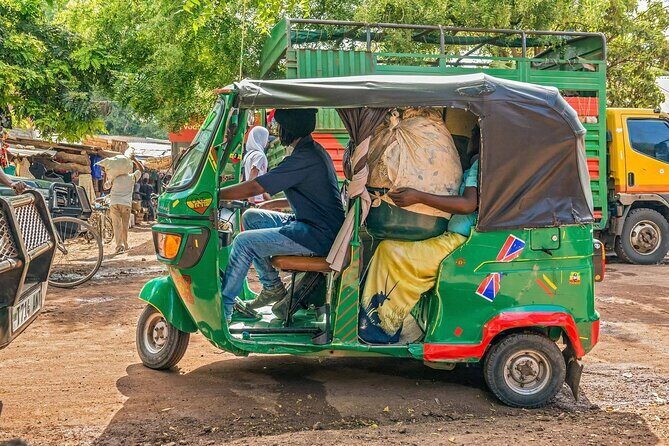
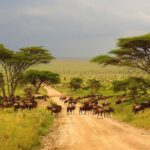
Tarangire is often described as elephant-forward, and this trip leans into that. The park is known for having the highest concentration of wildlife outside the Serengeti, and it is set up in a way that can make sightings easier.
Why easier? The terrain is described as more compact and open. That means you do not always need to work for every sighting. Wildlife can be exposed enough to see up close or from a distance, and you are less dependent on perfect timing.
Expect large herds of elephants as a main draw. Beyond elephants, Tarangire also lists a long set of likely sightings: wildebeest, zebra, buffalo, gazelle, warthog, impala, python, lion, leopard, and more than 50 bird species.
If you like “real safari variety,” Tarangire delivers. You are not just doing one kind of viewing. You are moving across a park where mammals, birds, and even reptiles show up if you stay patient and keep eyes scanning.
The game drive is about 6 hours again. It is consistent with the rest of the circuit: enough time to find action without turning the day into a marathon.
A few more Arusha tours and experiences worth a look
The 150 Corners Road to Karatu: Moving With Views, Then Choosing Your Own Afternoon
After Tarangire, you travel toward Karatu via a scenic drive up the escarpment, including the famous 150 corners road. That is one of those safari details you will hear people talk about because it changes your mood. You are climbing into a different kind of scenery and anticipation builds for the crater day ahead.
When you arrive in the afternoon at Africa Safari Karatu, you get time to relax or book additional activities. Two options are specifically mentioned: a coffee farm tour and visiting the Hadzabe tribe, described as one of the oldest tribes in Africa.
I like these add-ons because they give you a human scale to match the wildlife days. It is not a replacement for the parks, but it adds texture. Still, you should think about your energy level. After a couple of strong game-drive days, doing one activity is usually better than trying to cram in multiple.
This is also the point where you will likely feel the value of included lodging and meals. Karatu becomes a comfortable base instead of just a stopover.
Ngorongoro Crater: Big Five Odds Inside a Volcanic Caldera
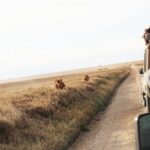
Day 6 is the big one: a full-day game drive in Ngorongoro Crater. The crater is described as the world’s largest intact volcanic caldera, which is a dramatic way to say the setting is massive and visually unforgettable.
The crater rim views matter. The description includes clouds hovering around the rim and a cool breeze at lookout points. That is your reminder that you are driving into a deep natural bowl, not just into another park segment.
Wildlife density is a major reason this crater day is so valued. The natural rims keep the ecosystem enclosed, and the conservation area is described as home to the Big Five. That does not mean you will see all five, but it does mean your chances are genuinely focused here.
The game drive time is listed at about 6 hours, which typically feels intense in a good way. You are watching animals in a place where everything seems to have room to show itself.
Practical tip: bring something warm. Even if it is sunny, crater mornings and rim breezes can shift quickly.
Price and logistics: What You Are Really Paying For
$2,721 per person is not pocket change, so you want to know what you are getting and what you still need to handle.
Here is what is included: park fees, overnight stays in unique accommodations on a full-board meal plan, transportation, and a driver guide. Meals are also included on six days: 6 breakfasts, 6 lunches, and 6 dinners. That is a real value point because it removes a chunk of daily decision-making and spending.
On the cost side, two items are explicitly not included at check-in: a Tourism Development Levy of $1.50 per person per night and a village tax of $1.00 per person per night. Drinks, personal expenses, and tips are also not included.
What this means for you: you can budget more confidently than if you were piecing the trip together yourself park by park. But you should still carry enough cash for those check-in taxes and keep a separate budget for drinks and tips.
Driver-guide quality: Why Allen, Jeff, Gaza, and DJ Kalid get named
On a safari like this, the guide is not just background. A good driver-guide helps you interpret movement, reading the terrain and using timing. And you feel that difference when sightings happen without the constant “where did it go” scramble.
In the praise you have seen for this kind of Northern Circuit work, certain names come up for specific traits. Allen, for example, is described as incredibly nice and very helpful. Jeff is credited with being attentive and excellent at helping people see Big Five wildlife. Gaza is praised for plant and wildlife knowledge, plus spotting skill. DJ Kalid is described as the best, with strong wildlife-finding ability.
Other guide names show up with similar themes: Shabani is associated with Big Five spotting, Hamis Abdul with knowledgeable guiding and German-speaking service, and Engelbert with strong park knowledge that made the trip feel top class.
You do not need those names to book a great safari. But you should use them as a clue for what to ask about: request your driver-guide details in advance if you can, and if language matters to you, ask whether a German-speaking guide option is available.
And one more practical thought: safari days move fast, but you still need a guide who gives you room to enjoy the moment, not only race to the next stop. That balance is part of what people commonly reward.
Lodges near the parks: Comfort that supports long driving days
Your overnight stays are described as unique accommodations located close to the national parks. That closeness is practical. It reduces fatigue from long transfers and helps you stay in rhythm for the early start game drives.
In similar Northern Circuit safari experiences, lodges and tented camps have been praised for things that matter after a full day in a vehicle: clean rooms, comfortable beds, friendly staff, and food that is more than enough. You should aim for the same mix when reviewing your confirmation details.
Also, the trip is built on a full-board plan. That means you are not scrambling to find food between parks, which keeps your energy steady for wildlife viewing.
Who should book this 7-day circuit
This is a strong fit if you want a classic Central Northern Circuit style trip with minimal extra planning. It is private-group, includes transportation and driver-guide, and uses a full-board meal plan that simplifies your days.
It is also ideal if you like variety. Arusha gives you monkeys and birds. Lake Manyara adds flamingoes, baboons, grazing animals, and the tree-climbing lions angle. Tarangire brings elephants and open-terrain viewing. Ngorongoro gives you the crater drama and Big Five odds in one setting.
If you dislike long drives or early starts, you should take a careful look at the daily time on the road and the fact that game drives are about 6 hours on the key wildlife days. The physical fitness requirement is listed as moderate, so you should be comfortable with long days and uneven ground around viewpoints.
Should you book this Central Northern Circuit safari from Arusha?
I would book this tour if you want a structured, classic route that hits multiple major parks without you doing the math every day. The big value for me is the combination of park fees, transport, a driver-guide, and full-board meals. It reduces surprises and helps you focus on wildlife.
I would think twice if your budget is tight once you include the Tourism Development Levy and village tax at check-in, plus drinks and tips. Those are normal safari add-ons, but they matter.
If you are the type who plans around wildlife and wants a guide who helps you see more with less wasted time, this circuit is a good match. Arusha and Lake Manyara are especially strong for people who like bird life and unusual behaviors like tree-climbing lions.
FAQ
FAQ
What time does the safari start each day?
The meeting start time is listed as 8:00 am.
Where does the safari start?
It starts in Arusha, Tanzania. Pickup is offered from your place of stay or from the airport.
Which national parks are included?
Arusha National Park, Lake Manyara National Park, Tarangire National Park, and Ngorongoro Crater are included.
Are park fees included in the price?
Yes. Park fees are included.
Are meals included?
Yes. The tour includes breakfast (6), lunch (6), and dinner (6) as part of a full-board meal plan.
Do I pay any taxes or fees at check-in?
Yes. The Tourism Development Levy ($1.50 per person per night) and the village tax ($1.00 per person per night) are not included and are paid at check-in.
Is transportation included?
Yes. Transport and a driver guide are included.
Is this a private tour?
Yes. It is private, and only your group participates.
What is the physical fitness level needed?
The tour lists a moderate physical fitness level.
Is free cancellation available?
Yes. You can cancel up to 24 hours in advance for a full refund.