REVIEW · ZANZIBAR
Cultural Walking Tour through Stonetown, a UNESCO World Heritage Site
Book on Viator →Operated by Splash Tour Company · Bookable on Viator
Stone Town tells its story best on foot. This walk is interesting because a licensed guide helps you connect the buildings you see with the heavier history behind them. I especially like how the tour threads together landmarks like the Anglican Cathedral and the Old Slave Market with what’s happening right outside your eyes, and I like that hotel pickup gets you into the right starting area without fuss. One thing to keep in mind: the House of Wonders may be under construction, so you may only be able to learn its story from the outside.
You get about 2 hours 30 minutes of guided wandering in UNESCO-listed Stone Town, not a rushed hit-and-run. It’s private, so you can ask questions as you go, and the route focuses on practical “don’t-get-lost” sections: Forodhani Gardens, Darajani Bazaar, the seawalk area, and the Jaws Corner coffee stop.
At $29 per person, the value is strong for a short, private tour—especially because transfers from elsewhere on the island aren’t included and the walking time is limited. Still, one review note I’d take seriously: pickup can occasionally run late, so if you have a hard schedule, confirm the timing through your hotel and plan a little breathing room.
In This Review
- Key Highlights You’ll Actually Feel on the Ground
- Stone Town in Two and a Half Hours: What This Walk Feels Like
- Forodhani Gardens and the Seawalk That Sets Your Bearings
- House of Wonders Outside-Only: When You Learn Even Without Entry
- Darajani Bazaar: Spices, Produce, and the Everyday Energy of Trade
- Slave Trade Stories at the Anglican Cathedral Area
- Jaws Corner: Coffee, Bao Game Watching, and a Real Local Pause
- Princess Salme: A Personal Story Tied to Power and Escape
- Price and Logistics: Is $29 Good Value for a UNESCO Walk?
- Who This Tour Suits Best (And Who Should Skip It)
- Should You Book This Stonetown Walking Tour?
- FAQ
- How long is the Cultural Walking Tour through Stonetown?
- What does the tour cost?
- Is hotel pickup included?
- Is this tour private?
- Where does the tour start and end?
- Which major stops are included?
- Are there admission fees for Forodhani Gardens and Darajani Bazaar?
- Are food and drinks included?
Key Highlights You’ll Actually Feel on the Ground
- Private guide means you can focus on looking, not navigating
- Forodhani Gardens sets the tone fast, right by the main seawalk
- House of Wonders is outside-only if construction affects access
- Darajani Bazaar gives you real market sights and smells (spices, fruits, fish/meat)
- Jaws Corner combines coffee with watching locals play Bao
- Personal attention helps you get meaning, not just photos
Stone Town in Two and a Half Hours: What This Walk Feels Like
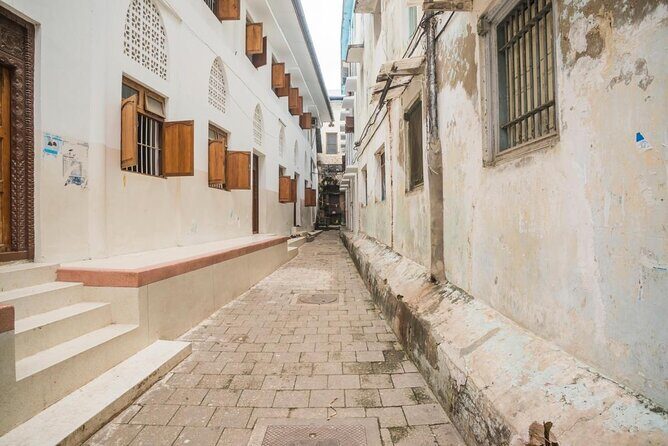
Stone Town covers a lot of emotional distance in a small area. This tour is built for that reality: you don’t spend hours hunting streets or trying to figure out what you’re looking at. Instead, you follow a guide who knows the flow of the old town and points you toward the spots that matter.
The private format is a big deal. Even on crowded days, you’re not stuck behind a long line of strangers. I like that you can slow down at a doorway that catches your attention or ask about a detail you noticed on a wall, then move on when you’re ready. The whole thing is designed to be manageable—about 2 hours 30 minutes—so it doesn’t turn into a leg-burning endurance test.
This is also a good “first day in Stone Town” option. The meeting point is Forodhani, and the route starts close to the sea and to some of the area’s best-known landmarks. That makes it easier to orient yourself afterward. You’ll leave with a mental map that actually matches what’s outside your window.
You can also read our reviews of more walking tours in Zanzibar



Forodhani Gardens and the Seawalk That Sets Your Bearings
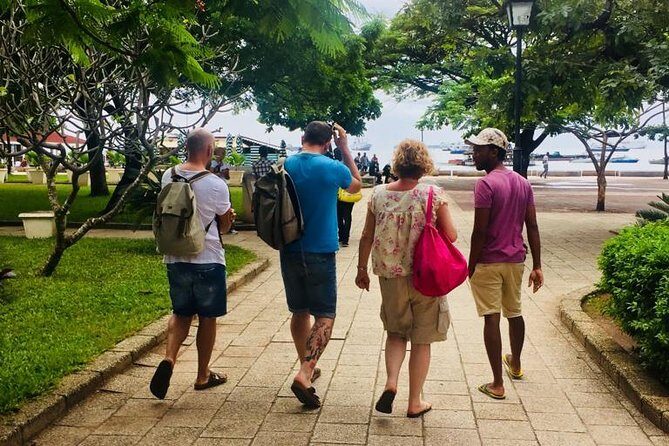
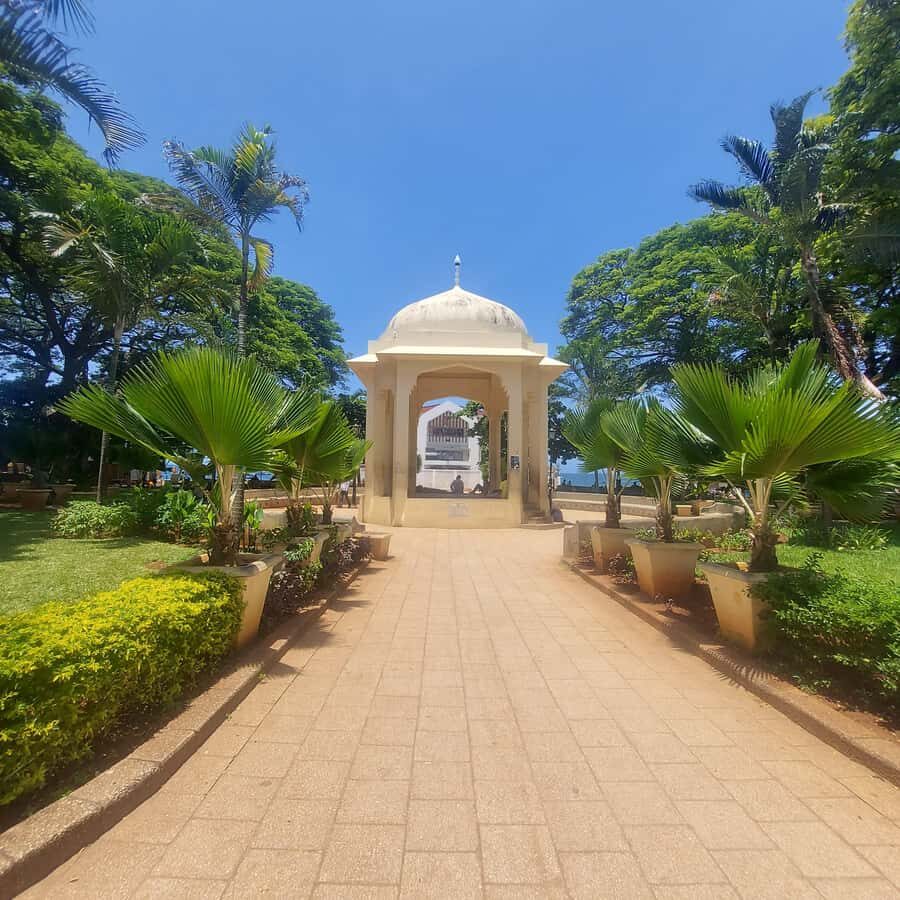
Your tour kicks off at Forodhani Gardens, a small park along the main seawalk. It sits in a prime position: you’re close to the House of Wonders and the Old Fort area, so the space feels like a hub. For me, that location matters because it gives you context right away—this part of Stone Town is all about the meeting between land, sea, and trade routes.
Forodhani also has a rhythm that changes through the day. It’s known as a local hangout, and it gets especially busy in the evening when it turns into a night food market. Even if your tour time is daytime, you can still feel why people gather here. It’s not just scenery; it’s where the town breathes.
Because this stop is free and short, it functions like a warm-up without dragging. You’re probably there for around 10 minutes, enough time to reset your senses and listen to the guide’s framing of what you’ll see next.
House of Wonders Outside-Only: When You Learn Even Without Entry
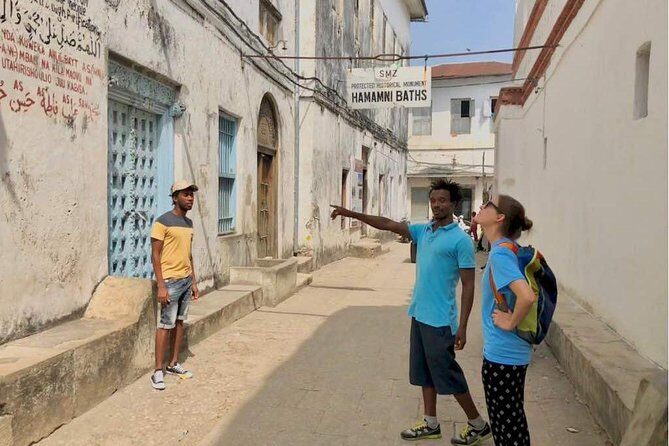
The tour passes the House of Wonders (Beit-el-Ajaib) early on. Here’s the practical part: the building may be under construction, and in that case you’ll learn the history from outside rather than going in.
That could sound like a disappointment—until you think about what a good guide can do. Even when access is limited, the exterior location and the story attached to it still anchor the meaning. You’re training your eyes on architecture and street position, not wasting time on a closed door.
If you’re the type who hates missing an attraction, take it seriously. But if you’re more interested in understanding Stone Town than checking boxes, this approach works well. It keeps the pace moving and keeps you connected to the real environment of the old city.
Darajani Bazaar: Spices, Produce, and the Everyday Energy of Trade
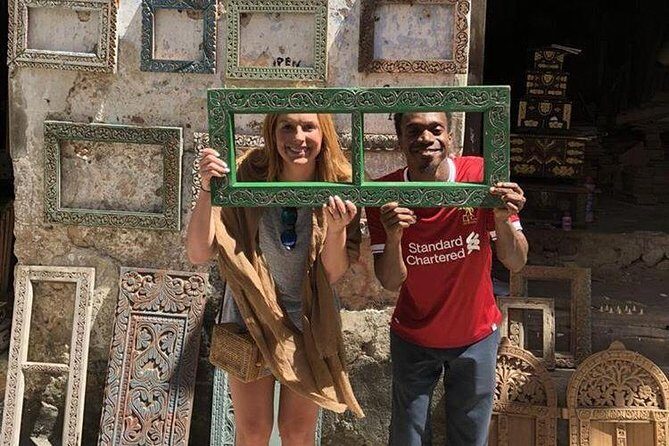
Next up is Darajani Bazaar, Zanzibar’s main market. This stop is about sensory geography. You’ll get the smells of spices plus the visual parade of fruits and vegetables, and you’ll also see the hustle around fish and meat trading.
This is the kind of place where a guide is worth real money. Without one, it can be easy to feel like you’re just walking past stalls. With one, you start to notice patterns: where vendors cluster, how bargaining and dealing play out, and what the market tells you about daily life in Stone Town.
The tour time here is about 15 minutes, and that’s smart. A market can swallow an hour if you let it. This amount gives you a taste—enough to remember—without taking away from the rest of the walk.
One more note: market areas can be crowded and active. So keep expectations realistic. You’re going to see a working market, not a curated shopping scene. If that sounds like your kind of travel, you’ll enjoy it.
Slave Trade Stories at the Anglican Cathedral Area
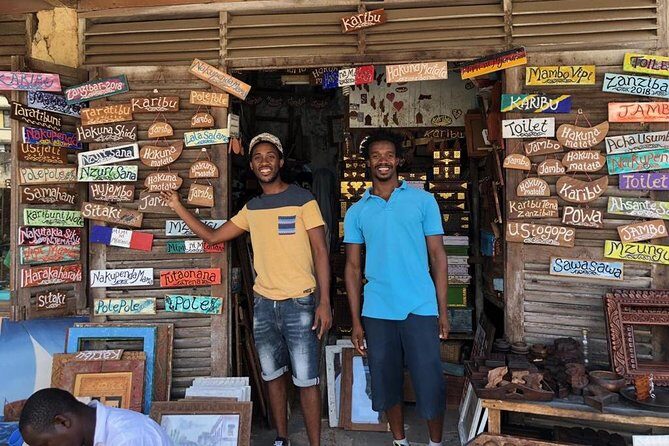
As you move along the route, you pass the Slave Market and the Anglican Cathedral area. This is the emotionally heavy portion of the walk, and it’s also one of the most valuable.
Instead of treating these as isolated landmarks, the guide explains the history of the slave trade in East Africa in relation to where you are. That matters because it turns monuments and buildings into something you can actually situate. You’re not just looking at a photo-worthy facade; you’re standing in an area tied to a painful regional story.
I appreciate how this tour doesn’t avoid the subject, and it doesn’t turn it into a lecture that disconnects from the street. You learn while you look, which is exactly how you remember history in a place like Stone Town.
A small drawback to be aware of: if you’ve already visited the Anglican Cathedral and nearby museum spaces on your own, you might find that this portion feels lighter. The tour is timed to fit multiple stops, so there isn’t time to go deep into every building’s interior unless entries are available and included.
You can also read our reviews of more historical tours in Zanzibar




Jaws Corner: Coffee, Bao Game Watching, and a Real Local Pause

After the heavier history, the tour shifts to something lighter at Jaws Corner, one of the hotspot areas in Stone Town. This is where you can take a breather, get a fresh brewed coffee, and watch local life happening in real time.
The Bao game is part of the fun. You’ll see people playing the typical Bao game—street-level entertainment that’s far more interesting than it sounds. It’s the kind of moment that makes you feel like you’re watching culture, not just absorbing information.
Even if you think you’ll only be there briefly, I’d make the most of the pause. Ask for a moment of context if your guide offers it, because the game is more than a distraction; it’s a social rhythm. These are the kind of small scenes that stick long after the photos.
Princess Salme: A Personal Story Tied to Power and Escape

The tour also covers Princess Salme, the daughter of the Sultan, and the story of her fleeing after falling in love with a German man. This is the type of narrative that changes how you see Stone Town, because it puts faces and personal choices into a city shaped by power.
I like stories like this when they’re delivered at street level. They help you connect what would otherwise be names and dates to the human decisions that ripple through history. And when it comes to Stone Town, those stories are everywhere—you just need someone to point them out at the right moment.
Price and Logistics: Is $29 Good Value for a UNESCO Walk?

At $29 per person for a private walking tour lasting about 2 hours 30 minutes, the value is clear if you’re comparing it to what a guided experience like this typically costs. You’re paying for a few key things you’d struggle to replicate alone:
- a licensed tour guide who can explain the meaning behind the places you walk past
- hotel pickup in Stone Town, so you don’t waste time crossing town before you even start
- a route built around short, efficient stops rather than a long, uncertain self-guided wander
There’s also a practical advantage: since admission fees aren’t included, you’re only dealing with optional spending if any entries apply beyond the free stops. Forodhani Gardens and Darajani Bazaar are free in this plan, so you’re not locked into paying at every turn.
The main logistics consideration is that the pickup only covers hotels located in Stone Town. If you’re staying elsewhere on Zanzibar, you’ll need to handle your own way to the start area. So before you book, make sure your lodging is in the Stone Town zone.
And one last value note: because this tour is private, you’re more likely to actually use the guide. If you prefer quick walks and hate stopping to learn, you might not feel as much value. But if you want the story behind the street plan, it’s a solid deal.
Who This Tour Suits Best (And Who Should Skip It)
This tour is a great fit if you:
- want a first-time orientation to Stone Town without getting lost
- like short guided stops that balance history and street life
- enjoy market energy but still want a structured plan
- want personal questions answered during the walk, not after the fact
It’s less ideal if you:
- already know Stone Town well and have visited all the major sites with strong context
- expect every building to be accessible at all times (the House of Wonders can be under construction)
- need a perfectly timed pickup with no room for delay, since occasional pickup problems do show up
If you’re traveling with mixed interests—someone who loves architecture and someone who wants social history—this format usually works because it includes both.
Should You Book This Stonetown Walking Tour?
I’d book it if you want a guided, manageable introduction to UNESCO Stone Town that actually connects the dots. The combination of Forodhani Gardens, Darajani Bazaar, the Anglican Cathedral/Slave Market area, and Jaws Corner gives you a well-rounded view in only a couple hours—enough to feel you experienced the town, not just passed through it.
I’d hesitate only if your schedule is extremely tight or if you need guaranteed access to the House of Wonders interior (because you may only see it from outside). Also, if you’ve already done a very similar guided tour of the same core sites, this one might feel shorter on new information.
Overall, for $29 with hotel pickup and a private guide, it’s a strong way to get your bearings fast and understand why Stone Town looks the way it does.
FAQ
How long is the Cultural Walking Tour through Stonetown?
The tour lasts about 2 hours 30 minutes.
What does the tour cost?
It costs $29.00 per person.
Is hotel pickup included?
Yes. Pickup from hotels located in Stone Town is included.
Is this tour private?
Yes. It’s a private tour, so only your group participates.
Where does the tour start and end?
The tour starts at Forodhani, Zanzibar, Tanzania and ends back at the meeting point.
Which major stops are included?
The walk includes Forodhani Gardens, passing the House of Wonders, Darajani Bazaar, the Slave Market/Anglican Cathedral area, and a stop at Jaws Corner.
Are there admission fees for Forodhani Gardens and Darajani Bazaar?
They are listed as free stops in the tour plan.
Are food and drinks included?
No. Food and drinks are not included.