REVIEW · ZANZIBAR
Stone Town Foodie Walk
Book on Viator →Operated by Grassroots Traveller · Bookable on Viator
Stone Town can feel like a maze, but food makes it make sense. This Stone Town Foodie Walk leads you through UNESCO-listed streets with a guide who ties what you’re tasting to Zanzibar’s food influences. I love the tight focus on hands-on bites, not museum stops, and I also like the small group limit that keeps the pacing friendly. One thing to consider: you’ll walk and snack for a few hours, so come hungry—but not too hungry.
You start with coffee at Forodhani Garden, then move into inner Stone Town for bakery-style treats, a local Urojo mix, and hand-pressed sugarcane juice. The route also includes a food market moment and seasonal tropical fruit, which is a great way to understand what locals buy and eat day to day. If you expect a full lunch replacement, plan on adding your own meal later.
In This Review
- Key things I’d circle in your plan
- Why this Stone Town Foodie Walk is a smart way to start
- Forodhani Garden: coffee, snacks, and orientation in one stop
- What you’ll taste: the lineup of Stone Town bites
- The Stone Town walking part: history told at street speed
- The market stop and seasonal fruit: where the story becomes real
- Small group of up to five: why that size is the sweet spot
- Price and value: $40 for tastings plus guided context
- Pickup, meeting points, and how to plan your timing
- What to wear and what to bring for an easy, respectful walk
- Who this Stone Town Foodie Walk fits best
- Should you book the Stone Town Foodie Walk?
- FAQ
- How long is the Stone Town Foodie Walk?
- How much does it cost?
- What group size is this tour limited to?
- Where does the tour start and end?
- Is pickup included?
- What food and drinks are included in the tasting?
- Is lunch included?
- What should I wear?
- Is this tour refundable if I change my mind?
Key things I’d circle in your plan
- Forodhani Garden coffee kickoff with sweet snacks and sea views to set the tone fast
- A short list you’ll actually recognize: bofil(o) bread, Urojo mix, sugarcane juice, plus more bites
- UNESCO Stone Town on foot, with food history woven into what you’re seeing
- Small group cap of five, so questions don’t get lost in the crowd
- Market stop + seasonal fruit, so you taste Zanzibar beyond street snacks
- Dress for cultural respect: shoulders and knees covered, casual and comfortable
Why this Stone Town Foodie Walk is a smart way to start
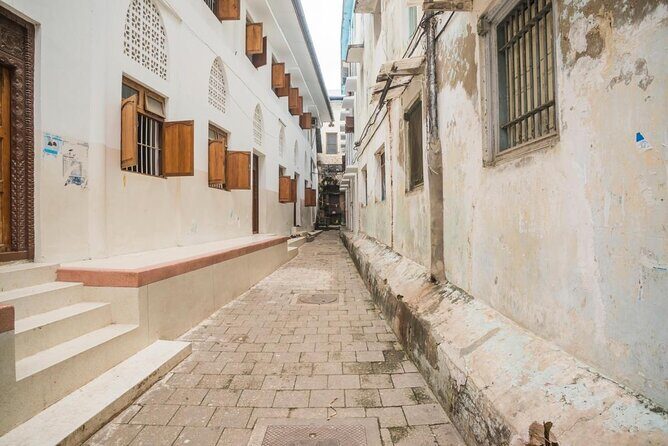
Stone Town is full of narrow lanes, sudden turns, and buildings that look like they’ve been layered for centuries. A food walk is a practical trick: it gives you a reason to move, and it turns the chaos into a pattern. The tour is designed as a 2 to 3 hour walking experience, and that length is perfect for your first day in town or a mid-trip afternoon when you want something memorable without burning an entire day.
The other thing I like is how the tour connects taste to history. Zanzibar food didn’t develop in a vacuum. You’ll hear how influences from former colonizers and nearby neighbors shaped what shows up on local plates and stalls. That matters because you won’t just think, Oh, that’s tasty—you’ll start noticing why certain flavors and dishes exist at all.
You can also read our reviews of more walking tours in Zanzibar



Forodhani Garden: coffee, snacks, and orientation in one stop
Most food tours start with food. This one starts with bearings. The meeting point is Forodhani, Zanzibar, Tanzania, and your first moment is at Forodhani Garden, where you get a briefing over traditional coffee and sweet snacks. While you’re there, you’re looking out toward the Indian Ocean, so you get a sense of the wider setting before you go street-deep.
This first stop also works as a warm-up for your stomach and your senses. You’re eased in gently: coffee, sweets, then the guide transitions into the bigger picture—what food influences are hiding in plain sight across Stone Town. If you get overwhelmed in new cities, that orientation step is a real value add.
One more practical note: the instructions mention a moderate physical fitness level. Starting at Forodhani Garden helps because you’re not immediately dropped into steep or long stretches before you know what’s happening.
What you’ll taste: the lineup of Stone Town bites
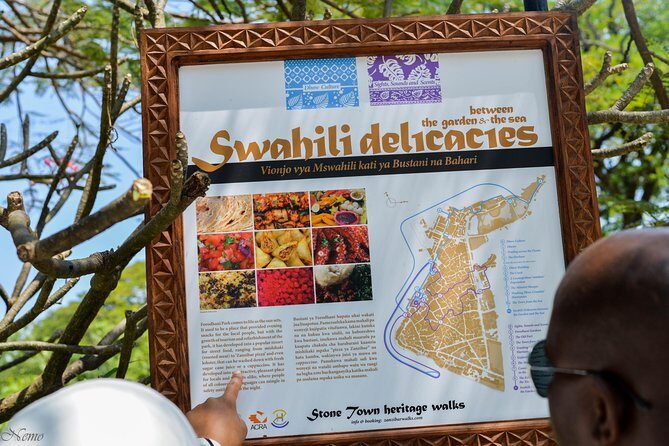
The tour is built around food tasting, not just browsing. While the full list can vary slightly by what’s available, the itinerary gives you clear anchors so you know what to expect.
Here are the specific items called out in the experience:
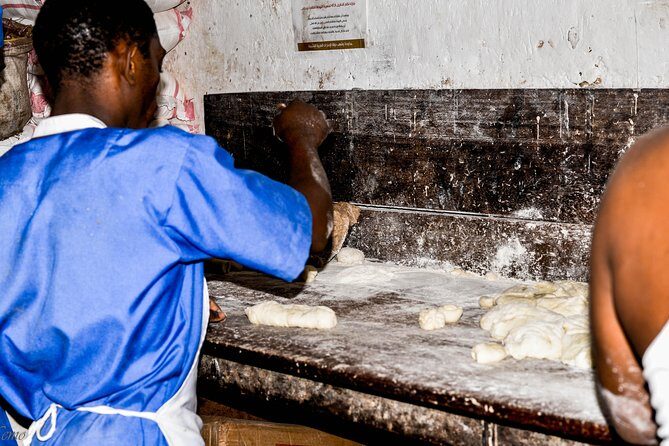
- Bofil(o) bread from a local bakery
- Indian Zanzibar Urojo mix (a local mix you’ll sip and taste as part of the food story)
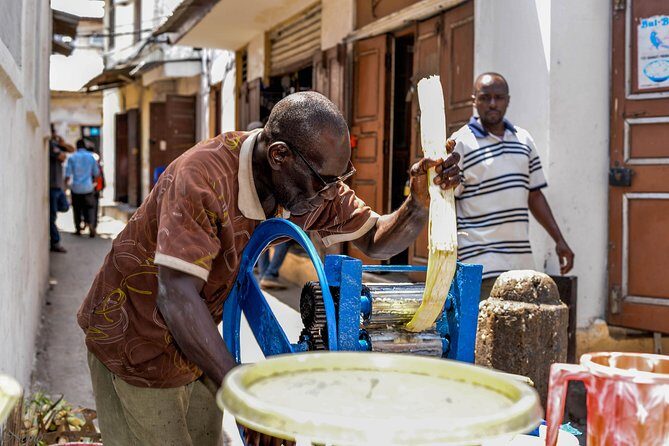
- Hand-pressed sugarcane juice
After those early tastings, you’ll keep walking through inner Stone Town to find local spots—your guide points out the best kinds of local food joints to seek out. Then you’ll hit a busy food market and sample seasonal tropical fruits.
What I like about a lineup like this is that it balances comfort and curiosity. Bread and juice keep things easy to approach. Urojo adds a stronger local flavor identity. And fruit at the market gives you something fresh at the end of the walk, when you’ve probably built up some appetite.
Tip: since this is a tasting tour, you’ll feel best if you treat it like your main meal window. More than one guide-led experience is better when you aren’t stuffed.
The Stone Town walking part: history told at street speed
This isn’t a long, slow lecture tour. It’s a walk through inner Stone Town, timed to keep you moving and tasting. The experience is described as a 3 hour walking tour with a trained guide, and it’s set up so you learn while you go—especially about food influences.
That “food secrets” angle matters because Stone Town isn’t organized by cuisine. The city feels like a maze unless someone helps you connect the dots. Your guide’s job is to point out patterns: why certain stalls exist, why particular ingredients show up, and how Zanzibar’s position shaped its flavors.
If you like history but hate standing still, this is the right format. You also get a guide who’s willing to talk at your pace. In the reviews, names like Haj and Mussawir come up for being friendly and early at the meeting spot, and for taking guests through parts of Stone Town that feel less predictable than the main tourist path.
The market stop and seasonal fruit: where the story becomes real

Markets can be overwhelming if you don’t know what to look for. That’s why the itinerary includes a “buzzing” (busy and active) food market stop, where you don’t just look—you taste. You’ll sample seasonal tropical fruits, which gives you a quick, sensory lesson in what’s fresh when you’re there.
This part also helps you beyond the tour. Once you’ve tasted market fruit with context, you’ll be better at ordering at stalls later. You’ll know what you’re aiming for and you won’t feel like you’re guessing.
Also, a market stop breaks up the walking energy. It’s a short pause that refreshes you without turning the tour into a long sit-down event.
A few more Zanzibar tours and experiences worth a look



Small group of up to five: why that size is the sweet spot
This tour has a maximum of 5 people per booking, and the experience notes that it’s conducted privately or in small groups up to five to maintain personalized experiences. In practice, that matters more than it sounds.
With a small group:
- you get more time to ask what things are
- your guide can adjust pacing if someone needs a slower rhythm
- you’re less likely to be herded into a single-file line at each tasting spot
If you’ve ever done a big group tour where you only catch half the story, the five-person limit is one of the best features here.
And the reviews back up the human side. People specifically praise guides for being early, clear on where to meet, and for taking the group through off-the-beaten path vendors—exactly what you want from a small group walk.
Price and value: $40 for tastings plus guided context

At $40.00 per person, this tour is priced as an entry-level “do it once” activity that still feels like more than a snack stop. You’re getting:
- a professional guide
- food tasting (with bottled water mentioned)
- a guided walking route through Stone Town
- pickup and drop-off from designated meeting points
- GST included
The value angle is that you’re paying for translation. Zanzibar’s food culture is easy to miss if you only eat what’s obvious. Here, you get help interpreting what you’re tasting and where it fits in the island’s mix of influences.
One careful consideration: lunch isn’t included. So if you’re budgeting, treat this as a meal window and plan a proper lunch or dinner elsewhere.
Also, your booking timing can matter. This type of experience is listed as commonly booked about 12 days in advance on average, so if you want a specific day, it’s smart to reserve early.
Pickup, meeting points, and how to plan your timing
The tour start is Forodhani, Zanzibar, Tanzania and it ends at Darajani, Zanzibar, Tanzania. That’s useful because you’re starting in one part of Stone Town and finishing near another key area, which can make it easier to keep exploring after the walk rather than feeling stuck at the same spot.
Pickup details are a bit nuanced:
- Pickup is offered, and pickup/drop-off is included from designated meeting points.
- Hotel pickup and drop-off in Stone Town is mentioned as an extra cost for PRIVATE tours only.
- Hotel pickup/drop-off from beach hotels is also noted as extra cost.
So, before you lock in your day, check what “included pickup” means for your exact hotel location. If you’re staying in Stone Town, chances are you’ll have an easy meeting point. If you’re farther out, plan for the possibility of extra pickup fees.
As for timing: the tour runs about 2 to 3 hours. I’d plan this around late breakfast or early afternoon so you’re hungry enough for tastings but not stuck needing a full meal right after.
What to wear and what to bring for an easy, respectful walk
This one’s straightforward. The dress code is casual, with instructions to cover shoulders and knees to respect local culture. Wear comfy shoes you can walk in on uneven surfaces, because you’re moving through inner Stone Town streets for a few hours.
What to bring:
- a light layer (Stone Town weather can shift)
- a water-ready mindset (bottled water is included, but you’ll still want to stay comfortable)
- a little flexibility, since the market and vendors can be active and change day to day
And here’s a practical food tip you’ll hear echoed in feedback: don’t overdo meals right before. People recommend not eating heavy breakfast or dinner the night before, so the tastings actually feel like tastings instead of an afterthought.
Who this Stone Town Foodie Walk fits best
This is a great fit if:
- you want a quick introduction to Stone Town without getting lost
- you enjoy food with context (why things taste the way they do)
- you prefer small groups and friendly Q&A over big-tour rushing
- you like walking tours but don’t want all-day steps
It may be less ideal if:
- you need a fully seated, low-walking experience
- you expect a full lunch included
- you’re sensitive to the idea of sampling several small bites within a short window
The tour also lists a moderate physical fitness requirement, which is another reason it works well for most visitors—just not for someone who’s expecting a totally effortless stroll.
Should you book the Stone Town Foodie Walk?
Book it if you want your first Stone Town hours to feel guided, tasty, and story-led. For $40 you’re buying a guided food route through UNESCO-listed streets, plus a market stop and fruit that gives your palate a real snapshot of the island.
Skip it or swap it if you’re the type who prefers only one “big meal” and hates mixing lots of snacks in between. Also double-check pickup if you’re outside Stone Town—hotel pickup can be extra depending on tour type and where you’re staying.
If your goal is to leave Stone Town knowing not just what you ate, but why it tastes like it does, this is an easy yes.
FAQ
How long is the Stone Town Foodie Walk?
The tour lasts about 2 to 3 hours.
How much does it cost?
It costs $40.00 per person.
What group size is this tour limited to?
The maximum is five travelers per booking.
Where does the tour start and end?
It starts at Forodhani, Zanzibar, Tanzania, and ends at Darajani, Zanzibar, Tanzania.
Is pickup included?
Pickup is offered. Pickup and drop-off are included from designated meeting points, and hotel pickup and drop-off in Stone Town is listed as extra cost for private tours. Hotel pickup from beach hotels is also noted as extra cost.
What food and drinks are included in the tasting?
The tour includes food tasting and bottled water. The itinerary specifically calls out bofil(o) bread, Indian Zanzibar Urojo mix, hand-pressed sugarcane juice, and seasonal tropical fruits at a food market.
Is lunch included?
No, lunch is not included.
What should I wear?
Wear casual clothing that covers your shoulders and knees to respect local culture.
Is this tour refundable if I change my mind?
Yes. There is free cancellation, and you can cancel up to 24 hours in advance for a full refund.