REVIEW · ARUSHA
10-Day Amazing Comfort Camping Safari
Book on Viator →Operated by I Dream of Africa Safari · Bookable on Viator
Camping safaris in Tanzania can feel surprisingly calm. This 10-day private trip balances classic wildlife days with a no-rush rhythm, plus real local-community stops so the trip feels more than a checklist. I especially love the chance to slow down for an armed ranger nature walk in Arusha National Park and the bird-focused moments at Lake Manyara. One thing to plan for: if your flight lands after 3 pm, you may need extra lodging in Arusha because you can’t reach the Arusha National Park campsite the same day.
What I like next is how the team handles the busy parts for you. You get camping equipment, drinking water, and all major meals (breakfast and lunch for the full trip, plus dinner every day after arrival days that include it), with park fees handled for non-residents. The main consideration is comfort-style camping: it’s a safari built around camping rather than hotel luxury, and towels/personal items aren’t included.
In This Review
- Key points before you go
- Value and what your $3,899 really buys
- The style of camping here: comfort safari, not hotel life
- Day 1: Arriving in Arusha and checking into Momella Public Campsite
- Day 2: Armed ranger walking safari plus evening game drive near Mount Meru
- Day 3: Cultural time in Mto Wa Mbu before Lake Manyara camping
- Day 4: Lake Manyara’s birding focus and an early-morning wildlife push
- Day 5: Serengeti transfer via Ngorongoro Conservation Area views and Seronera camping
- Day 6: Full-day Serengeti game drives, including river-and-predator moments
- Day 7: Sunrise Ngorongoro Crater viewing plus Maasai boma option and Simba campsite
- Day 8: Tarangire move with a bird-and-wildlife viewing style (confirm the park details)
- Day 9: Larmaku Swamp in Tarangire for elephants and breeding-bird habitat
- Day 10: Ending in Arusha, with airport transfers based on your flights
- How the guide team makes or breaks the safari
- Who this safari fits best
- Should you book this 10-Day Amazing Comfort Camping Safari?
- FAQ
- FAQ
- What parks are included on this safari?
- Does the tour include camping equipment and meals?
- Are park fees included?
- Is pickup offered?
- Is this a private safari or a shared group?
- What if my flight arrives after 3 pm on the first day?
- Are international flights included?
- What about towels and personal expenses?
- Is there a tip guideline?
- What is the cancellation policy?
Key points before you go
- Private pacing, not a cattle-car schedule: you move at a safari pace with room to adjust with your guide.
- On-the-ground support from a strong team: reviews highlight guides like Chris and fellow team members like Japhet and Warren as punctual and attentive.
- Arusha’s early-wildlife plus a walking safari: an armed ranger walk can stretch 2–4 hours, with waterfalls and huge fig trees in the mix.
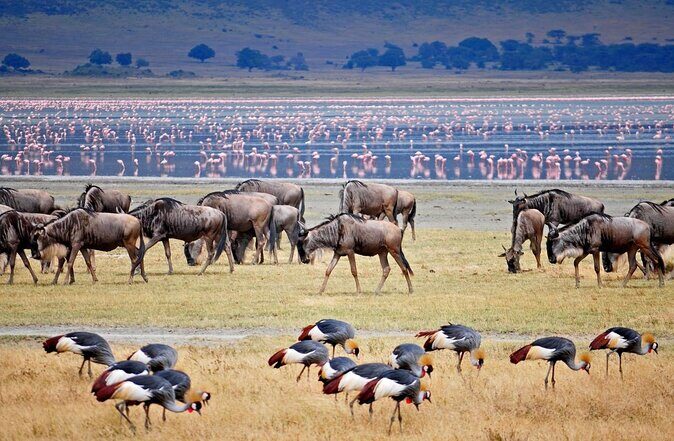
- Lake Manyara is about birds first: the program leans into the 400+ bird-species angle, including pelicans, ibis, and flamingos when conditions line up.
- Serengeti with time to actually look: you’ll spend full days on game drives, including areas less packed than the most famous routes.
- Tarangire’s elephant-and-swamp payoff: Larmaku Swamp is built into the plan for wildlife and breeding birds.
Value and what your $3,899 really buys
At $3,899 per person for about 10 days, this isn’t the cheapest way to do Tanzania. But it’s also not just a marketing number—you’re paying for a setup that reduces hassle and adds flexibility.
The value shows up in three places:
1) Support and logistics are handled. You travel with a professional driver/guide, park fees are included for non-residents, and camping gear is provided. That matters because Tanzania safaris can get expensive fast once you start adding “extras” day-by-day.
2) Meals are included. You have breakfast and lunch built in, plus dinner (9) as stated. That keeps each day simpler, especially when you’re out in parks for long stretches.
3) The experience is designed around time. The tour description promises no rush and safari at your own pace. When you’re doing Serengeti and Ngorongoro, that time is what turns a drive into real sightings—more scanning, more patience, fewer forced checkmarks.
You should still budget for things not included: international flights, extra nights in Arusha if your arrival schedule doesn’t line up, bath towels, personal costs, and tips (the guideline given is US$10 per person per day). In other words, you’ll spend less “on the ground” than some cheaper tours, but you still need a small buffer.
A few more Arusha tours and experiences worth a look
The style of camping here: comfort safari, not hotel life
This is a camping safari, but it’s labeled “amazing comfort.” The practical translation is: you’ll have camping equipment, you’ll be eating real meals (not just snack bars), and you’ll have water on all days.
What you should pack around the gaps:
- Bath towels are not included.
- Personal items (think sunscreen, chargers, insect repellent, and souvenirs) are on you.
- You’ll want a mindset for basic camp living, even if the overall “comfort” is better organized than many budget trips.
Fitness note: the plan includes a nature walk that can run about 2–4 hours, and you’ll be doing long game-drive days. The tour calls for moderate physical fitness level, so plan for walking and sitting for extended periods.
Day 1: Arriving in Arusha and checking into Momella Public Campsite
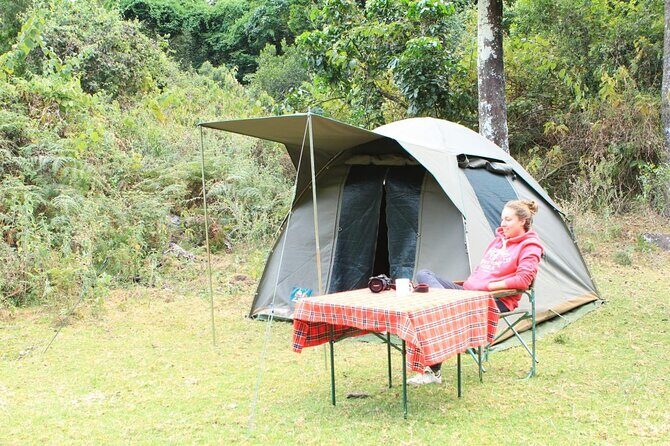
Your first big moment is arriving at Kilimanjaro Airport and then heading straight toward Arusha National Park. The tour’s opening stop is Momella Public Campsite, where you’ll check in as your guide explains what to expect while tents are set up.
Two practical details matter a lot on day one:
- If your flight arrives after 3 pm, you won’t be able to drive to the campsite in Arusha National Park, and you’ll need to overnight in a lodge in Arusha instead (not included).
- The approach gives you an early taste of northern Tanzania nature without immediately rushing into the most crowded parks.
Why this day is more than “just a sleep”: Arusha National Park is known for birds, and the area has a quieter feel than later days. It’s a good way to reset your body after travel and start observing instead of grabbing photos and moving on.
Day 2: Armed ranger walking safari plus evening game drive near Mount Meru
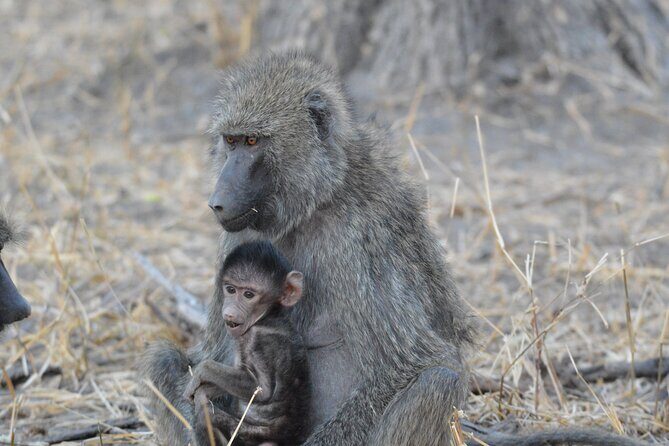
Breakfast first, then you go out with an armed ranger for a walking safari. This is one of the most human-scaled ways to experience the park: you’re not just watching from the vehicle. The walk focuses on flora and fauna, including waterfalls and big fig trees, and it can be as short or as long as you want.
After lunch back at camp, you head out on an evening game drive. The program highlights spectacular views involving Mount Meru and Kilimanjaro, along with scenery like waterfalls, lakes, swamps, and steep cliffs. Even if you’re not chasing a specific animal, these lighting conditions often help you see more detail in the landscape and wildlife behavior.
Optional add-on (at extra cost): you can choose a walk to Meru’s Summit, based on your guide’s consultation. Since it’s optional and costs extra, it’s a good lever if your group has energy and wants more hiking.
Day 3: Cultural time in Mto Wa Mbu before Lake Manyara camping
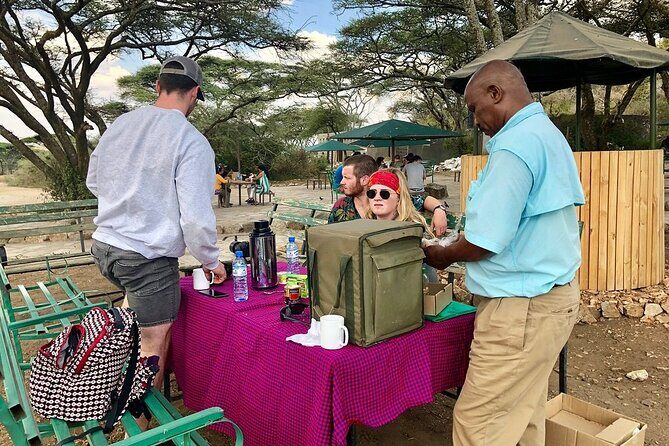
After Arusha, you drive to Mto Wa Mbu, with about 1–2 hours to wander through a lively local town. The emphasis here is cultural learning: you’ll hear about life of the Maasai and other cultural groups in the area, plus you may see traditional huts.
This day also has hands-on breaks:
- You visit plantations and local craftsmen.
- You taste banana beer at an authentic bar.
- You stroll past market stalls with local produce.
- Lunch is served by a cheerful Tanzanian mamma with tasty local dishes.
Then you switch gears to wildlife. You set up camp at Endabash Public Campsite in the heart of Lake Manyara National Park. Lake Manyara is a bird-lover’s park, but it’s also a place where small changes in viewing angle and time of day can mean different sightings.
Day 4: Lake Manyara’s birding focus and an early-morning wildlife push
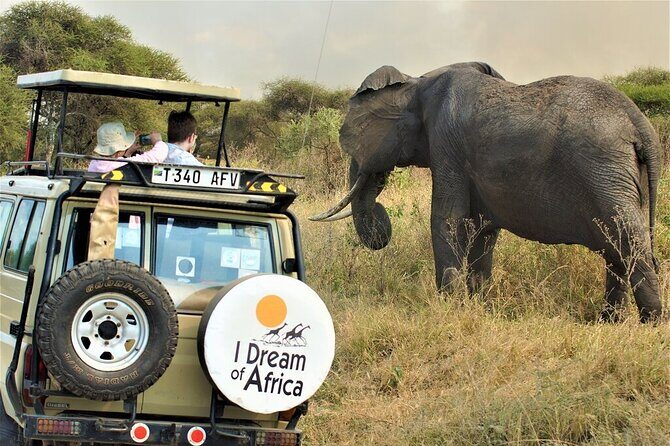
Day 4 is built around birdlife. The program notes 400+ bird species recorded and suggests that even first-time visitors can expect to see around 100 species in one day. That’s a big promise, but the reason it’s credible is the variety of water-associated habitats around the hippo pool area.
The highlighted birds include:
- Pelicans and herons
- Ibis (sacred and glossy)
- Black egret
- And, when water levels are right, thousands of pink-hued flamingos
Birds-of-prey also get attention, including crowned eagle and African hawk-eagle. After breakfast, you plan for an early game drive so animals are active and conditions are cooler and calmer.
Small practical tip: bring binoculars if you have them. Lake Manyara is a place where you’ll notice birds even when bigger mammals are quiet.
Day 5: Serengeti transfer via Ngorongoro Conservation Area views and Seronera camping
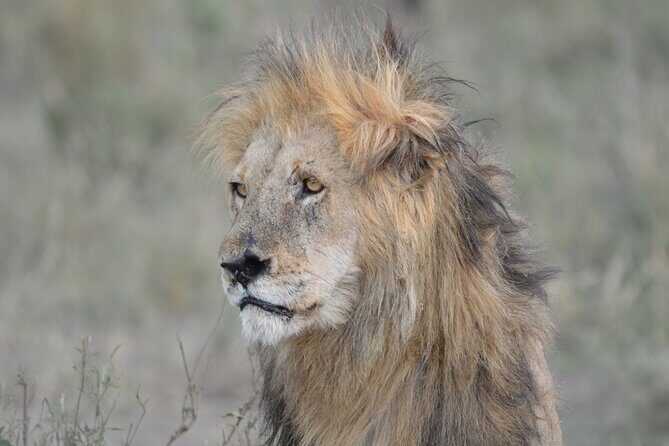
The drive from Lake Manyara toward Serengeti goes through Ngorongoro Conservation Area, and the big theme is panoramic viewpoints. You’ll travel across central Serengeti toward the Seronera area.
This is the day where the “comfort camping” format still feels like a full expedition. Road conditions can be part paved and part sandy and bumpy, so you’ll want patience for the ride.
When you reach Seronera Public Campsite, your day ends with dinner and overnight. The Serengeti portion is framed not only as big wildlife territory, but also as an Endemic Bird Area supporting bird species found nowhere else.
If you love animals but also enjoy birds, Serengeti is a strong fit. If you’re only after the big cats, it’s still worth it. The point is: you’re learning to look broadly, and that helps your odds.
Day 6: Full-day Serengeti game drives, including river-and-predator moments
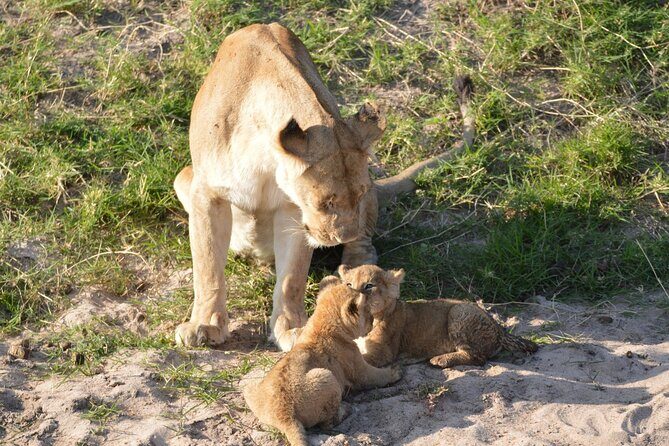
Day 6 is a full day game drive in the Serengeti. The route follows the shores of the Seronera River and Mara River, so you’re positioned where wildlife behavior clusters.
The program points to unforgettable moments like:
- Wildebeest crossing the river
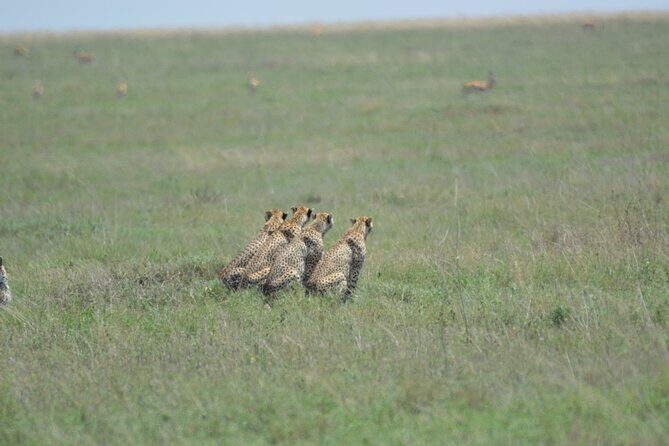
- A hunting cheetah
- Lions and other predators
- Crocodiles waiting near the shore
- And a silhouette giraffe view on the horizon
This is also the day that’s described as offering areas “not known to the greater public.” Translation: you get a better chance to see animals without the same crowd pressure you might find in the most famous pull-offs.
From the reviews, one recurring strength is the spotter ability. People mention a guide like Chris as attentive and excellent at finding animals. In the Serengeti, spotting skill is everything—because the animals aren’t always where you expect, and patience saves the day.
Day 7: Sunrise Ngorongoro Crater viewing plus Maasai boma option and Simba campsite
You rise early for a sunrise game drive in the Ngorongoro Conservation Area, timed for when carnivores are more active and the bush is still calm. Midday, you return to camp for brunch, then check out and move to the next campsite on the edge of the crater.
You’ll spend evening time at Simba Public Campsite for dinner and overnight.
Optional add-on (extra cost): a visit to a Maasai Boma to learn how semi-nomadic communities live according to older traditions. If you choose it, go in with the right mindset: you’re there to listen and learn, not to treat it like a quick photo stop.
Why Ngorongoro is special in this route: it’s one of those places where sunrise timing and positioning can change what you see. The crater setting also keeps the day focused—less bouncing around, more sustained viewing.
Day 8: Tarangire move with a bird-and-wildlife viewing style (confirm the park details)
You head next to Tarangire National Park after breakfast. The program is clearly aiming at bird and wildlife viewing, with notes about flamingos when water levels allow, along with sand-pipers, storks, vultures, and specialized grassland birds.
One thing I’d flag: the text describes a “caldera” and crater-like descent style, which is strongly associated with Ngorongoro. The stop list says Tarangire for this day, so before you go (or during the briefing), I recommend you confirm the exact park and route for day eight with I Dream of Africa Safari and your driver/guide. Small route details can matter for expectations.
What you can count on from the Tarangire framing here: lots of bird scanning from higher viewpoints and wildlife luck guided by local spotting skill. If you like birds and raptors, this is a day to stay patient and keep your eyes moving.
Day 9: Larmaku Swamp in Tarangire for elephants and breeding-bird habitat
Day 9 leans hard into Tarangire’s elephant and water-edge wildlife. After breakfast, you set off again on a game drive. The description calls out elephants sometimes very close to the campsite as they gather near the river.
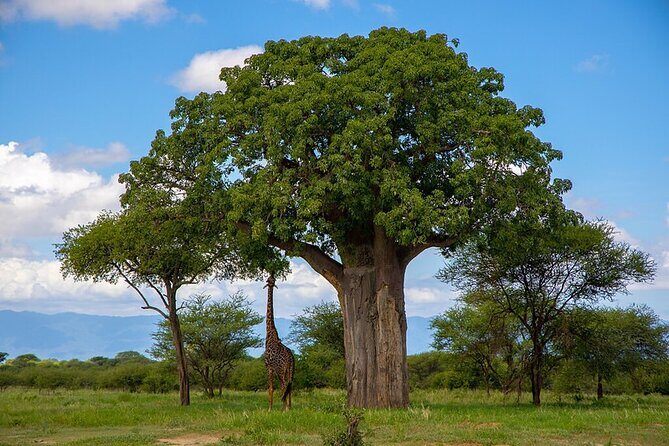
Then you drive to Larmaku Swamp, described as a major swamp area where elephants and other animals cool down in the water and hide in the shadows of acacia trees. The swamp also gets attention as having the most breeding bird species in one habitat anywhere in the world (as stated), which tells you this is not only an elephant day.
Bird notes include dry-country species at the edge of their range, such as northern pied babbler and vulturine guineafowl.
The tour says you have a 99.9% chance of seeing large herds of elephants in this park. I can’t promise you that number will feel exact in your real sightings, but it does signal that Tarangire is chosen for elephant odds, not empty marketing.
Day 10: Ending in Arusha, with airport transfers based on your flights
After breakfast, you’re driven back to a lodge in Arusha, to Arusha Airport for domestic flights, or to Kilimanjaro International Airport for your return home flight. Your safari ends at that point.
This is the kind of ending that feels practical. You’re not stuck far from the airport, and your guide handles the final handoff so you’re not wrestling logistics while you’re still in safari mode.
How the guide team makes or breaks the safari
From the available reviews, the most praised pattern is attention and spotting. People specifically mention Chris, plus teammates like Japhet and Warren, as punctual, knowledgeable, welcoming, and good at finding wildlife.
That matters because a camping safari isn’t just about where you go. It’s about what you do while you’re there:
- scanning slowly instead of sprinting,
- choosing the right time of day,
- and adjusting based on what’s showing up.
One of the more memorable review moments is practical support at night when luggage was accidentally locked. I bring this up because it reflects a larger theme: you want a team that responds fast when something goes sideways. In remote places, small problems can become big if you’re on your own.
Who this safari fits best
This tour suits you if you want:
- A private safari rather than joining a big group convoy
- Relaxed timing with flexibility to move at your pace
- A mix of classic parks (Serengeti, Ngorongoro, Tarangire) and calmer first days in Arusha
- A bird-forward experience, especially at Lake Manyara
- Comfort camping with meals and gear handled
It may not fit as well if you need hotel-style amenities every night, hate long drive days, or won’t handle a walking safari that can run up to 4 hours.
Should you book this 10-Day Amazing Comfort Camping Safari?
I’d book it if your goal is a safari that feels guided, paced, and real—where the team’s spotting skills and local support improve your odds and your comfort. The biggest strengths are the combination of camping convenience (equipment, water, meals) with wildlife days that are structured around good viewing times.
The decision hinge for many people is planning around arrival timing (the 3 pm cutoff for getting to Momella Campsite) and accepting that this is camping, not hotel life. If you’re good with that, this route is a strong way to experience Tanzania’s wildlife highlights while still getting time for birds and culture.
FAQ
FAQ
What parks are included on this safari?
You’ll visit Arusha National Park, Lake Manyara National Park, Serengeti National Park, Ngorongoro Conservation Area, and Tarangire National Park.
Does the tour include camping equipment and meals?
Yes. Camping equipment is included. The tour lists breakfast (10), lunch (10), and dinner (9), plus drinking water on all days.
Are park fees included?
Yes. The tour includes park fees for non-residents.
Is pickup offered?
Yes, pickup is offered.
Is this a private safari or a shared group?
This is a private tour/activity. Only your group participates.
What if my flight arrives after 3 pm on the first day?
If your flight arrives after 3 pm, it won’t be possible to drive to the Arusha National Park campsite the same day. You’ll need to overnight in a lodge in Arusha, and that extra accommodation is not included.
Are international flights included?
No. International flights are not included, and you also need to arrange your own flights from/to home.
What about towels and personal expenses?
Bath towels are not included, and personal items such as souvenirs and travel insurance are not included.
Is there a tip guideline?
Yes. A tipping guideline of US$10.00 per person per day is provided.
What is the cancellation policy?
You can cancel up to 3 days in advance for a full refund. If you cancel less than 3 days before the start time, the amount you paid will not be refunded.