REVIEW · ZANZIBAR
Stone Town Guided Historical Walking City Tour
Book on Viator →Operated by ZANZIWORLD TOURS · Bookable on Viator
Stone Town tells stories in every doorway. This guided walking tour strings together the city’s big landmarks and everyday street life in about 3 hours, with stops that cover Swahili culture, Omani rule, and the scars of the slave trade. I like the tight route built around major Stone Town landmarks like the House of Wonders and the Old Fort, and I also like how the walk includes real local stops such as Forodhani Gardens and Darajani Bazaar. One possible drawback: some buildings may be under renovation or ticketed areas may cost extra, so you won’t always get the same access from day to day.
You’ll start at the People’s Palace Museum on Mizingani Road, then work your way through narrow lanes where the “how” and “why” matter as much as the “what.” The tour is private, so it’s only your group, and you’ll get a mobile ticket that keeps things simple.
Bring your comfortable walking shoes and a bit of patience. The pace is meant to fit a lot in, and while many guides are patient and helpful (names like Saidi, Osman, Othman, and Abu show up in the feedback), a strong accent or a quiet speaking voice can make key details harder to catch if you’re sensitive to audio.
In This Review
- Key points that make this Stone Town walk worth your time
- Starting on Mizingani Road at People’s Palace Museum
- Forodhani Gardens: from afternoon stroll to night market energy
- House of Wonders (Bayt al-ʿAjāʾib): big exterior, big story
- Old Fort (Ngome Kongwe): Portuguese, Omani, and a railway era
- Freddie Mercury Museum stop: Zanzibar roots of Farrokh Bulsara
- Wandering Stone Town streets: doors, shops, and photo-friendly corners
- Old Slave Market and Anglican Cathedral: facing the hard chapter
- Darajani Bazaar: spices, seafood, grains, and everyday shopping
- Price and time: what you’re really paying for
- Pacing, audio, and shoe-leather reality checks
- Who this Stone Town walking tour suits best
- Should you book this Stone Town guided walking tour?
- FAQ
- How long is the Stone Town Guided Historical Walking City Tour?
- Where does the tour start?
- What does the price include?
- Is the tour private?
- Do I need to buy tickets myself at each stop?
- What kind of ticket format do I get?
- What happens if weather is poor?
Key points that make this Stone Town walk worth your time
- Forodhani Gardens / Night Market timing: a great change of feel between afternoon and evening
- House of Wonders views from the seafront: impressive exterior without needing extra effort for the angle
- Old Fort (Ngome Kongwe) with real timelines: Portuguese expulsion aftermath, then garrison/prison, then railway use
- Freddie Mercury childhood home context: who Farrokh Bulsara was and how his Zanzibar upbringing shaped the story
- Old Slave Market stop: guided explanation that frames a difficult chapter carefully
- Darajani Bazaar variety: food stalls and everyday shopping in one busy square
Starting on Mizingani Road at People’s Palace Museum
The tour kicks off at the People’s Palace Museum, right on Mizingani Road (that’s the start-point listed for the experience). This matters because it gets you into the old-town flow without wasting time crossing the island.
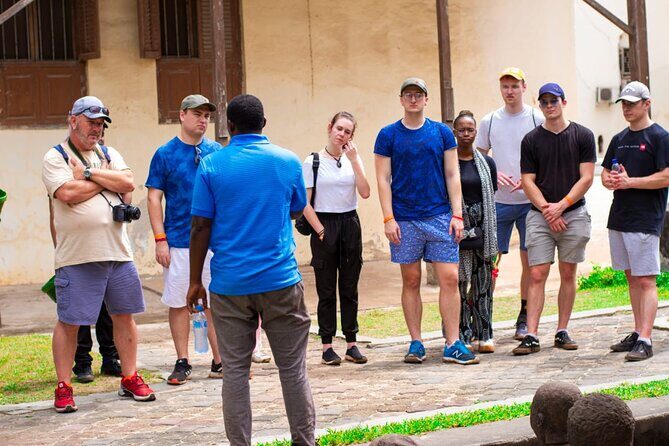
You’ll be walking for a few hours, mostly on foot through Stone Town’s tight streets. That’s not the place for heavy shoes with slippery soles. Aim for something you can walk in comfortably and accept that you’ll mix sun, shade, and crowds depending on when you go.
You can also read our reviews of more walking tours in Zanzibar



Forodhani Gardens: from afternoon stroll to night market energy

One of the best “first impressions” stops is Forodhani Gardens, also known as the Forodhani Night Market. It sits along the main seawalk, and it’s positioned in front of two major landmarks: the House of Wonders and the Old Fort. That gives you a built-in photo setup where you can look toward the water and still read the skyline.
Timing is the trick here. If you start earlier, you’ll have the calmer garden feel—more of a slow wander. If you go later, the Night Market atmosphere kicks in as evening builds and both locals and visitors gather. Even if your plan is history-first, this stop is where the city becomes a lived-in place rather than just a museum on streets.
Ticket note: Forodhani Gardens includes an admission ticket on this tour, so you won’t have to figure that part out on the spot.
House of Wonders (Bayt al-ʿAjāʾib): big exterior, big story
Next comes the House of Wonders, Bayt al-ʿAjāʾib. This is the landmark with scale on Stone Town’s seafront, and the tour is set up to show it as a major piece of the architectural landscape between the Old Fort and other palace structures.
What makes this stop useful is the context you’re given: it was commissioned by Barghash bin Said, the second Sultan of Zanzibar, and it connects to the broader palace building era during his reign. You’re not just looking at a building—you’re learning what kind of power and ambition put it there.
Ticket note: admission for the House of Wonders is not included on this tour. So if you want to go inside, plan for extra spending and check ahead so you don’t lose time deciding mid-walk.
Old Fort (Ngome Kongwe): Portuguese, Omani, and a railway era
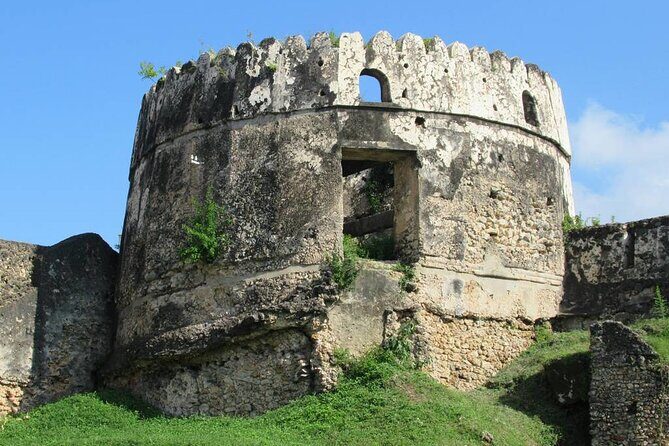
The Old Fort, Ngome Kongwe, is where the city history starts getting sharper. It’s one of the oldest buildings in the area and stays a favorite stop for good reason: the story behind it is layered, and the tour’s timing gives you a moment to absorb it before you move on.
Key dates you’ll hear here:
- Built by Omani Arabs after the Portuguese were expelled in 1699
- Used as a garrison and later as a prison in the 19th century
- Later became a railway terminal from 1905 to 1928, connecting Stone Town to Bububu
That mix—Omani construction, Portuguese aftermath, prison/garrison functions, then railway use—makes the Old Fort feel like a living timeline. You can stand there and see how one stone structure kept getting repurposed as Zanzibar changed.
Ticket note: admission for the Old Fort is included.
Freddie Mercury Museum stop: Zanzibar roots of Farrokh Bulsara

This is the stop people remember later. You visit Freddie Mercury’s childhood home area and learn how the Queen frontman was born in Zanzibar in 1946 as Farrokh Bulsara.
The value here isn’t pop trivia. It’s how Zanzibar is part of the shaping environment: Freddie grew up in Stone Town, and his family moved around because his father worked in British colonial service. The tour frames that as part of a broader identity story—Zanzibar as home, not just a stop on someone else’s journey.
You’ll also have an optional choice. The tour includes seeing the exterior, while entry into the house can require an additional fee.
Ticket note: Freddie Mercury House admission is not included on this tour.
You can also read our reviews of more guided tours in Zanzibar





Wandering Stone Town streets: doors, shops, and photo-friendly corners

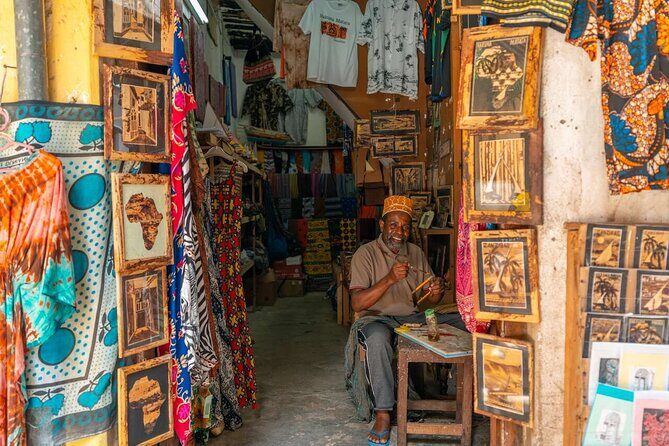
After the big landmark stops, the tour shifts into street-level Stone Town. This is where you feel the city’s everyday texture: architecture close enough to study, small shops for souvenirs and local items, and those iconic Zanzibar doors that have symbolism behind them.
The practical benefit of this part is that it helps you understand what you’re seeing as you walk. Instead of “pretty doors,” you’re learning what makes the doors meaningful—so when you see carvings and patterns on your own later, you’ll recognize what the tour taught you.
You’ll also get time to browse. The tour gives you a block of time for shopping and snapping photos. If you’ve got a list—spices, small crafts, fabric items—this is a good moment to compare options without rushing.
Ticket note: this Stone Town street section is free (no admission needed).
Old Slave Market and Anglican Cathedral: facing the hard chapter

This stop is not comfortable, and that’s the point. You’ll visit the old slave market area along Mkunazini Street, then continue toward the Anglican Cathedral on the way to Darajani Market.
The tour’s approach is clear: you get an explanation of how slaves were bought and sold here, and you’re guided through the historical context and its impact. It’s a sobering experience, but it’s also one of the most important stops in Stone Town because it connects buildings to human consequences.
If you’re the type who wants space to process, plan for a slower mental pace here than elsewhere. This is the stop where questions matter, and the guide’s role becomes especially important in how the information is delivered.
Ticket note: admission for the Old Slave Market / Anglican Cathedral stop is included.
Darajani Bazaar: spices, seafood, grains, and everyday shopping
You end at Darajani Bazaar, also known as Estella Market or Marikiti Kuu. This is the heartbeat stop where you can see what’s for sale, what’s being prepared, and what people are buying for daily life.
The details are what make it interesting. You’ll learn the market’s timeline and why it became a central trading point. The tour mentions it was built in 1904 by Bomanjee Maneckjee for Sultan Ali bin Hamud, which helps you connect the current market layout to a longer story.
What you’ll likely notice on arrival:
- Food and ingredients like fresh seafood and meats
- Fruits, grains, and spices in the aisles
- Other shop categories too, including consumer electronics and clothing
Darajani is also a practical finish because it’s a place where you can grab a snack or start shopping before heading out. Even if you’re not a shopper, it’s a good last stop to see Stone Town as a place where commerce still happens.
Ticket note: Darajani Bazaar is free.
Price and time: what you’re really paying for
The price is $32.90 per person for about 3 hours. On paper, that might sound simple, but the value comes from the mix of:
- A licensed local guide fluent in multiple languages
- Multiple landmark stops packed into a short window
- Several admission costs already included (Forodhani Gardens, Old Fort, and the Old Slave Market/Anglican Cathedral)
Two quick realities to keep in mind:
- House of Wonders and the Freddie Mercury House are not included, so you might spend extra if you want interiors.
- If your main goal is wandering and you already know Stone Town’s story, a do-it-yourself walk can feel cheaper. Some feedback also calls out that the experience depends a lot on the guide’s delivery and whether access is possible where buildings are being renovated.
In other words: you’re not paying just for steps. You’re paying for a route that keeps you from missing the meaning behind the sights—and for guide explanations that save you from having to research every doorway after the fact.
Pacing, audio, and shoe-leather reality checks
This is a walking tour, and the route is designed to cover a lot without stretching the day too long. That’s great for a half-day, but it also means:
- You’ll cover ground on foot
- Some spots may not be entered if access is restricted or interiors are being renovated
- Audio matters. A few experiences mention guides who were hard to hear due to accent strength or a quiet speaking voice
If you’re worried about any of that, a smart move is to go in with flexible expectations. Treat this as a guided framework that helps you read Stone Town. Then, after the tour, you can return to your favorite streets and linger on your own.
Also, plan your timing with a buffer. One negative note mentions a late start and a rough return experience. That sounds like an outlier, but it’s still wise to not book an ultra-tight connection right after your tour.
Who this Stone Town walking tour suits best
This tour is a strong fit if you want:
- A guided overview of Stone Town that connects architecture to real events
- A mix of landmark sights and local market life
- A short, focused experience rather than a full-day plan
- The Freddie Mercury connection without needing to build that day from scratch
It may be less ideal if:
- You dislike structured itineraries and prefer to roam alone
- You mainly want museum-style interiors where you can go at your own pace
- You’re very sensitive to quiet audio or thick accents
Should you book this Stone Town guided walking tour?
I’d book it if you’re aiming to understand Stone Town fast, not just photograph it. The route hits the key markers—Forodhani Gardens, House of Wonders, Old Fort, Freddie Mercury stop, old slave market, and Darajani Bazaar—while also teaching you what you’re looking at as you walk.
I’d think twice if you’re strict on budget for optional entry fees, or if you know you hate history talks while walking. In that case, you might save money with a self-guided walk and put the difference toward the House of Wonders or Freddie Mercury House—if those are your must-dos.
If you do book, wear walking shoes, bring some cash for market browsing, and set your goal to learn the story of the city one stop at a time.
FAQ
How long is the Stone Town Guided Historical Walking City Tour?
It runs for about 3 hours.
Where does the tour start?
The meeting point is at People’s Palace Museum on Mizingani Road in Zanzibar (listed as R5QR+X6C).
What does the price include?
At $32.90 per person, you get the guided walking tour and admission tickets at certain stops. Specifically, admission is included for Forodhani Gardens, the Old Fort, and the Old Slave Market/Anglican Cathedral. Admission is not included for the House of Wonders and Freddie Mercury Museum.
Is the tour private?
Yes. It’s a private tour/activity, so only your group participates.
Do I need to buy tickets myself at each stop?
Not for every stop. Some parts are free (Stone Town street section and Darajani Bazaar), some include admission (Forodhani Gardens, Old Fort, Old Slave Market/Anglican Cathedral), and some are not included (House of Wonders and Freddie Mercury Museum), meaning you may pay extra if you want entry.
What kind of ticket format do I get?
You receive a mobile ticket.
What happens if weather is poor?
The experience requires good weather. If it’s canceled due to poor weather, you’ll be offered a different date or a full refund.