REVIEW · ZANZIBAR
2 Hours Private Stone Town City Tour
Book on Viator →Operated by Adarx Tour Zanzibar · Bookable on Viator
Stone Town hits fast. This private 2-hour tour is built for big stories in a short walk, centered on UNESCO-listed streets and landmarks. I like that it’s guided from the first moment, so you’re not just sightseeing—you’re learning how Stone Town became a meeting point for African, Indian, Arabian, and European worlds. One possible downside: with only about two hours, some stops are brief, so if you want slow, museum-style time, you may feel it moves quickly.
What I love most is the pairing of turning points: you see major architecture like the House of Wonders, then you shift into darker chapters at the slave-trade sites. I also like the practical rhythm—photo breaks outside, short interior moments where tickets are included, and then real time at the market area.
Consider your pace and comfort in the sun and walking. Even though it’s a small, private group, you’ll still be on your feet for the full loop through Stone Town streets and bazaars.
In This Review
- Key highlights you’ll feel right away
- Two hours in Stone Town: the smart version of “first-timer history”
- From Forodhani to Darajani: the walk that finishes where the action is
- Beit Al Jaib (House of Wonders): a building you’ll understand after one minute of context
- Old Fort (Ngome Kongwe): where the slave-trade story becomes harder to ignore
- Freddie Mercury Museum: quick exterior photos with real cultural context
- Door styles, Catholic church photos, and street-level Stone Town walking
- Anglican Cathedral + slave-trade rooms: boards, a chamber of slaves, and sculptures
- Darajani Bazaar spice time: what you can take home
- Price and value: what $50 covers in real terms
- The guide factor: why Adam-style guiding makes the difference
- Tips, timing, and what to bring for a smooth walk
- Should you book this private Stone Town city tour?
- FAQ
- How long is the 2 Hours Private Stone Town City Tour?
- What does it cost, and is the price per person?
- Where does the tour start and end?
- What’s included in the tour price?
- Is this tour private?
- What are the main stops on the route?
- Do I need good weather for the tour?
Key highlights you’ll feel right away
- House of Wonders (Beit Al Jaib) as the story starter so you understand the town before you walk deeper
- Ngome Kongwe (Old Fort) with ticket included for a clear look at how the slave market functioned historically
- Freddie Mercury Museum stop for iconic photos with context shared by your guide
- Door-style sightseeing as you move through the streets toward Catholic church photo spots
- Anglican Cathedral + slave-trade display rooms with boards, a chamber of slaves, and sculptures
- Darajani Bazaar spice time so you can take Zanzibar flavors home
Two hours in Stone Town: the smart version of “first-timer history”
If you’re short on time in Zanzibar, this tour is a solid way to get your bearings. It focuses on the Stone Town core, not a giant checklist of far-flung sights. The “private” part matters here: your guide can keep the pace workable for your group and answer questions as you go.
The tour is also shaped around different types of learning. Some stops are about explaining buildings and trade routes. Others are about walking through memorial-style spaces tied to the slave-trade story. That mix keeps it from feeling like one long museum lecture.
One reason this format works is the order. You start with an anchor landmark, then move into trade and slavery-related sites, and end with the everyday market energy at Darajani. It’s not random; it’s how Stone Town teaches itself—history first, then life around it.
You can also read our reviews of more city tours in Zanzibar


From Forodhani to Darajani: the walk that finishes where the action is
The tour starts in Forodhani, Zanzibar and ends at Darajani, in front of Jumba la treni. That routing is practical because Darajani is a natural place to continue your day—food, snacks, and shopping are usually nearby.
Timing is straightforward: it begins at 10:00 am and runs about 2 hours. It’s also described as being near public transportation, which helps if you’re juggling transfers after the tour.
Because it’s private, only your group participates. That means fewer interruptions and less time waiting around for other travelers to catch up. It’s one of the best ways to tour Stone Town without feeling rushed by a bigger crowd schedule.
Beit Al Jaib (House of Wonders): a building you’ll understand after one minute of context

Your guide begins by framing what Stone Town is before you even hit the main sights. Then you walk past the House of Wonders—also known as Beit Al Jaib—and get highlights about its history.
This stop is listed as short, but that’s part of the point. You’re getting the “why it matters” before you start absorbing street-level details. Stone Town’s architecture can look like a maze if you don’t know what you’re looking for. A good opening sets the stage for everything that comes next.
If you’re the type who likes to photograph buildings and doors, this is a key first stop because it tells you what features to notice as you walk.
Old Fort (Ngome Kongwe): where the slave-trade story becomes harder to ignore
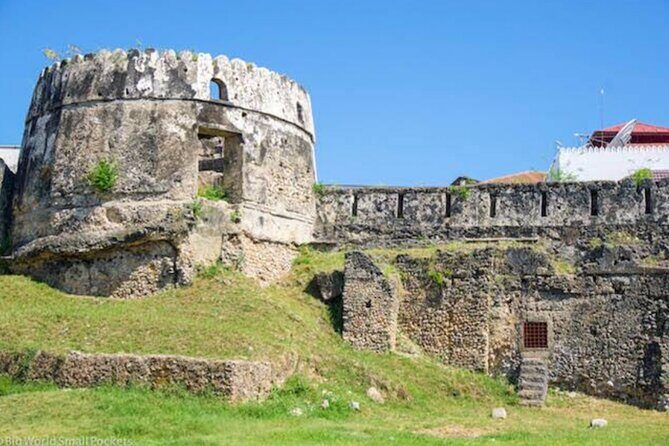
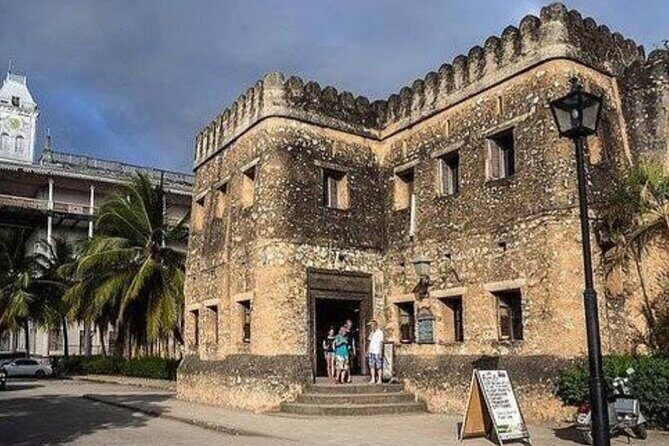
Next up is the Old Fort, also called Ngome Kongwe. This stop includes admission, and you’ll go inside for a short visit where your guide explains the building’s history—especially its role connected to the slave trade market.
This is one of the moments where the tour feels most serious. You’re not just viewing an old wall; you’re learning how trade networks operated and how enslaved people were processed within the historical system.
The interior time is brief (around a dozen minutes), so you won’t get a long, classroom-style session. But you will get the basic framework your guide provides, which makes the rest of the slavery-related stops hit with more meaning.
Tip for your own mindset: treat this part like a respectful read-through. Ask questions if you have them, but keep in mind that the site is conveying painful history, not a light attraction.
Freddie Mercury Museum: quick exterior photos with real cultural context
Then you’ll stop at the house associated with Freddie Mercury. You’ll usually do this one as an outside photo moment, with your guide sharing interesting background about his life in the area.
This stop is short and ticket-free, so it’s not meant to be a deep music museum visit. Instead, it works as a pop-culture bridge—something recognizable—so the surrounding Stone Town story feels more personal and less abstract.
Even if you’re not a superfan, it helps you see how Stone Town links global identities to local history. It’s a reminder that the town’s influence reached far beyond Zanzibar’s coastline.
You can also read our reviews of more private tours in Zanzibar





Door styles, Catholic church photos, and street-level Stone Town walking
After the museum stop, the tour shifts into a street walk through Stone Town’s lanes and bazaars. This is where your guide points out details you might otherwise miss.
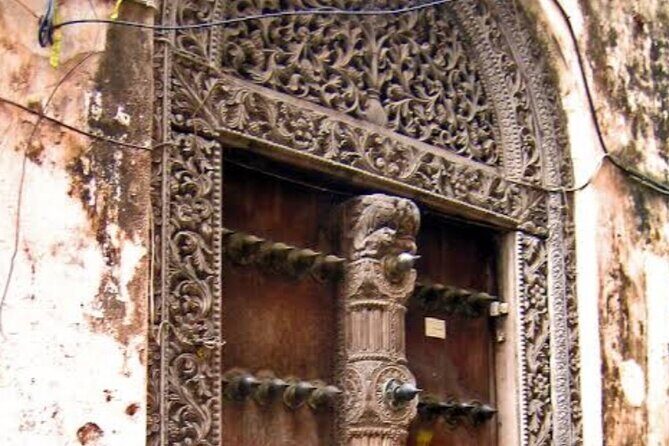
You’ll stop for a photo at the Catholic church, then your guide explains Indian door styles and Arabic door styles as you see them along the streets. Door design is a small thing on paper, but in Stone Town it becomes a clue to who lived here, what cultures mixed, and what craftsmanship mattered.
This section is also where the tour feels most “street alive,” because you’re moving through real paths rather than bouncing between major landmarks. Shop bazaars are part of this stretch too, so you’ll see the daily side of Stone Town in between the big historical stops.
Photo note: with doorways and facades, the best angles often come from side streets and corners. Your guide will naturally lead you there during the walking portions.
Anglican Cathedral + slave-trade rooms: boards, a chamber of slaves, and sculptures
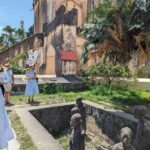
The tour then moves to another serious stop: the Old Slave Market / Anglican Cathedral area. You’ll enter the Anglican cathedral church and move into a room with information boards about the slave trade.
From there, you’ll be guided to the chamber of slaves, and then to the sculptures of slaves. Admission here is included, and the time inside is listed at around twelve minutes.
This is the kind of stop that changes how you read the rest of Stone Town. Once you’ve seen the physical spaces and learned how the system worked, it’s harder to treat the architecture as just decorative. You start seeing it as part of a larger human story—trade, coercion, survival, and memory.
If you prefer a slightly faster pace, this tour still gives you what you need without lingering too long. If you want a more emotional, slow reading, you might wish the time were longer—but the guide can often answer questions as you walk onward.
Darajani Bazaar spice time: what you can take home
The final stop is Darajani Bazaar, with about 20 minutes for spice shopping. Your guide will take you to shops focused on Zanzibar spices based on what you’re interested in.
The tour doesn’t force buying. The time block is there so you can purchase as you wish to take flavors home. If you’ve ever regretted skipping market shopping on a trip, this is the built-in fix.
Because the tour ends right after this area, you’re also positioned well if you want to keep exploring Stone Town on your own after the guided portion finishes.
Practical advice: bring a clear idea of what you want. If you love cooking, you’ll likely focus on whole spices and blends. If you prefer teas or aromatics, you’ll shop accordingly—this stop is short, so decisions help.
Price and value: what $50 covers in real terms
At $50 per person for an approximately 2-hour private tour, the value depends on two things: you get a professional guide, and the price includes all fees and taxes.
Your guide is included throughout, and that matters in Stone Town because the “why” behind landmarks is the whole point. Without guidance, it’s easy to wander and miss the connections between trade routes, building styles, and the slave-trade sites.
Also, admission is not charged separately for every stop. The tour includes entry at the Old Fort (Ngome Kongwe) and the Old Slave Market / Anglican Cathedral. Other stops in the route are listed as free entries, which helps keep the cost straightforward.
If you’re traveling as a pair, private tours can sometimes feel expensive compared with group options. Here, though, you’re paying for a compact, guided loop that covers major reference points you’ll likely want on a first pass.
The guide factor: why Adam-style guiding makes the difference
The strongest theme you’ll see around this experience is the guide’s approach. In the feedback, Adam comes up as organized, friendly, and good at explaining things in an entertaining way. That blend matters in Stone Town, where the material can be heavy.
People also point out that he’s willing to work around different needs, including families. That tells me this is the kind of guiding style that can keep kids from melting into the background while still respecting the history stops.
For you, this means less time stuck in awkward silence and more time learning. Questions aren’t treated like interruptions. They’re part of the flow.
If you want a tour that feels like a conversation rather than a script, this is where the value lives.
Tips, timing, and what to bring for a smooth walk
Tips aren’t included, so plan to decide what feels fair after the tour. If your guide adjusts pace, answers questions well, or helps your group get the best photos, tipping is a normal way to reflect that.
The tour starts at 10:00 am, so you’ll likely be walking during the morning’s better light. Still, Stone Town can get hot in the day. Bring sun protection, and wear shoes that handle uneven, historic streets.
For your shopping stop, set aside a little money for spices. You’ll have about 20 minutes at Darajani Bazaar, so being ready to pick what you want makes the most of the time.
Should you book this private Stone Town city tour?
Book this tour if you want a first, focused hit of Stone Town history and culture without losing half your day. It’s especially worth it if you care about understanding the town’s layers—trade routes, architecture styles, and the slave-trade sites—while still ending near a market area for continued exploring.
Skip it (or consider a longer option) if you’re the kind of traveler who needs more time in each interior stop. Some stops are intentionally short to fit everything into about two hours.
If your ideal Zanzibar day is a guided walk with clear stops, solid explanations, and a practical end point at Darajani, this one fits the bill.
FAQ
How long is the 2 Hours Private Stone Town City Tour?
It’s listed as about 2 hours.
What does it cost, and is the price per person?
The price is $50.00 per person.
Where does the tour start and end?
It starts at Forodhani, Zanzibar, Tanzania and ends at Darajani, Zanzibar, Tanzania, in front of Jumba la treni.
What’s included in the tour price?
Included are all fees and taxes plus a professional tour guide. Admission is included for the Old Fort (Ngome Kongwe) and the Old Slave Market/Anglican Cathedral.
Is this tour private?
Yes. It’s a private tour/activity, meaning only your group participates.
What are the main stops on the route?
You’ll visit the House of Wonders (Beit Al Jaib), Old Fort (Ngome Kongwe), the Freddie Mercury Museum area for photos, a Stone Town street walk with door-style explanations, the Old Slave Market/Anglican Cathedral, and then Darajani Bazaar for spices.
Do I need good weather for the tour?
The tour requires good weather. If it’s canceled due to poor weather, you’ll be offered a different date or a full refund.