REVIEW · DAR ES SALAAM
Dar es Salaam City Walking tour – Explore the Life of the Local People!
Book on Viator →Operated by Aloys E Malekela · Bookable on Viator
Dar es Salaam hits you fast on foot. I love how the route mixes big landmarks with everyday street life, and I like that you also ride local public transport instead of just watching from a curb. One consideration: this is active in warm weather, so the heat can feel like a lot, especially if you’re used to cooler climates.
This is a private tour led by Aloys E Malekela, and you can feel his focus on practical explanations while you walk. Expect frequent stops for context, so you’re not just ticking boxes—you’re learning what you’re seeing as you go.
You’ll cover key stops such as the National Museum of Tanzania and the Kariakoo Bazaar in about half a day (roughly 5 to 7 hours), but lunch isn’t included. Plan for a meal break on your own so the day doesn’t feel rushed at the end.
In This Review
- Key things I’d put on your radar
- A half-day Dar es Salaam plan that feels like daily life
- National Museum of Tanzania: a strong anchor for your first day
- Fish Market and the smell test reality check
- Sultan Majjid Building and the city’s 1862 roots
- Missionaries House and the church stops that explain beliefs
- Kariakoo Bazaar: the “how people shop” lesson
- Mwenge curio shops: a finish that shifts from landmarks to crafts
- Price and value: what $100 buys you in Dar es Salaam
- Weather reality: heat management and what to wear
- Who this tour fits best
- Should you book this Dar es Salaam City Walking Tour?
- FAQ
- How long is the Dar es Salaam City Walking tour?
- What does the tour cost?
- Is this tour private or shared with other groups?
- What attractions will we visit?
- Is lunch included?
- What’s included in the price?
- Is the tour ticket digital?
- Can I cancel and get a full refund?
Key things I’d put on your radar
- Private pace with a real guide: you won’t be stuck with a loud group and guesswork.
- Public bus included: you get Dar es Salaam transit in the mix, not just sights.
- 3 to 5 km walking radius: short distances, with stops that actually explain things.
- National Museum + church stops: culture in multiple forms, not only museums.
- Kariakoo Bazaar time: market energy you can see, ask about, and navigate.
A half-day Dar es Salaam plan that feels like daily life

A good walking tour is not about speed. It’s about getting your bearings. This one is built around a tight walking radius—about 3 to 5 kilometers—so you’re not constantly doing long, tiring transfers on foot. Instead, you get steady progress with regular sightseeing breaks, plus local public transport to connect the dots.
That “move-and-learn” rhythm is the best part for me. You’ll see the city as it actually functions: people walking to places, buses doing their routes, and neighborhoods showing up in fragments rather than postcard-sized perfection. And because it’s private, your guide can slow down when something catches your eye—or keep you moving when the midday heat starts punching.
The other smart choice is the stop selection. You’re not only seeing buildings. You’re seeing institutions tied to everyday routines: churches, a museum, markets, and a fish market area. It gives Dar es Salaam a fuller shape than a list of famous places.
You can also read our reviews of more walking tours in Dar es Salaam



National Museum of Tanzania: a strong anchor for your first day
If you want to understand Dar es Salaam quickly, starting with the National Museum of Tanzania is a solid move. Your visit is about an hour, and it works well as the “grounding stop” early in the tour.
A museum like this helps you read the city while you’re still fresh. Even if you don’t spend forever inside, the museum visit gives you context for what you’ll notice outside—how the past connects to today’s neighborhoods and identity.
Practical note: since admission is indicated as free and the tour includes all fees and taxes, you won’t face that awkward moment of wondering whether you need to buy tickets separately. Still, go in with one mental goal: pick out 2 or 3 themes you want to remember, then watch for them again later in the churches and market areas.
Fish Market and the smell test reality check
Next comes the Fish Market of Dar es Salaam, around 20 minutes. This is one of those stops that feels intensely real, fast. You see how a market environment functions—movement, trade, and the everyday details that never make it into glossy travel pages.
You should also be ready for the sensory side. One piece of feedback stood out: it can be smelly. That doesn’t mean it’s “bad”—it’s simply what a working fish market can be like. If you’re sensitive to strong odors, this is exactly the type of stop where a quick visit paired with good timing matters.
What I’d do with you (if I were packing your day): keep your time here purposeful. Look, ask your guide what you’re seeing, and then move on. Don’t try to linger until you’re uncomfortable.
Sultan Majjid Building and the city’s 1862 roots
Then you’ll spend time around the Sultan Majjid Building, about 40 minutes. This is where the tour connects Dar es Salaam to a specific origin story: the city was founded in 1862 by Sultan Majid, who used to stay in Zanzibar and come to Dar es Salaam for weekend retreats.
That detail helps the city’s architecture and institutions make more sense. It’s not just a name on a sign. It’s a reminder that Dar es Salaam developed through connections across the region, not in isolation.
A long museum day can blur into information overload. Here, the building stop gives you something different: you’re looking at structure and location while your guide ties it to a timeline. It’s a good balance.
Missionaries House and the church stops that explain beliefs
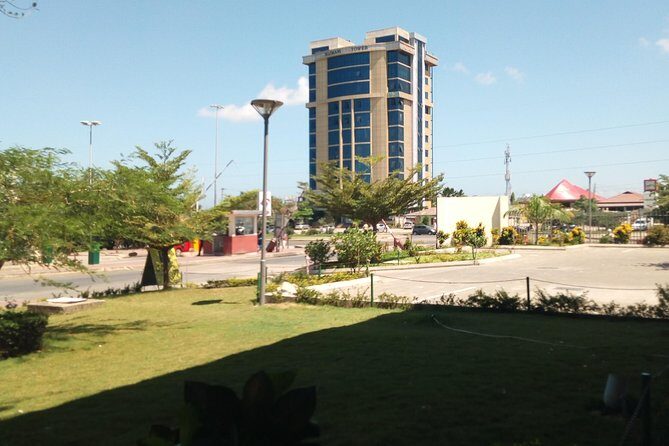
After the building context, the tour shifts to religious landmarks that show how communities shaped the city in different eras. You’ll visit Missionaries House (about 20 minutes), then Saint Joseph Church (about 15 minutes), and Azania front Church (about 20 minutes).
These stops are short enough to stay energetic, but long enough for you to notice what your guide points out—things like design choices, the setting around the church, and how these places anchor local life.
What I like most is that you’re not treating churches like photo backdrops. With the guide’s commentary, they become reference points for understanding the area. Even if you’re not deeply religious, seeing how these sites sit in the city helps you understand what residents value and how neighborhoods organize around shared spaces.
You can also read our reviews of more city tours in Dar es Salaam
Kariakoo Bazaar: the “how people shop” lesson
Kariakoo Bazaar is a highlight for a reason. You get about 30 minutes there, which is just enough time to see patterns without turning the market into an endurance test.
This is the stop where your guide’s approach really matters. Markets can be overwhelming if you try to “do it alone.” With a guide, you can:
- learn what’s worth asking about
- understand the flow of how people buy and sell
- get comfortable with the pace before you step into busier sections
The goal here isn’t to buy souvenirs for the sake of buying. It’s to understand the market as a living system. You’ll start noticing how everyday needs show up—items, packaging, bargaining culture, and the practical logistics of moving through a crowd.
And yes, it’s also a great place for photos, as long as you’re respectful. A quick conversation, then a respectful pause for pictures, goes a long way.
Mwenge curio shops: a finish that shifts from landmarks to crafts
The last stretch includes Mwenge curio shops. The time detail is truncated in the info I was given, so I won’t guess a minute count. What I can tell you is that it’s positioned as the end-of-tour shopping window—when you’re already oriented to the city and ready to look for smaller items with local character.
This stop can be fun if you treat it like cultural observation, not like a forced shopping spree. You can also use it as a practical “reset”: sit, cool down a bit if possible, and decide what you want to bring home after you’ve seen enough of the city’s rhythm.
Price and value: what $100 buys you in Dar es Salaam
At $100 per person for a 5 to 7 hour private walking tour, it’s not a “budget bus ride.” The value comes from three things you’d struggle to recreate on your own:
First, you’re getting public transport included. That matters because Dar es Salaam isn’t designed for a smooth sight-seeing loop where everything lines up perfectly. A guide handles the flow and keeps you from wasting hours figuring out routes.
Second, the tour is private. In a city like this, group tours can be fine, but private pacing helps. You can move at a human speed, ask questions as they come up, and avoid the common problem where everyone wants different photo stops.
Third, admission is marked as free for the museum element, and the tour includes all fees and taxes. So the price is more “all-in” than you might expect.
One more thought: this tour is booked, on average, 55 days in advance. That’s often a sign people like the planning-friendly structure—especially if you’re trying to fit Dar es Salaam into a travel schedule where days don’t have much slack.
Weather reality: heat management and what to wear
Dar es Salaam can feel intense. A review response from Aloys specifically pointed out temperature advice for Europeans, which is your signal to take the heat seriously. Even if you’re excited to see everything, don’t plan to “power through” like it’s cool-season sightseeing.
Here’s what you can do right now:
- wear breathable clothing
- bring water and plan small sips during walking sections
- keep your pace steady during the walking segments
- remember that the fish market can be smelly, so choose your timing wisely and don’t overstay
Also, set your expectations: this is a walking tour plus public transport. That means comfort beats fashion.
Who this tour fits best
This is a great match if you want:
- a half-day structure that doesn’t turn into a full-day grind
- a clear path between museums, churches, and major market areas
- a guide who can explain what you’re seeing rather than letting you guess
- private attention from Aloys E Malekela
It may be less ideal if you hate walking in warm weather or you can’t handle strong smells. If that’s you, the itinerary can still work, but you’ll want to be strategic about pacing and how long you spend at the fish market.
Should you book this Dar es Salaam City Walking Tour?
If your main goal is to get oriented fast—history context plus real local life in markets and churches—then yes, I think booking makes sense. The strongest reasons are practical: the private guide with frequent explanations, the inclusion of public transport, and the mix of major stops (National Museum, Kariakoo Bazaar, Saint Joseph Church) with daily routines you can actually observe.
If you’re the type who wants a slow, luxury day, or you’re very odor-sensitive, you may prefer a lighter alternative. But for most people who want a smart, structured introduction to Dar es Salaam without wasting time trying to figure everything out solo, this tour is a solid value at $100.
FAQ
How long is the Dar es Salaam City Walking tour?
It runs about 5 to 7 hours.
What does the tour cost?
The price is $100.00 per person.
Is this tour private or shared with other groups?
It’s private. Only your group participates.
What attractions will we visit?
You’ll visit the National Museum of Tanzania, Fish Market of Dar es Salaam, Sultan Majjid Building, Missionaries House, Saint Joseph Church, Azania front Church, Kariakoo Bazaar, and Mwenge Curio Shops.
Is lunch included?
No. Lunch or dinner is not included.
What’s included in the price?
All fees and taxes are included, and public transport is included.
Is the tour ticket digital?
Yes. You’ll receive a mobile ticket.
Can I cancel and get a full refund?
Yes. Free cancellation is available up to 24 hours in advance for a full refund.