REVIEW · ARUSHA
Full-Day Trip to Ngorongoro Crater from Arusha Town
Book on Viator →Operated by Travel Africa Safari Agency · Bookable on Viator
Ngorongoro rewards early mornings. This full-day Ngorongoro Crater safari from Arusha is built around being in the right place at the right time, starting with a 5:00am pickup and aiming for the crater light from above and down on the plains. I like the small-group 4×4 setup (max 14 people) and the fact that your driver-guide keeps the day moving with the entry fees, lunch, and the best scanning points in mind. The prize is a world-famous caldera packed with life: elephants, lion, leopard, buffalo, and the rare black rhino, plus flamingos by the soda lake.
One thing to plan for: it’s a long day, and even with good guiding you don’t control the animals. Rare sightings, especially black rhinos, can take patience. Also, ask about how transfers work if you want to avoid any extra vehicle shuffling during the day.
In This Review
- Quick Key Points You’ll Actually Care About
- The 5:00am Start Makes Ngorongoro Possible
- From Arusha to the Rim: 4×4 Comfort and Real Sightlines
- What Happens Once You Enter Ngorongoro Crater
- Big Five Chances: Lions, Leopards, Elephants, Buffalo, Rhino
- Flamingos and the Soda Lake Moment
- The Hippo Pool Picnic Break That Keeps You Human
- Black Rhinos: Why You Shouldn’t Fixate
- Guides Make or Break the Day
- Price and Value: Is $350 Worth It?
- Practical Tips to Improve Your Chances (and Your Mood)
- Who This Ngorongoro Day Trip Best Fits
- Should You Book This Ngorongoro Crater Safari from Arusha?
- FAQ
- What time does the Ngorongoro Crater trip start from Arusha?
- How long is the full-day trip?
- How many people are in the group?
- What’s included in the price?
- What’s not included?
- Will I get pickup and do I return to the same place?
Quick Key Points You’ll Actually Care About
- Max 14 people means you usually get better sightlines and less chaos than the huge buses.
- A 5:00am start helps you reach the crater early enough to make the day count.
- Big Five focus plus flamingos, hippo areas, and open plains scenery give the day variety, not just one payoff.
- 4×4 game drive time is the real product here, and the driver-guide’s spotting skills matter.
- Lunch, coffee/tea, soft drinks, and water keep you comfortable through the long crater day.
- Black rhino sightings are not guaranteed, so manage expectations and let the guide steer.
The 5:00am Start Makes Ngorongoro Possible
A day trip to Ngorongoro is all about timing. You leave Arusha at 5:00am and spend much of the morning working your way into the crater region and setting yourself up for the best light and animal activity. Ngorongoro’s big draw is concentration: the crater is a huge natural bowl, and animals use its different habitats—river cuts, swamps, forest pockets, soda-lake flats, and open plains.
The practical benefit of an early start is simple. Cooler hours often mean more movement, and the crater can be easier to read before everything heats up. You’ll also get that classic “arrive in time for sundowner” flow—meaning the day has built-in pacing rather than rushing you from one photo stop to the next.
A few more Arusha tours and experiences worth a look

From Arusha to the Rim: 4×4 Comfort and Real Sightlines
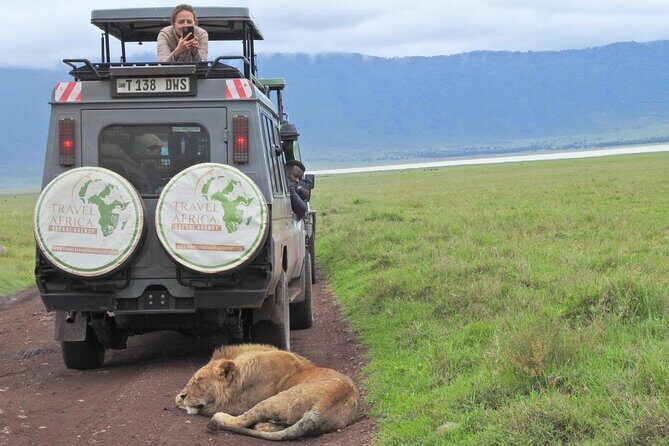
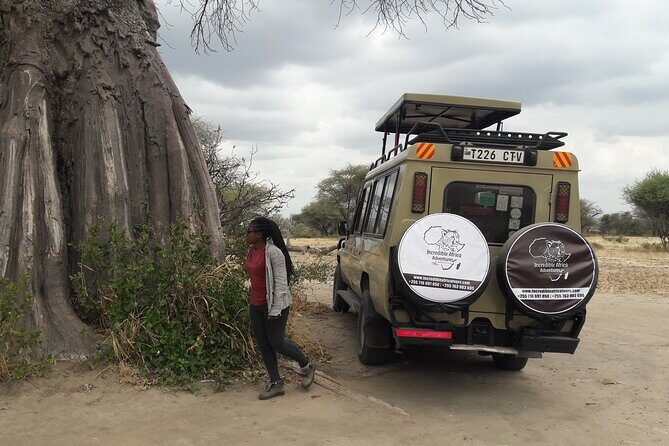
This trip runs on a 4×4 vehicle, which matters because the crater is not a place you speed through on paved roads. A proper game-drive vehicle helps you handle uneven tracks and still position for views. You’ll also have a professional driver-guide who can speak English, Spanish, and French, which helps when you’re trying to understand what you’re seeing—especially if the guide is pointing out tracks, feeding behavior, or why animals are hanging near certain water points.
Your pickup is from Sokoine Road in Arusha, and the tour ends back at the same meeting point. That round-trip structure is exactly what you want if you’re staying in town and don’t want to wrestle with transport logistics. One note: on a long day with multiple hotel or neighborhood pickups, transfers can involve extra coordination. If that would annoy you, ask ahead of time how returns are handled so you know what to expect.
What Happens Once You Enter Ngorongoro Crater
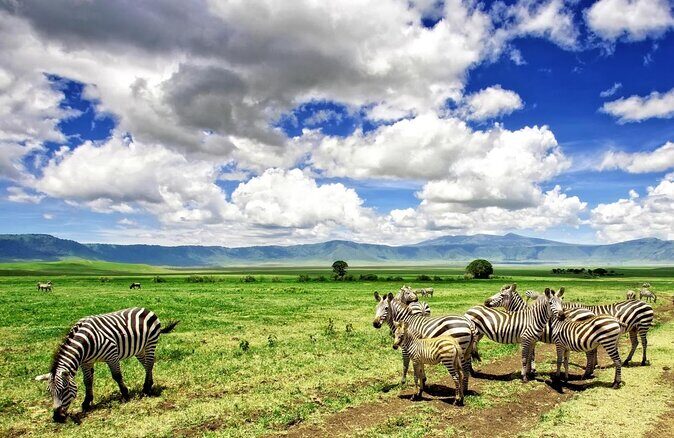
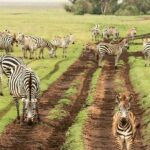
Once you’re in the crater, the experience becomes about “reading” the terrain. The crater isn’t one simple view—it’s a patchwork. Expect a mix of open plains, forest, swamps, a river, and a soda lake that can hold a big concentration of flamingos.
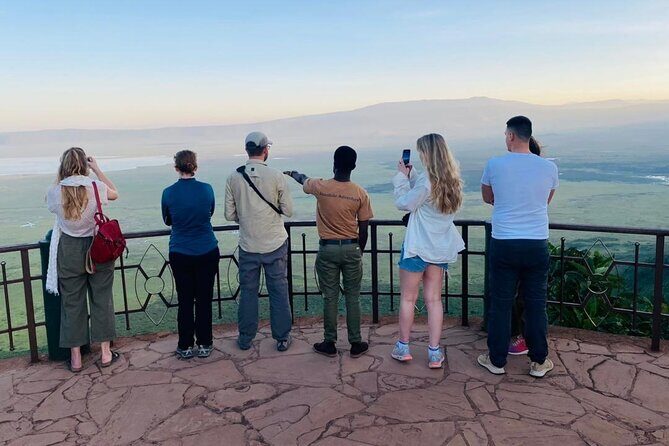
From the top and then deeper down, you’ll get a real sense of how the crater creates a natural feeding and water system. Lions and other predators use the open spaces for hunting, while herbivores often gravitate toward water and shade. Elephants can show up with impressive confidence—if you get lucky, you may see them with their massive tusks moving along routes that look almost planned.
And yes, the idea is that you may be in the right zone to see multiple species in a single drive. Big Five sightings in a day are part of the pitch for a reason, but the honest trick is that you still have to locate them. A good guide turns scanning time into sightings time.
Big Five Chances: Lions, Leopards, Elephants, Buffalo, Rhino
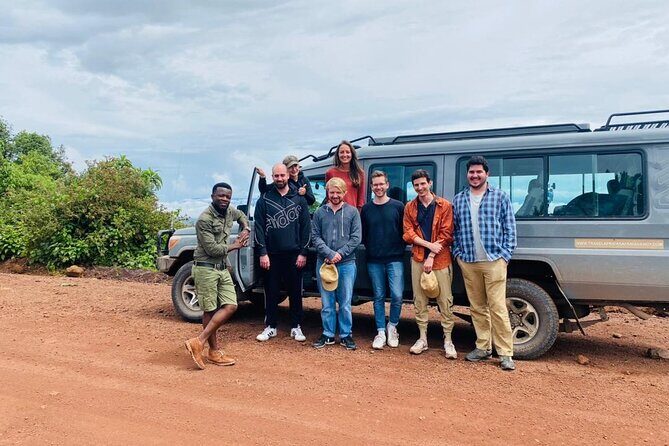
Ngorongoro is often sold as a Big Five crater, and the core payoff is that your day is structured around those possibilities. Here’s how to think about it while you’re out there:
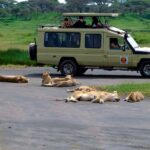
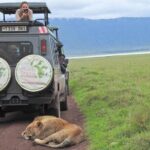
- Lions tend to be easier to spot once you hit the right areas because they spend time in visible positions when conditions are favorable.
- Leopards can be harder in practice. You might catch glimpses of them where the terrain breaks up sightlines or where they’re using cover.
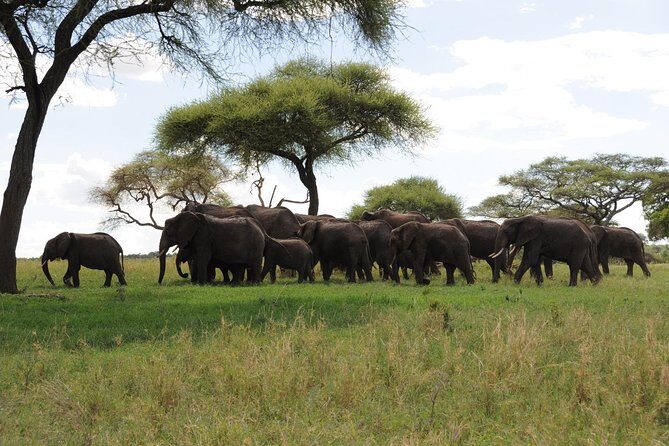
- Elephants are a standout possibility. If they’re in the area, the scale is hard to miss, and their behavior tends to draw everyone’s attention fast.
- Buffalo often show up around grasslands and water-adjacent zones, and they can be part of a predator-prey story.
- Black rhinos are the wildcard. They’re possible, but they require patience and the right timing.
One pattern I really like about this style of safari is that it doesn’t feel like a checklist you’re forced to complete. Instead, you spend your day moving between crater habitats until the animals tell you where to look.
Flamingos and the Soda Lake Moment
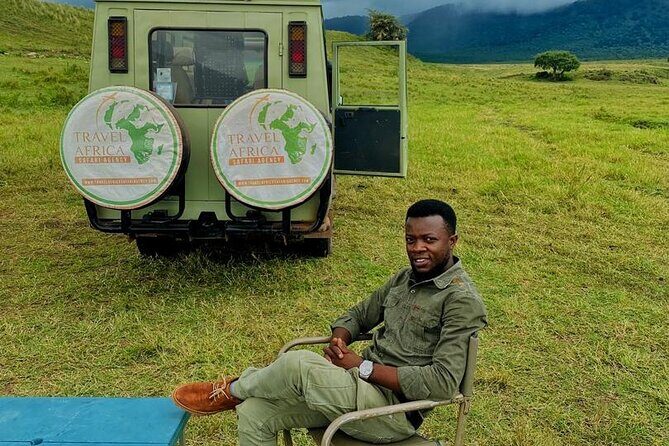
One of Ngorongoro’s signatures is the soda lake, where flamingos can gather in numbers. This is the kind of sight that shifts your day from purely “search mode” to “enjoy the scenery while you watch.” When flamingos are active, you may see them feeding or shifting across the water surface.
The practical value here is that this sort of stop helps balance the emotional ups and downs of spotting wildlife. Some stretches of a safari feel quiet. Then you hit a water point or a concentrated habitat and it all clicks again.
A few more Arusha tours and experiences worth a look


The Hippo Pool Picnic Break That Keeps You Human
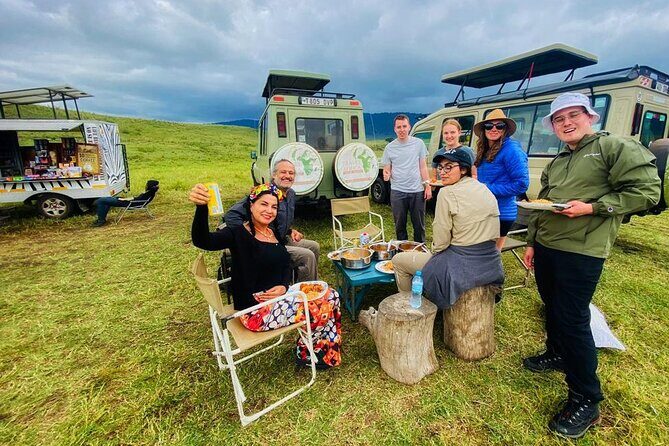
This safari includes a picnic-style break by a hippo pool. It’s the right kind of rest: not a long indoor stop, but a chance to reset while still staying in the wildlife rhythm. If hippos are visible, you get that rare feeling of being close to something powerful without needing to chase it.
Food is included too. You’ll have lunch plus coffee and/or tea and soft drinks with drinking water. For a day that starts at 5:00am and can run about 11 hours, this matters more than it sounds. You’ll want your energy steady for the last push of crater scanning.
Black Rhinos: Why You Shouldn’t Fixate
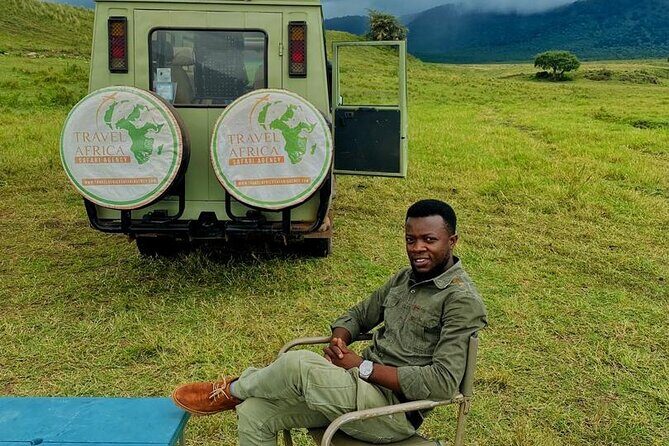
If you’ve been dreaming about black rhinos, good news: Ngorongoro is known for them. Better news: your guide will likely talk about where they tend to show and how to read signs in the terrain.
But here’s the key mindset. Rhino sightings can be tough, even when everything else goes well. The best way to help your day is to stay calm and let the guide manage the hunt. When you get tunnel vision, you miss other animals and waste the chance to spot movement in the periphery.
It’s totally fine to care about rhinos. Just don’t turn it into a constant interruption. Save your focus for the moments when the guide actually stops and sets your eyes on something real.
Guides Make or Break the Day
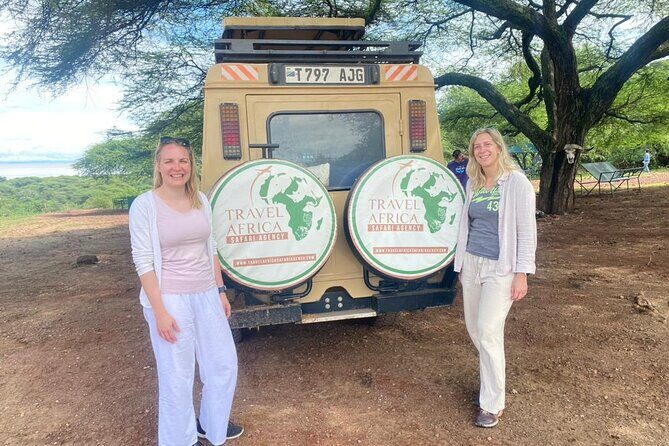
The biggest difference in a safari day isn’t the crater. It’s the people doing the driving and spotting. This experience runs with a professional driver-guide, and the language ability (English, Spanish, French) is a real quality-of-life upgrade.
From the trip’s strong ratings, you can see what works: guides who stay personable and explain what you’re seeing. Names that came up include Mohammed, Fifty, Malissa, and Joe’ (credited for making sure people were returned safely even late). Those details matter because they point to more than friendliness—they suggest the guiding style is active, not passive.
Another reason I’d pick this kind of operator: the day doesn’t end the minute you feel satisfied. There are hints of a flexible approach to drop-offs, even when you’re dealing with later timing on the road back.
Price and Value: Is $350 Worth It?
At $350 per person, this isn’t a bargain-basement option. But value depends on what’s included and what you’re actually buying.
You’re paying for:
- Round-trip transport from Arusha
- 4×4 game drive time
- Entry fees
- Lunch
- Coffee/tea, sodas, and water
- A guide who can communicate in multiple languages
- Dietary requests handled on request
When you compare that to trying to arrange crater access yourself, the price starts looking less like a random fee and more like buying a smooth, guided day where the logistics are already wrapped up. For many visitors, the real cost of DIY is time stress. On this particular route, stress is the enemy of good sightings.
My practical take: if you want a structured day with minimal planning and you’re comfortable paying for convenience, this value is reasonable.
Practical Tips to Improve Your Chances (and Your Mood)
You can’t force animals to show up. You can, however, make your day easier to enjoy.
- Bring binoculars if you have them. At times, animals are there but small at a distance.
- Dress for early morning and changing crater temperatures. Layers help more than you think.
- Keep your camera ready but don’t rush the moment. When the guide stops, it’s usually because something is happening now.
- Be patient with rhinos and let the guide lead the pace.
- Plan for a long day. Even with a picnic and included lunch, you’ll feel the 5:00am start by mid-afternoon.
Also, remember the day is built around multiple habitat types: forest edges, swamps, open plains, and soda-lake views. If you only care about one animal, you’ll feel like you’re waiting too long. If you’re open to variety, you’ll likely come away with a fuller memory.
Who This Ngorongoro Day Trip Best Fits
This is a strong fit if:
- You’re based in Arusha and want an organized safari without juggling transport.
- You prefer a small group over large crowds.
- You care about a real wildlife mix, not just one scenic overlook.
- You like the idea of a structured plan that still leaves room for animal surprises.
It might be less ideal if:
- You hate long drives and early wake-ups.
- You’re very sensitive to transfer logistics inside Arusha.
- You need everything to be perfectly predictable, since wildlife days rarely are.
Should You Book This Ngorongoro Crater Safari from Arusha?
If your priority is an efficient, guided way to experience Ngorongoro from Arusha, yes, I’d book—especially if you value a small group, included meals, and a driver-guide who can explain what you’re seeing. The combination of Big Five possibilities, flamingos by the soda lake, and a hippo-pool picnic gives you multiple chances for different kinds of sightings in one day.
I’d only hesitate if black rhino is your sole obsession and you’re likely to get frustrated by long scanning time. Even then, you can still come away with real wildlife moments, just not on command.
If you book, do one smart thing: communicate what you care about most—rhinos, predators, elephants, flamingos—so your guide can steer your day with your preferences in mind.
FAQ
What time does the Ngorongoro Crater trip start from Arusha?
The meeting/start time is 5:00am, with pickup from Sokoine Road in Arusha.
How long is the full-day trip?
The duration is about 11 hours.
How many people are in the group?
This tour has a maximum of 14 travelers, keeping it on the small-group side.
What’s included in the price?
Included items are coffee and/or tea, lunch, drinking water, soft drinks, all fees and taxes, and a professional driver/guide. A 4×4 game drive and admission ticket are included as well. Dietary requirements can be requested.
What’s not included?
Tips for the driver-guide and safari cook are not included, and travel insurance and international flights are also not included.
Will I get pickup and do I return to the same place?
Yes, pickup is offered, and the activity ends back at the Sokoine Road meeting point.