REVIEW · ARUSHA
Elephant Special Serengeti & Ngorongoro Crater 5 Days / 4 Nights
Book on Viator →Operated by ZARA TOURS · Bookable on Viator
Five days, four parks, one big safari aim. I love the open-roof 4×4 Land Cruisers with window seats and the way the schedule strings together Tarangire, Serengeti, Ngorongoro, and Lake Manyara. I also like that all park fees and taxes are wrapped into the price. The one thing to watch is the long travel stretches between parks, so if you dislike being in a vehicle for hours, you’ll want to pack comfort items.
If you travel in February and March, you’ll be there around the calving peak that often overlaps with the Great Migration, which can turn ordinary drives into wildlife drama. And based on the named guides I’ve seen linked with Zara Tours (like Issa, Regan, Peter, Vincent, Isaac, Brighton, Willie, and Munsa), the guiding style tends to be hands-on and focused on finding animals while keeping things fun.
In This Review
- Key highlights at a glance
- Hitting Tarangire, Serengeti, Ngorongoro, and Manyara in One Route
- Day 1: Tarangire National Park and the Dry-Season Water Pull
- Day 2: Olduvai Gorge First, Serengeti After Dark
- Day 3: Serengeti Full Day Game Viewing in World Heritage Plains
- Day 4: Ngorongoro Crater Drives for Black Rhino and Black-Manned Lions
- Day 5: Lake Manyara Late Afternoon for Forest Monkeys and Escarpment Elephants
- Vehicles, Guides, and Why the Human Touch Matters
- Price and Value: What You Get for $2,418.47
- Comfort and Photo Tips for Open-Roof Safari Days
- Who This Safari Suits Best (and Who Might Want Another Style)
- Should You Book This Elephant Special Route?
- FAQ
- What parks are included in the 5-day itinerary?
- Where does the safari start and end?
- What vehicle style is used for game drives?
- How many travelers are allowed per vehicle?
- Are meals included?
- Is breakfast included?
- Is the balloon excursion included?
- Are park fees and taxes included?
- Do I need to arrange my Tanzania visa?
- Is airport transfer included?
Key highlights at a glance
- Max 6 per vehicle, window seats: easier viewing, less shuffling, more time with your camera.
- Four parks plus Olduvai Gorge: you get archaeology, savanna, crater drama, and forested lake life.
- Open-roof game drives with bottled water: better sightlines and fewer comfort hassles.
- Full board meals included: breakfast, lunch, dinner across the trip makes budgeting simpler.
- Ngorongoro Crater black rhino odds: one of the best places in Tanzania for rhino viewing.
- Small details that matter: clean vehicles, supportive staff, and guides who help you spot action early.
Hitting Tarangire, Serengeti, Ngorongoro, and Manyara in One Route
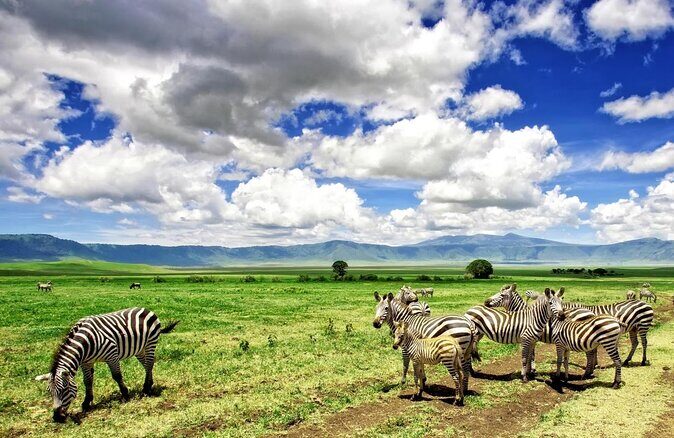
Northern Tanzania is a lot like a highlight reel. You land in Arusha, then you work your way through a chain of habitats: Tarangire’s dry-season river draws wildlife in, Serengeti’s plains set the stage for massive migrations, Ngorongoro’s crater wall creates a condensed “wildlife bowl,” and Lake Manyara adds a mix of ground-water forest and Rift escarpment backdrops.
This safari works because it’s built around efficient motion and frequent time in the parks. The itinerary doesn’t treat parks as checkboxes. It gives you at least one meaningful game-drive block in each major destination, plus a full Serengeti day.
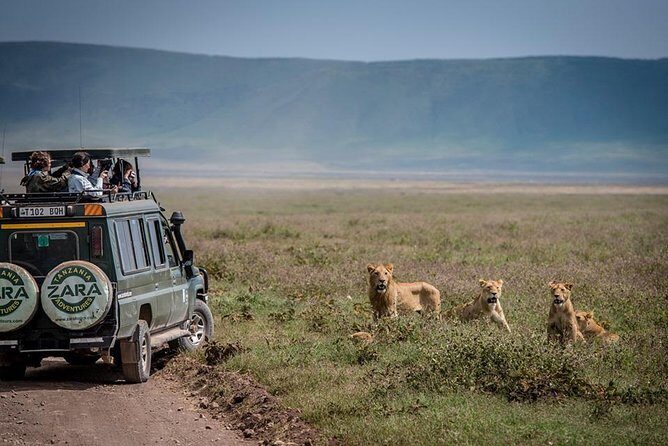
The other big reason this route feels worth it is the small-group setup. The tour uses custom-built 4×4 safari vehicles with viewing roofs and keeps it to a maximum of 6 travelers per vehicle, each with window seats. That matters. It reduces the constant stop-and-go of people twisting around, and it gives you steadier lines of sight when you’re trying to track a lion at the edge of a thicket.
There’s also a practical win: the price (listed at $2,418.47 per person) includes all park and entrance fees, taxes, fuel surcharges, and service fees, plus the Ngorongoro Crater car supplement. That’s the difference between a “cheap” safari that turns expensive at the end and one where you can actually plan your budget.
One more thing: your timing can change the feel of the trip. The Great Migration is always in the conversation in Serengeti, but the tour specifically points to February and March as a strong window for calving season. Even if you don’t catch a perfect moment, you’ll likely feel like the plains are alive with movement and predator opportunities.
A few more Arusha tours and experiences worth a look
Day 1: Tarangire National Park and the Dry-Season Water Pull
Day 1 starts with a drive from Moshi to Tarangire National Park, about three hours. Tarangire shines in the dry season, when animals return to permanent water sources like the Tarangire River. In other words, you’re not just searching; the park concentrates wildlife around reliable life-support.
This is where you often get the classic “tall grass meets giant bodies” moments. The itinerary specifically calls out wildebeest, zebra, elephants, eland, and oryx gathering in the dry season. Expect herds to move in patterns that follow water and grazing, so the game drive feels less random and more like watching a living system.
Tarangire also tends to be a great first taste of safari for your brain. On day one, you’re still learning how the park looks from a vehicle window—where to scan, how to read body language, and how quickly action can appear at a distance. If you’re coming in with camera gear, this is an ideal start to get your settings and rhythm under control before Serengeti.
That night you’ll stay at Highview Hotel. The drive time listed is about 6 hours for the day’s plan block, which includes time on the road and park time. Long days are part of this game, but starting with Tarangire means you don’t burn the whole first day just getting settled.
Day 2: Olduvai Gorge First, Serengeti After Dark
Day 2 takes you to Olduvai Gorge on the way toward Serengeti. The drive to Serengeti via Olduvai is described as 3 to 4 hours, which is a healthy amount of transit when you’re not spending the entire day behind the wheel.
Olduvai Gorge is an archaeological site linked to early human fossils. The key idea here is that you’re not only looking at animals; you’re also looking at deep time. The itinerary notes that the gorge’s dramatic features connect to tectonic forces that shaped the Great Rift Valley millions of years ago. That gives you a different kind of “wow” moment—less about hunting for wildlife, more about understanding why this region looks the way it does.
Then the day shifts into late evening travel and overnight in the Serengeti Wildcamps (the meal plan is listed as FB: full board). Wildcamps typically create a more remote feel than a town hotel, and that can make Serengeti feel closer to the action. Just remember that nights in safari zones are usually quieter and dustier than hotel life—so pack for comfort, not just looks.
A practical caution for day two: the itinerary has you moving from Olduvai into Serengeti late. That means you’ll likely arrive more tired than you would after a straight park stay. If you’re prone to motion sickness, this is also the day to take it seriously—bring what you use at home and hydrate early.
Day 3: Serengeti Full Day Game Viewing in World Heritage Plains
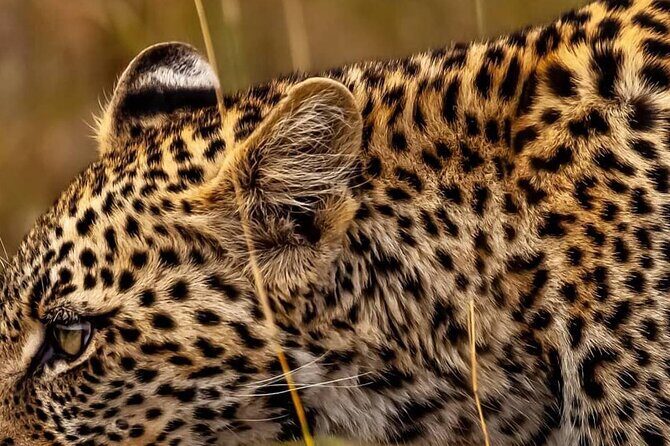
Day 3 is your full-day Serengeti game drive, after breakfast, with a picnic lunch while you’re out in the park. The time block listed is about 8 hours, and admission is shown as free for the park day.
Serengeti is a World Heritage site, and the itinerary emphasizes the scale: it’s where you see the largest concentration of plain game roaming freely. That’s not marketing talk. It’s a reality check for first-timers. When herds move, you don’t just watch one animal at a time—you watch patterns ripple across the plains.
Because this safari is an Elephant Special, you can also keep an eye out for elephants in Serengeti areas where they cross or graze near water and roads. But the main “ticket moment” here is the ecosystem around the Great Migration. If you’re in the Feb–Mar window, you’re in the right neighborhood for calving-related chaos and predator opportunities.
A good way to make this day work is to plan your camera workflow. You’ll likely be shooting both wide scenes (herd movement, open plains) and tight animal portraits (predators at the tree line or zebra in grass). A small tip that helps: keep your most-used lens and settings ready before your driver stops. When you’re out on the plains, spotting happens fast, and good sightings can turn into great sightings within minutes.
The itinerary puts you back at Serengeti Wildcamps for rest, dinner, and overnight in the late evening. That return matters. Your brain decompresses, you sleep near the action, and you’re ready for Ngorongoro the next day.
Day 4: Ngorongoro Crater Drives for Black Rhino and Black-Manned Lions
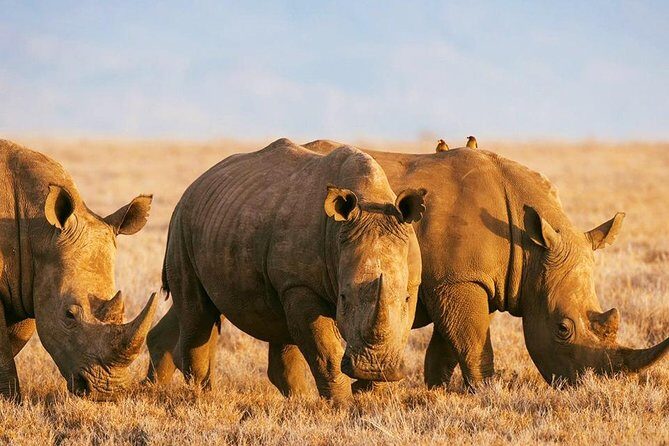
Day 4 heads to Ngorongoro Crater after breakfast. The plan is a game drive inside the crater, and it’s highlighted as one of the best places in Tanzania to see black rhino, along with prides of lion that may include magnificent black-manned males.
Ngorongoro has a different vibe than Serengeti. Instead of watching a big moving system across flat grassland, you’re in a bowl where animals cluster near the right terrain—water, shade, and open sightlines. That makes drives feel efficient: you’re more likely to see multiple species in a single driving session without burning time.
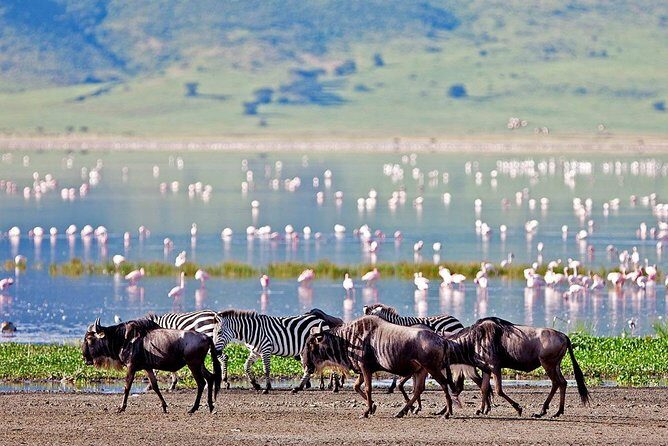
The itinerary also calls out colorful flamingos and other water birds. And you can find leopard, cheetah, hyena, other antelope family members, and small mammals. Even when you don’t get every predator, the diversity is the point. It’s a compact place to “stack sightings.”
Dinner and overnight are listed again at Highview Hotel. That’s a useful break compared to staying deep in the park. Highview gives you the chance to recover before the final day’s drive back toward Moshi.
One practical note: crater days often involve steep road sections and more time carefully descending and ascending. It can be cooler than you expect in the crater morning hours, even when it’s warm outside. Bring a layer you can handle quickly.
Day 5: Lake Manyara Late Afternoon for Forest Monkeys and Escarpment Elephants
Day 5 shifts to Lake Manyara National Park. The drive from the Highview Hotel to Manyara is described as about 30 minutes, which is a nice breather compared to the longer safari days.
After a picnic lunch in Manyara, you start a late afternoon game drive, which the itinerary says is the best time to view animals. That timing isn’t random. Late day light changes behavior. Animals often move more when temperatures drop and visibility improves.
Lake Manyara’s setting is split between lake edges and forested areas. The itinerary notes that when you approach from the east, the Rift Valley escarpment looms on the horizon. That creates a strong visual backdrop for elephants in shade, especially as the day softens.
You’ll likely see monkeys leaping in ground-water forest areas, elephants in the shade on the escarpment, and a supporting cast that includes zebras, impalas, giraffes, buffalos, hippos, and more. Even if animals are quiet, the birdlife and the way the park’s terrain frames the lake can still make the drive feel like a full experience.
In the late afternoon, you drive back to Springlands Hotel in Moshi. The day is listed as about 6 hours total, but much of that is park time plus picnic and return.
Vehicles, Guides, and Why the Human Touch Matters
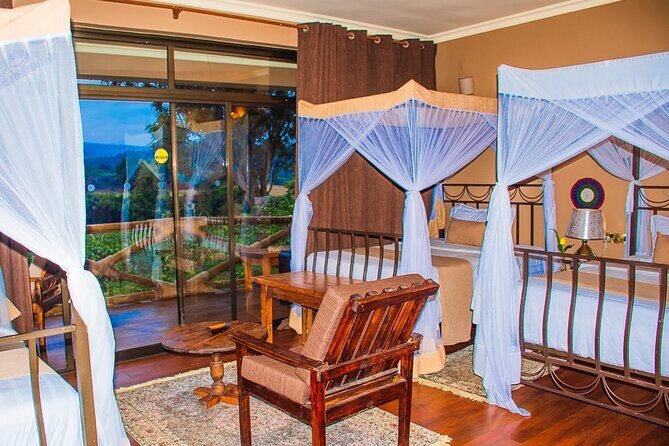
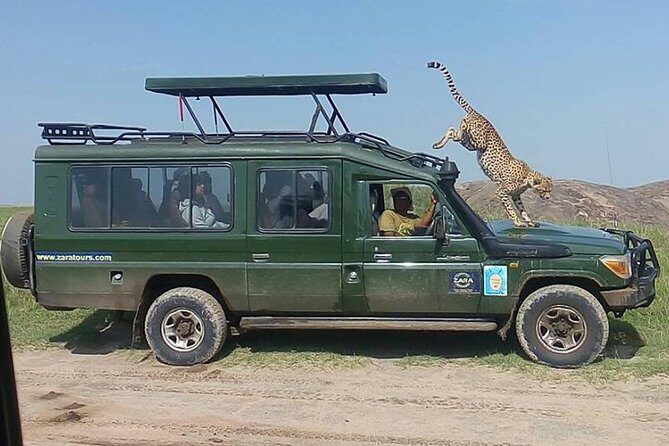
You’re spending a lot of time sitting. That’s why the vehicle setup is more important than people think. This safari uses custom 4×4 safari Land Cruisers with open roofs for game viewing and window seats for each traveler. Open roofs matter when an animal breaks into view on your side. Window seats matter when the group is packed tighter—less time negotiating space, more time watching.
The itinerary also includes bottled water in the safari vehicles, which is a small detail but it helps you stay functional on long days.
Guide quality is also a big theme in the feedback I’ve seen. Names like Issa, Regan, Peter, Vincent, Isaac, Brighton, Willie, Agostino, Munsa, Mansoul, and Agostino appear in the guide stories connected to Zara Tours. The common thread is that guides work hard to find animals, explain what you’re seeing, and keep things safe and upbeat. Humor shows up too, which sounds silly until you realize how much patience long drives require.
One more practical benefit: the tour includes 24-hour support from the office in Moshi. That doesn’t fix every travel delay, but it does reduce the feeling of being abandoned if something changes.
If you’re the kind of person who likes clear communication and a plan, this type of guiding usually fits you well. If you prefer total silence and minimal talking, you should still be fine—you can spend most of the time watching and only engage when you want explanations.
Price and Value: What You Get for $2,418.47
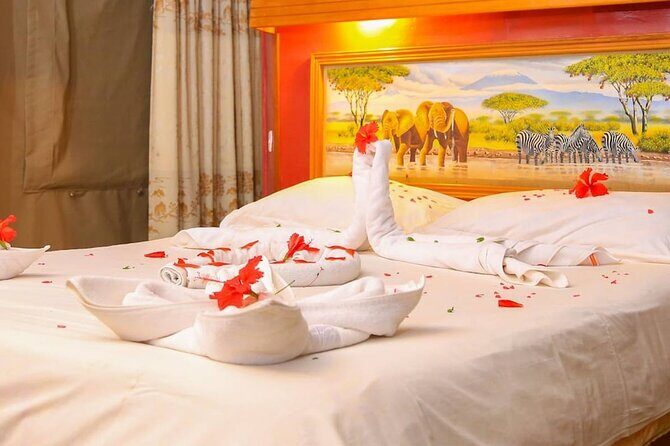
Let’s talk value in real terms. The listed price is $2,418.47 per person, and that number can either sting or make sense depending on what’s included.
Here, the inclusions are strong:
- All taxes, fuel surcharges, and service fees included
- Park and entrance fees included
- Ngorongoro Crater car supplement included
- All game drives in the custom-built 4×4 with viewing roofs
- Full board across the trip (breakfast, lunch, dinner)
- Bottled water in the vehicle
- Ngorongoro crater supplement fee is specifically mentioned, which is a common extra on many safaris
Now the extras and what to budget for:
- International or internal flights are not included
- Airport transfers are listed as not included in the details, even though airport transfer appears in the highlights, so double-check what you’re getting for your arrival and departure
- Balloon excursion is optional and listed at US$600 pp (not included)
- Tanzania visa entry is not included
- Travel and health insurance is not included
- Gratuities are not included
Also, meals and drinks outside the itinerary are not included. That’s normal, but it matters if you want soda, coffee, or extra snacks beyond what’s planned.
So does the price make sense? For me, it starts to feel fair because the biggest costs in safari planning—park fees, taxes, and logistics—are accounted for upfront. You’re not just paying for driving; you’re paying for access to the places animals matter and for the structure that keeps the trip working.
One more note: cancellation is shown as free up to 24 hours in advance for a full refund. That gives you breathing room if your flights shift.
Comfort and Photo Tips for Open-Roof Safari Days
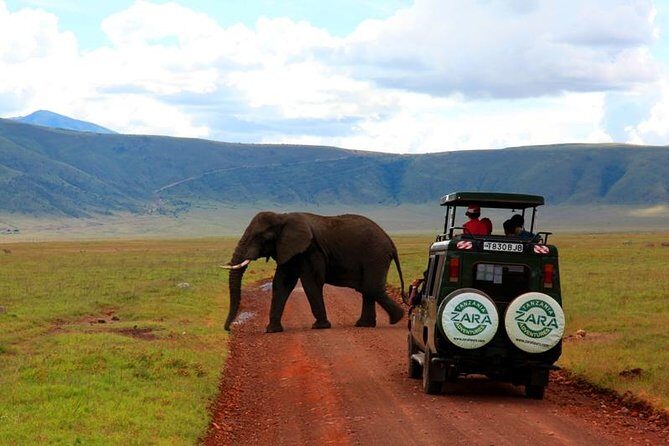
Open-roof safaris are great, but they come with physics: wind, sun, and dust. Pack for that reality.
Here’s what I’d prioritize:
- A light hat and sunglasses. The sun can hit hard and fast when you’re looking up and out.
- Layers. Morning crater time and late afternoon drives can cool down.
- A dust solution for your face and camera lens cloth ready to go.
- A daypack you can keep on your lap or between your feet.
For photography, the best trick is patience with scanning. In Serengeti, action can happen far away before it moves closer. In crater country, animals can appear suddenly along a slope or near shaded areas. Your guide’s job is spotting—your job is being ready when the stop happens. Keep your camera accessible, and make sure your batteries are charged the night before.
And since the experience includes a picnic lunch day and multiple hotel nights, you’ll have enough downtime to manage gear. In the guide stories tied to Zara Tours, I’ve seen comments about practical touches like a fully stocked vehicle fridge—while I can’t guarantee every vehicle will match, it’s worth asking if that matters to you.
Who This Safari Suits Best (and Who Might Want Another Style)
This is a strong fit if you:
- Want Big Five odds and especially the chance for black rhino around Ngorongoro
- Like structured days (early starts, planned game drive blocks, planned meals)
- Prefer small-group travel with less crowding in vehicles
It’s also a good fit for photographers because open roofs and window seats help you capture both wide landscapes and close-ups.
Where it may not fit as well:
- If you hate long drives, you may find the schedule tiring. Day 1 and Day 2 especially include real transit time.
- If you’re extremely sensitive to room quality variations between lodge categories, you’ll want to ask what style of accommodation to expect in Serengeti Wildcamps and the hotel nights.
Based on named guide feedback I’ve seen with Zara Tours, the guiding side tends to be consistently praised. That reduces stress for most people. But the physical reality of multi-park itineraries stays the same: you’re out and about, not lounging.
Should You Book This Elephant Special Route?
If your dream safari includes Tarangire for elephants and river-gathered wildlife, Serengeti for Great Migration drama, Ngorongoro for black rhino and dense predator chances, and Lake Manyara for forest monkeys and escarpment views, this itinerary matches that goal.
You should strongly consider booking if:
- You’re aiming for a tight 5-day sampler of Northern Tanzania’s top parks
- You care about included park fees and taxes (so the final bill stays predictable)
- You want a small-group ride with window seats in a roofed 4×4
You might skip or compare if:
- You want more downtime and fewer long driving days
- You’re not comfortable budgeting for visa, insurance, and tipping
A smart move before you confirm: ask the operator to clearly state whether airport transfers are included for your specific flights, and confirm the exact accommodation style for Serengeti Wildcamps and Highview/ Springlands nights. With those details clear, the rest of the safari looks like a well-built route for serious wildlife time.
FAQ
What parks are included in the 5-day itinerary?
Tarangire National Park, Olduvai Gorge, Serengeti National Park, Ngorongoro Crater, and Lake Manyara National Park are included.
Where does the safari start and end?
It starts in the Arusha/Moshi area (with Moshi referenced for transfers) and ends back at Springlands Hotel in Moshi after the Lake Manyara day.
What vehicle style is used for game drives?
You’ll travel in custom-built 4×4 safari vehicles with viewing roofs and window seats.
How many travelers are allowed per vehicle?
The safari is described as small group with a maximum of 6 travelers per vehicle, and the overall tour listing notes a maximum of 12 travelers.
Are meals included?
Yes. Full board is included: breakfast, lunch, and dinner are part of the trip.
Is breakfast included?
Yes, breakfast is included.
Is the balloon excursion included?
No. A balloon excursion is listed as not included, and the price is shown as US$600 per person.
Are park fees and taxes included?
Yes. All park and entrance fees are included, along with taxes, fuel surcharges, and service fees.
Do I need to arrange my Tanzania visa?
Yes. Entry visa to Tanzania is listed as not included.
Is airport transfer included?
Transfers to and from the airport are listed as not included, even though airport transfer is mentioned in the tour highlights. You should confirm what applies to your booking and flight times.