REVIEW · ZANZIBAR CITY
Stone Town Private Walking Tour
Book on Viator →Operated by Zanzibar Walks · Bookable on Viator
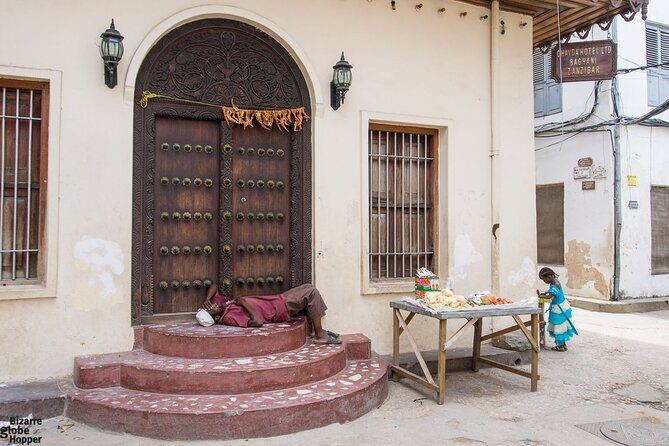
Stone Town is a maze, thankfully. This private walking tour is built for getting your bearings fast, with a guide focused on you and how the streets connect. I especially like the way the tour turns confusing corners into a clear story of architecture and culture.
I also like the practical side. Guides like Mohammed, Imran, and Ally Jape are described as patient and fun, and they give you real-world suggestions for where to eat, drink, and what to prioritize next. Expect help with things like market navigation and even souvenir bargaining tips.
One consideration: Stone Town can feel crowded and busy, and the walking pace may be more of an overview than a slow museum day. If you’re hoping for ultra-deep detail in every stop, you’ll likely want to do a bit of your own reading afterward.
In This Review
- Key Highlights You’ll Care About
- Stone Town’s Narrow Streets Make a Private Guide Worth It
- Price and Value: What $26.23 Buys You in Real Terms
- Getting Started at Mizingani Rd (and How Hotel Pickup Helps)
- Stone Town on Foot: What Each Stop Is Really Teaching You
- Anglican Cathedral (Former Slave Market) and the Weight of the Stories
- House of Wonders (National Museum): When You Want Context, Fast
- Palace Museum: Power, Trade, and the Architecture’s Message
- Old Fort: A Strategic Stop That Helps You Read the Map
- Darajani Market: Spices, Products, and How to Handle the Energy
- Hamamni Baths: A Cultural Stop Beyond the Photo Ops
- Catholic Cathedral: Another Thread in the City’s Religious Story
- Freddie Mercury House: Pop Culture With a Place on the Street
- Street Details Like Door Carvings: The Kind of Trivia That Sticks
- Food, Drinks, and Shopping Tips: How the Guide Can Save You Hours
- Timing, Pace, and the Busy-Streets Reality Check
- Who Should Book This Stone Town Private Walking Tour
- Should You Book It?
- FAQ
- How long is the Stone Town Private Walking Tour?
- Where does the tour start and end?
- Is hotel pickup included?
- Is the tour admission ticket free?
- What’s included in the price?
- Is this tour private?
- Do I get a mobile ticket or confirmation?
- What happens if the weather is poor?
- Is there free cancellation?
Key Highlights You’ll Care About

- Private guide, your pace: Only your group walks together, with room to slow down or speed up.
- Landmarks in one tight loop: You cover major sights in about 2 hours without wandering in circles.
- Door carvings and city details: Expect meaning behind the architecture, not just names.
- Markets and historic sites: You get orientation around places like Darajani market and Hamamni Baths.
- Local food and shopping tips: Guides share places to eat and how to handle the souvenir side.
- A strong intro for first-timers: Great when you land with luggage and need a map made of real streets.
Stone Town’s Narrow Streets Make a Private Guide Worth It
Stone Town is famous for its tight lanes, coral-stone buildings, and sudden turns. If you try to do it alone, you’ll spend a lot of time asking yourself where you are and where you’re headed next. This tour is designed to fix that, with a guide who knows how the historic center fits together.
What I like most is that the tour isn’t just a list of stops. It’s a guided explanation of what you’re looking at—why the city looks the way it does, and how different cultures shaped Zanzibar City over time. You walk through a UNESCO World Heritage Site that reflects African, Arab, Indian, Persian, and European influences, layered across more than 2,000 limestone buildings.
And yes, it helps that the guides described here sound like they actually enjoy talking. People mention humor, patience, and clear English. That matters in a city where a lot of signage, stories, and details can blur together unless someone keeps it organized.
You can also read our reviews of more walking tours in Zanzibar City



Price and Value: What $26.23 Buys You in Real Terms

At about $26.23 per person for a ~2-hour private walking tour, the value comes from the combination of time and attention. You’re paying for someone to do the “thinking work” of orientation—turning Stone Town from a maze into a route you understand.
It’s also booked fairly far in advance (around 22 days on average), which usually means this is popular for the first days of a trip. That’s smart. If you wait, you can end up exploring Stone Town with less context, which is the whole point of doing a first guided loop.
Since it’s a private tour, you’re not splitting the guide’s attention among strangers. That’s important in a place where you’ll probably want to ask questions—about religion, architecture, the history around the slave trade, or how to handle the market scene.
Getting Started at Mizingani Rd (and How Hotel Pickup Helps)

The meeting point is at the Zanzibar tourist information center on Mizingani Rd in Zanzibar City. The tour ends back at the same meeting point, so you’re not left trying to reconstruct your route later.
Pickup from Stone Town hotels is included, but you have to request it in advance. In a place with narrow lanes, that kind of start-up help can save real hassle, especially when you’re arriving with bags or you’re not yet sure how to move through the area without getting turned around.
You’ll also get a mobile ticket and confirmation at booking time. That’s useful because it reduces the “where do we meet?” stress—provided you arrive at the right spot and give yourself a little buffer.
Stone Town on Foot: What Each Stop Is Really Teaching You
You’ll cover Stone Town’s core in a way that connects history, architecture, and everyday city life. The tour uses the geography of the historic center to explain the bigger picture, including how the city became a crossroads of influences.
Below is what you can expect to see and what each stop helps you understand.
Anglican Cathedral (Former Slave Market) and the Weight of the Stories
One of the major anchor points is the Anglican Cathedral, described as a former slave market. This isn’t sightseeing in the casual sense. It’s a place that puts the history of slavery and the broader trade into context.
From what you can learn during the walk, expect an explanation that helps you connect the site to the wider story told at the slave-focused museum stop included in the route. Guides are described as sharing the meaning behind what you’re seeing, including how the narrative is presented and what you should pay attention to as you look around.
A practical note: this section can feel heavy. If you’re visiting with sensitive expectations, take a moment, slow down, and let your guide set the tone before you rush through.
You can also read our reviews of more private tours in Zanzibar City





House of Wonders (National Museum): When You Want Context, Fast
The route includes the House of Wonders, also called the national museum. This is where a guide can help you connect objects and architecture to the human story of Zanzibar.
Why it matters on a walking tour: museums can be intimidating if you don’t know what to look for. With a guide, you don’t just “see stuff.” You understand why it matters and how it links to the rest of Stone Town’s story.
The tour is still only about two hours, so think of this as an orientation stop rather than a full museum deep session.
Palace Museum: Power, Trade, and the Architecture’s Message
You’ll also pass by the Palace Museum. This is one of those stops where the building itself says something—about status, rule, and the city’s role in regional trade.
What you gain here is perspective. Stone Town looks like it grew by stacking cultures on top of each other, but the city also had power structures that shaped who lived where, how wealth showed up in buildings, and what the public spaces were for.
If you’re a history-minded person, you’ll likely enjoy how your guide ties the architecture to real events and social change.
Old Fort: A Strategic Stop That Helps You Read the Map
Old Fort appears in multiple ways depending on the guide’s flow, and some groups even start there. The point isn’t just “walk past a fort.” It’s to help you understand why the city developed where it did and how maritime trade influenced what mattered.
For first-timers, Old Fort works like a mental landmark. Even if you later forget every detail, you’ll remember where you stood and what the guide said about the city’s strategic position.
Also, forts are usually easier to pace than tighter indoor stops. It’s a good reset in the middle of a city walk.
Darajani Market: Spices, Products, and How to Handle the Energy
Darajani market is one of the stops that shifts you from monument mode into daily-life mode. Guides are described as walking through the market and explaining what’s sold, including spices and common products.
This is where you learn practical judgment. Markets can be overwhelming if you don’t know what you’re seeing. A good guide helps you spot what’s worth looking at and how to keep your questions respectful.
If shopping is on your list, this is also where you might get pointers on bargaining or on how to avoid awkward moments. One guide described in the notes even helped bargain a little and arranged transport to lunch, which shows how flexible the experience can be.
Hamamni Baths: A Cultural Stop Beyond the Photo Ops
Hamamni Baths come into the route as a distinct cultural landmark. Expect the focus to be on how everyday life in Stone Town works, not just on the visual look.
This is one of those places where listening matters more than speed. Your guide can explain what people use these spaces for and why they’re part of the city’s ongoing rhythm.
If you want your tour to feel like real city life—because Stone Town is still lived in—Hamamni Baths helps deliver that.
Catholic Cathedral: Another Thread in the City’s Religious Story
You’ll also see the Catholic Cathedral. This stop adds another layer to what you’re learning about religion and cultural blending in Zanzibar City.
The benefit on a guided walk is that you get the connections between stops. Instead of seeing religious buildings as disconnected photos, you understand them as parts of the city’s long transformation.
Freddie Mercury House: Pop Culture With a Place on the Street
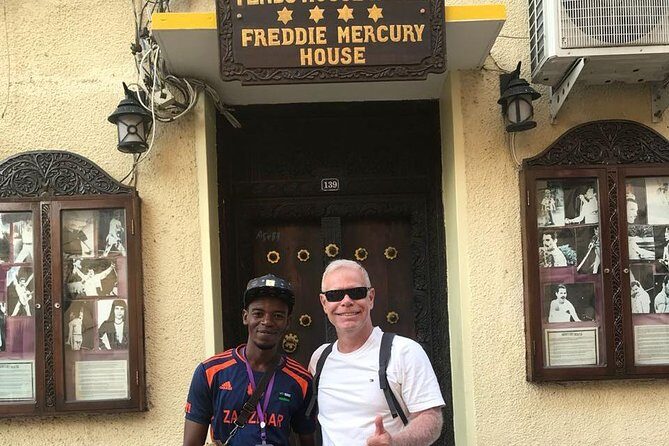
Freddie Mercury’s house is included as well. This is the stop that turns the historical city into something that reaches global pop culture.
It’s fun, and it also gives your guide a chance to show how Stone Town’s physical layout and famous names intersect. For many visitors, this is the moment the walk feels lighter, after heavier history stops.
Just remember: it’s still Stone Town, so don’t expect a theme park vibe. It’s a street-level reality.
Street Details Like Door Carvings: The Kind of Trivia That Sticks
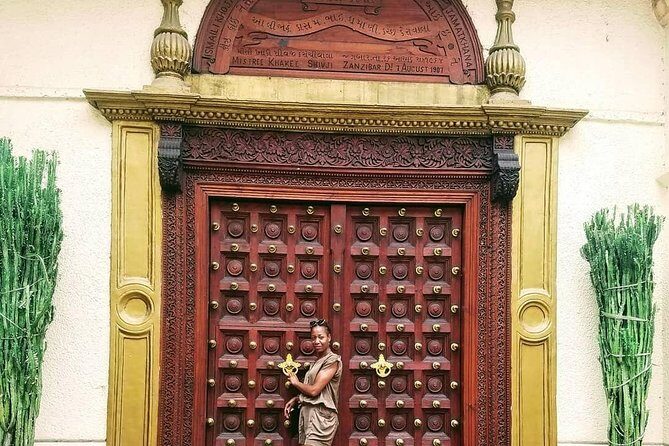
One of the most praised “wow” details in the notes is door carving meaning. Stone Town doors often look like art, but without context, you’ll miss what the patterns communicate.
This is where a strong guide earns their fee. They point out small details and connect them to life in the city—who crafted things, what messages were used, and why craftsmanship mattered.
Even if you only remember one thing after your walk, it might be a door you didn’t notice before.
Food, Drinks, and Shopping Tips: How the Guide Can Save You Hours

A standout feature is local guidance on where to eat, drink, and visit next. The tour time is short, so these tips matter. If you know which area to aim for and what to expect, you lose less time hunting.
Guides described here go beyond facts. Some helped coordinate a tuktuk ride, and one guide helped with a lunch destination called Lukmaan. Others suggested how to bargain for souvenirs without getting stuck in a tense back-and-forth.
You should treat this as guidance, not a rigid itinerary. The value is that you leave with a plan that fits your interests—whether you want a relaxing meal, spice shopping, or a follow-up stop somewhere else in Stone Town.
Timing, Pace, and the Busy-Streets Reality Check
This is a 2-hour walking tour, so pace is built-in. The best guides make it adjustable, and multiple accounts praise guides who go slower or faster depending on the group.
Still, Stone Town’s streets are narrow and busy. The tour will feel active. Wear shoes that handle uneven ground and plan for crowds in the market areas.
One caution from the notes: some people felt the history elements were more of an introduction, not a deep, footnote-heavy education. If you’re a serious student of Zanzibar history, you’ll get a strong foundation, but you may want to read up before or after.
Another minor concern that pops up: on some tours, the route can feel like it includes time near shopping areas. That doesn’t ruin the day, but it’s worth keeping in mind if your priorities are strictly “history first.”
Who Should Book This Stone Town Private Walking Tour

I’d put this tour high on your list if you’re:
- Visiting Stone Town for the first time and want to get oriented fast
- Traveling solo or as a small group and want a guide’s attention
- Interested in history and architecture, especially how different cultures left marks on the buildings
- Short on time and want a smart first loop before you plan the rest of your days
You might hesitate if:
- You want long, sit-down museum time and detailed lectures at every stop
- You dislike busy marketplaces or shopping-related detours
- You prefer total freedom with no guide at all
The big win is that it helps you understand Stone Town in a way you can build on later. You don’t just collect photos. You learn how to navigate the city’s meanings.
Should You Book It?

Yes, I think you should book it if you want a clear first impression of Stone Town with a human guide leading the way. At $26.23 per person for a private, ~2-hour route, the price feels fair for what you gain: orientation, major landmarks, and practical local tips in one go.
Before you go, do two simple things. First, confirm your pickup request if you’re using a Stone Town hotel. Second, show up a touch early at the Zanzibar tourist information center area so the start is smooth.
If you want Stone Town to make sense quickly—and you enjoy learning while walking—this is an efficient, friendly way to get started.
FAQ
How long is the Stone Town Private Walking Tour?
The tour is about 2 hours.
Where does the tour start and end?
It starts at the Zanzibar tourist information center on Mizingani Rd, Zanzibar, Tanzania. It ends back at the same meeting point.
Is hotel pickup included?
Yes, pickup from Stone Town hotels is included, but you need to request it in advance by sending a message.
Is the tour admission ticket free?
The tour is listed as Admission Ticket Free.
What’s included in the price?
A professional tour guide and pick up from Stone town hotels (if requested) are included.
Is this tour private?
Yes. It’s a private tour/activity, so only your group participates.
Do I get a mobile ticket or confirmation?
Confirmation is received at booking time, and mobile ticket is listed as a feature.
What happens if the weather is poor?
This experience requires good weather. If it’s canceled due to poor weather, you’ll be offered a different date or a full refund.
Is there free cancellation?
Yes. You can cancel up to 24 hours in advance for a full refund.