REVIEW · ZANZIBAR CITY
Stone Town Exciting Walking Tour & Convenient Transfer – Zanzibar
Book on Viator →Operated by Your Trips Guide · Bookable on Viator
Stone Town is a maze worth learning. This walking tour helps you turn confusing alleys into a sensible route, with guided stops tied to Zanzibar’s trade and cultural history. I especially love the Old Market leg, including the fish, meat, and vegetable sections plus the spice area that smells like you walked into a shop window from another century.
I also like the House of Wonders visit and the chance to see Tippu Tip House up close, not just from a distance. The main drawback to plan around is basic: it’s a 3 to 4 hour walk, and if your guide doesn’t share clear context, the experience can feel like a sightseeing checklist rather than a story.
In This Review
- Key highlights you’ll care about
- What this Stone Town walk is really good at
- Old Market to Old Fort: where Zanzibar’s street life meets landmark history
- Old Market (including the spice area)
- House of Wonders and Tippu Tip House: two stops that change how you see the streets
- Africa House (Former English Club) and the carved-door maze
- Old Fort, Palace Museum, and Old Dispensary: why these stops fit together
- Former Slave Market and Anglican Cathedral: important, heavy, and not for everyone
- The extra ticket you need to budget for
- A tip for getting more value here
- Price and logistics: what $20 buys you (and what it doesn’t)
- How to get the best experience on a 3–4 hour Stone Town route
- Ask one question right away
- Bring the right basics
- Don’t assume every optional attraction will be included
- Who should book this Stone Town walking tour
- Who might want to reconsider
- My booking verdict: should you choose this tour?
- FAQ
- How long is the Stone Town Exciting Walking Tour?
- What is the price, and is there an extra cost?
- Does the tour include hotel pickup and drop-off?
- What stops are included in the tour?
- Is the slave market ticket included?
- What is the cancellation policy?
Key highlights you’ll care about
- Old Market details: fish, meat, vegetables, and a dedicated spice section that helps you understand Zanzibar’s trade links.
- House of Wonders (National Museum): a central stop that sets the stage for what you’ll notice in Stone Town streets afterward.
- Tippu Tip House: a standout historical home that makes the past feel specific, not vague.
- Old Fort + Palace Museum + Old Dispensary: multiple built landmarks packed into a compact walking loop.
- Former Slave Market stop: emotionally heavy, but handled as a real part of Stone Town’s story.
- Small group cap (up to 20): easier pacing and more chances to ask questions than with huge crowds.
What this Stone Town walk is really good at
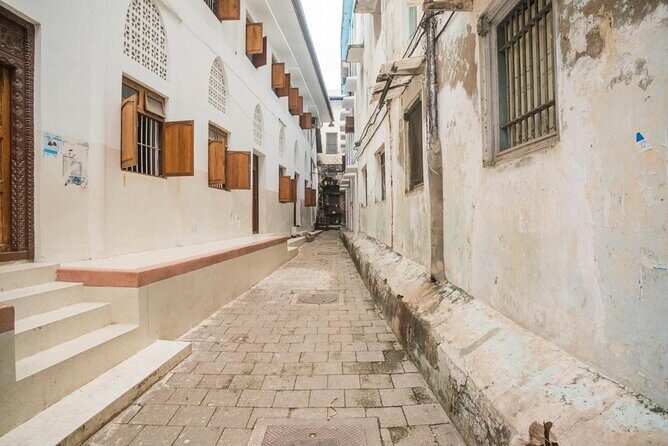
Stone Town looks like it was designed for getting lost on purpose. Narrow lanes twist. Doorways and balconies seem to change style every few steps. This tour helps you read the place instead of just walking through it.
The big value is that you’re not left to wander randomly. A professional guide points out the landmarks you’re likely to miss alone: Old Market, the House of Wonders, the Old Fort, the Palace Museum, and Tippu Tip House. You also get the Atlantic-facing, spice-trade-to-slavery context that makes the architecture feel less like decoration and more like evidence of real movement of people, goods, and power.
This isn’t a luxury experience. It’s a practical, guided walking route, with hotel pickup/drop-off available if you choose that option. If you want your time in Stone Town to feel structured—without having to plan a self-guided route—this is built for that.
You can also read our reviews of more walking tours in Zanzibar City



Old Market to Old Fort: where Zanzibar’s street life meets landmark history
The tour’s first stretch starts in Stone Town with a focus on markets and forts, which is smart. Markets show everyday life. Forts show control. Put them together and you get a fuller picture of how the island functioned.
Old Market (including the spice area)
You’ll visit the Old Market, which has been serving locals since 1903. The market is organized into clear sections, including fish, meat, and vegetables. That layout matters because it turns what could be just a photo stop into something you can interpret.
Then there’s the spice area. Even if you’re not a spice expert, you’ll feel how central spices were to Zanzibar’s identity. Smell is a strong memory tool, and this is one of those places where you’ll likely remember more than you expected.
One practical note: markets are active and sometimes warm. Wear shoes you trust for uneven stone and take a moment to slow down so you can actually watch the stalls, not just rush past them.
House of Wonders and Tippu Tip House: two stops that change how you see the streets
After the Old Market, the tour shifts toward what I think of as Stone Town’s “story anchors.”
House of Wonders (National Museum)
The House of Wonders, also known as the National Museum, is included. This stop is valuable because it gives you a framework. When you return to the streets right after, you’ll notice details you might otherwise treat as background—especially when the guide connects what you’re seeing in buildings to broader trade history.
If you care about making sense of architecture, this is where your walking route starts paying off.
Tippu Tip House
Next is Tippu Tip House. Seeing it with a guide helps because you’re not just looking at a residence—you’re looking at a clue about the island’s wider connections. Tippu Tip House is one of those stops that can feel like a shortcut to understanding why figures in Zanzibar’s past mattered.
If you’re the type who likes questions (What was this for? Why here? What changed?), this is a good place to ask. A strong guide can tie it back to the earlier market and spice-trade discussion.
Africa House (Former English Club) and the carved-door maze
The tour also includes the former English Club, now Africa House. It’s a quick but useful waypoint because it signals how foreign influence shaped Zanzibar’s built environment.
Then you’ll spend time moving through the narrower alleys and noticing the details—ancient doors, wooden balconies, and the general mix of styles that makes Stone Town feel like a living museum.
I love this section when the pacing is good. If you’re rushed, those doors and balconies blur into each other. The best way to get value here is to pause for a few seconds at each major door detail rather than only photographing from motion.
A few more Zanzibar City tours and experiences worth a look





Old Fort, Palace Museum, and Old Dispensary: why these stops fit together
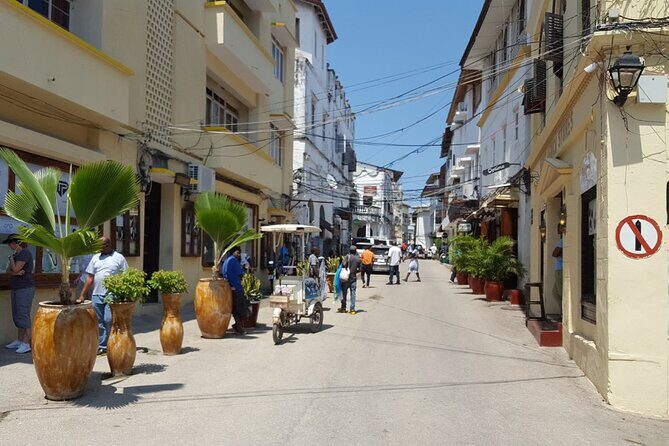
The tour route keeps stacking built landmarks rather than jumping between far-apart sites, which matters for comfort and time. The Old Fort is a must-do in this area for many visitors, and you’ll also visit Palace Museum and Old Dispensary.
Here’s why I think this trio makes sense:
- Old Fort helps you understand defense and power.
- Palace Museum gives you a sense of authority and royal or official space.
- Old Dispensary adds a different kind of history—one that’s often less obvious when people only focus on dramatic locations.
Even if you’re not a museum person, these stops give your feet a purpose. Instead of walking for walking’s sake, you can track what you learn: trade, influence, control, and everyday infrastructure.
Former Slave Market and Anglican Cathedral: important, heavy, and not for everyone
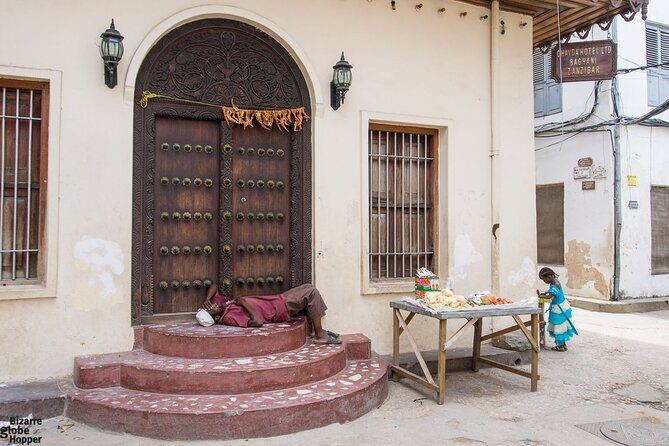
The second big part of the walk focuses on the Former Slave Market area, along with the Anglican Cathedral nearby. This is a poignant stop tied directly to Zanzibar’s past and how invaders treated the island’s inhabitants.
You should go into this with the right mindset. It’s not entertainment. The tour keeps it as a dedicated block of time (about one hour), which helps prevent it from feeling rushed.
The extra ticket you need to budget for
One important practical detail: the slave market ticket is not included. You’ll need to pay $5 per person for the ticket on site.
So if you’re budgeting, don’t think only $20. A realistic base total for most people is $25 before any extra transfer charges.
A tip for getting more value here
If you’re not sure what to ask, start simple:
- What does this location represent in Zanzibar’s larger story?
- How does it connect to the trade routes referenced earlier on the walk?
A guide who knows the subject well can make this stop more coherent without making it feel like a lecture.
Price and logistics: what $20 buys you (and what it doesn’t)
At $20 per person for a 3 to 4 hour guided walk, the value can be strong—especially if you’re trying to see multiple Stone Town landmarks without planning them all yourself.
What’s included (key items):
- Guided visits covering Old Market and Old Fort, plus House of Wonders (National Museum), Tippu Tip House, Africa House, Old Dispensary, Palace Museum, and the Former Slave Market area.
- Pickup and drop-off by air-conditioned vehicle if you select that option.
- Admission is included for the first museum-style portion, while the Former Slave Market ticket is extra.
What’s not included:
- Slave Market ticket: $5 per person.
- Transfer from outside Stone Town city may cost extra.
What you should consider:
- Group size is capped at 20, which usually keeps things manageable.
- Duration is long enough that heat and sun can wear you down. One past participant flagged that the long, sunny hours didn’t feel worth it. If you’re sensitive to heat, plan your start time and bring sun protection seriously.
My practical advice: decide whether Stone Town is a “morning energy” activity for you. If you tend to fade in the afternoon, push this walk earlier in your day.
How to get the best experience on a 3–4 hour Stone Town route
A great guide can make Stone Town click. A mediocre one can make it feel like you’re just walking between stops. You can improve your odds.
Ask one question right away
At the start, ask something like:
- How will you connect the spice trade to what we see in the streets and landmarks?
If the answers are clear and specific, you’re in good hands for the whole route. If the guide struggles, you can still salvage the experience by asking follow-ups at each stop.
Bring the right basics
You’re on your feet for hours, in the sun and in tight lanes. Bring:
- Water you can sip during stops
- Sun protection (hat, sunscreen)
- Comfortable shoes with grip
If you’re the type who likes photos, also remember: Stone Town’s doors and balconies reward slow stops. Speed ruins the details.
Don’t assume every optional attraction will be included
Stone Town has plenty of “extra” spots people like to tack on. If there’s a specific place you care about—like Forodhani Park—ask your guide whether it fits your exact route. Some versions may focus tightly on the listed landmarks, and you don’t want to discover your favorite stop was skipped when you’re already hot and tired.
Who should book this Stone Town walking tour
This tour fits best if you want:
- A guided overview of Stone Town’s core landmarks in a walking format
- A market-to-museum-to-fort rhythm, so you understand everyday life and power structures
- A history-focused route that references the spice trade and the island’s connection to the slave trade
I’d also say it suits solo travelers, couples, and small groups who don’t want to spend hours planning logistics. The group max of 20 helps keep it from feeling chaotic.
Who might want to reconsider
Skip this (or adjust expectations) if:
- You hate long outdoor walking in sun
- You’re looking for a slow, artsy photo walk only
- You want a deep museum experience with plenty of time inside each building
Also, if you want maximum flexibility to hop around Stone Town on your own, you might prefer a self-guided approach. This is structured, with set stops and set time blocks.
My booking verdict: should you choose this tour?
If you’re in Stone Town for the first time and you want a guide-led route that hits the major landmarks—Old Market, Old Fort, House of Wonders, Tippu Tip House, plus the emotionally heavy Former Slave Market stop—this is a solid way to make the hours count.
I’d book it if you can handle walking and you’re okay budgeting the extra $5 for the slave market ticket. I’d also book with eyes open: guide quality matters. If you arrive and the explanation feels thin, push for clarity early—ask questions and get the story you paid for.
If you’re very heat-sensitive or you expect a longer list of places beyond the main stops, look at other options or plan to add extras on your own afterward.
FAQ
How long is the Stone Town Exciting Walking Tour?
The tour runs about 3 to 4 hours.
What is the price, and is there an extra cost?
The price is $20 per person. The Former Slave Market ticket costs $5 per person and is not included.
Does the tour include hotel pickup and drop-off?
Yes, hotel pickup and drop-off by an air-conditioned vehicle is included if you select the pickup option.
What stops are included in the tour?
The tour includes visits to Old Market and Old Fort, House of Wonders (National Museum), Tippu Tip House, Africa House (former English Club), Old Dispensary, Palace Museum, and the Former Slave Market area.
Is the slave market ticket included?
No. The slave market ticket is not included and costs $5 per person.
What is the cancellation policy?
You can cancel for a full refund up to 24 hours before the experience starts.