REVIEW · ZANZIBAR
Zanzibar Stone Town: Historical Walking Tour With a Local Guide
Book on Viator →Operated by Zanziphoria | Zanzibar Tours · Bookable on Viator
Stone Town feels like a living museum. This 3-hour walking tour threads together UNESCO-listed streets and the stories behind them, from the old City Market to Forodhani Garden. Along the way, you’ll see the sand-and-stone architecture that makes Stone Town so distinctive and so hard to forget.
What I really liked most was the local guide energy—you get answers that connect the buildings to the people who lived around them. On a rainy day, I’d want that kind of real-world help, and the guide Abdi is the sort who shows up prepared (including bringing an umbrella when weather turns).
One thing to think about first: this tour is weather-dependent and involves a solid walk on narrow lanes. If you’re heat-sensitive or you dislike uneven old streets, plan accordingly.
In This Review
- Key moments that make this tour worth your time
- Why Stone Town walking works in 3 hours (and what you gain)
- Starting at City Market (opened in 1904): where you get your bearings fast
- Stone-and-sand architecture: the little details your camera loves
- The Old Slave Market and Anglican Cathedral of Christ: powerful, close-up, and not sugarcoated
- House of Wonders (Beit-el-ajaib): where palace drama meets colonial administration
- Peoples Palace Museum and the sultan-stay story you can actually picture
- Freddie Mercury area sights and the optional Freddie Mercury Museum
- Darajani Bazaar: daily markets for spice, fish, and fruit
- Old Arab Fort and finishing at Forodhani Garden: the last views that stick
- Price and value: what $33 buys you (and what it doesn’t)
- Who this tour suits best (and who may want a different plan)
- FAQ
- Is this tour private?
- How long is the Zanzibar Stone Town walking tour?
- What does the tour cost?
- Where does the tour start and where does it end?
- Which major sites are included?
- Is the Freddie Mercury Museum ticket included?
- Are there any entrances or admissions included?
- What are the opening hours?
- Should you book this Stone Town walking tour?
Key moments that make this tour worth your time
- City Market (opened in 1904): a practical starting point that helps you understand the town’s trade and daily rhythms.
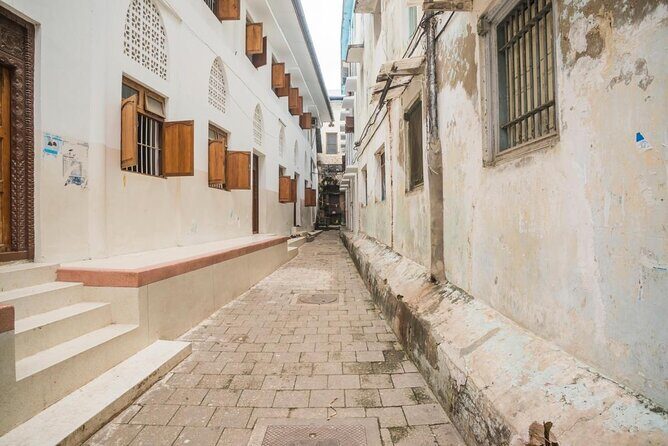
- Arab/Indian architectural details: carved doors with brass studs, balconies, and old sand-and-stone homes you’d miss alone.
- Old Slave Market to Anglican Cathedral of Christ: one location where you can’t separate the architecture from the human story.
- House of Wonders (Beit-el-ajaib): ceremonial palace past meets colonial-era office use.
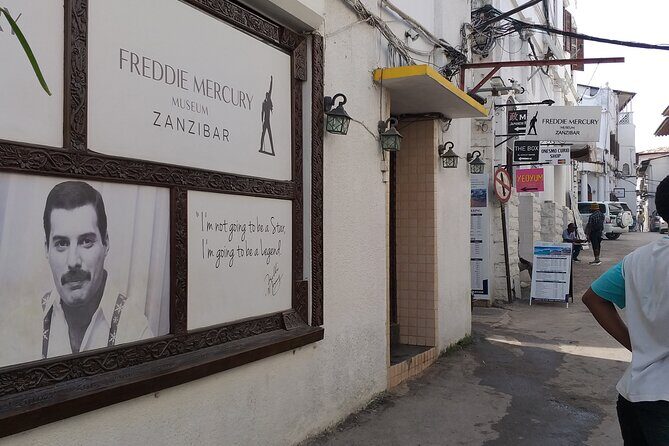
- Freddie Mercury area sights: you pass the birthplace area and can optionally add the Freddie Mercury Museum.
- Forodhani Garden finish: a scenic end point in the open air where Stone Town feels most alive.
Why Stone Town walking works in 3 hours (and what you gain)
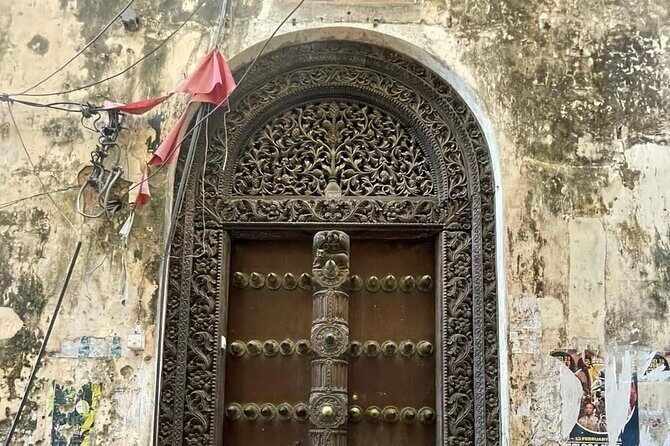
Stone Town is one of those places where the details matter. You don’t just look at a view—you keep turning corners, spotting door carvings, catching glimpses of courtyards, and reading the town through its physical layout. A walking tour is the right format because so much of what makes Stone Town special sits in the tight spaces between buildings.
This tour is also built for context. You start at a main market area, then shift into the historical heart—slave-market memory, palace-era power, and the mix of religious and colonial layers you can still see on the streets today. By the time you reach the end near Forodhani Garden, you’ve basically got a mental map of how trade, wealth, and culture flowed through town.
The practical upside: you’re not stuck for a whole day. At about 3 hours, it’s long enough to get oriented and see major highlights, but short enough that you can keep exploring afterward on your own terms.
You can also read our reviews of more walking tours in Zanzibar



Starting at City Market (opened in 1904): where you get your bearings fast

You begin at the main City market, a busy hub that opened in 1904. That date matters because it helps you understand Stone Town as a working port city, not only a museum town.
From here, your guide points out how the architecture grows out of commerce and coastal life. You’ll move through narrow alleys toward the local souvenir bazaar area, with enough flexibility to shop if you want to. Even if you don’t plan to buy much, the shopping streets help you understand how this place still functions day-to-day.
Pro tip: if you’re shopping, do it with a plan. Markets here can tempt you fast. Set a small budget in your head for spices, carvings, or small souvenirs, so you’re not negotiating while jet-lagged and hungry.
Also, a walking tour like this is especially helpful if it’s your first time in Stone Town. The streets can feel like a maze. Starting at the market is a smart way to build order out of the chaos.
Stone-and-sand architecture: the little details your camera loves

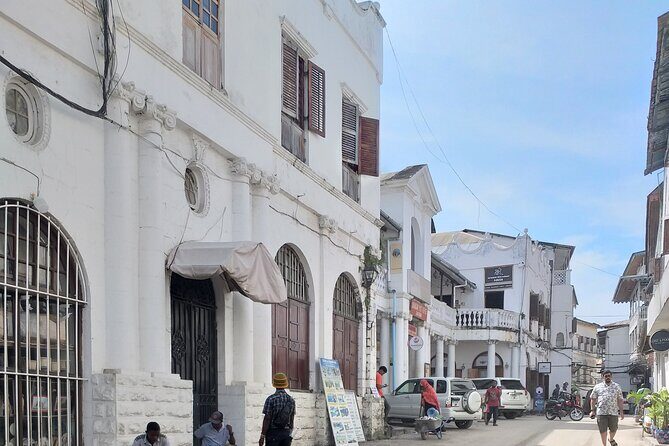
Stone Town’s look comes from materials and craftsmanship—sand and stone buildings with interior life you can’t always see from the street. As you walk, you’ll notice the style markers that make locals recognize a house’s era and influence.
Pay attention to:
- Arab and Indian influences on carved doors (including brass-studded details)
- balconies with worked designs
- the way old homes sit along lanes rather than standing alone like European streetscapes
Your guide helps you connect these details to history, not just aesthetics. That’s the difference between snapping photos and actually learning how Stone Town became Stone Town.
And if you’re the type who likes to travel by observing—watching how people move through doorways, where goods are displayed, how courtyards shape the air—this part of the tour will feel especially satisfying.
The Old Slave Market and Anglican Cathedral of Christ: powerful, close-up, and not sugarcoated

This is the most emotionally heavy stop, and it’s placed intentionally. You visit the site of the former slave market and then go to the Anglican Cathedral of Christ, located on that same grounds.
You’ll see:
- slave monuments and slave chambers
- historical panels about slavery
- signs of the past process (including wiping post references)
- the grave of Bishop Edward Steere, described as the man who built the Anglican church
This isn’t presented as abstract “dark history.” It’s right there underfoot, in the layout and the memorial pieces. The guided context matters here because the site is complex. You’ll want someone to help you follow the story without rushing past the hard parts.
Sensitive travel note: If you prefer lighter sightseeing, this segment might be heavy. I’d keep your expectations honest. This tour is willing to face the truth of Stone Town’s past.
The good news? The cathedral stop helps you see how the same space holds layered meaning—religion, remembrance, and a shift in power through time.
House of Wonders (Beit-el-ajaib): where palace drama meets colonial administration
Next you move toward House of Wonders, also known as Beit-el-ajaib. Here, the tour focuses on how a royal space changed hands and functions over time.
You’ll see the ceremonial palace of Sultan Baraghash, and you’ll also learn that it was used as British Colonial Administration Offices. That combination is what makes this stop click for visitors: it explains why the buildings in Stone Town feel like they belong to more than one era.
This is the kind of stop where you start noticing contrasts. Royal architecture isn’t just decoration. It’s a statement of authority. When you learn the same building served colonial administration too, you get a clearer picture of how the region’s political power shifted.
One practical detail: this stop is relatively short on the schedule. Plan to ask questions if there’s something you want clarified—history, architecture, or the significance of specific rooms—because that’s when a guide’s explanations turn photos into understanding.
You can also read our reviews of more guided tours in Zanzibar





Peoples Palace Museum and the sultan-stay story you can actually picture

You also visit the People’s Palace Museum, described as a palace/house used by some sultans.
Even with limited time at this stop, the value comes from what your guide builds in before you arrive. When you’ve already been through the House of Wonders and the broader palace narrative, you can start placing each site into a bigger picture: who lived where, what spaces were public versus private, and how power played out in daily building life.
If you like your history grounded in physical spaces, you’ll appreciate this. It’s one thing to read about sultans. It’s another to stand somewhere that helped house their lives.
Freddie Mercury area sights and the optional Freddie Mercury Museum
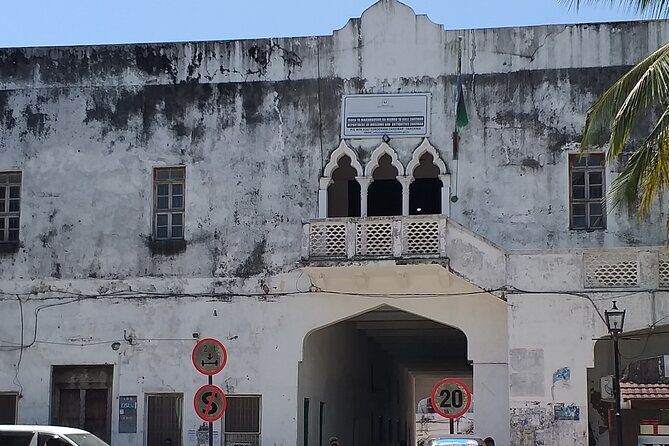
Stone Town is connected to Freddie Mercury in more than one way. On this walk, you’ll pass:
- the house where Freddie Mercury was born (as part of the tour route)
- the area that also leads to the Freddie Mercury Museum stop
There is a brief Freddie Mercury Museum visit option (about 10 minutes), and admission for the museum is not included. So treat that museum as an add-on you decide on based on your interests and time.
Here’s how I’d think about it: if you’re a Queen fan, the museum can be a satisfying way to connect pop culture to place. If you’re more focused on architecture and historic sites, you may choose to spend your time elsewhere and keep moving with the group.
Either way, the key is that the tour doesn’t just toss in a famous name. It uses Freddie Mercury connections as part of the broader Stone Town story—how global fame and local origins sit on the same streets.
Darajani Bazaar: daily markets for spice, fish, and fruit
After the heavier history and palace stops, you get a change of pace at Darajani Bazaar. This is where you see day-to-day Zanzibar life—spices, fish market activity, and fruits.
This part is less about monuments and more about motion. You’ll get a sense of what people actually buy and cook with, and why Stone Town’s trading roots still matter.
A practical takeaway: markets are great for photos, but keep an eye on your comfort. Don’t hover too long at crowded spots. If you want to shop, do it with patience and keep your bargaining tone friendly.
Also, if you’re curious, ask about spice varieties or what locals use them for. The tour’s focus is Stone Town, but your guide can often connect market goods to the wider culture.
Old Arab Fort and finishing at Forodhani Garden: the last views that stick
The tour also includes the Old Arab Fort. It’s one more piece of the defense-and-power story that runs through Stone Town’s architecture. Even when time is short, forts give you a different angle—literally and emotionally—because they’re about protection and control.
Then you finish near Forodhani Garden. That ending matters because it puts you back in open-air surroundings where Stone Town feels less like a maze of alleys and more like a lived-in waterfront city.
Finishing around Forodhani is also smart for planning the rest of your evening. If you want more wandering after the tour, you’ll already be in the right zone to keep exploring.
Price and value: what $33 buys you (and what it doesn’t)
At $33 per person for an approximately 3-hour private walking tour, this is priced like a practical orientation experience rather than a full-day sightseeing package.
Here’s what you should mentally budget for:
- Included: guided tour, exploration of ancient houses and architecture, Anglican Cathedral and Old Slave Market visit, Old Arab Fort, and strolling in Forodhani Garden.
- Included also: you get opportunities to shop at spice shops and souvenirs.
- Not included: meals and drinks.
- Not included: tips (optional).
- Not included: admission for the Freddie Mercury Museum.
A big value driver here is the included historical sites with guided context. You’re not just ticking boxes. You’re getting a guided connection between architecture, slavery-era memory, and palace administration spaces.
Another value driver: it’s a private tour, meaning it’s only your group. That usually translates to better question time, fewer awkward pauses, and a smoother pace through tight streets.
If you already have a strong personal interest in architecture and local history, this tour is a strong match. If you mostly want beach time or nightlife, it may feel too focused on streets and serious topics.
Who this tour suits best (and who may want a different plan)
This tour fits you best if you:
- want a guided Stone Town orientation without committing to a full day
- care about architecture details like carved doorwork, balconies, and the way buildings cluster
- are interested in the Old Slave Market story and how it’s marked today
- enjoy market scenes and want a taste of daily Zanzibar commerce
- like to travel with a guide who answers questions beyond the script
It might not fit you as well if you:
- dislike walking or uneven old-street terrain
- want only cheerful sightseeing and very light history
- need long museum time, since several stops are brief and the museum-admission add-on is separate
The guide Abdi example is a good sign. When weather changes, a prepared guide helps you keep the day on track and keeps the tour from becoming a miserable march.
FAQ
Is this tour private?
Yes. It’s listed as a private tour/activity, meaning only your group participates.
How long is the Zanzibar Stone Town walking tour?
It’s about 3 hours (approx.).
What does the tour cost?
The price is $33.00 per person.
Where does the tour start and where does it end?
You start at the main City market. It finishes back at the meeting point, with the last part of the walk ending at Forodhani Garden.
Which major sites are included?
You’ll cover Stone Town highlights including the Old Slave Market/Anglican Cathedral of Christ, House of Wonders (Beit-el-ajaib), and the Old Arab Fort, plus a stroll through Forodhani Garden.
Is the Freddie Mercury Museum ticket included?
No. Freddie Mercury Museum admission is listed as not included.
Are there any entrances or admissions included?
The Old Slave Market/Anglican Cathedral of Christ stop is shown as admission ticket included, while other areas like House of Wonders are listed as free. The Freddie Mercury Museum admission is not included.
What are the opening hours?
The hours provided are for Monday, 9:30 AM to 5:30 PM (within the date range shown).
Should you book this Stone Town walking tour?
If you want one reliable way to understand Stone Town fast, I think this is a smart buy. The mix of UNESCO streets, architecture details, a key slavery-era site, and a palace-building story gives you more than a photo walk. Add in a strong local guide like Abdi—complete with practical help when weather turns—and you’ll come away with a clearer picture of how Stone Town worked.
Book it if you value guidance, thoughtful context, and seeing the city on foot. Skip it or pair it differently if you want a relaxed, light day with minimal walking or if you prefer to control museum time independently (because the Freddie Mercury Museum isn’t included and other stops are brief).