REVIEW · ARUSHA
Horse safaris in Tanzania
Book on Viator →Operated by Kaskazi Horse Safaris · Bookable on Viator
Hoofprints beat ho-hum safaris. Kaskazi Horse Safaris sends you from Arusha toward Dolly Wildlife Estate in Maji Ya Chai for a roughly two-hour horseback ride where you can scan for zebra, wildebeest, and antelope. I like that helmets are provided and the staff match the route to your riding comfort.
I also like the small group size: a cap of eight riders keeps the attention personal, even when you are sharing the trail with curious animals. Morning and afternoon rides let you pair this with other Arusha plans without turning the day into a marathon of transfers.
The main trade-off is that wildlife is wild and sightings can vary, and some horses may move at a gentle pace on calmer tracks. If you want a fast, action-packed safari every minute, plan to treat this as a ride first, safari second.
In This Review
- Key things I’d plan around
- Where the ride actually happens: Kaskazi at Dolly Wildlife Estate
- The simple flow of a two-hour horseback safari
- Wildlife spotting: what you can hope for (and what you can’t control)
- Beginners, kids, and faster riders: how the ride adapts
- Helmets and trained horses: what safety looks like here
- When to ride in Arusha: morning vs late afternoon
- Photos on horseback: getting great shots without wrecking the ride
- Price and value: is $120 fair for this kind of safari?
- The practical stuff: tickets, groups, and weather
- Who should book this horse safari (and who should skip it)
- Should you book Kaskazi Horse Safaris near Arusha?
- FAQ
- Where is the meeting point for Kaskazi Horse Safaris?
- How long is the horse safari?
- Are helmets provided?
- Are beginners welcome?
- How many people are in the group?
- Do they offer morning and afternoon rides?
- What happens if the weather is poor?
- How much notice do I need for a full refund?
Key things I’d plan around
- Dolly Wildlife Estate, 30 minutes from Arusha: a wildlife setting that is close enough for a short, high-reward outing.
- Twice daily departures: morning and afternoon options for different light, temperatures, and animal behavior.
- Small group cap of eight: easier communication and less crowd noise when you’re trying to spot wildlife.
- Helmets provided: a simple but important detail that makes the experience feel more relaxed from minute one.
- Mixed riding levels welcome: beginners get a calmer ride, while more confident riders can be offered faster gaits.
- Wild animals, not a zoo: you’re going to be around wildlife, but you can’t lock in exact sightings.
Where the ride actually happens: Kaskazi at Dolly Wildlife Estate
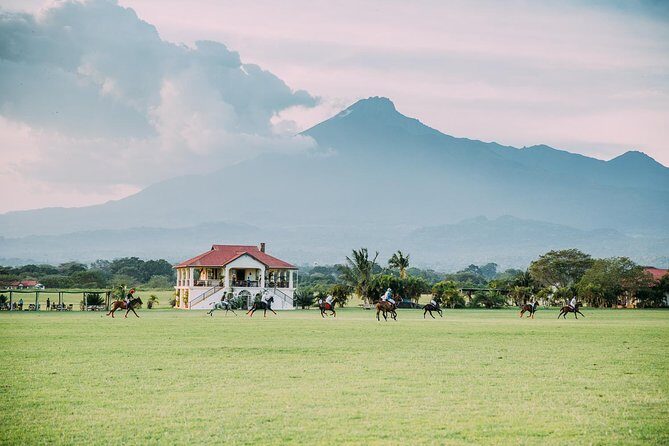
This is an Arusha-area horse safari that starts at Kaskazi Horse Safaris in Dolly Wildlife Estate, Maji Ya Chai. The big value here is the location. You’re not doing a full-day trek to get to a horse route; you’re getting out of the city area and into natural space relatively quickly.
In practical terms, that matters because you can do this in the middle of a normal itinerary. Arusha is often about crater daydreams and quick hops. A two-hour ride is a nice reset. It also gives you something different from the standard jeep rhythm: being on horseback changes how you experience the ground, the soundscape, and the way wildlife reacts.
One note that keeps things honest: Dolly Wildlife Estate is an estate with animals living their lives. So you might see zebra and wildebeest close to the trail, or you might see fewer animals than you hoped for. Either way, the point is getting access to areas where vehicle tracks and human noise aren’t dominating the moment.
You can also read our reviews of more tours and experiences in Arusha.



The simple flow of a two-hour horseback safari
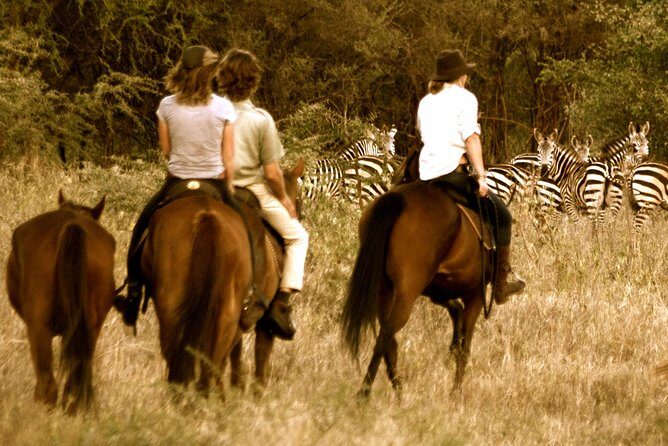
You’re looking at an experience that runs about two hours from start to finish, and it ends back at the same meeting point. You’re not committing to a long expedition, which is great if you’re trying to balance energy levels or save the biggest adventure for later.
Here’s what your timeline will feel like, in real-world terms:
You’ll arrive at the meeting point, get your bearings, and get fitted with a helmet. Then you mount your horse and start moving along the estate and surrounding natural area. Expect a trail pace that varies with the group and the horses, and expect frequent stopping opportunities if wildlife is nearby.
For beginners, the ride is described as a gentle hack along dust tracks within quieter estate areas where zebra, wildebeest, and antelope graze. For more confident riders, the experience can shift into faster riding and meandering paths, with more chances to cover ground and spot wildlife from different angles.
No matter what pace you get, the rhythm is the same: mount, ride, watch for movement, and enjoy the fact that you’re close enough to notice details you usually miss from a jeep window.
Wildlife spotting: what you can hope for (and what you can’t control)
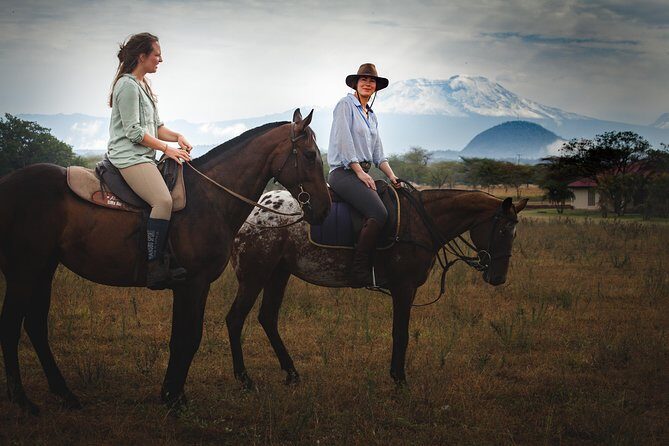
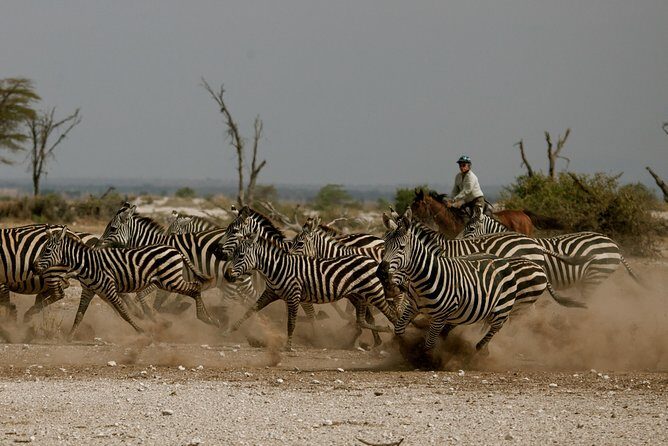
The headline animals are the ones you care about in northern Tanzania: zebra, wildebeest, and antelope. You may also spot monkeys moving through the trees above you, which adds variety to what otherwise could be a “look left, look right” activity.
The key thing to understand is why this safari feels special: you’re not just seeing animals from a distance. On good runs, riders get to ride close to zebra and wildebeest. That kind of closeness is exactly what makes the ride feel cinematic in a real, not staged, way.
But there’s a trade-off. Wildlife is not guaranteed on command, and animal movement changes with time of day, weather, and the day’s patterns. That’s why I’d avoid going in expecting an animal count like a checklist. If you keep it flexible—focus on being present and watching for signs of life—you’ll usually leave happier than if you only judge the outing by how many animals you can tick off.
Beginners, kids, and faster riders: how the ride adapts
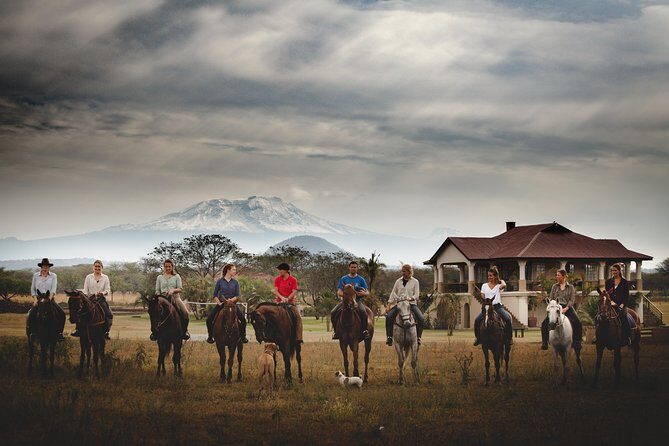
One of the strongest positives is that the activity is built for all experience levels. That doesn’t just mean “we won’t turn you away.” It means your ride can be shaped to match your comfort.
For first-timers, the ride is geared toward gentle movement along calmer tracks. It’s also set up to be family-friendly. For example, I see clear evidence that an 11-year-old rode successfully even with no prior horseback experience. That tells me they’re not just marketing to beginners—they’re running a format that works in practice.
If you’re an experienced rider, you can still get value. The plan includes options for faster gaits, and more confident guests can explore paths with a bit more riding intensity. In other words, this isn’t “everyone goes the same speed.” It’s more like two ride styles wrapped in one experience.
My practical advice: be ready for the fact that horse pace can vary day to day. If you want photos, go in knowing you’ll need to communicate with your guide. One tip that really matters: ask the guide to slow down when you need a stop or a steadier pose. It makes your pictures better without turning the ride into an awkward stall.
Helmets and trained horses: what safety looks like here
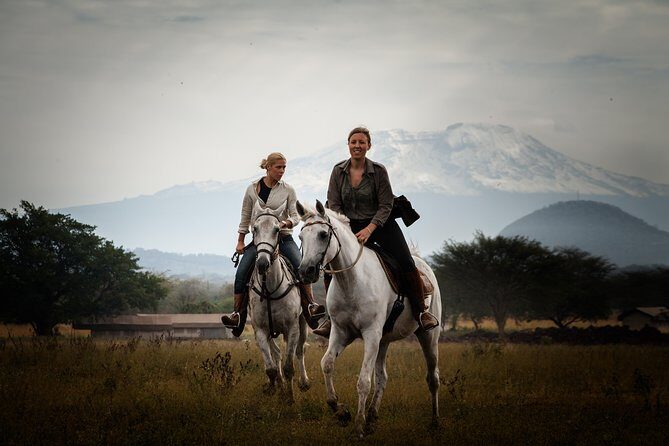
Safety is handled in the basics, and those basics are a big deal when you’re on horseback around wildlife. Helmets are provided, and the experience is designed for riders of different levels, which usually means the horses are trained for mixed riders and that the guides keep the pace appropriate.
From the feedback pattern, the guide style that works best is proactive safety. Riders noted that guides were safety conscious and good at managing the ride. The horses are described as well trained, and guests also mentioned riding relatively close to zebra and wildebeest when conditions allowed.
So what should you do as the rider to get the best safety outcome?
- Wear the helmet properly once it’s fitted.
- Stay attentive to the guide’s cues about pace and stopping.
- If you’re new, keep your focus on your balance first. Horses respond to rider movement, and calm riders help everyone.
The estate setting also matters. Since this is not a controlled arena, you’ll still be in a place where animals roam naturally. The best safety mindset is relaxed but alert.



When to ride in Arusha: morning vs late afternoon
You’ll have choices. Kaskazi runs both morning and afternoon rides, and that is not just a scheduling detail. It changes how the ride feels.
Morning rides can be great because you’re starting earlier, with often cooler air and fresh light for spotting animals. Afternoon rides can be a comfort play too. One practical tip from rider experiences: around later afternoon, like roughly 4:30, it can be cooler and more pleasant for everyone, including the horses. It also gives you softer light for photos.
There is another reason to care about timing: viewpoints. People mention views that include Mount Meru, and that kind of scenery tends to look best when the light is right and the air feels clear enough for distance.
My recommendation: if you’re choosing between two times, pick based on comfort first. If heat makes you cranky or slow, choose the later option. If you’re a morning person and want the day started with action, the morning ride can hit the sweet spot.
Photos on horseback: getting great shots without wrecking the ride
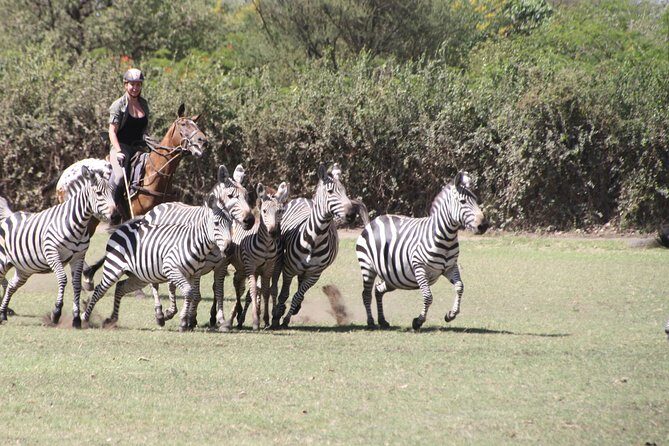
Horseback safari photos are a balancing act. You’re moving, the horse is responding to trail rhythm, and you’re often scanning for wildlife. That’s why you’ll get more consistently good pictures if you plan for short pauses rather than trying to capture everything while moving.
Here’s the simplest tactic: when you see something worth photographing—or you just want a clearer frame—ask your guide to slow down so you can take your shots. That’s a direct, practical suggestion that shows up for good reason.
Also, use your body positioning. Don’t fight the movement. Instead, lean slightly into the moment when your horse steadies. The best photo usually happens when the ride rhythm pauses naturally because of wildlife interest or trail timing, not when everyone is trying to snap too quickly at full speed.
Finally, keep your expectations realistic. You’re on a horse ride through an estate, not a professional photo set. The payoff is getting the perspective: zebra and wildebeest at your scale, with you actually part of the scene.
Price and value: is $120 fair for this kind of safari?
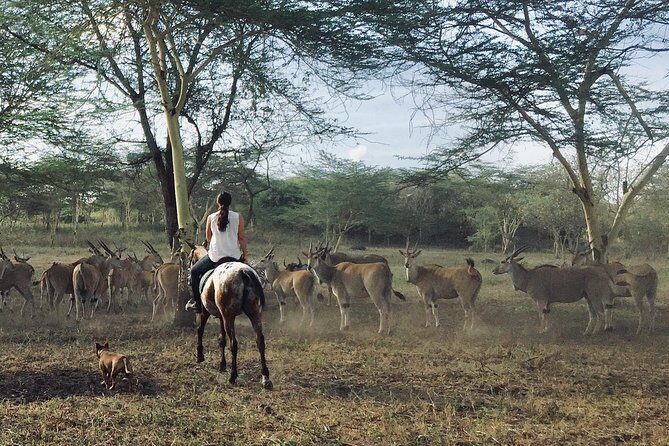
At $120 per person, this isn’t the cheapest activity in the Arusha area. But it also isn’t priced like a full-day jeep safari either. The value comes from what you’re buying:
- A guided horseback experience that works for beginners through advanced riders
- Helmet support
- A small group format (cap of eight)
- A wildlife route close to Arusha, so you’re not spending hours just traveling
The real question isn’t whether it’s affordable. It’s whether it fits your style. If you want the classic jeep photo line, this may not scratch that itch. If you want a different angle—close animal sightings when conditions allow, quiet trail moments, and a riding experience—you’re paying for access and the activity itself, not just the animal checklist.
Also consider what can vary. Wildlife sightings and horse speed are not guaranteed to match every expectation. That’s true for any wildlife setting. If you’re okay with that uncertainty and you value the riding experience, $120 can feel reasonable for what you get.
The practical stuff: tickets, groups, and weather
A few operational details make your planning easier.
You get a mobile ticket, which is convenient if you don’t want to carry paper. Confirmation is typically received within 48 hours of booking, subject to availability. And the group is kept small, capped at eight travelers, which helps the ride stay controlled and personal.
Weather matters here. This experience requires good weather. If it’s canceled because of poor conditions, you’ll be offered a different date or a full refund. That’s a straightforward approach, and it means you should keep a little flexibility in your schedule if your ride is near the beginning of your Arusha days.
One more planning tip: this ride can book up. The average booking lead time is about 38 days, so if you have a tight calendar, I’d secure your slot early, especially for the time of day you want.
Who should book this horse safari (and who should skip it)
This is a great fit if you:
- Want a horseback wildlife experience close to Arusha rather than a long-distance expedition
- Are traveling with beginners or mixed experience levels
- Care about safety basics like helmet support
- Like shorter, focused adventures that still put you in a real wildlife area
It may not be the best fit if you:
- Want a guaranteed high number of animal sightings on cue
- Only enjoy fast-paced riding and expect maximum speed the entire time
- Get disappointed when the pace is gentle, even if the experience is peaceful and scenic
And if you’ve got kids or you’re nervous about trying something new, this one stands out because it explicitly welcomes mixed riders. I’d still tell you to be honest with your guide about comfort level on the day, so you ride at the right speed.
Should you book Kaskazi Horse Safaris near Arusha?
If you’re open to wildlife that moves on its own and you really want a horse ride that brings you close to zebra, wildebeest, and antelope, I think you should book it. The small group size, helmet support, and morning/afternoon options make it easy to work into an Arusha itinerary. Plus, the ability to match pace to your skill level is a big quality-of-life win.
Just go in with the right mindset: this is not a zoo show and it’s not a speed trial. It’s a two-hour ride through a wildlife estate where you’re watching, listening, and enjoying the view from horseback. If that sounds like your kind of Tanzania day, Kaskazi is a strong choice.
FAQ
Where is the meeting point for Kaskazi Horse Safaris?
The ride starts at Kaskazi Horse Safaris at Dolly Wildlife Estate, Maji Ya Chai, Tanzania. The activity ends back at the same meeting point.
How long is the horse safari?
The experience lasts about 2 hours (approx.).
Are helmets provided?
Yes. Helmets are provided to participants.
Are beginners welcome?
Yes. All experience levels are welcome, and beginners are offered gentler riding options.
How many people are in the group?
The tour has a maximum of eight travelers.
Do they offer morning and afternoon rides?
Yes. Morning and afternoon rides are available.
What happens if the weather is poor?
If the experience is canceled due to poor weather, you will be offered a different date or a full refund.
How much notice do I need for a full refund?
You can cancel up to 24 hours in advance of the experience for a full refund. If you cancel less than 24 hours before, the amount paid is not refunded.