REVIEW · ZANZIBAR
Stone Town City Tour
Book on Viator →Operated by Exodus Go Tours · Bookable on Viator
Stone Town rewards slow walking. This 2-hour, 20-minute circuit takes you through narrow lanes where Arabic, African, Indian, and European influences sit side by side, often with mosques, churches, and temples close enough to spot in the same stroll.
Two things I especially like about this experience are the built-in guided context at the key landmarks and the fact that you’re not just walking until you melt. You get lunch and bottled water, plus you’ll have time to photograph places that usually feel like quick photo stops when you go on your own.
The main thing to plan for is the walking. You’ll cover a good amount on foot in real city streets, so wear comfortable shoes—and if weather looks rough, be ready for the tour to shift since it requires good conditions.
In This Review
- Key things to know before you go
- Why this Stone Town route feels efficient (and not tiring)
- House of Wonders: a quick start with real context
- Old Fort (Ngome Kongwe): history you can actually see
- Freddie Mercury Museum: the photo stop that’s more than a selfie
- Stone Town streets: architecture lessons from the Zanzibar Door to the church
- Old Slave Market / Anglican Cathedral: a heavier stop with guided structure
- Darajani Bazaar: shopping for spices without feeling lost
- Price and what you’re really getting for $58
- What to expect from the guides
- Getting ready: practical tips for a smooth 9:00 a.m. start
- Who this tour suits best
- Should you book Stone Town City Tour with Exodus Go Tours?
- FAQ
- What is the meeting point for the Stone Town City Tour?
- What time does the tour begin?
- How long is the tour?
- Where does the tour end?
- Is lunch included?
- Are entrance fees included for the stops?
- Does the tour include bottled water?
- Is private transportation included?
- What is the cancellation policy?
Key things to know before you go
- Multicultural stop list: House of Wonders, Old Fort (Ngome Kongwe), and the Freddie Mercury birthplace home
- Focused photo moments: Freddie Mercury Museum plus scenic architecture like the Zanzibar Door
- A serious historical component: Old Slave Market/Anglican Cathedral including slave chambers and statues
- Market time for shopping: Darajani Bazaar with a chance to pick up spices and items
- All fees covered: Lunch, bottled water, and site-related fees are included in the price
Why this Stone Town route feels efficient (and not tiring)
Stone Town is a place where getting lost can be part of the fun—until you realize you’ve wandered too far away from the sights you actually want to understand. This tour works because it’s built around walkable clusters. You start near Forodhani and end near Darajani, which is handy because those are major areas you can connect to afterward.
The timing also makes sense. At about 2 hours 20 minutes, you’re not spending an entire half-day on your feet. It’s long enough to hit standout stops (and listen), but short enough that you’ll still have energy for lunch and browsing afterward.
And because it’s a private tour/activity for just your group, you’re less likely to get rushed by strangers who move at a different pace. If you’re traveling as a couple or small group, this can make the whole experience feel smoother.
You can also read our reviews of more city tours in Zanzibar


House of Wonders: a quick start with real context
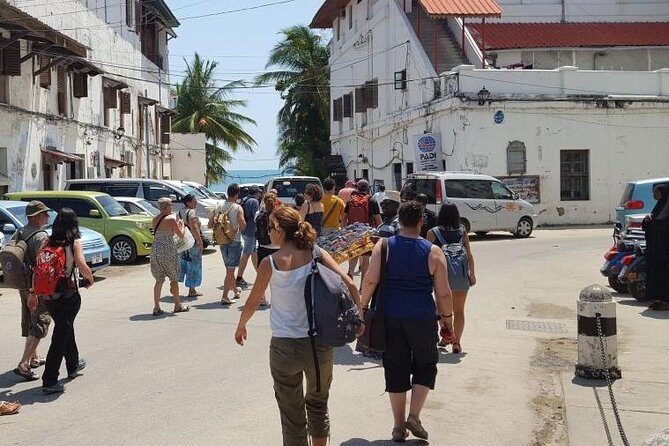
You’ll begin at Forodhani and meet your guide for greetings and a short setup about Stone Town—then you head to the House of Wonders area. Your guide gives information about the building’s history and cultural artifacts while you’re passing and stopping outside.
A tip: don’t treat this as a throwaway “we’re passing by” stop. The way Stone Town is layered—Arab, African, Indian, European—means the landmarks make more sense when someone explains what you’re looking at. Even a short orientation at the beginning helps you spot details later in the day, like decorative doors and the way architecture shifts from street to street.
Admission here is free, so there’s no stress about ticket lines or additional costs during this early segment.
Old Fort (Ngome Kongwe): history you can actually see
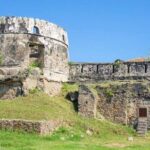
Next comes the Old Fort (Ngome Kongwe). You’ll walk there and sign in at the entrance door, then go inside where the guide explains what the fort meant in historical times and shows you different parts of the building.
What I like about this stop is that forts are often described in big, vague terms. Here, the value is in walking through parts of the structure and getting pointed explanations as you go. You’ll likely come away with a clearer sense of why this area mattered and how protection, power, and trade shaped the city.
Admission is free, but do note the “sign in” step. It takes a minute, and it’s one of those small city customs that goes smoothly if you’re not rushing.
Freddie Mercury Museum: the photo stop that’s more than a selfie
Then you’re off to the Freddie Mercury Museum, specifically the house where the musician was born. You’ll walk to the site, and you’ll take pictures of the house while your guide shares the story tied to that location.
This stop is short, but it’s a good reset. After forts and big historical sites, it gives you a pop-culture moment without feeling random. You get a sense of how Stone Town connects to the wider world, not just to regional trade and architecture.
One practical note: because it’s a photo-oriented stop, it helps to have your camera settings ready. Bright light can be harsh around midday, so consider using portrait mode or adjusting exposure if your phone tends to over-brighten pale walls.
Admission is free for this part of the visit.
Stone Town streets: architecture lessons from the Zanzibar Door to the church
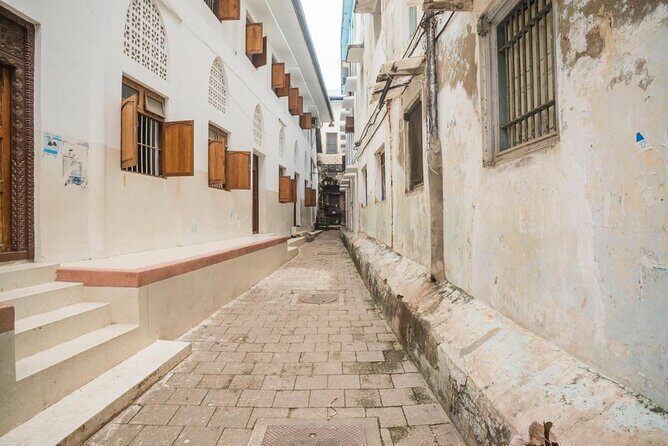
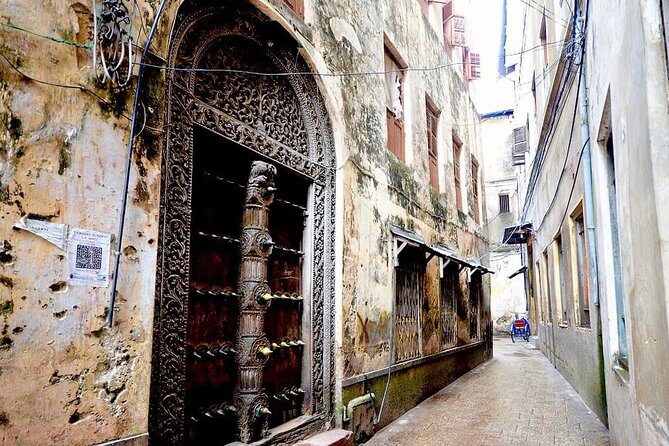
The tour then turns into a guided walk through the Stone Town streets. This is where the city starts to feel like a living puzzle: you’ll pass local shops, and your guide will point out multicultural architectural details.
Two details you should keep an eye out for:
- The Zanzibar Door concept, with its distinctive style and symbolism
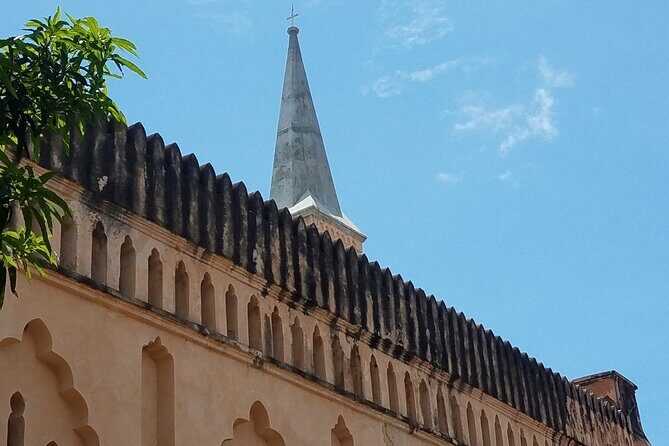
- The Roman Catholic church you’ll pass during the walk
This is also the segment where you’ll learn how to navigate narrow lanes. The streets are not the kind of place where cars pass, so the city’s layout shapes everyday life. When you understand the street logic, the whole area becomes easier to explore later on your own.
Because this segment is guided and you’re staying moving, it’s a nice compromise between structured learning and that free-wandering feeling.






Old Slave Market / Anglican Cathedral: a heavier stop with guided structure
After the more playful and architectural moments, you’ll hit a serious historical site: the Old Slave Market / Anglican Cathedral area. You enter through the gate, sign up, then go into a room where you have free time to look at information boards.
From there, you’ll be taken to the slave chambers and then see the statues of slaves, with your guide explaining history related to what you’re seeing.
This stop is only about 15 minutes, which means you shouldn’t expect it to replace a museum visit. But with a guide’s narration, it can land in a powerful way because it’s not just a quick glance. The structure—read boards first, then move into the chambers—helps you absorb details in the right order.
If you’re sensitive to difficult history, it’s worth knowing this stop is part of the deal. I’d treat it like a “pause” in your day rather than a checkbox. If your group needs a slower pace, you can ask the guide to pause while you read.
The admission for this segment is included.
Darajani Bazaar: shopping for spices without feeling lost
Finally, you head to Darajani Bazaar. Your guide explains the market and then you visit shops with an opportunity to buy spices and items to take home.
This is a smart ending for two reasons. First, markets reward the mood you’ve already built by seeing the city’s architecture and history. Second, you’ll have a practical set of purchases in mind—spices, packaged items, and small souvenirs—so you’re not overwhelmed by dozens of stalls at once.
A good way to shop here is to think in categories before you start:
- spices you actually cook with
- tea or blends you can use quickly at home
- small gifts you can carry easily
Also, remember you end the tour after visiting the market, and you’ll finish in front of a building called Jumba la Treni. Plan to keep your route simple afterward, especially if you’re heading out for lunch on your own.
This market stop is listed as free admission, so you’re mainly paying attention to what you choose to buy.
Price and what you’re really getting for $58
At $58 per person, the big value is not just the landmarks—it’s what’s bundled with the walk.
Included:
- Lunch
- Bottled water
- All fees and taxes
Not included:
- Private transportation
That “fees and taxes” part matters in Zanzibar. Even when entrance charges are small at individual stops, the total adds up once you’re counting each entry. Here, the tour covers the paid parts, including the Old Slave Market/Anglican Cathedral segment.
The also-noticed value is time. You’re getting a guided flow through the major sights that are connected by foot. If you tried to do this on your own, you’d likely spend extra time figuring out where to go, what to look for, and when to pause.
If you’re relying on local transport, this is practical because the start and end areas are near public transit.
What to expect from the guides
Your guide plays a real role in making this tour worth it. You’re not just receiving a list of stops—you’re getting explanations as you stand outside buildings, walk through the fort, view the Freddie Mercury birthplace area, and then handle the more sensitive slave market content.
In particular, you may be guided by someone with strong language skills. One guide named Oumar is mentioned as helpful and friendly, and an official francophone guide named Suleiman Abdallah Aliy appears in the local guide context.
So if you want a smooth experience, ask at the start what languages your guide can handle comfortably. It’s easier to follow when you understand every key detail, especially at the older historical sites.
Getting ready: practical tips for a smooth 9:00 a.m. start
The tour starts at 9:00 am. That’s a nice time window because you’re not starting at the hottest hour, and you’ll still have daylight for photos.
Here’s what I recommend you do before you go:
- Bring water (even though bottled water is included, it helps to have extra for later browsing).
- Wear closed-toe shoes with grip for uneven Stone Town streets.
- Keep your phone/camera charged for the Freddie Mercury house photo moment and the street architecture stops.
- Bring something light for sun. Even on a walking tour, the shade in Stone Town can be patchy.
Also, the tour requires good weather. If conditions are poor, it may be offered on a different date or you can request a full refund.
Who this tour suits best
This is a great choice if:
- You want a guided Stone Town orientation without a full-day commitment
- You like architecture and want help noticing details like the Zanzibar Door
- You’re okay with a structured, time-limited visit to difficult history
- You want market time at Darajani Bazaar with guidance so you can shop intentionally
It’s especially good for couples and small groups who don’t want to get mixed into a crowded group setting.
If you already know Stone Town well and you only want time for wandering, you might feel the tour is structured. But if you’re short on time and want the city’s highlights plus explanations, this is a strong fit.
Should you book Stone Town City Tour with Exodus Go Tours?
I’d book this tour if you want the best parts of Stone Town—landmarks, architecture, and a meaningful historical stop—tied together into a manageable 2-hour-plus walk. The bundled value is real: lunch, bottled water, and fees covered, plus a guided pace that helps you understand what you’re seeing instead of just moving past it.
Skip it only if you hate walking in tight streets or you’re looking for a long, self-paced museum-style visit. The slave market stop is meaningful, but it’s still timed.
If your goal is to get your bearings fast in one of Africa’s most characterful old cities, this is the kind of tour that does its job.
FAQ
What is the meeting point for the Stone Town City Tour?
The tour starts at Forodhani, Zanzibar, Tanzania.
What time does the tour begin?
The start time is 9:00 am.
How long is the tour?
The duration is approximately 2 hours 20 minutes.
Where does the tour end?
After visiting Darajani market, the tour ends in front of Jumba la Treni.
Is lunch included?
Yes, lunch is included.
Are entrance fees included for the stops?
Admission is listed as free for places like House of Wonders, Old Fort (Ngome Kongwe), Freddie Mercury Museum, Stone Town, and Darajani Bazaar. The Old Slave Market/Anglican Cathedral segment has admission included.
Does the tour include bottled water?
Yes, bottled water is included.
Is private transportation included?
No, private transportation is not included.
What is the cancellation policy?
You can cancel for a full refund up to 24 hours in advance. The tour also requires good weather; if canceled due to poor weather, you’ll be offered a different date or a full refund.