REVIEW · ZANZIBAR
Stone Town Walking Tour
Book on Viator →Operated by Khamis Davido · Bookable on Viator
Stone Town can feel like stepping into a living museum. This walking tour is built around Stone Town’s UNESCO-level streets—sea-side lanes, carved doors, meeting points of Arab, Indian, and European influence—plus the stories behind the slave, spice, and ivory trade. I especially loved the way the walk ties architecture to real events, and the fact that Khamis Davido can explain everything clearly in both English and German. One consideration: you’ll be on foot through tight alleys and markets, so pack comfy shoes and a moderate walking pace mindset.
The route is practical and timed. In a couple hours you’ll hit the major historical beats—Old Fort and the House of Wonders area, then the Old Slave Market and Anglican Cathedral area, and finally Darajani Bazaar with fish and spice stalls—without feeling dragged around. The tone stays respectful, and you don’t just look; you learn what the places used to be.
If you’re the type who likes to get your bearings fast, this tour makes a great first pass. It also ends right back near the start at Old Fort (Mizingani Rd), so you’re not stranded when you’re ready to keep exploring on your own.
In This Review
- Key things that make this Stone Town walking tour worth your time
- Stone Town on foot: why this route works in 2–3 hours
- Starting at Old Fort (Mizingani Rd): your orientation point
- Stop 1: Stone Town streets, Old Fort context, and the House of Wonders area
- Stop 2: Old Slave Market and Anglican Cathedral—what you’ll see and why it’s handled well
- Stop 3: Darajani Bazaar and the fish-and-spice market atmosphere
- Price and value: what $45 gets you (and what it doesn’t)
- The guide matters: Khamis Davido’s style of explanation
- Logistics you should know before you go
- Who should book this Stone Town walking tour?
- Should you book Stone Town with this guide?
- FAQ
- How long is the Stone Town walking tour?
- Where does the tour start?
- Where does the tour end?
- Is admission included for the main stops?
- What is included in the price?
- Is this tour private?
- What kind of fitness level do you need?
- What happens if weather is poor?
- What languages does the guide speak?
Key things that make this Stone Town walking tour worth your time

- Old Fort + House of Wonders stop early so you get context before the deeper sites
- Old Slave Market and Anglican Cathedral focus with the slave monument and original chain you can see on-site
- Darajani Bazaar finish with a short look at the daily fish and spice hustle
- Khamis Davido’s clear English and German helps a lot if you want details, not just highlights
- All fees and taxes are included in the $45 price, with tips left to you
- Private-group experience means it’s just your group, not a mixed crowd
Stone Town on foot: why this route works in 2–3 hours

Stone Town is Zanzibar’s headline destination for a reason. The streets are packed with history, and the buildings aren’t just pretty—they’re clues. This tour uses that strength. Instead of hopping from one far-off spot to another, you move along the same lanes locals walk, watch, and trade in.
That matters because Stone Town is a place where context changes how you see everything. A doorway is not just a doorway when you understand who built and used it. A church area is not just a church when you know what used to happen nearby. And a market isn’t only about shopping when you know what spices and food meant to trade on the island.
I like that the timing fits real life. The tour runs about 2 to 3 hours, with a walk that’s structured but not rushed. You get enough stops to feel you covered the core, and then you’re released back near the Old Fort so you can wander independently after.
You can also read our reviews of more walking tours in Zanzibar



Starting at Old Fort (Mizingani Rd): your orientation point
The tour begins at Old Fort, Mizingani Rd, Zanzibar. That’s an excellent choice because Old Fort sits at the center of the Stone Town story you actually want to understand first: administration during colonial times, the sea-side setting, and the “how did this city function” perspective.
From here, you’re not just staring at buildings. You’re walking past historical structures that were used as administration offices during colonial time, and that helps you connect the architecture to power and movement. It also gives you an easy mental map for the rest of the walk, since Stone Town’s alley network can feel like it has a personality of its own.
If you’re coming from the coast areas or using public transport, the meeting point being near transit is also practical. You spend less time figuring out logistics and more time watching the city.
Stop 1: Stone Town streets, Old Fort context, and the House of Wonders area

Stop 1 covers the main Stone Town walk along the sea-side area and through the historic parts of the city. The tour focuses on how Stone Town looks and how it worked, including the cosmopolitan influences you can still see today.
You’ll also spend about one hour on this first section, which is a sweet spot. It’s long enough for your brain to switch from vacation mode to “read the city” mode, but short enough that you don’t feel exhausted before the emotional part of the tour.
Two places get attention in this segment: Old Fort and the House of Wonders area. The key value here is not only the sites themselves, but the way the guide uses them to explain how trade and outside influence reshaped Zanzibar. Even if you’ve read a little about the island before, having someone point out what to notice—doors, balconies, layout—makes the whole neighborhood feel “legible.”
Also, this is where the tour’s character shows. You’ll see the curving doors and balconies people photograph, but you’ll also connect them to a broader story of how Zanzibar acted as a multi-cultural meeting point.
Stop 2: Old Slave Market and Anglican Cathedral—what you’ll see and why it’s handled well

Stop 2 is where the tour becomes serious. You visit the former slave market area and the Anglican Cathedral area tied to it, with about one hour dedicated here.
This stop includes a few elements you don’t want to rush past:
- The former slave market exhibits the history of slavery
- The church place is part of the story of how the space functioned like a market center
- You can see the slave monument with an original chain used during the slave trade
This is important because it keeps the lesson grounded in physical evidence. You’re not only absorbing general history—you’re seeing a tangible reminder of the forced movement that powered parts of the trade system.
One thing I appreciate: the tour structure doesn’t hide from the topic, but it also doesn’t turn it into a performance. It’s presented as part of the city’s story, alongside spice and ivory trade routes. That balance helps you understand Zanzibar as a full historical system, not a set of pretty pictures.
If you’re sensitive to heavy topics, plan your energy for this part. Come in calm, and let the walk pace itself. A guided stop like this can be intense in the best way: it sticks.
Stop 3: Darajani Bazaar and the fish-and-spice market atmosphere

Stop 3 is shorter—about 30 minutes—and it’s a good ending. You walk through Stone Town’s narrow lanes toward Darajani Bazaar, where the focus shifts from major historical sites to everyday life.
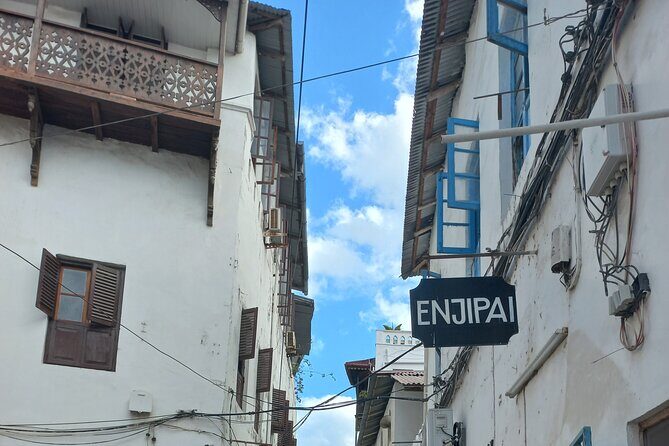
You’ll spot the kinds of details people come to Stone Town for: Zanzibar doors, Indian-style balconies, and a lot of shopfront activity. Then you reach the market area where you can experience the daily hustle connected to the fish and spice stalls.
Why this last stop works: it reminds you Stone Town isn’t only past tense. Spice and trade aren’t just “then,” they’re still part of what people do today. The market segment gives you a sensory landing pad after the heavier history at Stop 2.
Also, if you like souvenirs, this is where your eyes will get busy. You’ll see gifts and shops, and the tour includes time that can fit shopping naturally. In the reviews, people highlighted that Khamis also helped with shopping options, which makes sense here: you’re close to where people actually sell.






Price and value: what $45 gets you (and what it doesn’t)
The price is $45.00 per person, for a 2 to 3 hour guided walking tour. That’s not a “cheap tour,” but it also isn’t pricing you out of doing something meaningful.
The big value point is that all fees and taxes are included. That removes a common stress: you don’t get to the first admission or stop and wonder what else is coming. Tips aren’t included, but tipping is always optional in the sense that you decide what feels right for the service you received.
The other value point is the guide. Reviews consistently highlight Khamis Davido’s professionalism and the ability to speak fluent English and German, plus the way he explains history in detail. When your guide can answer questions and keep the group moving at the right pace, the price feels more justified.
One practical note: this tour is described as weather-dependent. If it’s canceled due to poor weather, you’ll be offered a different date or a full refund. That’s worth taking seriously if you’re scheduling only one day in Stone Town.
The guide matters: Khamis Davido’s style of explanation

A walking tour can be only as good as its guide. In this case, the standout theme in the feedback is consistent: Khamis Davido is friendly, careful with timing, and good at explaining history in a way that doesn’t feel like a lecture.
People specifically called out:
- Fluent English and German
- Detailed explanations of Stone Town’s history and architecture
- Taking good care of the group
- Making the tour stressless and fitting it into the time you have
- Helping with shopping possibilities
That last point may sound small, but it’s a big deal if you’re new to Stone Town. When you’re standing in a crowded bazaar, having someone guide your attention helps you avoid wasting time and lets you shop with less confusion.
One more detail: some reviews mention Khamis going beyond the strict tour end—like ensuring guests were guided back to their driver after lunch. That tells me he treats the experience as more than checklists.
Logistics you should know before you go

This is a private tour/activity, meaning only your group participates. That often makes a walk through Stone Town feel calmer, especially if your group has kids, seniors, or anyone who needs a slower pace.
It’s also marked as near public transportation. So if you’re hopping between beaches, ferry terminals, or your hotel area, you’re not stuck with long transfers.
Physical fitness is described as moderate. This is realistic. Stone Town’s streets can be uneven, tight, and busy at times. You don’t need to be an athlete, but you should be comfortable walking for the duration and navigating narrow paths.
Finally, you’ll receive confirmation at booking, and there’s a mobile ticket involved. That’s a nice modern touch when you’re traveling on a phone anyway.
Who should book this Stone Town walking tour?
I’d book this if you want your Stone Town experience to feel organized but not sterile. It’s a good match for:
- First-timers who want the key sites in a short window
- People who care about architecture details, not just photos
- Travelers who appreciate a guide who can explain trade history clearly
- Anyone who wants an ethical, on-site approach to the slave trade history
- Shoppers who want a smarter plan and local context at Darajani Bazaar
If you already know a lot of Stone Town history and you prefer ultra-long exploration sessions, you might still enjoy it—but you’ll probably want more time to wander after. That’s the strength here: you get a guided “core,” then you take over.
Should you book Stone Town with this guide?
Yes, if you want a short guided walk that hits the big landmarks and teaches you what to notice on the way. The combination of Old Fort context, the Old Slave Market and Anglican Cathedral stop with the visible chain monument, and a finish at Darajani Bazaar gives you a full view of Stone Town as both past and present.
I’d lean toward booking if your group values good explanations in English or German, and if you want someone friendly who keeps the pace realistic for the time you have.
One last decision tip: plan comfortable footwear and mentally prepare for the heavier history at Stop 2. If you do that, this tour is one of the cleanest ways to understand Stone Town without missing the essential parts.
FAQ
How long is the Stone Town walking tour?
It runs for about 2 to 3 hours, depending on timing and pacing.
Where does the tour start?
The meeting point is Old Fort, Mizingani Rd, Zanzibar, Tanzania.
Where does the tour end?
It ends back at the meeting point near Old Fort.
Is admission included for the main stops?
All fees and taxes are included. Admission for Old Fort and the House of Wonders area is listed as free, and the Old Slave Market/Anglican Cathedral stop is included. Darajani Bazaar admission is free.
What is included in the price?
The tour includes all fees and taxes. Tips are not included.
Is this tour private?
Yes. It’s private, and only your group participates.
What kind of fitness level do you need?
A moderate physical fitness level is recommended.
What happens if weather is poor?
This experience requires good weather. If it’s canceled due to poor weather, you’ll be offered a different date or a full refund.
What languages does the guide speak?
Based on reviews, Khamis Davido speaks fluent English and German.