REVIEW · ZANZIBAR ARCHIPELAGO
Zanzibar: Private SpiceFarm, PrisonIsland And StoneTown Tour
Book on GetYourGuide →Operated by yazan tours · Bookable on GetYourGuide
Stone Town can feel like a movie set. This private day tour strings it together with Prison Island and a spice farm stop, all with a guide and hotel pickup. Two things I like right away are the smooth, organized flow and the fact that you’re not just looking at places—you get explanations tied to what you’re seeing.
I especially like that the day mixes people, food, and nature instead of staying stuck in one lane. You’ll get a guided walk in Stone Town, a boat ride to Prison Island to see the giant Aldabra tortoises, and then a Shabuta Spice Farm visit where you learn how spices are grown and used—plus a local Swahili lunch if you choose it. One drawback to consider: this tour is not suitable for people with diabetes, and it also has weight and age limits (over 287 lbs / 130 kg, or over 70 years).
In This Review
- Key things that make this tour worth considering
- Stone Town first: how this day tour keeps the story moving
- Your private guide in Stone Town (including what you can ask for)
- Prison Island by boat: tortoises, a quarantine past, and beach time
- Shabuta Spice Farm: learning how spices grow (and why lunch hits harder)
- Lunch of Swahili food: why it’s the best part for many people
- Price check: does $70 per person make sense?
- Logistics that matter: timing, cash, and simple rules
- Who should book this Zanzibar private tour (and who should reconsider)
- Should you book? My practical take
- FAQ
- FAQ
- What’s included in the tour price?
- Is lunch included?
- Do I need cash?
- Is the Slave Trade Memorial Market fee included?
- Are drinks or smoking allowed during the tour?
- Is the tour private, and what languages are available?
Key things that make this tour worth considering

- Private guide in Stone Town so you can request what you actually want to see
- Prison Island history plus Aldabra tortoises, with time to relax or snorkel
- Shabuta Spice Farm (small plots) with practical talk on planting and harvesting
- Lunch on-site featuring Swahili-style dishes you just learned about
- Hotel pickup and drop-off that keeps the day from turning into logistics work
Stone Town first: how this day tour keeps the story moving

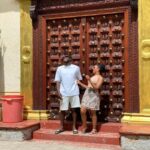
Zanzibar’s Stone Town isn’t a place you quickly “cover.” It’s more like a place you start reading, then keep rereading from different angles. The value of this tour is that it begins right where Stone Town life starts to make sense: with your guide leading a walking tour through the important landmarks and streets in the heart of town.
Stone Town is often described as the oldest town in East Africa, and what matters for you on the ground is the vibe: old stone lanes, dense human activity, and a sense that the island’s past still shapes daily routines. A good guide helps you connect dots fast—who built what, why certain sites matter, and how the island’s culture shows up in normal life, not just monuments.
Also, because it’s private, you’re not stuck with a rigid group route. In practical terms, that means you can slow down for details or speed up if the street is not your thing. That flexibility is one of the reasons this format works so well as a first or second day on Zanzibar.
You can also read our reviews of more private tours in Zanzibar Archipelago

Your private guide in Stone Town (including what you can ask for)

The tour is built around a guide who handles the explanations and the timing between stops. In the Stone Town portion, you’re doing a guided walk where the focus is historical and cultural landmarks, plus everyday local life. This is the part where a guide can save you from the “I saw stuff but I didn’t know what it meant” problem.
The tour offers English, French, and Spanish. In one experience, the guide was Kiki (French-speaking). In another, the guide was Yasser. Either way, the practical benefit is the same: you can communicate clearly, ask questions, and get context without having to piece together information from signs that may not be detailed.
What you can do to get more out of this stop:
- Think of 2–3 things you’d like to see in Stone Town before pickup (even simple ones like a specific area or landmark type).
- Ask your guide what’s fastest to reach on foot from where you’re standing, so you don’t waste energy backtracking.
- Expect to walk. Even a “short” tour day still means active feet in a compact town.
If you’re the kind of traveler who likes to understand what you’re seeing, this is a strong setup. If you just want photos with minimal talking, you might want to gently set that expectation at the start.
Prison Island by boat: tortoises, a quarantine past, and beach time

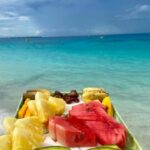
After Stone Town, you jump to Prison Island by boat. The ride itself is part of the experience—this is one of those transitions where Zanzibar’s mainland density gives way to open water and that lighter, coastal mood.
Prison Island Zanzibar is known for two things:
1) its former use as a quarantine station
2) the famous giant Aldabra tortoises
The quarantine-station angle matters because it adds a real-world history reason for why the island existed beyond tourism. It’s not only a “look at animals” stop. With a guide, you’ll learn the background and how the island’s role connects to wider regional health and movement patterns.
Then there’s the tortoises. You don’t need to be a wildlife superfan to enjoy them. They’re slow, old-school, and strangely calm—perfect for photos and just watching for a while. The tour also gives you time to relax on the beach or snorkel in the clear water, if that’s your style.
A practical note: bring your attention, not just your camera. The best moments on Prison Island are often the unplanned ones: watching the light, taking a break in the salt air, and letting the tortoises do their tortoise thing while you catch your breath after a walking day.
Shabuta Spice Farm: learning how spices grow (and why lunch hits harder)
Spice farms in Zanzibar can be touristy if they feel like a show. This one—Shabuta Spice Farm—is presented as an authentic garden with spices grown in small plots. That detail makes a difference. Small plots usually mean you’re walking through working areas and learning from the actual rhythm of the land instead of just following a scripted path.
At the farm, you’ll learn what’s planted, how it’s cultivated, and how it’s harvested. You also get everyday uses of Zanzibar’s aromatic spices, which is the part that turns this from a sightseeing stop into something useful you can take home.
This is also where the day’s logic clicks. You saw the island’s human culture in Stone Town. You saw the island’s water and animal life on Prison Island. Now you’re in the green, learning what makes Zanzibar taste like Zanzibar.
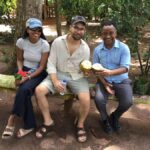
One of the standout details from the experience is the coconut moment: there’s a coconut tree climber who collects a coconut at the end of the spice tour. It’s a memorable, visual finish that makes the “spices and palms” theme feel real, not just explained.
If you want to maximize learning time here:
- Ask how the spices are used in cooking (not only what they are).
- Pay attention to harvesting seasons or methods, since that’s where the practical knowledge tends to live.
- Stay present during the explanations. It’s easier to taste later when your brain is already linking names to smells.
Lunch of Swahili food: why it’s the best part for many people
Lunch is served at the spice farm with local Swahili food, when you select the lunch option. This is more than included food. It’s a built-in “taste test” that comes right after you’ve learned how the ingredients work.
That order matters. If you eat first and learn later, the flavors don’t connect. Here, you’re likely to recognize spice types, understand how they’re used, and notice the way Swahili dishes can feel both comforting and bold depending on the herbs and aromatics.
This part of the day is also a nice break from walking. You get seated time, a real meal, and a calmer pace before you head back.
What to expect from the meal based on what’s provided: it’s a Swahili-style lunch tied to local ingredients grown on the farm. The exact dishes aren’t listed in the details, so I’d treat it as a farm-cooked local experience rather than a menu you can predict like a restaurant.



Price check: does $70 per person make sense?

$70 per person sounds simple. The question is what you get for it—and here, the value is in the package.
Included items that support the price:
- Hotel pickup and drop-off
- A tour guide for all parts
- Bottled water
- Entrance at the spice farm
- Boat transport
- Entrance fees and marine conservation fees for Prison Island (you choose the appropriate option)
- All fees and taxes
- Lunch of Swahili food if you select the lunch option
That’s a lot of “single-ticket” costs bundled into one day. Private tours can be expensive when you have to add every entrance and every transfer separately. This one reduces that headache. You’re paying for one coordinated day with transport, guides, and key admissions.
Is it expensive compared to DIY? Yes, most likely. But DIY in Stone Town plus Prison Island plus a working spice farm usually turns into a bunch of small bookings, timing problems, and more chances of not getting good explanations. The guide component is what turns the day from a checklist into an understanding experience.
So for who it’s good value: if you want a guided, one-day sampler that includes transportation and key entries, $70 can be a fair deal.
Logistics that matter: timing, cash, and simple rules
This tour asks you to bring cash. That’s usually for small extras or optional entrances. One item explicitly not included is the Slave Trade Memorial Market entrance fee at $5 per person, which you can choose to enter or skip.
You also need to plan around the tour’s simple no-go rules:
- No smoking in the vehicle
- No alcohol and drugs
Those aren’t just “house rules.” They keep the day comfortable and predictable, especially during long ride segments and when you’re eating.
If you’re the type who likes to stay organized, do this before you go:
- Carry enough cash for optional fees.
- Wear clothing that works for walking in a warm climate (light layers help).
- Bring something for sun and hydration, even though bottled water is included.
Who should book this Zanzibar private tour (and who should reconsider)
This experience is a strong fit if you like variety in one day: culture, history context, wildlife, and hands-on spice learning, all with a guide and smooth transfers.
It may be a poor fit if any of these apply:
- People with diabetes (not suitable)
- People over 287 lbs (130 kg)
- People over 70 years
The big reason is straightforward: Stone Town is a walking tour, and the overall day involves moving between sites. Even when the pace is managed by a guide, your body still needs to do the work.
Who it suits best:
- First-time visitors who want structure
- People who prefer private guiding over crowded group routes
- Travelers who enjoy food and want spice education that connects directly to lunch
- Anyone who wants Prison Island without having to figure out transportation on their own
Should you book? My practical take

I’d book this tour if your goal is a guided “Zanzibar in one day” plan that doesn’t leave you guessing. The best part is the way the stops connect: Stone Town gives you the cultural and historical framing, Prison Island adds a distinctive island story and animal viewing, and Shabuta Spice Farm makes the scents and flavors you learn about actually show up in your lunch.
I would skip it if you’re looking for a laid-back day with zero walking, or if the diabetes/age/weight restrictions apply to you. Also, if you only care about one topic—say, only beach time or only wildlife—you might feel the day is too packed.
FAQ
FAQ
What’s included in the tour price?
The tour includes a tour guide for all parts, bottled water, all fees and taxes, hotel pickup and drop-off, spice farm entrance, boat transport, and entrance fees at Prison Island plus marine conservation fees (the appropriate option is chosen). Lunch of Swahili food is included if you select the lunch option.
Is lunch included?
Lunch is included only if you choose the Swahili lunch option. The meal is served at the spice farm.
Do I need cash?
Yes. The tour specifically asks you to bring cash, which is useful for optional costs like the Slave Trade Memorial Market entrance.
Is the Slave Trade Memorial Market fee included?
No. The Slave Trade Memorial Market entrance fee is $5 per person and is optional.
Are drinks or smoking allowed during the tour?
Smoking in the vehicle is not allowed, and alcohol and drugs are not allowed.
Is the tour private, and what languages are available?
It’s a private tour. Languages available for the guide are English, French, and Spanish.