REVIEW · ZANZIBAR CITY
Jozani Forest
Book on Viator →Operated by Suncoast Zanzibar Tours · Bookable on Viator
A day in Jozani starts with surprising calls. You’ll track down Zanzibar’s endemic monkeys, then move through mangrove habitat with a guide who helps you actually see what matters. I love the chance to look for Red Colobus and compare them with other species in the forest. I also like that the walk doesn’t feel rushed, so you can pause for sightings instead of marching on.
This is a private half-day format, so your group sets the rhythm. It includes pickup and drop-off, plus an air-conditioned vehicle and bottled water, which makes a forest trip feel easy rather than logistically annoying. You’ll also get admission included in the package, which saves you a step.
One thing to think about: the experience depends on good weather. If conditions are poor, the operator may reschedule or refund, so it’s smart to keep your plans flexible.
In This Review
- Key highlights to know before you go
- Why Jozani Forest feels different than a standard wildlife stop
- The monkey focus: Red Colobus and the other colobus options
- What else lives here besides monkeys (and why it makes the walk better)
- Stop by Stop: the forest walk starting at the Red Stage area
- The mangroves walk: a different feel, same wildlife mindset
- Timing, transfers, and how the private setup helps you enjoy it
- Price and value: what $100 buys you in the real world
- Weather matters in Zanzibar forest life
- What to expect during the experience (comfort, pace, and practical flow)
- Should you book the Jozani Forest private tour?
- FAQ
- What’s included in the Jozani Forest private tour?
- Is hotel pickup and drop-off provided?
- How long does the tour take?
- Which animals and birds can I expect to see?
- Do I get a mobile ticket?
- What happens if the weather isn’t good?
Key highlights to know before you go
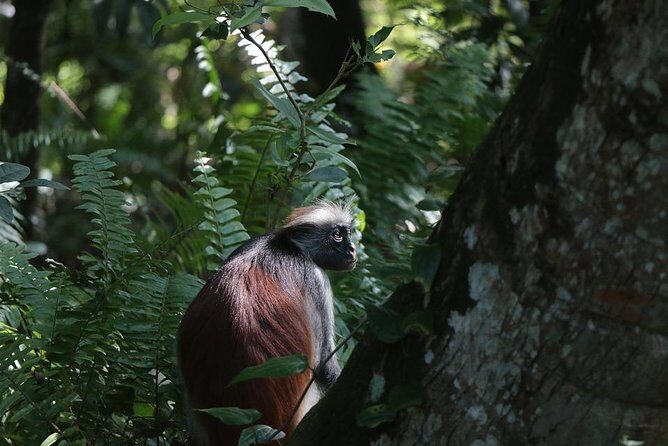
- Zanzibar’s endemic Red Colobus: the forest is famous for them, and the numbers from conservation work are impressive.
- More than monkeys: you’re also looking for butterflies, birds, and other small forest species.
- Black-and-white Colobus plus Sykes and more: you get a better shot at multiple colobus types.
- Mangroves are part of the story: after the main forest walk, you’ll head into the mangrove area.
- Private pacing: your group goes at your own speed instead of blending into a big crowd.
- Pickup + drop-off included: you don’t have to figure out local transport to Jozani.
Why Jozani Forest feels different than a standard wildlife stop
Jozani Forest is Zanzibar’s main nature spotlight, but it’s not just about seeing animals. The real value is understanding how the habitat shapes what you find. In one protected area, you can move through swamp forest, evergreen thickets, mangroves, and other forest types—so your chances of noticing different wildlife go up as the scenery changes.
This tour is built around that idea. You’re not stuck with a quick photo session and then out the gate. Instead, you get guided time in the forest so you can spot monkeys and also pick up on the small, easy-to-miss details like birds and butterflies moving through the canopy and understory.
And because it’s private, you don’t have the usual scramble. If everyone in your group wants to wait for the next movement, you can do that without feeling like you’re holding up strangers.
You can also read our reviews of more tours and experiences in Zanzibar City.
The monkey focus: Red Colobus and the other colobus options
The star of Jozani is the Red Colobus, an animal that’s endemic to Zanzibar—meaning it’s native to this island and not found in the same way elsewhere. Jozani’s Red Colobus story also has a conservation arc: about 20 years ago, they were considered at risk of extinction, but conservation efforts helped turn the trend around. The tour info notes roughly 6,000 red colobus monkeys living in Jozani Forest today, which helps explain why sightings are a realistic goal rather than a once-in-a-lifetime gamble.
But the monkey section isn’t single-species only. You’ll also be on the lookout for other colobus types, including Black and White Colobus. Depending on the day and where the guide leads you, you may also hear about and search for Sykes and red colobus monkeys as part of the broader primate and forest-wildlife mix.
Here’s why that matters for your experience: colobus monkeys don’t always show themselves instantly. A good guide helps you read the forest—where they tend to move, what sounds to listen for, and how to position yourself for views. That’s the difference between seeing monkeys and actually getting to appreciate the animals in their habitat.
What else lives here besides monkeys (and why it makes the walk better)
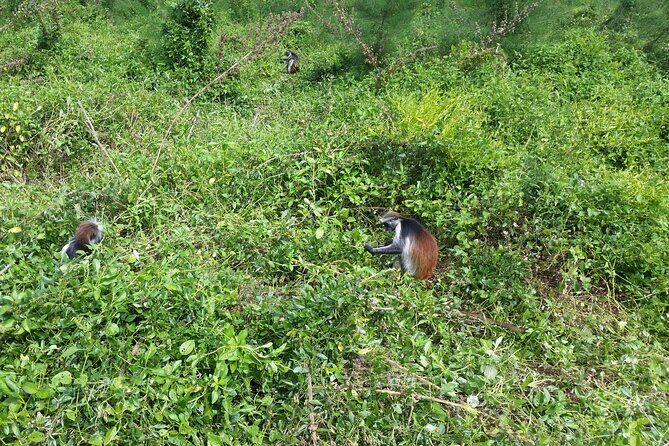
If you only care about primates, Jozani still delivers. But the tour shines when you look past the obvious. The forest is described as home to several habitats and a wide mix of wildlife, including bush pigs, Ader’s duiker, suni antelopes, elephant shrews, chameleons, and lots of birdlife.
You’ll also spend time looking for butterflies and birds during the walk. This is one of those “small” details that turns into big enjoyment, because it changes how you experience the place. Instead of scanning only for movement in the canopy, you get to notice activity at different levels—birds calling from branches, color flashes from insects, and the occasional surprise when something moves closer than you expect.
Even when an animal doesn’t show up, the guide-led focus helps you understand what you’re not seeing. That makes the walk feel purposeful rather than random.
Stop by Stop: the forest walk starting at the Red Stage area
Your main start point is the Red Stage area by Red Monkey Beach Lodge, where the Jozani Forest experience kicks off. This is where the focus becomes practical: get oriented, begin searching, and let the guide’s local knowledge help you find the best spots to watch.
From there, the time is designed around real wildlife viewing. The tour includes admission, and the forest time is listed at about 2 hours at this starting stage. In that window, you’re not just walking through greenery. You’re moving through habitats such as swamp forest, evergreen thickets, and mangrove environments, which increases the range of animals you might encounter.
What I like about this structure is that it gives you a concentrated nature experience without pretending you’ll see everything Jozani can possibly offer. Think of it like a guided “best-of” pathway rather than a marathon through the entire reserve.
Possible drawback: two hours can feel quick if your group locks onto one favorite area and wants to stay longer. The good news is the overall tour duration is flexible (listed as 2 to 6 hours), so if you’re seeing a lot and want time to linger, you can often lean into that pacing with your private guide.
The mangroves walk: a different feel, same wildlife mindset
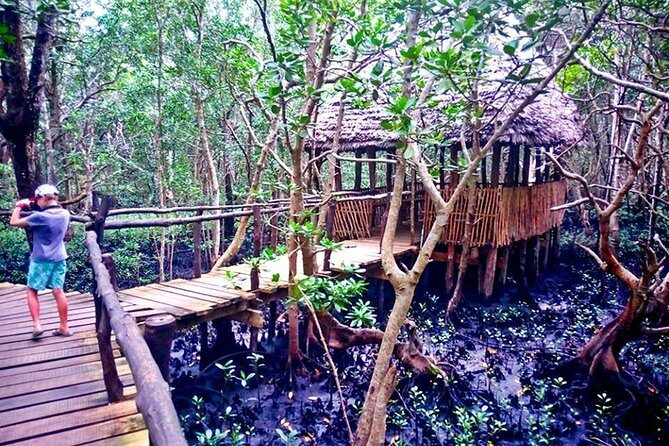
After the main colobus search, the experience typically includes a walk through the mangroves. This changes the whole vibe. Mangroves are a unique coastal-forest system, with a layout that feels more enclosed and more “woven” than open trail forest.
This section matters because mangroves aren’t just scenic. They’re another habitat layer that supports birds and other small wildlife. In a place like Jozani, that means you get a second chance to spot things even if the forest timing was slow with monkeys.
It also helps you avoid one of the common problems in wildlife trips: leaving right after you’ve seen the big-ticket animal. Here, the mangroves extend the experience and give you a reason to keep paying attention even after the monkey sightings start to settle down.

Timing, transfers, and how the private setup helps you enjoy it
This tour is scheduled for a half-day window, with duration listed at about 2 to 6 hours. That range is useful because it reflects what often happens in wildlife viewing: some days you get movement quickly, other days you wait a bit longer for animals to show.
Pickup and drop-off make a real difference in Zanzibar. The tour includes transfers to and from your hotel, plus an air-conditioned vehicle and bottled water. For many people, this is the deciding factor—Jozani can be easier to enjoy when you’re not stressing about transport, parking, or finding the right access point.
Also, because it’s private, your group is the only one participating. That usually means fewer interruptions and more room for your guide to adjust the route based on where animals are active.
Price and value: what $100 buys you in the real world
The price is listed at $100.00 per person, and the tour includes key cost items like all fees and taxes, bottled water, admission for the main forest experience, and air-conditioned transportation. You’re also getting a private guide approach rather than joining a mixed group.
Is it “cheap”? Probably not if you’re comparing it to a self-guided taxi day. But it’s good value if you want fewer hassles and more guided wildlife time. Private viewing is also what often turns an ok trip into a memorable one: you spend more of your time watching and less time negotiating logistics.
One interesting alternative exists if you’re the DIY type. You can arrange to go yourself by taxi or rental car, then pay at reception and be allocated a guide. If you choose that route, you may get a more flexible setup. But the advantage of this organized private tour is the streamlined end-to-end flow: pickup, guided time, and a return to your hotel.
Weather matters in Zanzibar forest life
The experience requires good weather. If it’s canceled due to poor weather, you’ll be offered a different date or a full refund. For your planning, that means you should avoid booking this as a single “do-or-die” event on a fixed schedule.
Also, one of the photos you may see from Jozani days is wet weather scenes—rain doesn’t always ruin wildlife viewing, but it can affect trail conditions and the comfort of the walk. If you’re flexible and come prepared to adapt, you’ll be more likely to have a smooth day even if skies change.
What to expect during the experience (comfort, pace, and practical flow)
You’re in a guided setting, so the structure is straightforward:
- You start with pickup and transit by air-conditioned vehicle.
- You head into the forest area for guided monkey and wildlife searching.
- You include admission as part of the experience.
- You continue into the mangroves section.
- You return by vehicle for drop-off back at your hotel.
Comfort-wise, bottled water is included, which helps on a tropical walk. The private format also helps your group stay comfortable because you can pause and adjust without a group schedule dictating every stop.
A note on accessibility: service animals are allowed, and the tour is listed as near public transportation, with most travelers able to participate. If you have specific mobility needs, it’s still wise to confirm expectations with the operator before you go—because forest paths can vary.
Should you book the Jozani Forest private tour?
I’d book it if you want a guided Zanzibar colobus-focused nature walk without handling transport and entry details yourself. The strongest reason is the combination: Red Colobus as the headline, plus other wildlife and then mangroves for a second habitat experience.
You should think twice if you’re extremely short on time or you’re booking a trip on a weather-sensitive schedule. In that case, make sure you can shift plans if conditions cause a change in timing.
If you like nature days where you actually learn what you’re seeing—and you don’t mind waiting a few minutes for the forest to reveal its animals—this private Jozani Forest outing is a smart use of a half-day in Zanzibar.
FAQ
What’s included in the Jozani Forest private tour?
The tour includes air-conditioned vehicle transport, bottled water, all fees and taxes, and admission ticket access for the forest experience.
Is hotel pickup and drop-off provided?
Yes. Pickup and drop-off transfers are included for convenience.
How long does the tour take?
The experience duration is listed as approximately 2 to 6 hours.
Which animals and birds can I expect to see?
You’ll be looking for Zanzibar’s endemic Red Colobus, as well as Black and White Colobus. The forest is also home to other wildlife such as bush pigs, Ader’s duiker, suni antelopes, elephant shrews, chameleons, and lots of birdlife, plus butterflies.
Do I get a mobile ticket?
Yes. A mobile ticket is included.
What happens if the weather isn’t good?
The experience requires good weather. If it’s canceled due to poor weather, you’ll be offered a different date or a full refund.