REVIEW · ARUSHA
8 Days Safari (Lake Manyara /Tarangire/Serengeti/Ngorongoro)
Book on Viator →Operated by MERU SLOPES TOURS AND SAFARIS · Bookable on Viator
Eight days, and the wild never stops. This safari is built around Great Migration odds and delivers a classic northern circuit sweep: Tarangire, Serengeti, Ngorongoro, and Lake Manyara, with Ngorongoro Crater as the big centerpiece.
I especially like how the days are designed for real sightings, not just checkmarks—early game drives, targeted areas like the Mara River, and time in both central and northern Serengeti. I also like that you’re in a pop-up-roof 4×4 so you can see over the grasses without constantly changing position.
One consideration: it’s a fast-moving plan with early mornings (some starts are before 6am), long drives, and migration timing that can’t be guaranteed the same way twice.
In This Review
- Key highlights you should care about
- Setting out from Arusha: game viewing starts early
- Arusha National Park to Ngurdoto Crater: the “smaller” day that sets the tone
- Tarangire National Park: elephants, baobabs, and big-tree energy
- Serengeti: chasing migration drama without losing your sanity
- Where the best action is targeted: Mara River flash-points
- A day that starts in the dark: Serengeti sunrise and the long view
- Moving to Ngorongoro: Serengeti plains to crater concentration
- Mto wa Mbu walking tour: seeing life beyond the parks
- Lake Manyara: tree-climbing lions and the flamingo factor
- Maasai boma visit and then back to Arusha
- Price and logistics: where the value actually comes from
- What you’re likely to get from the team (from the pattern of past guests)
- Who this safari fits best
- Should you book this 8-day Tanzania safari?
- FAQ
- What time does the safari start?
- Are airport transfers included?
- How many nights are spent in Arusha town?
- What parks and special stops are included?
- What vehicle do you use for game drives?
- Is food included during the safari?
- What should I budget for that is not included?
Key highlights you should care about
- Pop-up-roof 4×4 game viewing that helps you scan and shoot over the landscape
- Migration focus with planned time around the Mara River and Kogatende flash-points (especially July–September)
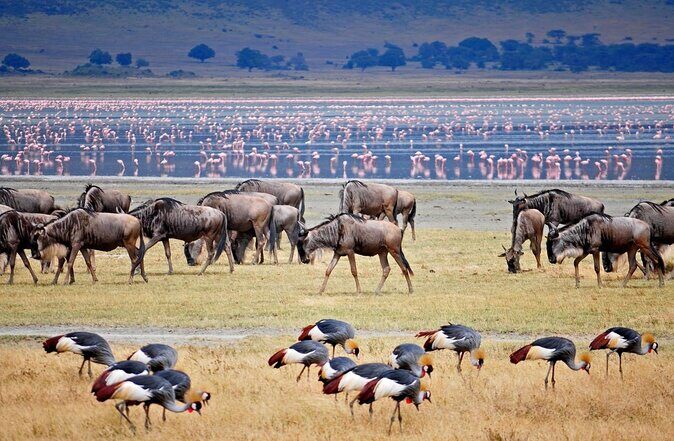
- Ngorongoro Crater in one shot: big wildlife density, a crater lunch, and time on the floor for birds and flamingos
- Multiple nature textures: montane forest in Arusha, baobabs and elephants in Tarangire, open plains in Serengeti
- Culture stops that aren’t just a photo: Mto wa Mbu walking visit and a Maasai boma visit
- Well-fed days with breakfast/lunch/dinner handled, plus unlimited drinking water
Setting out from Arusha: game viewing starts early
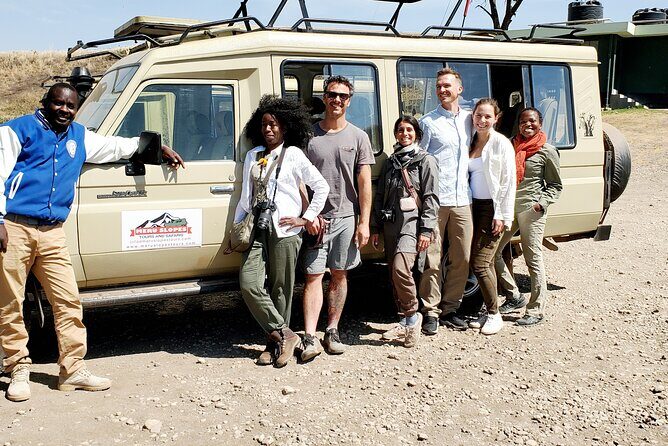
Your safari begins around Arusha, and the schedule is built for an early start (the listed meeting time is 7:30am). That matters because wildlife tends to be most active in the cooler morning hours, and you’ll want full daylight for each park.
On Day 1, you’ll head into Arusha National Park. This park is a fun warm-up because it isn’t just one habitat. You move from shadowy montane forest to the dramatic backdrop of Ngurdoto Crater, with herds of buffalo and warthog down on the marshy floor.
What I like here is the variety. The forest gives you a chance at blue monkeys and colorful turacos and trogons, and it’s one of the few northern-circuit areas where the black-and-white colobus is easier to spot. If you’ve never watched monkeys and birds before a proper “big safari” day, this is a great way to get your eyes trained.
A few more Arusha tours and experiences worth a look



Arusha National Park to Ngurdoto Crater: the “smaller” day that sets the tone
This first day feels lighter than the later park days, but it’s not casual. You’re still doing a real park visit, and the crater scene is the visual payoff.
Expect a guided walk-and-scan style outing: you’ll be moving through forest shade, then shifting focus to the crater’s steep cliffs and wet interior. The crater can be surprisingly alive, and it’s a nice change from the wide-open plains you’ll see later.
A practical tip: bring something warm for early forest mornings. Even if you expect “tropical,” shaded montane areas can feel cool before the sun really kicks in.
Tarangire National Park: elephants, baobabs, and big-tree energy
After Day 1, you’ll drive to Tarangire National Park, about a 3-hour transfer from Arusha (roughly 115km). The park’s signature is its dry-season rhythm: animals concentrate around water, and the Tarangire River gives the place its name and its action.
Tarangire is also where you’ll get your first real dose of “scenery wildlife.” The park is famous for baobab trees, and that matters because you’ll see animals against a very recognizable backdrop. Elephants are a major draw here, and you can also look out for lions and leopards, plus snakes like pythons in the right conditions.
What I love about Tarangire in this route: it breaks up the migration-heavy focus with a different vibe. Serengeti is open plains and drama; Tarangire is dense activity around water and trees.
One small caution: Tarangire can move fast in your mind because there are so many different things to watch. Ask your guide to slow the car when you spot tracks, signs, or a feeding group. That’s where sightings often come from.
Serengeti: chasing migration drama without losing your sanity
When you reach Serengeti, you’re moving from “pretty impressive” to “how is this even real?” territory. The plan has you arrive mid-afternoon, then do an evening drive in central Serengeti to catch sunset light.
This is a smart pacing move. A sunset drive helps you settle into Serengeti’s scale without spending the whole first day burning out your energy. And the light can make animals pop, especially when the plains turn gold.
The core attraction is the Great Migration. The route is designed around the idea that herbivores and the predators that follow them shift across the plains, and that key moments often happen near water sources. Your guides are looking for movement patterns, not random luck.
Where the best action is targeted: Mara River flash-points
Your Serengeti days include early starts and longer time in the park, which is exactly what you need for migration-style searching. The plan specifically calls out Mara River flash-points, including areas like Kogatende.
Timing matters. The route description focuses on July to October, when herds can funnel into river crossings more consistently. It also notes that river crossings at Kogatende start in July and that June to September is a strong window for the best chances.
Could you still see dramatic scenes outside that window? Sure, but if migration is your top priority, this schedule is clearly aimed at the highest-probability season.


A day that starts in the dark: Serengeti sunrise and the long view
One of the most important shifts in the plan happens on the Serengeti stretch: you’ll wake extremely early (the schedule lists a start around 5:45am for sunrise viewing). The goal is simple—find animals when they’re most active and before the day gets hot.
You’ll do morning game drive time, then return to camp for a hot lunch and a chance to reset. After that, you head back out for game viewing again, before moving toward the Ngorongoro side.
Why this pattern works: you’re not just “on safari all day.” You’re splitting the day into high-probability blocks, with real food and rest in between. That keeps your energy level up for crater day later.
If you enjoy sunrise light and don’t mind waking early, this will feel like your best day. If you’re the type who likes slow mornings at all costs, be warned: Serengeti rewards early.
Moving to Ngorongoro: Serengeti plains to crater concentration
After the Serengeti portion, you’ll head toward Ngorongoro with dinner and overnight at Simba campsite. This is one of those transitions that helps you understand what makes Ngorongoro special: the crater is a contained world.
The next morning starts around 5:30am, and you descend to the crater floor after breakfast. The plan highlights one big reason Ngorongoro stays on bucket lists: high wildlife density. You’re set up for big five viewing, and the description specifically notes black rhino presence inside the crater.
Even if you’re not chasing a checklist, Ngorongoro is great for birds. The schedule includes time for flamingos and lots of different species around the crater’s water and open spaces.
Then there’s the best part that feels different from normal safari: lunch inside the crater while you watch the scene. You’re not just rushing to see animals; you’re slowing down enough to notice how the whole system works.
Mto wa Mbu walking tour: seeing life beyond the parks
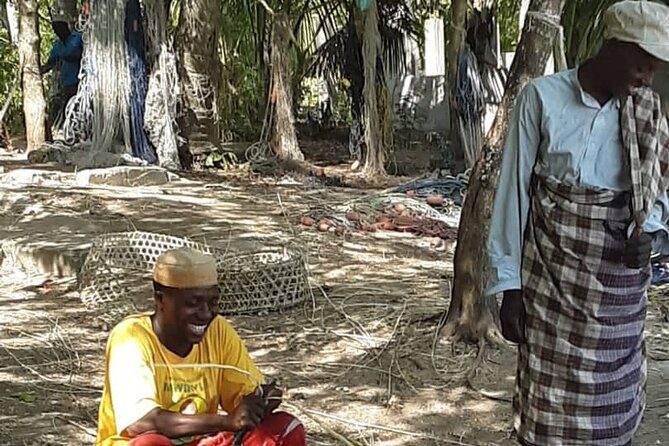
After the crater game drive, the plan includes a walking tour in Mto wa Mbu village. You’ll learn how local people live, see banana plantations, and you can taste local food.
This is a good balance if you’re worried the entire trip will be “just driving and looking.” It’s also a reminder that these conservation landscapes affect real communities nearby.
Practical note: walking tours can be uneven. Wear shoes that you feel good in, not “pretty but slippery.”
Lake Manyara: tree-climbing lions and the flamingo factor
Your final big park day is Lake Manyara National Park, after breakfast. You’ll do a full day game drive here, with the well-known highlight: tree-climbing lions.
Lake Manyara also delivers big bird energy. The plan calls out flamingos attracted by algae in the lake, and you’ll also visit a hot spring.
This park adds variety to the route because it’s not just about plains. You’re shifting between wooded areas, lake edges, and open views where flamingos cluster.
Maasai boma visit and then back to Arusha
The day doesn’t end with wildlife. You’ll visit a Maasai boma where you can see daily life and learn about culture and traditions.
After that, you drive back to Arusha for dinner and overnight. Pairing Lake Manyara with a culture stop is a smart way to finish: it gives you memories that aren’t only animal sightings.
Price and logistics: where the value actually comes from
The price shown in your details may be placeholder on this page, but the value logic is clearer when you look at what’s included. This safari covers all fees and taxes, includes airport-to-Arusha transfers, and provides two nights in Arusha town (one night before and one night after your safari). That’s not just a line item; it protects you from schedule stress.
You also get meals planned into the rhythm: breakfasts (8), lunches (8), and dinners (9), plus unlimited drinking water. On safari, that matters because it reduces the odds of “we’re hungry and now we’re negotiating snacks” during long drive blocks.
Transport is also a value driver. You’ll be using an extended 4×4 with a pop-up roof, which is a big deal for sightlines. You’re paying for the ability to see and photograph without constant repositioning.
What’s not included is also important: Tanzania visa (you handle that), personal expenses, and tips/gratuities for the guide and cook. If tipping is a deal-breaker for you, factor it into your budget now rather than at the end.
What you’re likely to get from the team (from the pattern of past guests)
The company behind this trip, Meru Slopes Tours and Safaris, shows up in many guest comments for strong communication and smooth operations. Names that came up in support and on-the-ground roles include people like Geofrey Nasari (director/sales contact) and Gift as a friendly booking point of contact.
Guide names that repeatedly show up include Edson, Nuru, Jacob, Douglas, Benson, Mohamed, Iddy, Samwel, and Nelson. Several comments also praise the chef, including Dula and Eric, with mentions of consistently good meals.
You shouldn’t expect the exact same staff every time. But you can reasonably expect a team that takes organization seriously and aims to keep drives productive.
Who this safari fits best
This is a strong match if you want the northern circuit highlights in one focused week-plus. It’s also ideal if your priority is the Great Migration season planning, because the route explicitly targets Mara River timing and river-crossing areas during the stronger months.
It’s less ideal if you want a totally relaxed trip with late starts and minimal driving. This plan is built around getting you into parks early, staying out during peak viewing windows, and moving from one major habitat to the next.
If you’re going as a couple or family, the “only your group will participate” note makes sense for comfort and flexibility. And if you like a guide who can explain what you’re seeing, this style of safari is built for that—especially in Serengeti and crater country.
Should you book this 8-day Tanzania safari?
I’d book it if you want a well-rounded circuit that hits the big names with a clear migration goal and enough structure to keep each day purposeful. The combination of early Serengeti drives, crater concentration at Ngorongoro, and Lake Manyara’s tree-climbing lions gives you several different ways to have a great safari.
I would think twice if you’re sensitive to early mornings and long drives, or if your expectations are set to see a specific migration moment on a specific day. Wildlife timing is never fully predictable, even with strong planning.
If your dream is simple—big wildlife, varied ecosystems, and culture stops that don’t feel like a random add-on—this is the kind of route that can deliver.
FAQ
What time does the safari start?
The meeting/start time listed for the experience is 7:30am.
Are airport transfers included?
Yes. Transfers between the international airport and Arusha are included.
How many nights are spent in Arusha town?
The tour includes two nights’ accommodation in Arusha town—one night before your safari and one night after.
What parks and special stops are included?
You’ll visit Arusha National Park, Tarangire National Park, Serengeti National Park, Ngorongoro Crater, and Lake Manyara National Park. There are also culture stops at Mto wa Mbu village and a Maasai boma, plus a hot spring visit.
What vehicle do you use for game drives?
You’ll use an extended 4×4 luxury safari jeep with a pop-up roof for game viewing.
Is food included during the safari?
Yes. Breakfast and lunch are included for the listed safari days, and dinners are included as well (with unlimited drinking water).
What should I budget for that is not included?
Your Tanzania visa, personal expenses (like drinks and other costs), and tips/gratuities for the guide and cook are not included.