REVIEW · ZANZIBAR
Stone Town Walking Tour with Hassan
Book on Viator →Operated by Hansver tours · Bookable on Viator
In This Review
- Stone Town can be a lot, fast.
- Key Highlights You’ll Feel Right Away
- Stone Town on Foot: Why This 3-Hour Route Works
- Starting at Forodhani: Night Market Energy Without the Guesswork
- House of Wonders and the Old Fort: Oman Meets Portuguese Influence
- House of Wonders (and why it matters)
- Old Fort (Ngome Kongwe): the fortress that still tells Portugal’s story
- Freddie Mercury, St. Joseph’s Cathedral, and Malindi Mosque
- Freddie Mercury Museum
- St. Joseph’s Roman Catholic Cathedral
- Malindi Mosque (Ijumaa Mosque)
- Jaws Corner: The Town’s Social Center in One Small Pause
- Old Slave Market / Anglican Cathedral: A History Stop You Should Not Skip
- Darajani Bazaar and the Old Dispensary: Trade Goods and Charity Plans
- Darajani Bazaar
- Old Dispensary
- Old Customs House and People’s Palace: Power, Government, and Survival
- Old Customs House
- People’s Palace Museum
- Price, Tickets, and What to Budget for Value
- Who This Tour Fits Best (and When to Choose Something Else)
- Should You Book This Stone Town Walking Tour With Hassan?
- FAQ
- How long is the Stone Town Walking Tour with Hassan?
- Where does the tour start and end?
- Is this a private tour?
- What’s included in the $25 price?
- Are entrance tickets included for every stop?
- What’s the cancellation policy?
Stone Town can be a lot, fast.
If you want history that you can actually walk through, this is a smart way to cover Stone Town’s key sights with Hassan, a guide who keeps the story moving without turning it into a lecture. I love how you get both the famous landmarks and the everyday places like Jaws Corner and Darajani Bazaar, so the town feels lived-in. I also like that the route stays flexible and paced, so you can take photos, ask questions, and still finish in about three hours. One consideration: several stops have entrance fees not included, so you’ll want a little cash budget if you plan to go inside everything.
You’ll start at Forodhani and end back there, which makes logistics easy even if you’re staying in Stone Town. The tour is private (just your group), uses a mobile ticket, and includes a bottle of water—small detail, but it helps when the day gets warm.
Key Highlights You’ll Feel Right Away
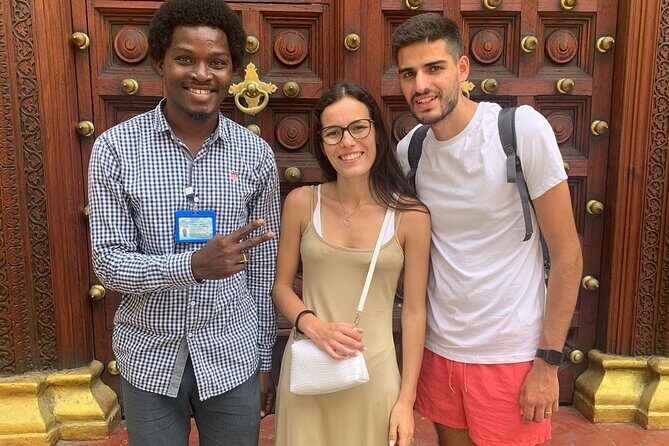
- Hassan’s pace and explanations: clear history tied to the actual buildings, without boredom tax
- Forodhani Gardens: a place built for ceremony that also turns into Stone Town’s night-food mood
- A real mix of cultures in walking distance: Oman-era sultan spaces, Portuguese fort influence, and religious sites side by side
- Freddie Mercury connection: the museum stop gives you a pop-culture anchor in the middle of serious history
- Market energy you can see up close: Darajani Bazaar for fish, spices, fruit, and everyday trade
- The stories people don’t speed past: slave trade history is included, not skipped
You can also read our reviews of more walking tours in Zanzibar


Stone Town on Foot: Why This 3-Hour Route Works
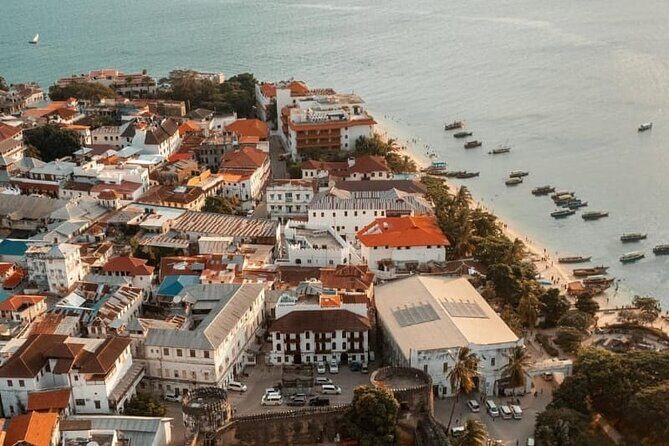
Stone Town is a dense, maze-like UNESCO World Heritage area. Doing it alone can feel like you’re just collecting streets instead of meaning. This tour is built around the landmarks you can connect like a story: who ruled, who fought, what traded hands, and what people built for worship and daily life.
At around 3 hours, it’s long enough to feel you’ve seen the town, but short enough that you’re not exhausted before you reach the places you care about most. It’s also private, so Hassan can slow down for questions or move faster if your group wants to keep momentum.
Only you can decide how much you want to pay for entry tickets. A few of the best stops require separate admissions, so bring a little extra budget if you want full indoor time.
Starting at Forodhani: Night Market Energy Without the Guesswork

You begin in Forodhani, and that’s a smart choice. It’s right at the heart of Stone Town, near major landmark buildings and the walkable “between-sights” zone where the town feels most alive.
One stop is the Forodhani Gardens area, which originally was laid out in 1936 to commemorate the silver jubilee of Sultan Khalifa. In the evening, it’s also where you’ll find the night food market feel—tourists and locals sharing simple meals and casual conversation.
You get to experience it as a destination, not just a place you pass through. If you’re the type who likes to understand what you’re seeing, having that historical setup makes the market vibe land harder.
House of Wonders and the Old Fort: Oman Meets Portuguese Influence
The route quickly takes you to two buildings that explain a big chunk of Stone Town’s identity.
House of Wonders (and why it matters)
The House of Wonders was built in Stone Town by Sultan Baraghash bin Said. In the 19th century it was the largest and tallest building in the area, facing Forodhani Gardens, and positioned between the Old Fort and the Palace Museum.
Hassan’s role here is key: the building isn’t just a photo stop. It was used as a ceremonial palace and a reception hall, which helps you understand why it was placed where it was. It’s architecture shaped by power and public presence.






Old Fort (Ngome Kongwe): the fortress that still tells Portugal’s story
Next up is the Old Fort, also known as Ngome Kongwe. It carries Portuguese influence and dates to the 16th century. Today it’s used for different Zanzibar festivals, which means the building still has community use—not just museum status.
This fort is also described as the first oldest building in Stone Town, sometimes referred to as the Arabic fort, and that kind of overlapping naming is part of Stone Town’s story: layers of rule, trade, and cultural blending.
Practical note: the Old Fort stop includes an admission ticket on this tour, so you don’t have to worry about paying for that one separately.
Freddie Mercury, St. Joseph’s Cathedral, and Malindi Mosque

One of the most interesting parts of the walk is how quickly the town shifts gears: from sultans and forts to music fame and religious spaces.
Freddie Mercury Museum
You’ll stop at the Freddie Mercury Museum, tied to the fact that Freddie Mercury was born in Zanzibar Town on 5 September 1946. He went on to become a British singer and songwriter, best known as the lead vocalist and pianist of Queen, and he died on 24 November 1991.
This stop works well even if you’re not a hardcore Queen fan. It gives you a modern anchor in a town where the main stories can feel far removed in time. The result is a route that feels more human and personal.
St. Joseph’s Roman Catholic Cathedral
Next is St. Joseph’s Roman Catholic Cathedral. Construction began in 1863 by French missionaries connected to the French Colony Réunion area, around 1857 to 1860. Building paused because they found graves on the land, and then resumed about 30 years later. The first mass was held at Christmas in 1898.
If you’re into how communities shape sacred spaces, this one gives you that detail. It’s not just a church façade; it’s a timeline of interruption, return, and eventual completion.
Malindi Mosque (Ijumaa Mosque)
On the Islamic side, the stop at Malindi Mosque takes you to the Ijumaa Mosque, built in the 19th century. Compared with the more dramatic domes and tall minarets you might see elsewhere, Zanzibar mosques are often described as relatively plain and unpretentious. Here, though, there’s a notable update: in 1994 the Ijumaa Mosque was renovated in a modern arabesques style.
That mix of traditional baseline and modern renovation helps you read Stone Town as a living place, not a preserved set.
Jaws Corner: The Town’s Social Center in One Small Pause
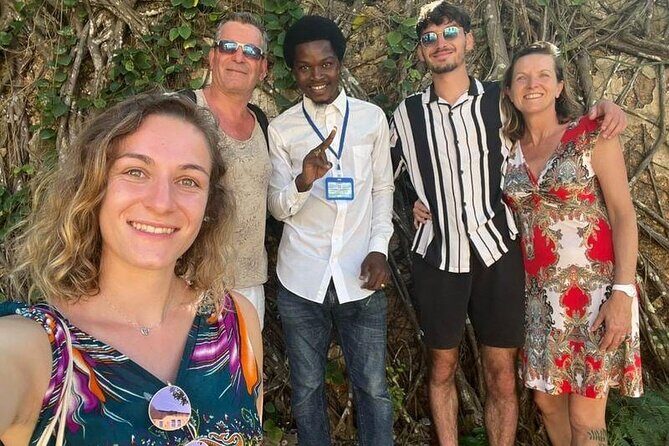
Right in the middle of all the landmark buildings, you get a short stop at Jaws Corner—often described as the heart of town. It’s a meeting place where local people and tourists grab coffee and share jokes.
This stop may sound small, but it’s actually useful. After hours of forts, palaces, and religious architecture, it gives you a breather and helps you reset your mental map of the streets. You also get a sense of how people use public space day to day.
If you’re hoping your tour won’t feel like marching from one monument to another, this quick pause helps a lot.
Old Slave Market / Anglican Cathedral: A History Stop You Should Not Skip
This is one of the heavier parts of the walking tour, and it matters. You visit the Old Slave Market area, now tied to a museum experience.
Before it became a museum, it functioned as a market of slaves, with enslaved people arriving from different countries. The market was closed around 1873 by Sultan Baraghash. After that, the site’s story shifts into a new chapter: an Anglican Church was built by Edward Steere, the third Bishop of Zanzibar, who reigned from 1874 to 1882.
When Steere died of a heart attack in a building next door, he was buried behind the altar. It’s a detail that makes the space feel personal and specific, not abstract.
If you prefer to keep tours light and upbeat, this may not be your favorite stop. But if you want to understand Stone Town honestly, this one is part of the town’s real story, not a side note.
Darajani Bazaar and the Old Dispensary: Trade Goods and Charity Plans
Markets in Stone Town aren’t just for souvenirs. They show you how people actually eat, cook, and sell.
Darajani Bazaar
You’ll visit Darajani Bazaar, described as the largest of the central market structures. It was designed in an eclectic style by the British architect J. H. Sinclair and inaugurated in August 1904. The bazaar faces the creek, and inside you’ll find smaller market sections for fish, spices, meat, fruits, and vegetables.
This stop includes admission on the tour, which is a nice value bonus. More importantly, it helps you connect the city’s trade history to what you can still buy today. Look at the layout and you can feel how the port economy shaped daily life.
Old Dispensary
Another stop is the Old Dispensary, commissioned in 1887 by Tharia Topan with the intent of creating a charitable hospital for the poor. When Tharia Topan died in 1891, the building wasn’t finished. His widow resumed work, but had to suspend it in 1893 when her budget was exhausted.
In the same year, after a family quarrel, the building was sold to a new owner, and it was finally completed in 1894.
This is the kind of story Hassan can bring to life: the building becomes a timeline of intention, interruption, and reuse. It’s also a reminder that social services and public projects can be affected by politics, money, and family dynamics.
Old Customs House and People’s Palace: Power, Government, and Survival
The final stretch leans into government and administration buildings—places where authority used to sit, and sometimes still does.
Old Customs House
You’ll stop at the Old Customs House, built around 1865. It originally served as the home for Zam Zam, the daughter of Seyyid Said, the first Sultan of Zanzibar, and her husband Sayyid Humud bin Ahmed from the Busaidy family.
After Humud bin Ahmed died a few years later, Zam Zam moved out and left the home with relatives of her later husband. In 1928, the customs authority moved from the Forodhani area to the new port area, and the family house served as the Customs House until 1987.
This stop included an admission ticket on the tour, so it’s one you’ll want to plan for if you’re budgeting. Even if you don’t go inside for a long time, the story of changing use shows you how Stone Town’s buildings adapt when economies shift.
People’s Palace Museum
Next is People’s Palace Museum. The palace was built by Seyyid Said bin Sultan in the 1830s for members of the Sultan’s family. It was the second palace he built, with Mtoni Palace being the first.
The palace was bombarded during the Anglo-Zanzibar war in 1896 and reduced to half its original size. It stayed as an Al Busaidy palace until the Revolution of Zanzibar in 1964, when Sultan Jemshid was overthrown. After the revolution, it was renamed the People’s Palace and used for government offices. It was officially opened as the palace museum in 1994.
This stop is valuable because it explains how political change physically reshaped the building’s role over time. Stone Town isn’t frozen in time—it changes with power.
Price, Tickets, and What to Budget for Value
The tour costs $25 per person and runs about three hours. You get a certified English-speaking guide, plus a bottle of water. There’s also a mobile ticket, so you’re not juggling paper in a crowd.
To judge value, pay attention to the ticket mix. Entrance tickets are included at:
- Forodhani Gardens
- Old Fort (Ngome Kongwe)
- Darajani Bazaar
- Old Customs House
Entrance tickets are not included for other stops like House of Wonders, Freddie Mercury Museum, St. Joseph’s Cathedral, the Old Slave Market/Anglican Cathedral, Old Dispensary, Malindi Mosque, and People’s Palace Museum.
So the real “value math” is simple: if you’re willing to choose a couple of indoor stops and rely on the exterior sights for the rest, you’ll probably feel great about the price. If you want every single interior experience, set aside extra cash so you’re not making choices at the last moment.
Also remember: the experience requires good weather. If the conditions are poor, the tour may be offered a different date or a full refund.
Who This Tour Fits Best (and When to Choose Something Else)
I think this tour is ideal if you want:
- a structured Stone Town walk without getting lost in street chaos
- a guide who connects buildings to the story of Zanzibar
- a route that mixes markets, faith sites, and famous cultural references like Freddie Mercury
It’s also a good fit for most people who can handle walking through a compact historic area. Private groups mean you’re less likely to feel rushed.
You might choose a different option if you’re trying to keep costs extremely tight (because several admissions are not included), or if you don’t want historical stops related to the slave trade.
Should You Book This Stone Town Walking Tour With Hassan?
Yes—if you want Stone Town to feel like a coherent story instead of a pile of attractions. The biggest win here is Hassan’s approach: informed, flexible, and focused on the buildings and what they meant, plus the way he explains Zanzibar life and politics alongside the architecture.
Book it if you like walking, asking questions, and letting a guide help you connect dots across sultans, forts, churches, mosques, and markets. If you’re the type who hates paying extra for indoor entries, then you’ll want to budget for a few tickets in advance. Either way, starting at Forodhani and walking back there keeps the experience grounded and easy.
FAQ
How long is the Stone Town Walking Tour with Hassan?
It’s listed as about 3 hours.
Where does the tour start and end?
The tour starts at Forodhani, Zanzibar, Tanzania, and ends back at the same meeting point.
Is this a private tour?
Yes. It’s private, so only your group participates.
What’s included in the $25 price?
A certified English-speaking guide and a bottle of water are included. Some entrance tickets are also included, but not all stops.
Are entrance tickets included for every stop?
No. Entrance tickets are included for Forodhani Gardens, Old Fort (Ngome Kongwe), Darajani Bazaar, and Old Customs House. Tickets are not included for several other stops.
What’s the cancellation policy?
You can cancel for a full refund up to 24 hours in advance of the experience start time. It’s also subject to weather—if canceled due to poor weather, you’ll be offered a different date or a full refund.
If you tell me your travel month and whether your hotel is inside Stone Town, I can suggest how to budget the extra entrance fees so you don’t have to think about it mid-walk.