REVIEW · ZANZIBAR
Stone Town walking Tour
Book on Viator →Operated by George zanzibar · Bookable on Viator
Stone Town is a story you walk through. This 3 to 4 hour Stone Town walking tour strings together key landmarks, markets, and architecture, guided by George Zanzibar (often also referred to as Dadju) with room for your questions. I like that it hits major stops efficiently, and I especially like the way the guide shares context as you move from place to place. One heads-up: a few attractions have admission fees not included, so you may want some cash ready.
It’s also a simple format that works: bottled water and a guide are included, you start at Jamal’s Shawarma (R5QQ+RMV), and you’re taken back to that same spot. The pace is walk-first, with a moderate fitness level expected, so wear comfy shoes and plan on uneven old-stone surfaces.
In This Review
- Key things to know before you go
- Why this walk makes sense in Stone Town
- Starting point: Jamal’s Shawarma and the easy way to begin
- Stop 0: Zanzibar Historical house of Sultan Baraghash
- Old Fort (Ngome Kongwe): where defense meets early town planning
- Old Slave Market area and the Anglican Cathedral zone
- Freddie Mercury Museum: music history in Stone Town form
- Darajani Bazaar: spices, trade, and everyday Zanzibar
- Forodhani Gardens: night market stop for food and pacing
- Hamamni Persian Baths: a historical pause you can plan for
- The guide factor: why reviews keep coming back to George (Dadju)
- Duration, group size, and walking reality
- Price and value: what $25 really buys you
- Practical tips to make the tour feel smooth
- Should you book this Stone Town walking tour?
- FAQ
- FAQ
- How long is the Stone Town walking tour?
- What does the tour cost?
- Where does the tour start?
- Is the tour private or shared?
- What is included in the price?
- Are tickets included for every stop?
- Which stops have free entry based on the tour details?
- Which stops list admission fees as not included?
- What fitness level do I need?
- Is there confirmation after booking?
Key things to know before you go

- George Zanzibar as your guide: reviews highlight history and personal attention, with lots of answers as you go
- A tight route in 3–4 hours: old fort, slave history area, Freddie Mercury Museum area, then markets and baths
- Mix of free and paid-entry stops: some places are free, others require tickets you’ll pay separately
- Night market timing: Forodhani Gardens is built into the walk, so food options come naturally
- You can steer the conversation: the guide listens to what you want to know or buy during stops
Why this walk makes sense in Stone Town

Stone Town can feel like a maze at first—narrow lanes, quick turns, and buildings layered with different eras. This tour is valuable because it turns that confusion into a route you can actually follow. Instead of hopping between sights on your own, you get a guided path that connects the dots between the old fort area, the slave-market history, the Freddie Mercury site, and the trading spaces where daily life happens.
The price is also a big part of the appeal. At $25 per person, you’re paying for more than basic “show me the highlights” touring. You’re paying for a local guide’s time, bottled water, and a structured tour length that fits into a half-day. If you’re spending several days on Zanzibar, this is the kind of activity that helps your future self: you’ll recognize landmarks later and know what you’re looking at.
One more practical win: you’re not getting shuffled into a huge group. It’s private, so your pace and questions stay yours.
You can also read our reviews of more walking tours in Zanzibar



Starting point: Jamal’s Shawarma and the easy way to begin

Your tour begins back at Jamal’s Shawarma (the meeting point listed as R5QQ+RMV, Zanzibar). I like meeting points that are easy to find in real life, and this one is the kind of place you can visually spot and use as a mental anchor for getting oriented.
From the start, the tour’s structure is clear: it’s a walking loop, and it ends back at the same meeting point. That matters in Stone Town. Getting lost is half the fun for many people, but when you’re doing history sites, markets, and a night-food stop, you want a reliable return plan.
Also, you’ll have bottled water included. That’s not a luxury in Zanzibar heat—it’s just smart.
Stop 0: Zanzibar Historical house of Sultan Baraghash
The tour opens with the Zanzibar Historical house of Sultan Baraghash, which sets the tone. Starting here helps you understand that Stone Town isn’t just pretty buildings and photo stops. It’s a place shaped by rule, trade, and shifting power.
I like that this early stop isn’t an abstract museum-style introduction. It’s presented as part of the town’s story you can see and walk around. Even if you only catch a few key points at the beginning, it gives you a framework for what comes next: forts, religious buildings nearby, the darker chapters of the slave trade, and then the commercial side of Zanzibar life.
If you’re the type who loves context while you walk, you’ll probably enjoy this as a warm-up.
Old Fort (Ngome Kongwe): where defense meets early town planning
Next comes The Old Fort (Ngome Kongwe). It’s scheduled for about 30 minutes, and the admission ticket is listed as free for this stop.
Old forts are helpful because they show how a town protected itself and controlled movement. You don’t need to know military architecture to appreciate why it mattered. From a visitor point of view, this stop is also a good reset. After the early historical house, the fort area gives you open sightlines compared to the tight alleyway feeling Stone Town can have.
Practical tip: since this part is free-entry, it’s a good chance to spend your energy on the guide’s explanation without immediately worrying about ticket payments.
Old Slave Market area and the Anglican Cathedral zone
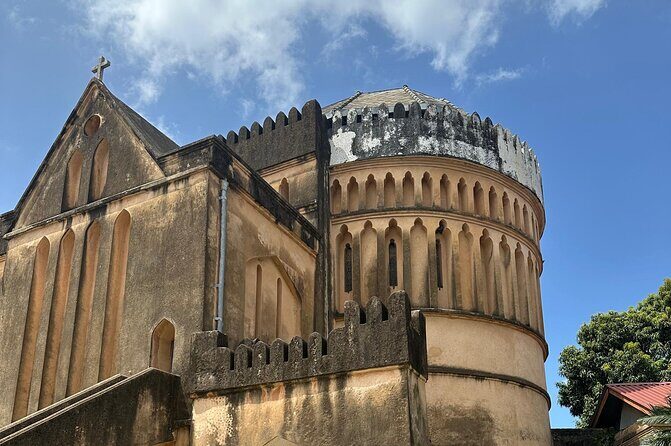
Then the tour shifts to a heavier chapter: the Old Slave Market/Anglican Cathedral area. This stop is about 45 minutes, and the admission ticket is not included.
This is one of those stops where the value is not the building itself as a photo background. It’s the story and the sequencing. You’ll be learning about the history of slavery in Zanzibar, presented as a “key moments” part of the town’s journey.
A heads-up for your planning: because the entry fee isn’t included, you’ll likely want to budget for it. If you’re sensitive to hard topics, go in with your expectations clear. Also remember you can ask questions—this tour style encourages that, and it helps you process what you’re seeing without feeling rushed.
From a review pattern, one theme stands out: the guide’s sympathy and clarity make the experience easier to handle. That matters a lot at sites like this.






Freddie Mercury Museum: music history in Stone Town form
The next stop is the Freddie Mercury Museum. You’ll get about 30 minutes here, and again, admission is not included.
This stop works even if you’re not an all-the-time Queen fan. Why? Because it links Stone Town’s identity to someone who became globally famous. The museum is listed as a house and history site, so it’s more than a memorabilia stop. It’s about place—how a person’s story is tied to the kind of environment Stone Town created.
If you plan on paying for paid-entry attractions on the tour day, it’s smart to keep some cash or a card ready. The tour doesn’t include these ticket fees, and you’ll likely want to avoid last-minute friction.
Darajani Bazaar: spices, trade, and everyday Zanzibar

Now you pivot from major history sites to daily commerce at Darajani Bazaar, also about 10 minutes. This stop is listed as free.
Even with a short time slot, this is a high-impact stop. Darajani Bazaar is described as the main market of Zanzibar, especially for Zanzibar spices. That’s exactly the kind of place where Stone Town’s “trade identity” becomes real. You’ll see the ingredients of Zanzibar cooking and the energy of people buying and selling.
Because the time here is shorter, think of it as orientation and sampling, not a full shopping afternoon. If you want to pick up spices, you’ll have a chance to ask questions on what’s what—and your guide may help you understand how Zanzibar spices differ and how people use them.
Practical suggestion: bring small bills if you plan on shopping. Markets often move fast, and you’ll feel more relaxed if you’re not hunting for change.
Forodhani Gardens: night market stop for food and pacing

After the shopping stop, the tour goes to Forodhani Gardens, about 15 minutes, and this is another free stop. It’s described as a night market, with dinner and refreshments happening right there.
I like this placement because it breaks up the heavier history stops with something social. You’re not stuck in a formal setting. You’re in a place where the atmosphere is part of the experience, and you can choose what you want to eat without feeling locked into a restaurant schedule.
Also, a short time here keeps the tour flowing. If you want a longer dinner break, you can always extend your night on your own after the tour returns you to the meeting point.
If you’re planning your day, treat this stop as a “reset meal.” Eat what looks good, not what sounds good. And go easy on the first bite—Stone Town heat plus walking can hit harder than you expect.
Hamamni Persian Baths: a historical pause you can plan for
The tour ends with Hamamni Persian Baths, about 30 minutes, and admission is not included.
This is a very different kind of stop from markets and forts. Persian baths are a historical setting, but they also feel like a pause in your day: a place where people go to slow down, wash, and recover. Even when you’re not staying for a full soak, the value of the stop is the contrast. You’ve walked through commerce and conflict. Now you see a side of Zanzibar focused on ritual, architecture, and relaxation culture.
Because entry isn’t included, you’ll need to decide whether you want to pay to enter during the tour. If you’re tired from walking, prioritizing your comfort here can be worth it. If you’d rather save money, you can still appreciate the area and the idea of the site, but you should expect that full access may require the paid ticket.
The guide factor: why reviews keep coming back to George (Dadju)
What makes this tour more than just a list of landmarks is the guide relationship. Reviews repeatedly mention George Zanzibar (also referred to as Dadju Zanzibar) and focus on two qualities: strong history explanations and genuinely kind, attentive service.
That combination matters because Stone Town is not only about what you see. It’s about how the story is explained while you’re standing in front of it. When someone can answer your questions as you go—why something changed, what a site represents, how different cultures touched the town—you start noticing details yourself.
Also, the tour style includes freedom to ask questions. That’s not just polite customer service. It makes the experience fit your curiosity, whether you want more detail about slavery history, trade and spices, or the Freddie Mercury connection.
If you like guided tours but hate feeling trapped in a script, this one is a good match.
Duration, group size, and walking reality
The tour is listed as 3 to 4 hours (approx.). That’s a sweet spot. Long enough to cover the main historical and market stops. Not so long that you’re stuck in exhaustion by the time you reach the night market.
It’s also described as private, meaning only your group participates. For you, that means you won’t be squeezed into someone else’s pace. If your group includes people with different interests—history lovers plus food shoppers—that private format helps keep everyone included.
The tour also notes moderate physical fitness. Stone Town is walk-heavy and the ground can be uneven. Bring shoes with grip. And keep water in your mind even with bottled water included; if you stop for extra drinks at Forodhani Gardens, you’ll stay comfortable longer.
Price and value: what $25 really buys you
At $25 per person, this tour is positioned as good value for a guided Stone Town walk. The included items are bottled water and a guide. The non-included items are the all fees and taxes, plus things like private transportation and bicycle use.
The value equation is simple:
- If you mostly want guided storytelling and a structured route, you’ll get a lot from this price.
- If you plan to enter every paid attraction (like Freddie Mercury Museum, Hamamni Persian Baths, and the slave market-area ticketed entry), your total cost will rise. That doesn’t make it bad value—it just changes the budget.
My advice: decide ahead of time what you want to pay for. If you have to prioritize, pick the paid entries that match your interests most, then treat free stops as the surrounding context.
Practical tips to make the tour feel smooth
A few things will help you enjoy the tour more without overthinking it.
First, keep some cash/card ready for stops where admission is not included. The tour doesn’t bundle every ticket into the base price.
Second, dress for walking. Even when stops are “only” 10 to 30 minutes, you’re still moving through the streets between them.
Third, bring curiosity. The tour encourages you to ask questions, and that’s where the experience often becomes personal. If you care about a specific theme—culture, slavery history, music, spices—say it early so the guide can steer the conversation.
Finally, plan to eat lightly before Forodhani Gardens. That night market is part of the tour flow, and it’s easier to enjoy if you don’t feel too full.
Should you book this Stone Town walking tour?
I’d book this if you want a guided path through Stone Town’s main story points without spending your day guessing where to go next. It’s especially worth it when you care about historical context and you like asking questions.
You might skip it if you want a fully self-guided itinerary or if you strongly prefer tours where every admission fee is included in the price. This one is built on a mix of free stops and paid-entry stops, so budget accordingly.
If your goal is to understand Stone Town beyond the beach view, this tour gives you a focused, walkable introduction with a guide who seems to genuinely care—George (Dadju) is the name that keeps showing up for a reason.
FAQ
FAQ
How long is the Stone Town walking tour?
It lasts about 3 to 4 hours.
What does the tour cost?
The price is $25.00 per person.
Where does the tour start?
It starts at Jamal’s Shawarma, listed as R5QQ+RMV, Zanzibar, Tanzania.
Is the tour private or shared?
It’s a private tour/activity, so only your group participates.
What is included in the price?
The tour includes bottled water and a guide.
Are tickets included for every stop?
No. Some stops are free to enter, while others list admission as not included.
Which stops have free entry based on the tour details?
The Old Fort (Ngome Kongwe) and Darajani Bazaar and Forodhani Gardens are listed as free-entry stops.
Which stops list admission fees as not included?
The Old Slave Market/Anglican Cathedral area, Freddie Mercury Museum, and Hamamni Persian Baths are listed as admission not included.
What fitness level do I need?
You should have a moderate physical fitness level.
Is there confirmation after booking?
Yes, confirmation is received at the time of booking.