REVIEW · ZANZIBAR CITY
Stone Town Guided Tour from Zanzibar
Book on Viator →Operated by ARP Travel Group · Bookable on Viator
Stone Town rewards people who slow down and look closer. This guided walk is interesting because you move through Zanzibar City with an expert who connects the architecture and history, and you’ll also get a practical shopping stop for souvenirs. One caution: it’s only about 3 hours, so the pace can feel quick if you like long stops and deep explanations.
I like that pickup and drop-off are built in, and the tour folds in the key sights without you having to plan or pay separately. Expect some heat and tight walking too, and you’ll want to dress conservatively for the streets and churches.
In This Review
- Quick Hits: What Stands Out on This Stone Town Tour
- Stone Town in About 3 Hours: What You Actually See
- Hotel Pickup, Mobile Ticket, and the Private-Group Feel
- Darajani Bazaar: Where Stone Town Starts With Food and Noise
- Old Fort (Ngome Kongwe): Battlements, Curio Shops, and Oman’s Edge
- Old Slave Market and the Anglican Cathedral: A Heavy Place, Told Clearly
- Price and What’s Included: Is $85 Good Value?
- Shopping Break: Souvenirs You’ll Actually Use
- Walking Pace, Heat, and the Dress Code Reality
- How to Get More From Your Guide (Even If Time Is Short)
- Should You Book This Stone Town Guided Tour?
- FAQ
- How long is the Stone Town guided tour?
- Where does the tour take place?
- Is hotel pickup and drop-off included?
- What’s included in the price?
- Is food and drinks included?
- Is there time to shop for souvenirs?
- Do I need to dress formally or conservatively?
- Is this a private tour?
- What if I need to cancel?
Quick Hits: What Stands Out on This Stone Town Tour
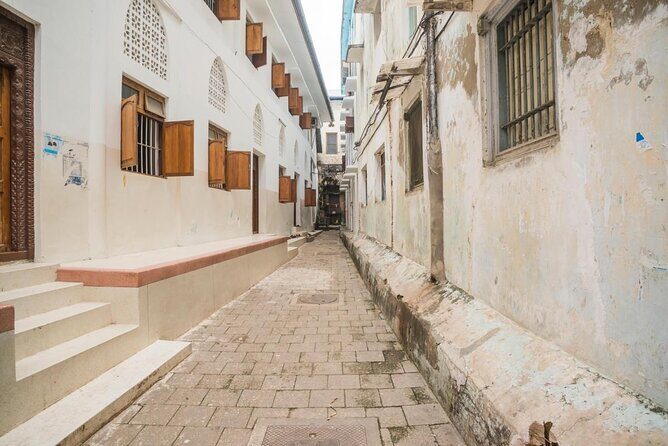
- Door-by-door storytelling: you don’t just pass landmarks; you get the cultural meaning behind them.
- Darajani Bazaar in real life: a food-first market where spices, produce, and seafood set the tone.
- Ngome Kongwe’s defensive design: an Old Fort shape built for war, now used for crafts and performances.
- The Anglican Cathedral site layers: it sits on the ground of the old slave market, so history is unavoidable.
- Short shopping break: enough time to browse souvenirs without losing the tour’s flow.
- Guide quality can make-or-break it: the best guides make the walk feel alive.
Stone Town in About 3 Hours: What You Actually See
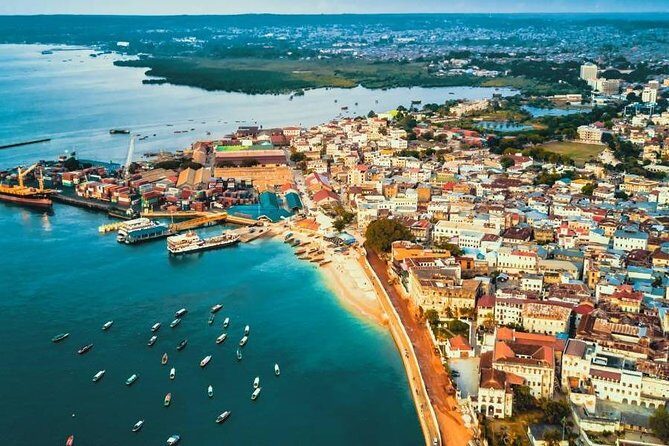
This is a half-day Stone Town guided tour designed for people who want the highlights without spending a full day getting oriented. You’ll choose either a morning or afternoon departure, and you’ll be picked up and dropped back at your Zanzibar hotel.
The tour focuses on a tight route through the historic walled city—UNESCO Stone Town territory—with a guide to interpret the mix of African, Arab, Indian, Persian, and European influences. That cultural mix is exactly why Stone Town is so different from other coastal places: the streets, doors, and public spaces show layered history rather than one single story.
The big trade-off is time. With roughly three hours on the ground, you’ll cover major stops, but you won’t have long linger sessions at each one. If you’re the type who wants to read every plaque and zoom in on every carved door, go in with realistic expectations—or ask your guide to prioritize the details you care about.
You can also read our reviews of more guided tours in Zanzibar City



Hotel Pickup, Mobile Ticket, and the Private-Group Feel
One of the simplest “value” wins here is hotel pickup and drop-off. Stone Town streets are narrow and busy, so having someone meet you at your hotel saves energy and reduces hassle—especially if you’re new to Zanzibar City.
You also get a mobile ticket, and the experience is private for your group only. That matters because Stone Town is a place where you often end up following other people’s pace; a private format makes it easier to slow down when you find a door or alley worth your time.
Guides can be multi-lingual, and in practice this tour shines when your guide speaks clearly. Some guides you might encounter—based on real-world experience from past travelers—include Said Faki, Seif Ali, and Omar, each noted for strong communication and helpful explanations. You can’t always choose a specific person, but you can ask what languages the guide will use and whether you can get explanations timed to your interests.
Darajani Bazaar: Where Stone Town Starts With Food and Noise
Darajani Bazaar (also known as Darajani Market or Marikiti Kuu) is where the local rhythm hits you first. It’s mainly a food market—seafood, meat, fruits, grains, and spices—with other shops mixed in too, from clothing to consumer electronics.
You’ll see it near the Anglican Cathedral of Christ area, and this is a stop that gives you context for daily Zanzibar life, not just postcard views. Even if you’re not buying, it helps you understand the city as a living market, not only a museum.
A cool historical detail: the market’s main structure was built in 1904 by Bomanjee Maneckjee for Sultan Ali bin Hamud, and it was later extended and restored. That kind of detail is useful because it turns the bazaar from scenery into a place with a timeline.
How to make this stop work for you: bring a small amount of cash for snacks or spices you want to smell up close, and don’t be shy about asking what something is used for. If the heat is heavy, take a few minutes under shade and let your guide explain what you’re seeing before you push deeper into the crowds.
Old Fort (Ngome Kongwe): Battlements, Curio Shops, and Oman’s Edge
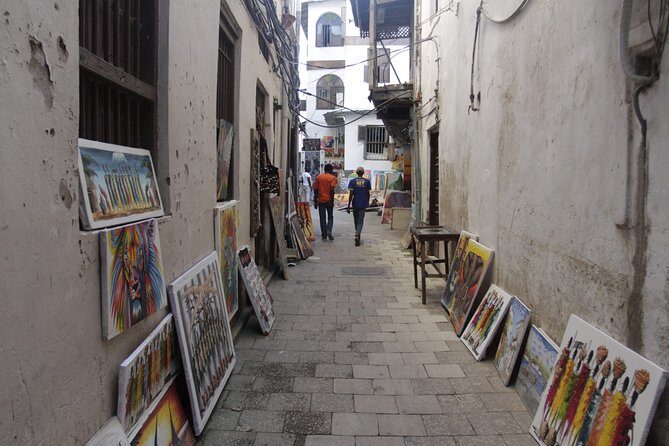
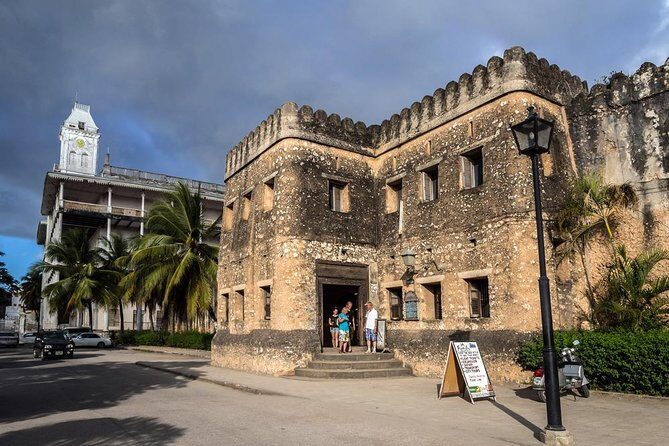
Next you’ll visit The Old Fort (Ngome Kongwe), the oldest standing structure in Stone Town. It was built by the Omanis in the 17th century as a defense against the Portuguese, which is a big deal when you notice the fort’s defensive design—high walls, entrances with pointed arches, and a crenelated battlement look.
Today, the fort is converted into a cultural center. That means you’re not just looking at stones; you’ll likely find curio shops inside and around the courtyard, and there can be activity in the open-air amphitheater area.
This is also where you’ll often see local crafts that go beyond the tourist version of souvenir shopping. Tingatinga-style paintings and traditional handicrafts show up here, which makes it a good stop if you want something that feels tied to Zanzibar art rather than mass-produced goods.
Potential drawback: because this part also functions as a shop/cultural hub, it can sometimes feel like a place where people rush to buy. If you want the history angle, tell your guide you prefer to hear the fort’s background first, then browse.
Old Slave Market and the Anglican Cathedral: A Heavy Place, Told Clearly

The stop that adds the most weight to this tour is the Old Slave Market/Anglican Cathedral area. The church is built of coral stone in a Canterbury-style design, and it stands on the site of the old slave market, when Zanzibar was a major slaving center under the British-supported Muscat and Oman Sultanate.
This is not one of those “quick peek” church stops. You’ll learn that the cathedral’s altar is believed to stand at the place of the old whipping post. Next to the church, there’s also an option to enter slave chambers in the cellars of the old Anglican Mission House, now used as a hostel.
One of the most specific details is about the cross inside the cathedral. It’s made from the tree under which the heart of David Livingston was buried in 1873. And if you look outward to the setting, there’s a huge rectangular bell tower with a clock.
In the churchyard, you can also see a concrete sculpture of slaves exiting a holding cell from underground, made by a Swedish sculptor. That kind of outside memorial is exactly what keeps the history from staying trapped behind walls and plaques.
A practical note on tone: this stop can feel intense. If you’d rather keep the emotional weight lighter, plan to take a breath outside between viewpoints. A good guide will pace the story and let you absorb what you’re looking at.




Price and What’s Included: Is $85 Good Value?
At $85 per person for about three hours, this tour sits in the “you’re paying for convenience and a guide” category. In return, you get hotel pickup and drop-off, a professional guide, and entrance fees included for the fort and cathedral-type sites.
Darajani Bazaar itself is free to enter (so the bazaar portion isn’t where the cost is really landing). The value is in the guiding—how someone ties together the architecture, the places tied to Zanzibar’s trade and colonial connections, and what to notice in the narrow lanes.
Food and drinks aren’t included. That’s important because in hot weather you may want water or a snack between stops. If you’re trying to keep the total day cost down, eat before you go and budget for a drink during the tour.
The mixed rating you sometimes see for tours like this usually comes down to one thing: guide effectiveness and time pressure. If your guide is strong and you’re comfortable with a quick pace, the price can feel fair. If you’re expecting a slow, super detailed walk with lots of time for questions, you may feel slightly rushed.
Shopping Break: Souvenirs You’ll Actually Use

A shopping break is built into the experience, described as about 30 minutes. This is smart for Stone Town because the best buying happens when you know what to look for—doors, textiles, spices, and crafts—rather than grabbing the first thing that looks good.
Here’s where you can shop in a way that doesn’t feel random: use your guide’s eyes. Ask what’s local, what’s worth the money, and what’s easy to pack. Then set your own limit so the walk stays fun, not stressful.
Souvenir photos are available to purchase, but they aren’t included. If you like photos, plan on taking your own with a phone or camera during natural pauses in the route. Stone Town is full of angles—balconies, carved doors, and street scenes—so it’s worth keeping your camera handy.
Tip that saves money: start with browsing, not buying. Prices and quality can shift quickly street to street, and a guide can help you avoid paying tourist premiums for items that look similar.
Walking Pace, Heat, and the Dress Code Reality
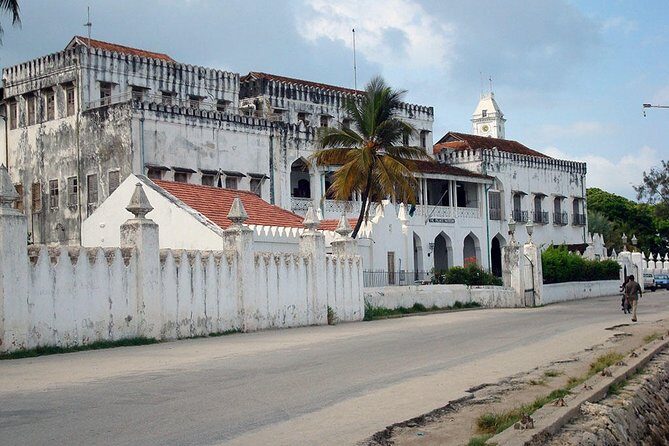
Stone Town is walkable, but it’s still an old city: uneven surfaces, tight corners, and plenty of stop-start movement. The tour asks for moderate physical fitness, which usually means you should be comfortable walking for several stretches without long breaks.
Dress code is formal and conservative. For men, that typically means more covered clothing than shorts and a tank top. For women, the guidance is clear: cover shoulders and wear long skirts or trousers.
This can be tricky in the heat. Go for lightweight breathable fabrics, but still match the coverage rules. Bring a small scarf or shawl if you think you might need it for shoulder coverage, especially if you plan to spend time near churches.
Also remember that the tour is about 3 hours, so there isn’t much slack time. If you’re planning to wear very heavy clothing or bring lots of extras, keep it light.
How to Get More From Your Guide (Even If Time Is Short)
In Stone Town, the guide’s job isn’t just to list facts. It’s to show you what your eyes might skip.
When you meet your guide, ask one or two targeted questions like:
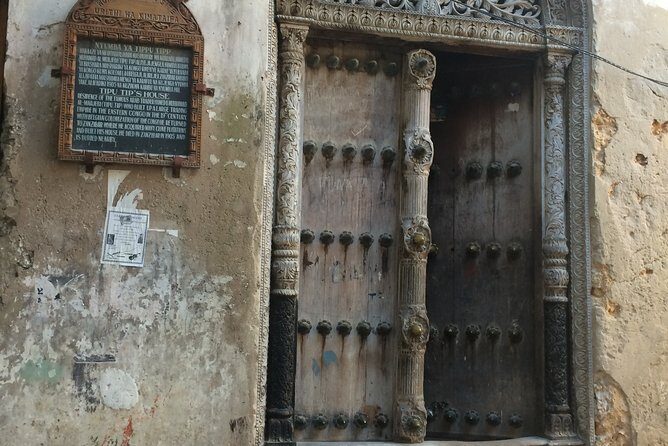
- Which feature should I look for in the door designs?
- What detail in the fort’s structure tells you it was built for defense?
- Why does the cathedral site connect to Zanzibar’s slave market history?
You can also ask them to point out cultural clues as you walk—how architecture changes street to street, where influences seem to overlap, and what looks “European” versus what looks more Arab/Indian/Persian. That kind of explanation turns the walk into something you carry home.
And if you’re lucky enough to have a guide with strong English and clear storytelling—people have praised guides such as Seif Ali and Said Faki for being easy to follow—that’s when the tour really clicks.
Should You Book This Stone Town Guided Tour?
Book it if you want a structured Stone Town introduction in a few hours, especially if you’d rather not navigate the old streets alone. The mix of Darajani Bazaar, Old Fort, and the Anglican Cathedral/Old Slave Market area gives you a balanced snapshot of daily life and the heavier side of Zanzibar’s past.
Consider skipping—or pairing it with extra time on your own—if you’re the kind of traveler who needs long stops, lots of photos without rushing, or very detailed deep-dives at each location. The tour is designed to move, and it’s easy to feel shortchanged if you expected more time per site.
If your top priority is highlights plus a guide who can connect the dots, this is a solid way to spend your half day in Zanzibar City. Just come prepared for heat, dress conservatively, and treat the shopping break as a planned mini-session instead of an afterthought.
FAQ
How long is the Stone Town guided tour?
It runs for about 3 hours (approx.).
Where does the tour take place?
The tour is in Zanzibar City, Tanzania, covering historic Stone Town.
Is hotel pickup and drop-off included?
Yes. Pickup and drop-off at Zanzibar hotels are included.
What’s included in the price?
You get a professional guide, hotel pickup/drop-off, and entrance fees are included for the sites on the route.
Is food and drinks included?
No. Food and drinks are not included.
Is there time to shop for souvenirs?
Yes. There is a shopping break of about 30 minutes to browse distinctive Zanzibar souvenirs.
Do I need to dress formally or conservatively?
Yes. Stone Town has a formal, conservative dress code. Shoulders should be covered, and women should wear long skirts or trousers.
Is this a private tour?
Yes. It’s a private tour/activity, and only your group will participate.
What if I need to cancel?
You can cancel up to 3 days in advance for a full refund. If you cancel less than 3 days before the start time, the amount paid is not refunded.