REVIEW · ZANZIBAR CITY
Spice farm,Stone town and Jozani forest tour with lunch
Book on GetYourGuide →Operated by Mtende Tours & Safaris · Bookable on GetYourGuide
A trip starts to smell good right away. This day pairs a hands-on spice farm shamba walk with wildlife time in Jozani Forest and a final stop in Stone Town. It’s the kind of tour that turns Zanzibar’s spice reputation into something you can actually see, smell, and taste.
Two things I really liked: the way the guide shows you how plants grow in an organic-style farm setting, and the tasting moments where spices and herbs go from words on a label to real ingredients. There’s also a practical lunch included, so you’re not hunting food mid-afternoon. One thing to consider: the day involves walking outdoors, and it can get warm, so plan for sun and comfort.
In This Review
- Key highlights you’ll care about
- Zanzibar spice farm shamba: what you’re really paying for
- Getting there and what to bring (this is where comfort wins)
- The spice farm walking tour: tasting Zanzibar, plant by plant
- How the guide experience helps
- The spice stall: how to handle cash and keep your purchases smart
- Lunch: local spice pilau, included, and timed well
- Jozani Forest: red colobus monkeys and respectful viewing
- Stone Town heritage centre: tying Zanzibar together without rushing
- Price and value: does $85 make sense?
- Who should book this tour (and who should think twice)
- Practical advice so your day feels easy, not hectic
- Should you book Spice Farm + Jozani Forest + Stone Town with lunch?
- FAQ
- Is lunch included on the Spice Farm, Stone Town, and Jozani Forest tour?
- Do I need cash during the tour?
- Are transfers included in the price?
- What does the tour include besides lunch?
- What should I bring with me?
- Who is this tour not suitable for?
Key highlights you’ll care about
- Shamba spice walk where you learn what grows, what’s used, and how it’s cultivated
- Smell-and-taste stops for clove, lemongrass, nutmeg, cinnamon, turmeric, vanilla, and more
- Red colobus at Jozani Forest with time to look for monkeys in the trees
- Stone Town heritage centre as a focused cultural wrap-up after the nature part
- Lunch included with local spice pilau, so you keep momentum instead of searching
Zanzibar spice farm shamba: what you’re really paying for

Zanzibar has a spice legacy that shows up everywhere—signboards, souvenir tins, even the way people talk about food. But this tour is valuable because it doesn’t stop at the scent of spices. It walks you through the plants themselves, the farm setting, and the everyday uses, so you understand how Zanzibar earns the reputation.
You’ll be moving through a spice farm (shamba) that’s set up to show a wide variety of plants across the year. Instead of being a quick drive-by, the walking portion matters: you get a slower pace for noticing leaves, pods, and different growth styles. And because you’re guided, the point isn’t just pretty photos. You learn what each plant is and how it’s harvested or used.
A few more Zanzibar City tours and experiences worth a look


Getting there and what to bring (this is where comfort wins)
The tour price is $85 per person, and the listing-style details are pretty clear about what you do and don’t get. Entry fees, your guide, government tax, and lunch are included. Transfer is not automatically included, but you can request it, and the operator can arrange transport for a cheaper rate than you’d likely piece together on your own.
What you should bring is straightforward:
- a camera (you’ll want it for plants and monkeys)
- comfortable clothes for warm, outdoor walking
- cash (especially for the spice stall at the end)
A quick reality check: weather in Zanzibar can swing between sunny and sudden showers. The tour is outdoor-heavy, so check conditions before you go and dress for it. I also recommend keeping your daypack light and easy—when you’re tasting spices and moving on, you don’t want bulky bag hassle.
The spice farm walking tour: tasting Zanzibar, plant by plant

This is the core experience, and it’s built around a simple idea: spices aren’t abstract. On the shamba walk, you’ll see how spices, herbs, and tropical fruits are cultivated—then you’ll get the best part, smelling and tasting.
You can expect to encounter a mix of the following:
clove, lemongrass, nutmeg, cinnamon, turmeric, vanilla, coconuts, papaya, chili, black pepper, jackfruit, cardamom, cassava, and oranges.
That list might look like a supermarket shelf. On the farm, it changes shape. You start to notice how different plants look and grow, and you get a better sense of what’s aromatic versus what’s more used as a root, fruit, or seasoning. It also makes it easier to buy spice later without feeling totally lost—because you’ve already met the plant and the smell.
How the guide experience helps
A good spice guide turns confusion into clarity fast. In practice, guides like Mohamed are praised for explaining what you’re seeing at each stop and keeping the day running smoothly. When you arrive before it gets too busy, you can actually take your time with the plants instead of being pushed along.
Also, the tour price includes tips for farm workers, which is a nice touch. You’re still free to tip if you want, but you shouldn’t feel pressured to scramble for extra money during the farm portion.
The spice stall: how to handle cash and keep your purchases smart

The tour finishes with a stop at a spice stall where you can buy fresh packaged spices. It’s a cash-only situation, so bring enough to avoid that awkward moment where you love the smells but can’t pay.
If you’re thinking about what to buy, here’s the practical approach I’d use:
- buy a few blends you can use quickly at home (not just one-off single spices)
- taste or smell in the moment, then make a short, confident decision
- ask what’s best for cooking if the stall staff explains options
Because you’ve just spent hours with the plants, you’ll likely buy with more certainty than you would on a “just walk through” shopping stop.
A few more Zanzibar City tours and experiences worth a look





Lunch: local spice pilau, included, and timed well

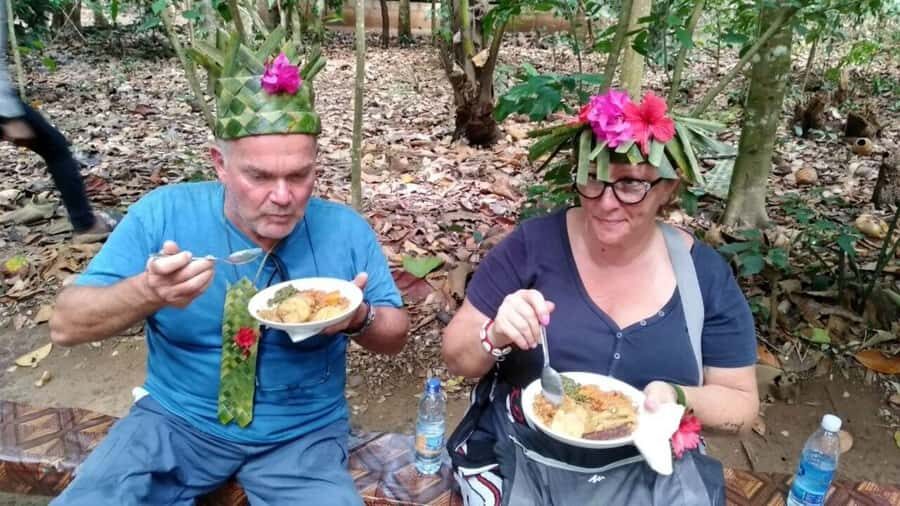
Lunch is included: local spice food pilau. That matters more than it sounds. After the farm walking portion, you’re usually ready for a real meal, not a snack you regret later.
Pilau is also a good match for this day’s theme. You’ve been learning about spices and herbs, and then you eat something that uses them. Even if you’re not a cooking nerd, it helps the morning make sense.
One note: dietary needs like allergies aren’t listed in the tour info you provided, so if you’re sensitive to certain spices or ingredients, I’d plan to communicate your needs to the guide before lunch. Don’t assume the kitchen will automatically know.
Jozani Forest: red colobus monkeys and respectful viewing
After the farm, the day shifts from plants to wildlife. You’ll visit Jozani Forest with a focus on seeing red colobus monkeys. This part is exciting for a simple reason: monkeys are unpredictable. You can’t guarantee sightings, but a guided forest visit gives you a better shot than wandering alone without local knowledge.
What makes Jozani work on this itinerary is pacing. You go from hands-on spice learning to a calmer, observation-style experience. The forest environment changes your rhythm: less tasting, more watching, listening, and scanning tree lines.
Bring the camera, but don’t let it run your whole attention. For monkey sightings, your eyes matter more than your settings. Keep following your guide’s directions so you don’t accidentally step where you shouldn’t.
Stone Town heritage centre: tying Zanzibar together without rushing
The final stop is Stone Town heritage centre. This is a smart move after nature and food. It gives you a cultural anchor so the day doesn’t feel like three random stops in a row.
I like heritage-centre stops because they’re usually easier to digest than aimless street wandering. You can get context efficiently, then step back into Stone Town with a clearer sense of what you’re looking at.
Even if you’re short on time, this stop helps connect the dots: Zanzibar’s spice production isn’t just an agricultural story—it’s also part of how the island’s identity and exchange with the wider world formed over time. The heritage centre format keeps it focused, and that’s good for first-timers.
Price and value: does $85 make sense?
At $85 per person, you’re not just paying for a car and a guide. You’re getting:
- entry fees included
- a tour guide
- government tax included
- lunch included (local spice pilau)
- tips for farm workers included
Transfers aren’t automatically included. That’s the one cost item to plan for. If you want pickup, you can request it through the operator, and they’ll offer it for a cheaper price than arranging separately.
So is it good value? For me, the best sign is the mix of included items. When lunch and entry fees are already covered, you’re less likely to spend the day running into surprise add-ons. And because the day has both a farm education component and a wildlife component, you’re getting value from time, not just destinations.
Who should book this tour (and who should think twice)
This is a strong fit if you:
- like food and want to understand spices beyond souvenir tins
- enjoy hands-on learning where you can smell and taste
- want to see red colobus monkeys in Jozani
- want at least one structured cultural stop in Stone Town
It may be less ideal if you:
- have very limited mobility, because you’ll be walking in the farm and moving through forest areas
- dislike guided group pacing (the tour is designed as a full sequence, not a free-form day)
The tour is also noted as not suitable for babies under 1 year and for people over 95 years. If you’re in a careful-mobility category, ask about comfort and walking expectations before you go.
Practical advice so your day feels easy, not hectic
Here’s how to make this tour smoother from start to finish:
- Check weather conditions the day before and on the morning of the tour.
- Wear comfortable clothes you don’t mind getting dusty or warm.
- Bring cash for the spice stall. The stall is cash only.
- Keep your camera accessible for Jozani monkey moments.
- If you have questions about cooking or spice uses, ask your guide early. The farm tasting portion is when that info lands best.
I also recommend going in with curiosity, not expectations of a strict museum style. This tour works because it’s sensory. The more you pay attention to smells and plant differences, the more the day stays with you after lunch.
Should you book Spice Farm + Jozani Forest + Stone Town with lunch?
If you want one day that hits spices, wildlife, and Stone Town culture without feeling scattered, I’d book it. The inclusion of lunch and entry fees helps the day feel complete, and the farm portion gives you an experience you can’t get from just buying a spice set at a stall.
Book it especially if you’re visiting Zanzibar for the first time and want an easy way to understand why the island’s spices matter. If you prefer a slower, unstructured day with lots of independent time, you might find the sequence too planned—but for most people, this is a smart, well-rounded use of a single day.
FAQ
Is lunch included on the Spice Farm, Stone Town, and Jozani Forest tour?
Yes. Lunch is included and it’s local spice food pilau.
Do I need cash during the tour?
Yes. You’ll need cash for the spice stall at the end of the spice farm part of the tour.
Are transfers included in the price?
No. Transfer is not included, but you can request it, and the provider can offer it for a cheaper price.
What does the tour include besides lunch?
The tour includes entry fees, a tour guide, and government tax.
What should I bring with me?
Bring a camera, comfortable clothes, and cash. It also helps to check weather conditions before you go.
Who is this tour not suitable for?
It’s not suitable for babies under 1 year and not suitable for people over 95 years.