REVIEW · ZANZIBAR
Zanzibar Spice tour
Book on Viator →Operated by Mo Tours & Safaris · Bookable on Viator
Cloves in Zanzibar are not subtle. This guided Spice Island trip from Stone Town sends you into a working plantation where you can smell and taste herbs right where they grow, with guides like Mo or Ally often leading the way.
I love the hands-on format: you walk through villages and spice plots, see workers climb and harvest, and then get real tastings (not just a sales pitch).
The other big win is the farm lunch. You eat a traditional Swahili lunch served by locals, with the spices showing up in the food and fruit served after.
One thing to plan for: it’s a walking tour through plantations. Bring comfortable shoes and mosquito repellent, and be ready for a warm, buggy outdoor morning.
In This Review
- Quick highlights I’d plan around
- Zanzibar’s nickname isn’t marketing fluff
- Meeting at 9:00am: the start time that shapes the day
- Getting to Jambo Spice Farm without fuss
- The plantation walk: where you see harvesting up close
- Palm-leaf accessories and fruit tastings (yes, you’ll eat)
- The Swahili lunch: included and genuinely part of the point
- Price and value: $70 for a guided farm day
- What to pack for a comfortable spice morning
- Group size and the “real guide” effect
- Spice shopping after the farm walk
- Who should book this spice tour
- Should you book the Zanzibar Spice tour?
- FAQ
- What time does the Zanzibar Spice tour start?
- How long is the Zanzibar Spice tour?
- Is hotel pickup and drop-off included?
- Where is the tour’s main stop?
- Is lunch included in the price?
- Do they keep the group small?
- Is it a private tour?
- What should I bring to this tour?
- Do I get confirmation after booking?
- What’s the cancellation window for a full refund?
Quick highlights I’d plan around

- Small-group cap of 15 keeps the pace human and the guide’s attention focused.
- Hotel pickup and drop-off makes the 9:00am start easier than DIY.
- Village-and-plantation walk lets you see spices where they’re actually grown and harvested.
- Palm-leaf accessories (ties, rings, bracelets, glasses) add a fun, hands-on touch.
- Swahili lunch on the farm is included and is the most flavorful part of the morning.
Zanzibar’s nickname isn’t marketing fluff
If you’ve read Zanzibar’s history, you already know spices mattered. What makes this tour feel real is how quickly you get from old trade routes to actual plants you can touch. The whole idea is simple: Zanzibar = spice cultivation, not just a souvenir stand.
The “Spice Island” nickname comes to life on the walking route. You move through villages and spice plantations, and the guide points out specific plants as workers cut barks and harvest. You’re not just hearing about cloves, nutmeg, or aromatic herbs. You’re experiencing the smells in the air and the flavors during tastings.
And if your guide is Mo or Ally, you’ll likely get a story-heavy, very conversational experience. Multiple guides are referenced across bookings, but the through-line stays the same: clear explanations, friendly energy, and a focus on spices and how they’re used.
You can also read our reviews of more tours and experiences in Zanzibar.



Meeting at 9:00am: the start time that shapes the day
This tour starts at 9:00am, with pickup from your hotel. That matters in Zanzibar. Early is usually more comfortable for walking, and it helps you still have time in Stone Town for the rest of your plans later in the day.
The tour runs about 3 hours (approx.), which is a sweet spot. Long enough to get a proper plantation walk and a sit-down lunch, short enough that you’re not stuck outdoors all day.
You’ll also want to remember this is set up as a private tour/activity in the sense that it’s for your group. At the same time, the experience is built to cap groups at 15 participants, so it’s still small, not crowded.
Getting to Jambo Spice Farm without fuss

You don’t need to figure out transport. Pickup and drop-off are included, and the tour company handles the transfer to Jambo Spice Farm.
This is one of the practical reasons the tour is such a good value. A spice farm visit can turn into a coordination headache fast: finding a ride, paying for taxis twice, and losing time waiting. Here, you pay once, and you’re simply moved from Stone Town out into the plantation area.
Also, you’ll have a mobile ticket, which reduces the paper shuffle. When you’re traveling, those little friction points add up. Fewer of them means more time doing the fun part.
The plantation walk: where you see harvesting up close

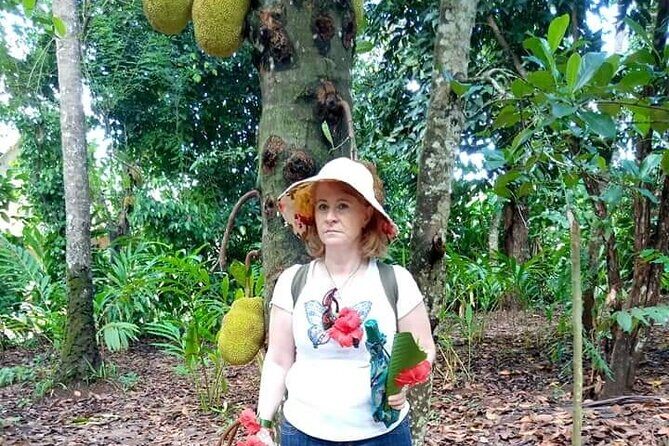
The main event is a guided walking tour through working farms. The route includes villages and spice plantations, and it’s built around what workers are doing at that moment.
As you walk, you should expect the guide to take you plant-by-plant so you can see the parts used (leaves, barks, fruits, and other aromatic portions). The tour description specifically notes that workers climb trees to harvest and that you’ll see plants being cut and collected.
That’s the difference between a spice museum and a farm. On a museum day, the spice is already processed. Here, you’re watching the raw material come from the living plant.
What I like about this format is that you’re not stuck at one spot with a lecture. You’re moving, smelling, and then getting your questions answered while your senses are already engaged. It’s hard to forget the scent of cloves once you’ve stood near the source.
Palm-leaf accessories and fruit tastings (yes, you’ll eat)

At some point during the walk, you may be decorated with palm-leaf accessories, like ties, rings, bracelets, or glasses. It sounds like a small detail, but it helps in two ways: it’s fun, and it makes the experience feel interactive rather than observational.
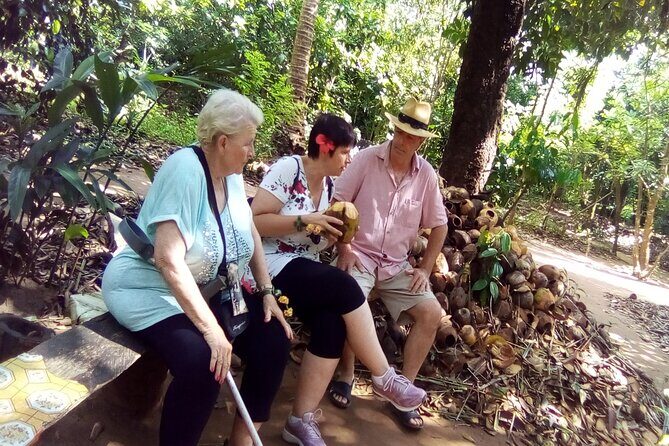
Then comes the tastings. At the spice farm, you’ll get the chance to taste exotic fruits of Zanzibar. Lunch is later, but the fruit sampling keeps momentum and helps you make sense of what spices do in real food.
Many spice tours do tastings that feel too brief. This one gives you enough to actually notice differences: sweet, aromatic, and sometimes unfamiliar fruits. If you enjoy food travel, this is where you’ll start thinking about Zanzibar’s flavors in a more practical way.



The Swahili lunch: included and genuinely part of the point

The lunch is a big deal because it’s not an afterthought. After the farm walk, you’re invited to an opulent traditional Swahili lunch served by locals.
Even if you don’t consider yourself a food person, this is the moment the tour earns its money. Spices are easier to understand once you’ve tasted how they change dishes. The tour is set up so you get that connection while you’re still at the farm.
You can also expect a meal with plenty on the table. Multiple bookings mention lots of food and fruit served after, so the lunch often feels like a mini celebration rather than a quick bite.
And yes, if you’re the kind of person who likes learning through eating, this part will click fast. You’re likely to pick up ideas for what spices do beyond fragrance—heat, sweetness, depth, and balancing flavors.
Price and value: $70 for a guided farm day
At $70 per person, this isn’t a throwaway add-on. You’re paying for more than entry to a garden. Your money covers hotel pickup and drop-off, a professional guide, fees and taxes, and the lunch served by locals.
The value is easiest to see when you break it down:
- Guide time: you’re not wandering on your own. You’re walking and learning plant-by-plant.
- Farm-based lunch: the meal is included, and it’s meant to taste like Zanzibar spices, not generic buffet food.
- Transport: you avoid the “getting there” hassle from Stone Town, which often costs time even if it doesn’t cost a lot of cash.
Where the price can feel less appealing is if you’re only curious about spices but hate walking and outdoors time. The tour is built around movement and sensory experience. If that’s not your style, you may feel like you paid for effort more than learning.
What to pack for a comfortable spice morning
The tour strongly suggests a practical kit, and I agree with all of it:
- Comfortable walking shoes (you’ll be moving on farm paths)
- Long outfit (helps with sun and insects)
- Mosquito repellent (this is an outdoor plantation day)
- Bring a light layer if you get chilly at night later, but for the morning, dress for warmth
If you’re sensitive to bites, don’t wait until you’re already sweating. Apply repellent before you step outside.
Also, keep your expectations simple: this isn’t a fancy indoor attraction. It’s a working farm route with real air, real plants, and real bugs. That’s also why it feels authentic.
Group size and the “real guide” effect
A common weak spot in tours is crowd energy. This experience sets group sizes capped at 15 participants, which keeps the experience from turning into a conveyor belt.
That smaller cap matters for two reasons:
- You can actually hear the guide’s explanations while you’re walking.
- You can ask questions when something catches your attention, like how a spice is harvested or how it gets used in cooking.
In the reviews, the guides come up repeatedly by name—Mo and Ally—and the praise tends to focus on two things: being friendly, and being able to explain spices clearly. For you, that means a better chance you leave with ideas you can use later, like how to recognize spice scents and how they show up in dishes.
Spice shopping after the farm walk
At the end of the tour, you’re in a shopping zone. You may be able to buy spices and perfumes at the exit, and some people also mention gifts made in front of you.
Here’s my practical advice: shop slowly. It’s tempting to grab souvenirs the second you feel the spice smell. Instead, taste what you’re buying (when possible), and keep your purchases small until you’ve compared quality and price with other vendors in Stone Town.
Also remember that fragrance-based items like perfumes can vary a lot. If it smells great on the vendor, it may smell different on your skin. If you’re picky, test carefully.
Who should book this spice tour
This is a strong choice if you want a morning activity that feels hands-on and food-connected. It’s especially good for:
- Food travelers who like understanding ingredients
- People who want to see farming rather than just read about it
- Couples and small groups who prefer a capped group size
- Anyone staying in Stone Town and wanting an easy, guided trip out to a working plantation
I’d skip it if you’re dealing with limited mobility or you hate the outdoors. The tour says most travelers can participate, but it still centers on walking through a farm and villages.
Should you book the Zanzibar Spice tour?
Yes—if you like learning by seeing and tasting. This tour does the basics well: pickup from Stone Town, a guided walk on a real spice farm, and an included Swahili lunch that uses the spices you just learned about.
For the best experience, go prepared for an outdoor morning. Wear shoes you can walk in all day, bring repellent, and give yourself time to smell things without rushing.
If you want to understand Zanzibar’s spice culture in a way that sticks (and you don’t mind walking), this is an easy “make room in your schedule” kind of tour.
FAQ
What time does the Zanzibar Spice tour start?
The tour starts at 9:00am.
How long is the Zanzibar Spice tour?
It runs for about 3 hours.
Is hotel pickup and drop-off included?
Yes. Pickup and drop-off are included.
Where is the tour’s main stop?
The main stop is Jambo Spice Farm.
Is lunch included in the price?
Yes. You’ll have lunch served by locals in the farm, and it’s included.
Do they keep the group small?
Yes. The group size is capped at 15 participants.
Is it a private tour?
It’s described as a private tour/activity, meaning only your group participates.
What should I bring to this tour?
Bring comfortable walking shoes, a long outfit, and mosquito repellent.
Do I get confirmation after booking?
Yes. Confirmation will be received at time of booking.
What’s the cancellation window for a full refund?
You can cancel up to 24 hours in advance for a full refund. If you cancel less than 24 hours before the start time, it’s not refunded.