REVIEW · ZANZIBAR
Stone Town Tour in Zanzibar.
Book on Viator →Operated by Mudikei Zanzibar Tour Guide · Bookable on Viator
One walk and Stone Town clicks. You get a guided circuit that moves you through the iconic sights fast, without turning it into a checklist. I like how the tour pairs big landmarks (like Freddie Mercury House and the Old Fort) with practical street-level stops, including the food scene at Forodhani Gardens. I also like that you’ll see the market areas where people actually shop. One thing to consider: entry fees for some stops are not included, so you’ll want a little extra cash or card just in case.
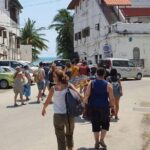
This is a private tour, so it’s built for your pace and questions—especially helpful if it’s your first time in Zanzibar. It starts right at Forodhani, which makes the whole loop feel natural. You’re looking at about 2–3 hours, mostly walking through lanes and public areas, so wear comfortable shoes and plan for warm weather.
In This Review
- Key highlights at a glance
- A solid way to get your bearings in Stone Town
- Freddie Mercury Museum: more than a celebrity stop
- Ngome Kongwe Old Fort: a 17th-century defense site with daily life around it
- Forodhani Gardens: where the waterfront turns into food and people-watching
- Beit el-Sahel (People’s Palace): when you can’t enter, you still learn a lot
- Old Slave Market/Anglican Cathedral site: the hardest stop, for a reason
- Darajani Bazaar: the spice and everyday-life stop
- St. Joseph’s Roman Catholic Cathedral: a brief architectural pause
- Price and value: what $28 gets you (and what it doesn’t)
- Who this tour is perfect for—and who should adjust expectations
- Should you book this Stone Town tour?
- FAQ
- How long is the Stone Town tour?
- Where does the tour start and where does it end?
- Is this tour private?
- What’s included in the price?
- Are museum and fort admissions included?
- What kind of ticket do I get?
- What are the tour’s opening hours?
- Can I get a refund if I cancel?
Key highlights at a glance
- Freddie Mercury House for the legend’s Stone Town story (museum entry not included)
- Old Fort (Ngome Kongwe), a 17th-century defense site now used as a cultural hub
- Forodhani Gardens night market with seafood and snacks along the waterfront
- People’s Palace (Beit el-Sahel): architecture you can view even though it’s not open to the public
- Old Slave Market/Anglican Cathedral area: a sober stop with real historical weight
- Darajani Bazaar for spices and everyday market life in the center of town
A solid way to get your bearings in Stone Town
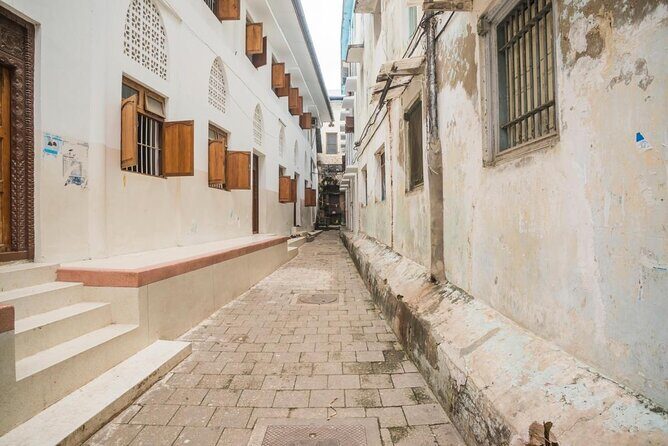
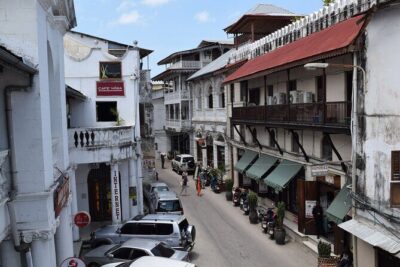
Stone Town is compact, but it can feel maze-like the first day. This tour helps you understand what you’re seeing instead of just looking at buildings. The route is set up like a walking loop through major anchors: music history, fortifications, coastal gardens, market streets, and the darker parts of Zanzibar’s past. You finish back at the starting point near Forodhani.
Because it’s private, you don’t have to rush to match a big group. That matters in Stone Town, where one sharp question can turn into a great side explanation. And with a guide like Mohammed (noted in guide experiences), you’ll get context as you go—how the sites fit together and what to watch for as you walk.
You can also read our reviews of more tours and experiences in Zanzibar.



Freddie Mercury Museum: more than a celebrity stop
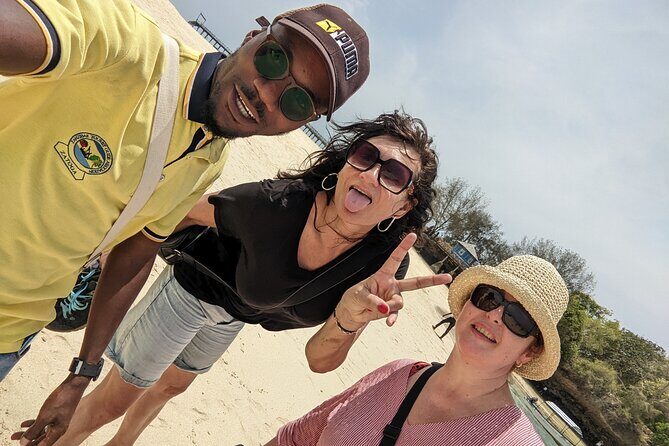
The tour begins at Mercury House, also known as the Freddie Mercury House, now turned into a museum. Admission isn’t included, so you’ll likely pay that fee separately if you choose to go in. The value here isn’t only the name recognition. You’re in the place tied to Farrokh Bulsara, Freddie Mercury’s birth name, and you’ll see memorabilia, photos, and personal items that connect the legend back to the island.
If you’re a music fan, this is a quick hit. If you’re not, it still works because the museum stop gives you a foothold into how Stone Town produces global stars—and why people keep coming back.
Practical tip: even if you pass on the museum entry, the stop still helps orient you to Stone Town’s story. If you do enter, give it the time it takes—this is one of those places where small details matter.
Ngome Kongwe Old Fort: a 17th-century defense site with daily life around it
Next up is the Old Fort (Ngome Kongwe), originally built in the 17th century as a defensive fortress. Like the museum, admission is not included. But even without buying a ticket, the stop is worth it because today it’s used as a cultural center with shops, markets, and performances.
This is one of the reasons the tour feels grounded: it doesn’t treat history like wallpaper. You’re seeing how a structure designed for protection now supports community activity. You’ll notice how Stone Town layers eras—past purpose, present use.
Watch your time: the stop is short, so if you want to do a slower browse of shops inside the fort, you’ll want to tell your guide early.
Forodhani Gardens: where the waterfront turns into food and people-watching
Forodhani Gardens sits along the Indian Ocean coast. It’s a “walk-and-look” kind of stop by day, but the real draw is the evening scene. In the evenings, Forodhani becomes a famous night market. This is where you’ll want your appetite switched on.
What you can expect from the food market includes grilled seafood, plus snacks like samosas and chapatis. Sugarcane juice is also part of the lineup. It’s not a formal restaurant meal. It’s street food culture—busy, social, and very local in how people gather.
How to use this stop well:
- Go hungry, because the choices are part of the fun.
- If you’re sensitive to heat, sit briefly and pace yourself.
- Use your guide to point you toward what’s most worth trying, since the market is crowded and easy to get lost in.
Good to know: admission here is free, and the stop is designed to be a quick taste of the evening vibe.
Beit el-Sahel (People’s Palace): when you can’t enter, you still learn a lot
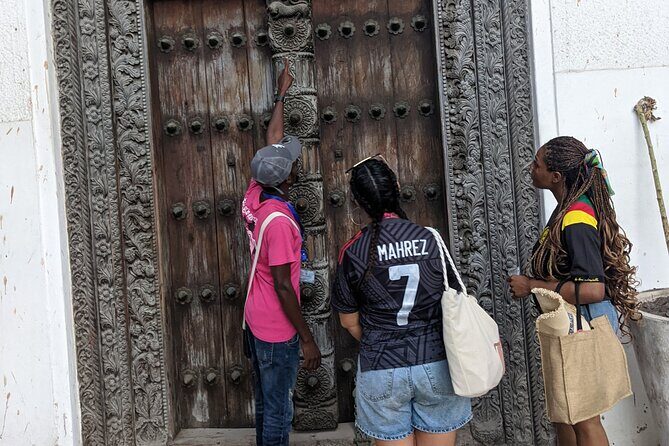
The tour includes the People’s Palace Museum, known as Beit el-Sahel in Swahili. Important detail: it’s not open to the public, so you won’t tour inside. But you can still appreciate it from the outside, and that’s where your guide’s context matters.
This palace was built in the late 19th century as a residence for Sultan Barghash. After the 1964 revolution, it became tied to political leadership, later renamed the People’s Palace and serving as the official residence of the President. Architecturally, it reflects a blend of Arabic, Indian, and European influences—so even a quick look becomes a lesson in Stone Town’s connections.
Practical tip: don’t treat a “view-only” stop as lesser. With the right explanation, you’ll spot why the building matters and what stories it carries.



Old Slave Market/Anglican Cathedral site: the hardest stop, for a reason
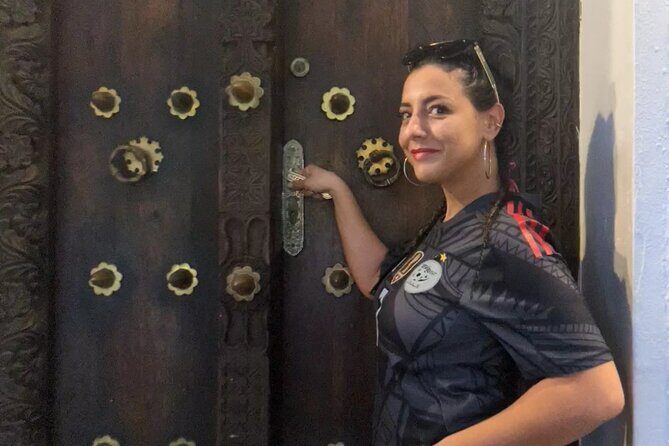
If you want the tour to be meaningful, don’t rush this part. The Old Slave Market/Anglican Cathedral area marks a painful chapter of Zanzibar’s past as a major hub in the East African slave trade in the 19th century.
You’ll see remnants of what used to be a marketplace where enslaved people were bought and sold. Today, it serves as a memorial and a reminder of the millions of Africans forcibly taken from their homes.
This isn’t about ticking off a site. It’s about giving the past its due weight while you’re still walking through real streets. Your guide can help you frame what you’re looking at, and you’ll likely feel the emotional gravity settle in as you move through the area.
Personal advice: keep your phone away for a moment. Take in the setting first, then decide if you want photos.
Darajani Bazaar: the spice and everyday-life stop
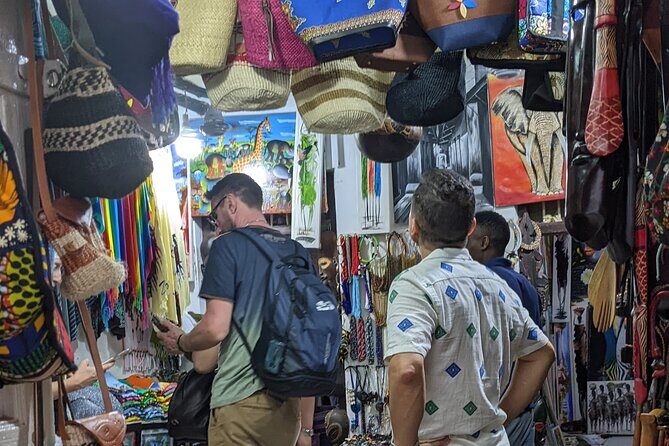
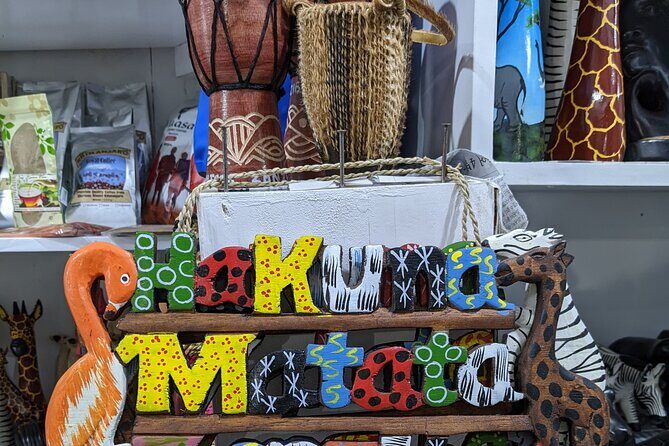
Then you’re back into the rhythm of modern Stone Town at Darajani Bazaar. This is one of the oldest and most popular markets on the island, and it’s built for sensory overload—in a good way. You’ll pass sections that sell different categories: fresh fruits and vegetables, spices, meats, seafood, clothing, household goods, and handicrafts.
The spice stalls are the standout here. You’ll see and smell spices like cloves, cinnamon, cardamom, and vanilla. Even if you don’t plan to buy, this is where the tour becomes more than sightseeing. You learn what “Zanzibar spices” actually means when you’re standing in it.
How to shop without getting overwhelmed:
- Decide what you want beforehand (tea, spice blends, small gifts), so you don’t get pushed into buying everything.
- Ask your guide what’s worth it. It’s the fastest way to avoid regret later.
Admission here is free, which helps keep the whole experience good value.
St. Joseph’s Roman Catholic Cathedral: a brief architectural pause
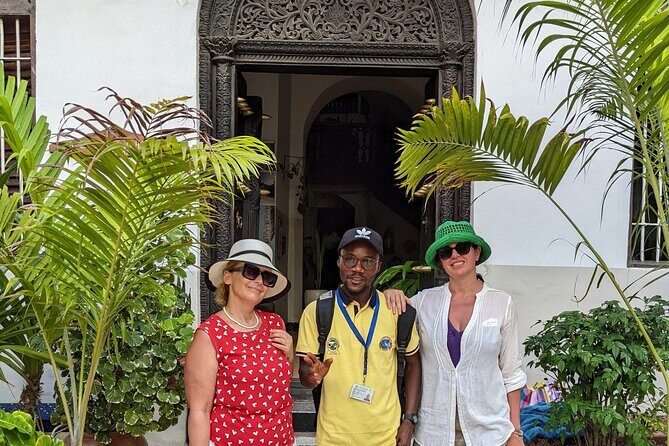
The tour also includes St. Joseph’s Roman Catholic Cathedral. It’s a short stop—just a few minutes—and admission isn’t included. There isn’t a lot of extended detail provided for this specific location, but it’s still a useful punctuation mark in the route. You get another look at Stone Town’s layered influences, seen through a different religious and architectural lens.
Think of this stop as your “reset moment” before you head back through the busiest parts of town.
Price and value: what $28 gets you (and what it doesn’t)

At $28 per person, this tour is priced like an easy first-day decision—especially if you’re unsure how to connect all the landmarks on your own. The big value isn’t only the route; it’s the guidance that helps you understand what the places mean.
Here’s what’s clearly covered:
- Water is included
And here’s what to plan for:
- Some stops have admission fees not included, including Freddie Mercury House and the Old Fort.
- For view-only or free sections, you don’t pay anything, like Forodhani Gardens and Darajani Bazaar.
If you hate surprise costs: you’ll feel better if you budget for at least one paid entry. A few entry tickets add up, even though the tour is reasonably priced overall.
Also, confirmation happens at booking, and the tour uses a mobile ticket, which is handy when you’re juggling plans on vacation.
Who this tour is perfect for—and who should adjust expectations
This is ideal if:
- You want a first-time Stone Town orientation without overplanning.
- You like both iconic landmarks and street-level stops (markets and food).
- You prefer a private experience where your guide can answer your questions and add small practical detours.
You might reconsider if:
- You want a super long, slow tour of each building. The structure here is tight and efficient.
- You don’t like walking in warm conditions. The tour calls for moderate physical fitness, which usually means comfortable walking and basic stamina.
Should you book this Stone Town tour?
Yes, if you want your time in Stone Town to feel connected. This tour is built for people who want the key sights plus the everyday reality—especially the food moment at Forodhani and the spice immersion at Darajani. With an average 5/5 rating and a 100% recommendation rate noted for the experience, it clearly lands well with visitors who want guidance that goes beyond pointing.
If you’re the type who loves museums and paid sites, it’ll likely be even better because some stops have ticketed entries that you can choose to make. If you’re picky about costs, just plan for the fact that not everything is included.
FAQ
How long is the Stone Town tour?
It’s listed as about 2 to 3 hours.
Where does the tour start and where does it end?
It starts at Forodhani, Zanzibar, Tanzania and ends back at the same meeting point.
Is this tour private?
Yes. It’s a private tour/activity, meaning only your group participates.
What’s included in the price?
Water is included.
Are museum and fort admissions included?
No. Admission is not included for several stops, including the Freddie Mercury Museum and the Old Fort. Some stops like Forodhani Gardens and Darajani Bazaar are free.
What kind of ticket do I get?
You receive a mobile ticket.
What are the tour’s opening hours?
The published opening hours are Monday to Wednesday, 9:00 AM to 9:30 PM (for the listed date range).
Can I get a refund if I cancel?
Yes. Free cancellation is available if you cancel up to 24 hours in advance for a full refund. If you cancel less than 24 hours before the start time, there’s no refund.