REVIEW · ZANZIBAR
Guided Stone Town Tour In Zanzibar
Book on Viator →Operated by Zanzibar Tour Guide Francophone/Anglophone · Bookable on Viator
Stone Town has a way of sticking with you. This guided walk gives you the key Zanzibar story—how it grew, traded, fought, and built—while you move stop to stop through the streets people actually use. You’ll pass places tied to the slave trade, Zanzibar’s markets, and the famous architectural details Stone Town is known for. Stone Town and a licensed guide make it easier to understand what you’re seeing instead of just collecting photos.
I like how the tour hits both the heavy parts and the everyday life parts. You get informed context at the Old Slave Market and then you’re back in real Zanzibar at places like Darajani Bazaar. One thing to keep in mind: it’s a fast pace with short stops, and the Freddie Mercury Museum entrance fee is extra if you want to go inside.
Key points you’ll care about
- Official licensed guide with Francophone/Anglophone support
- 2–3 hour walking route with multiple short stops across Stone Town
- Pickup offered and mobile ticket use for easier arrival
- Most entrances are free, but Freddie Mercury Museum has an $8 fee
- Stops include slave-trade sites, markets, gardens, forts, cathedrals, and door/architecture viewpoints
- Private tour: only your group, so you can ask questions at each stop
In This Review
- What you’ll learn on this Stone Town tour in 2–3 hours
- Old Slave Market and Anglican Cathedral: history you can’t skip
- Darajani Bazaar and Forodhani Gardens: markets and coastal views
- Freddie Mercury House, Old Fort, and House of Wonders
- Jaws Corner café break, Saint Joseph’s Cathedral, and Zanzibar doors
- Emerson Spice and why architecture stops are worth your time
- Price and tickets: what costs extra and what’s covered
- Should you book this guided Stone Town tour?
- FAQ
- How long is the Guided Stone Town Tour in Zanzibar?
- Is pickup included?
- Where does the tour start and end?
- Is this tour private?
- Does the tour include an official licensed guide?
- Do I need to pay for any attractions during the tour?
- Is the tour ticket digital?
- What should I know about the weather?
- Can I cancel for a refund?
- Is the tour suitable for most travelers?
What you’ll learn on this Stone Town tour in 2–3 hours
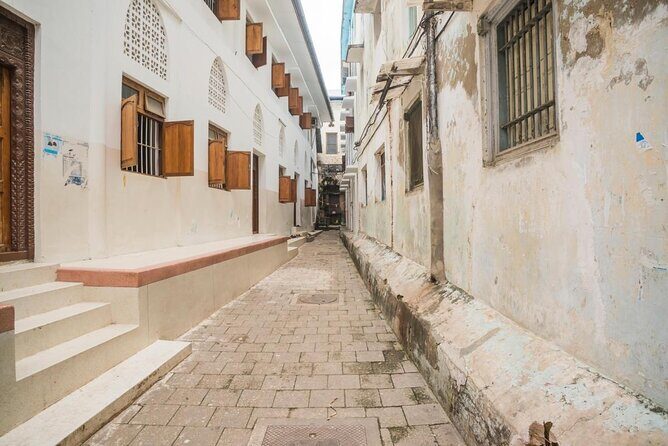
This isn’t a slow museum day. It’s a guided street route built to explain the layers of Zanzibar while you’re still in the neighborhood where those layers were created. That format matters: in Stone Town, the clues are everywhere. Doors, street corners, and old building styles explain centuries faster than a single lecture ever could.
You’ll get an overview of Zanzibar’s history, with extra focus on the evolution of Stone Town itself. The guide connects the big story—trade, culture, and power—with what you can actually see on the ground. I also like that the tour isn’t only about famous names. It includes the local market rhythm and the everyday places where people buy fish, spices, and fruit.
Logistically, it’s designed to stay manageable. The tour lasts about 2 to 3 hours, and it includes pickup (when offered) plus a mobile ticket. It ends back at the meeting point, so you don’t get stranded halfway across town. The group is private, so it’s more of a guided walk for your group than a crowded cattle-car tour.
Old Slave Market and Anglican Cathedral: history you can’t skip
Stop 1 is the hardest emotional start, and that’s usually a good sign. You’ll visit the Old Slave Market/Anglican Cathedral, where your guide shares the history of slavery in Zanzibar. The stop includes time to see the slave chambers and a monument, with about 40 minutes on the first location and an admission ticket included.
What makes this stop valuable is that you’re not just looking at a building. You’re learning what those rooms were used for and how slavery shaped Zanzibar’s economy and society. When a guide gives context before you walk inside, it changes the whole experience. You start noticing details in the space instead of treating it like a quick photo stop.
A quick consideration: this is not light sightseeing. If you’re sensitive to the subject, plan for a slightly slower emotional pace here. The tour’s later stops turn toward markets, gardens, and architecture, but Stop 1 sets the tone.
You can also read our reviews of more guided tours in Zanzibar



Darajani Bazaar and Forodhani Gardens: markets and coastal views
After the weight of the first stop, the route shifts into daily Zanzibar. Next comes Darajani Bazaar, with about 15 minutes. The guide shows you the local market for fish, spices, food, and fruits, and explains the history of this place. Entrance is free for this segment, which is nice because it keeps the experience focused on the guidance, not ticket math.
This is where you really feel how Stone Town works. Markets are not just attractions—they’re living infrastructure. The guide’s job is to translate what you’re seeing: which products matter, why the market is where it is, and how Zanzibar’s trade heritage shows up in everyday shopping.
Then you move to Forodhani Gardens, a coastal area where the tour pauses for a short break. The guidance includes a brief overview of the place, plus time (about 5 minutes built into the stop) to take photos and relax. Entrance is free. I like that the tour gives you a breather here, because you’ll likely feel the walking in Stone Town’s tight streets.
One practical note: these stops are fast. If you want to linger for shopping or food, treat this tour as your orientation. You can always come back on your own with a better idea of where you want to spend more time.
Freddie Mercury House, Old Fort, and House of Wonders

This part mixes international fame with local power, which is exactly how Stone Town feels overall. You’ll stop at Freddie Mercury’s house (often discussed as tied to the Freddie Mercury Museum area). The stop is about 10 minutes, and the short history is part of what you get from the guide. The Freddie Mercury Museum entrance fee of $8 is not included, so if you want to go inside, budget that extra cost.
If you’re a fan, this is the easy, time-efficient way to connect the singer to the neighborhood. If you’re not, it still works because the guide uses it to point out how Stone Town became a place with global attention, not just local importance.
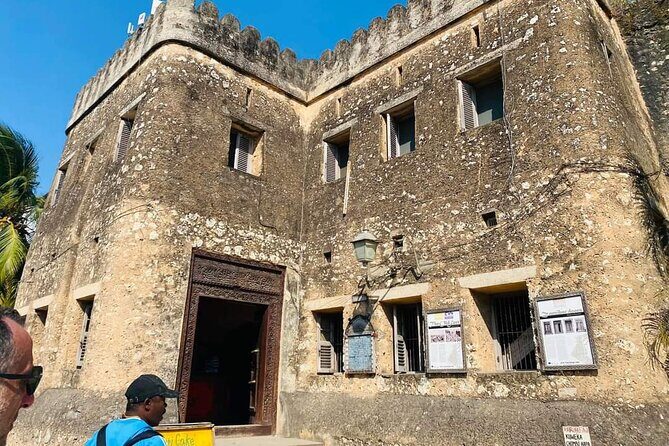
Next, you’ll visit the Old Fort (Ngome Kongwe) for about 15 minutes. The tour includes a short history plus a guided walk showing important parts of the area. Entrance is free. Forts in Stone Town aren’t just scenery; they’re about geography and defense. Even a quick explanation helps you understand why this spot matters.
After that comes the House of Wonders, again about 10 minutes with guided context and a chance to see the place. Entrance is free. This stop is great if you love architecture and want the guide to point out what makes these buildings recognizable in Zanzibar—how styles reflect trade influences and local builders’ choices.
A heads-up: because each stop is timed, you won’t have a full “slow day” inside every building. You’ll get the key points, then you can decide later if you want to return.
Jaws Corner café break, Saint Joseph’s Cathedral, and Zanzibar doors
One of my favorite parts of this route is how it mixes major landmarks with small, social pauses. At Jaws Corner, you get about 10 minutes with the guide explaining the culture of the place and Zanzibar in general. The stop includes a chance to taste local coffee. Entrance is free.
This matters because Zanzibar isn’t only history and stone. It’s also people taking breaks, chatting, and keeping routines. A short café stop like this can make the tour feel more human and less like a checklist.
Then you’ll visit Saint Joseph’s Cathedral for about 10 minutes. Your guide shares the cathedral’s history, and you may get inside if you want to. Entrance is free. Even if you don’t go in, the guided context can help you connect religious architecture to the island’s broader cultural mix.
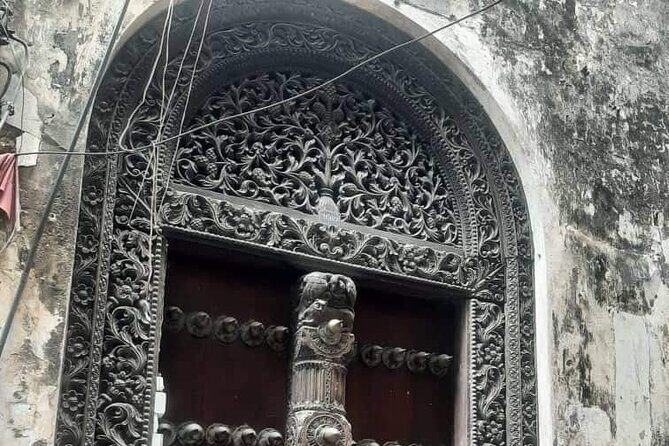
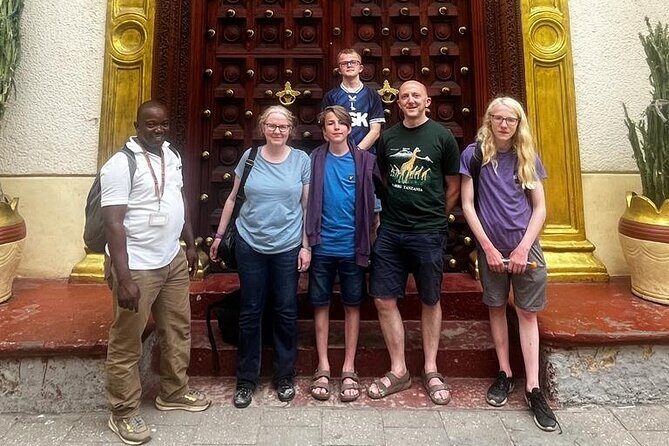
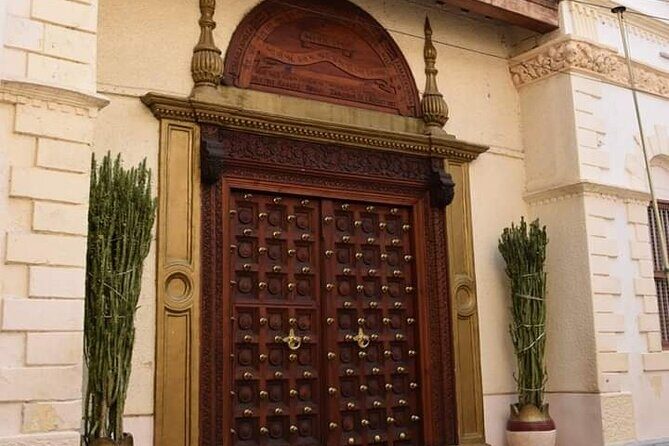
The tour then highlights what Stone Town looks like when you pay close attention: the Swahili House. You’ll see Zanzibar doors with strong curved shapes, reflecting Indian and Arab styles, and then you’ll be taken to one of the rooftop terraces to see the view of Stone Town. This stop is about 10 minutes and entrance is free.
This rooftop moment is where all the earlier explanations start clicking. From above, it’s easier to understand the density of the streets and how buildings relate to each other. If you like photography, bring your camera habits back down to Earth: the view is short, so be ready when it’s your turn.
Emerson Spice and why architecture stops are worth your time
The final set of ideas builds on what you’ve already started noticing. At Emerson Spice, you get around 10 minutes of explanation tied to architectures in Stone Town and Zanzibar in general. The guide also accompanies you to get inside some buildings to see architectural features.
This is the stop I’d especially recommend if you’re the type who likes learning how a place works. Doors, walls, and building layouts tell stories about trade contacts, climate needs, and local craftsmanship. Even when time is short, a guide pointing out what to look for can completely change what you remember later.
Also, if you feel like Stone Town’s streets can confuse you, this architecture-focused capstone gives you a mental map. You leave with a better eye for what’s original versus what’s been changed.






Price and tickets: what costs extra and what’s covered
At $23.44 per person for a 2 to 3 hour guided experience, this tour sits in the “good value” zone—especially because the guide is licensed and the route includes multiple major stops. The key value isn’t only the sightseeing. It’s the guidance that turns landmarks into context.
Here’s the practical budget picture:
- Included: official licensed guide
- Included at Stop 1: admission ticket for the Old Slave Market/Anglican Cathedral
- Included throughout: most other stops are free (Darajani Bazaar, Forodhani Gardens, Old Fort, House of Wonders, Jaws Corner, Saint Joseph’s Cathedral, Swahili House, Emerson Spice)
- Not included: Freddie Mercury Museum entrance fee ($8) if you want to go in
So your total cost might be $23.44, or $31.44 if you choose to include the museum entrance. That’s a manageable add-on, and it lets you keep control of how deep you want to go.
Pickup is offered, and the tour uses a mobile ticket, which helps you keep the start-day stress low. The meeting point is Mizingani Seafront Hotel (R5RR+9MJ, Mizingani Rd, Zanzibar). The tour ends back at that same meeting point, so you’re not left figuring out how to get home after the last stop.
Should you book this guided Stone Town tour?
If you want the fastest way to understand Stone Town without guessing, I’d book it. This is a strong choice when you care about context: slavery history first, then markets, then architecture, then sea views. The timing works for a short stay, and the guide-led explanation helps you avoid wandering with no clear mental framework.
Book it if you like:
- history that explains what you’re seeing
- markets as more than photo backdrops
- architecture details like the curved Swahili doors and the rooftop view
Skip it only if you need long, quiet time in each site or you want a deep museum-style experience at the Freddie Mercury museum itself. In this format, you get highlights and the meaning behind them, then you can return later if something pulls you in.
FAQ
How long is the Guided Stone Town Tour in Zanzibar?
The tour runs about 2 to 3 hours.
Is pickup included?
Pickup is offered.
Where does the tour start and end?
It starts at Mizingani Seafront Hotel and ends back at the same meeting point.
Is this tour private?
Yes, it’s private, so only your group participates.
Does the tour include an official licensed guide?
Yes. The tour includes an official licensed guide.
Do I need to pay for any attractions during the tour?
The Freddy Mercury Museum entrance fee is not included and costs $8. Other stops in the route list admission as free or included.
Is the tour ticket digital?
You’ll use a mobile ticket.
What should I know about the weather?
This experience requires good weather. If it’s canceled due to poor weather, you’ll be offered a different date or a full refund.
Can I cancel for a refund?
Yes. You can cancel up to 24 hours in advance for a full refund.
Is the tour suitable for most travelers?
Most travelers can participate, and service animals are allowed.