REVIEW · ZANZIBAR
Pongwe Dhow fishing
Book on Viator →Operated by Pongwe Tour & Safari · Bookable on Viator
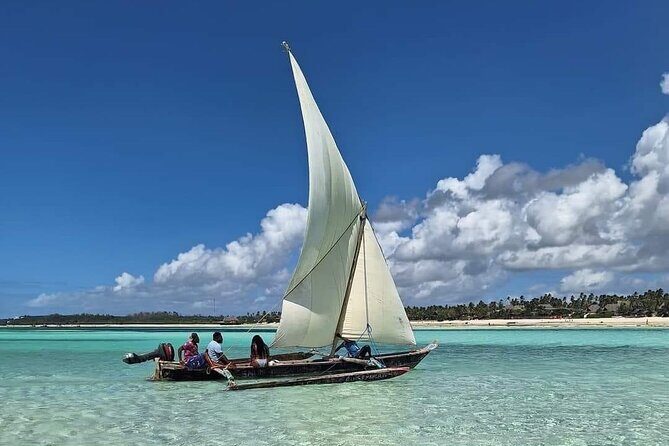
Catch the day starts with a sail. In Pongwe, you ride a traditional dhow with local fishers and learn hand-line fishing in a calm bay where engine boats stay out of the way. It feels like you’re watching and practicing the real rhythm of Zanzibar fishing.
My favorite part is how hands-on it is. The captains teach you sailing and traditional fishing techniques during the tour, so you’re not just a spectator on someone else’s workday. And I love the payoff: in a midday slot, the experience ends with fish soup cooked by the captains wife, with soft drinks included.
The one thing to plan around is weather. This outing requires good conditions, and if things get rough, the activity can be moved or refunded.
In This Review
- Key highlights worth caring about
- Pongwe dhow fishing: what you’re really paying for
- Meeting your team and getting onto the dhow
- Pongwe Bay: the calm water advantage
- Learning sailing the traditional way (and why it’s not just a ride)
- Trying traditional fishing with a hand line
- The midday finish: fish soup cooked by the captain’s wife
- Who this tour suits best (and who may want to adjust expectations)
- Price and planning: fitting 3 hours into your Zanzibar day
- FAQ
- FAQ
- How long is Pongwe dhow fishing in Pongwe?
- Where does the experience take place?
- Is pickup included?
- Is this tour private?
- What’s included besides fishing?
- Do I need good weather?
- Will I get confirmation after booking?
- Is it suitable for most travelers?
- What are the cancellation terms?
- Should you book Pongwe dhow fishing?
Key highlights worth caring about
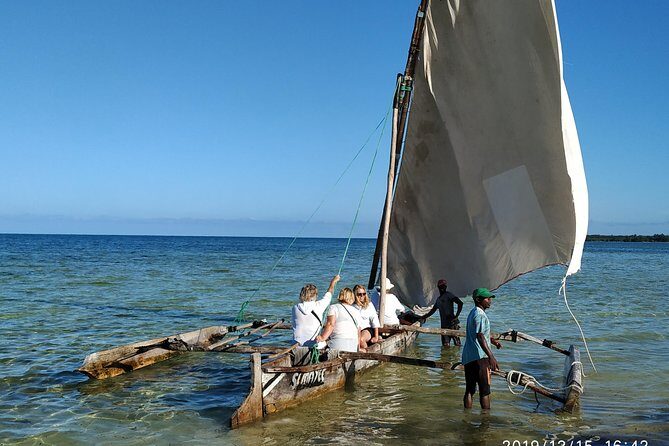
- Pongwe Bay quiet: fewer engine-boat interruptions, so the water experience stays more natural
- Real dhow time: you learn sailing from a local crew on their own boat type
- Hands-on hand-line fishing: you try traditional methods during the trip
- Midday food with locals: fish soup cooked by the captains wife to close the tour
- Private, pickup-friendly setup: pickup is offered and only your group participates
Pongwe dhow fishing: what you’re really paying for
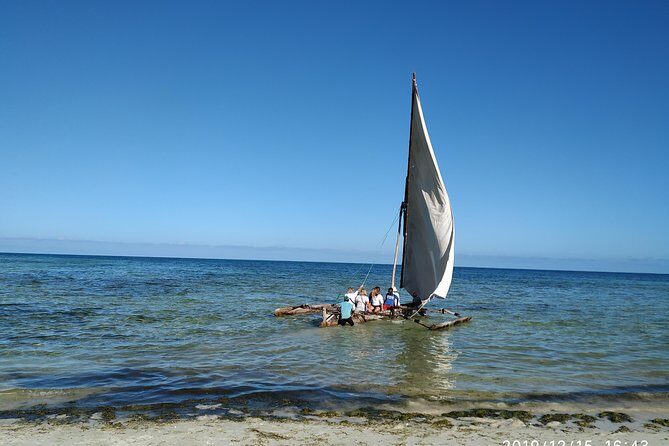
This tour is $100 per person for about 3 hours, and the value isn’t just the boat ride. You’re paying for local instruction, traditional fishing practice, and a proper Zanzibar-style finish that includes soft drinks plus fish soup at midday.
You also get a practical setup. Pickup is offered, you’ll have a mobile ticket, and it’s set up as a private tour/activity, meaning only your group goes. If you like learning by doing, this kind of experience usually feels worth it because you’re actively involved the whole time.
There’s also a smart geographic choice baked in. The bay of Pongwe is described as one of the best spots because there’s no other engine-boat interruption, which matters more than it sounds. Less motor noise and fewer boats usually means a calmer pace for both sailing and fishing.
One more detail: this is often booked well ahead. The average booking window is 64 days, so if you’re traveling in a popular period, try not to wing it.
A few more Zanzibar tours and experiences worth a look
Meeting your team and getting onto the dhow
Your day starts with the local fishing team in Pongwe. You’ll join them in their traditional dhow and learn how the crew does their work, not just how to pose near the water.
Pickup is offered, and that’s a big deal in Zanzibar. Water days can turn into time-wasters if you have to figure out transport on your own, so having pickup built in helps you actually enjoy those 3 hours instead of racing the clock.
Once you’re on the boat, you should expect a mix of instruction and movement. The captains are there to teach you sailing and fishing, and the whole point is that you experiment with the same basic approach used by older generations of fishers.
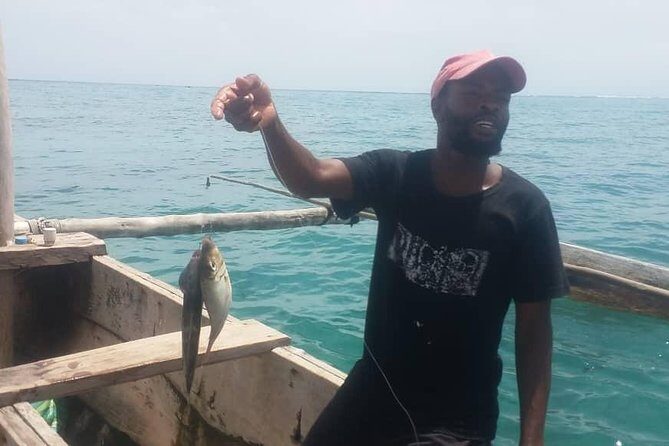
A small but telling detail from one past experience: the group focused on line fishing, and the hand-line approach made people feel directly involved once the action started. That’s the vibe you want if you’re booking this kind of outing.
Pongwe Bay: the calm water advantage
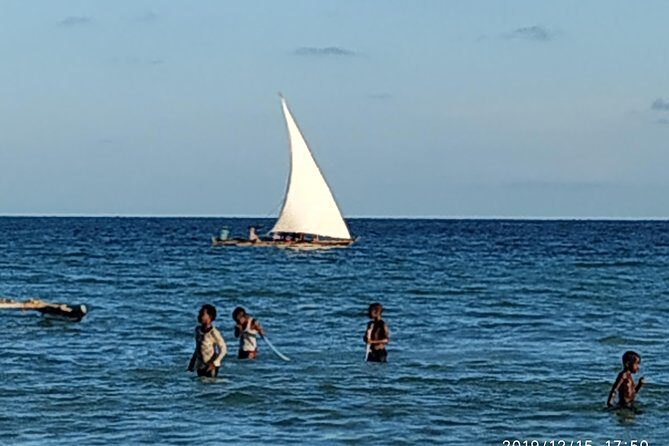
The bay matters here. This tour specifically calls out Pongwe as a top place to do dhow fishing because there’s no other engine-boat interruption.
What that means for you, in plain terms: you’re more likely to experience the water and the boat as a boat, not a noisy worksite. With fewer boats around and less motor interference, sailing feels smoother, and fishing feels less like you’re fighting wake and noise.
It also helps with learning. When the environment stays calmer, you can focus on what the captain is showing you—how to handle the boat under sail, how to position yourself for fishing, and how to follow the crew’s rhythm. This is one of those tours where the setting turns into part of the lesson.
Of course, the bay’s calm setup still depends on good weather, since the experience requires it. If conditions aren’t right, you’ll be asked to reschedule or you’ll get a refund.
Learning sailing the traditional way (and why it’s not just a ride)
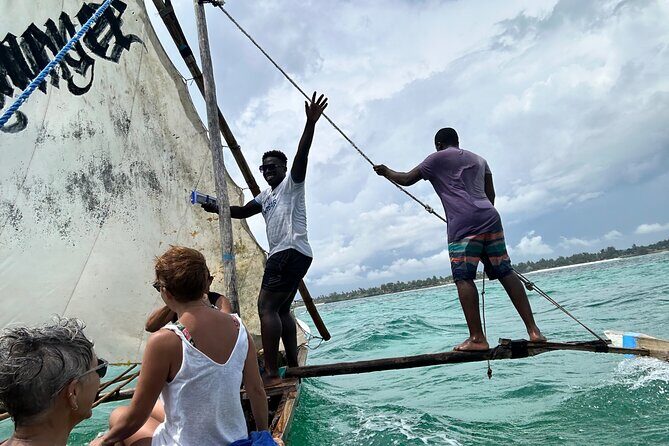
This isn’t a sit-and-watch charter. You’ll learn how to sail during the tour, with the captains teaching you as you go.
On a dhow day, sailing is more than scenery. You’re learning how wind and boat handling work together, and you’re doing it on the kind of boat local fishers actually use. That makes the experience feel more authentic than a typical ocean cruise.
You should also be ready for a real sea-day feeling. Even if the bay is sheltered, you’re on the water for several hours total, and you’ll be moving around the boat while you listen and try the tasks you’re assigned.
If you’re the type who likes practical skills—how something works, not just that it exists—this portion is a strong match. If you want zero participation and only photos, you might find it more active than you expected.
Trying traditional fishing with a hand line
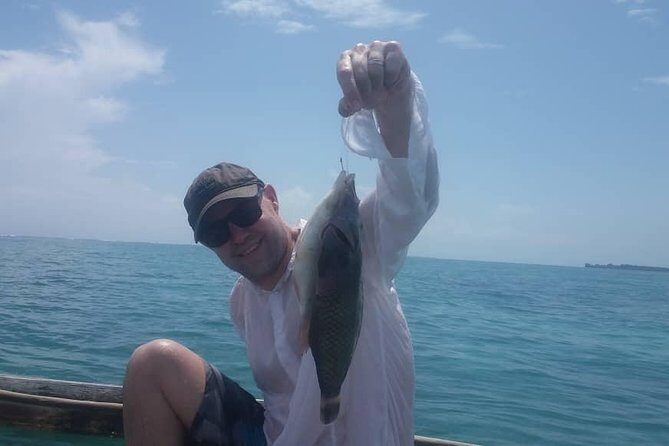
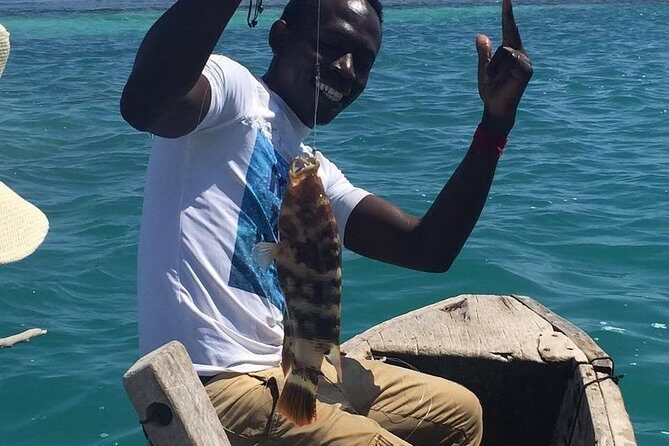
The heart of the tour is fishing. You’ll join the crew and experiment with traditional techniques, learning while you fish.
The experience is centered on the idea of “ancient fishermen” and the tools they used, which here translates into traditional fishing methods and hand-line style participation. In at least one firsthand account, people specifically mentioned the fun of fishing with the hand line and managed to pull in fish into the boat.
That’s not a promise you’ll catch something every time—fishing always has its own moods—but the structure is designed so you have a real chance to take part. You’re not just holding a rod for a moment while the crew does the work.
Practical tip for your mindset: treat this as a learning session. Expect uneven action, and focus on following the captain’s guidance closely. When you line up the basics—positioning, timing, and how you handle the line—the day becomes a lot more satisfying.
Also, note the tour’s length. With about 3 hours total, the tour needs to feel efficient, and it does. You’ll be out there enough to try, but not so long that you lose your energy.


The midday finish: fish soup cooked by the captain’s wife
This is the part I wish more tours copied. In a midday session, the trip ends with fish soup cooked for you by the captain’s wife.
It’s a simple detail, but it changes the feeling of the day. Instead of a generic meal at a restaurant, you get a home-cooked finish tied directly to the fishing crew. You’re closing the loop: you learn the work, you help try the fishing, and then you eat the result in a local way.
Soft drinks are included during the tour, which is a nice, practical addition. After time on the water, hydration and something easy to drink keeps the experience comfortable.
What should you expect from the soup itself? The data only says fish soup, so you shouldn’t assume a specific spice level or style. But you can expect it to be fresh and tied to what the fishing crew is doing that day.
If you’re the kind of traveler who likes food that has a story behind it, this meal is one of the reasons the tour scores well. It’s not just a payoff; it’s part of the cultural context.
Who this tour suits best (and who may want to adjust expectations)
This is described as something most travelers can participate in, which suggests it’s broadly accessible. It’s also private, so your group pace matters less because you’re not competing with a large crowd.
You’ll probably enjoy it most if you:
- want hands-on learning, not just sightseeing
- like local crews and traditional methods
- enjoy food that comes from the work you just watched or tried
You may want to think twice if you:
- have strong motion sensitivity, since you’ll be out on the water
- prefer highly scheduled, minute-by-minute activities (this is teaching-focused, not rigid)
- only want a guaranteed catch (fishing isn’t guaranteed, and the tour aims to teach)
The weather requirement is also a deciding factor. If you’re traveling during a season where conditions fluctuate, keep flexibility in your plan.
Price and planning: fitting 3 hours into your Zanzibar day
At $100 per person for about 3 hours, this falls into the category of tours that are priced for instruction and local experience, not just transportation. For that cost, you’re also getting pickup offered, soft drinks, and the fish soup finish in a midday format.
It’s not a long day, so it’s easier to plan around other Zanzibar priorities like beach time or Stone Town outings. The main planning challenge is booking timing and weather.
Since the average booking lead is 64 days, the tour may fill up earlier than you expect during busy periods. If you can, lock it in sooner rather than later, especially if you’re hoping for a midday session.
Finally, since it’s private, group size affects the feel. A smaller group usually means more personal attention during sailing and fishing.
FAQ
FAQ
How long is Pongwe dhow fishing in Pongwe?
The tour lasts about 3 hours (approx.).
Where does the experience take place?
It takes place in Zanzibar, Tanzania, with the activity based in Pongwe.
Is pickup included?
Yes, pickup is offered.
Is this tour private?
Yes. It’s a private tour/activity, and only your group participates.
What’s included besides fishing?
The experience includes soft drinks, and in the midday finish you’ll have fish soup cooked by the captain’s wife.
Do I need good weather?
Yes. The experience requires good weather, and if it’s canceled due to poor weather, you’ll be offered a different date or a full refund.
Will I get confirmation after booking?
Yes. Confirmation is received at time of booking.
Is it suitable for most travelers?
Most travelers can participate.
What are the cancellation terms?
You can cancel for free up to 24 hours in advance for a full refund. If you cancel less than 24 hours before the start time, the amount paid won’t be refunded.
Should you book Pongwe dhow fishing?
If you want a short, active Zanzibar experience with real local instruction, I think this one is an easy yes. The combination of hands-on sailing, traditional hand-line fishing, and a midday fish soup meal cooked by the captain’s wife is exactly the kind of built-in authenticity that’s hard to recreate on your own.
Book it if you can line up good weather and you’re comfortable being a participant on a boat for a few hours. If your schedule is tight or the forecast looks iffy, keep flexibility so you’re not disappointed by a weather change.